Sitharaman Credits Middle-Class Spending for India's Growth Run
Speaking at a panel in France, Finance Minister Nirmala Sitharaman said middle-class consumption helped India stay the fastest-growing large economy after Covid, putting the consumer economy back at the heart of the growth debate.
Commentary & Analysis ·

Finance Minister Nirmala Sitharaman has described India's middle class as a key engine of the country's economic growth. Speaking at a panel discussion in France, she said consumption driven by middle-class households helped India remain the world's fastest-growing large economy after Covid, generating what she called a virtuous cycle of economic activity. It is a familiar theme in her public remarks, but the setting mattered: a European panel, addressing an audience far more interested in India's investment case than in its domestic politics, is a different stage from a budget speech or a parliamentary debate.
Why the middle class carries the growth story
Consumption is one of the core pillars of India's growth model, and middle-class spending touches nearly every sector: retail, housing, travel, education, automobiles, digital services, financial products and everyday consumer goods. This is not a narrow or peripheral claim. Unlike economies that lean heavily on exports or resource extraction, India's growth arithmetic has long depended on what households buy, borrow for, and save towards. When a family upgrades from a two-wheeler to a car, enrols a child in a private school, books a domestic flight, or takes out a personal loan to renovate a home, each of those decisions ripples outward into manufacturing, logistics, hospitality, education services and banking.
When households spend with confidence, businesses respond by investing, hiring and expanding capacity, which in turn supports incomes and further spending. This is the "virtuous cycle" Sitharaman invoked, and it is a genuinely useful shorthand for how consumption-led economies compound growth over time. The mechanism is straightforward in theory: confidence begets spending, spending begets investment, investment begets jobs, and jobs beget more confidence. The difficulty, as with most virtuous cycles, is that it can just as easily run in reverse if any one link weakens.
A message aimed at global investors
The remarks also serve a strategic purpose. India is positioning itself internationally as a stable, deep growth market, and foreign investors watch consumer demand closely because it signals domestic opportunity that does not depend on exports or government capital expenditure alone. In a global environment where trade flows are increasingly politicised and supply chains are being reshaped for reasons that have little to do with economic efficiency, a large and growing internal market is a form of insulation. It tells an investor that even if external demand falters, there is a domestic buffer that keeps the growth engine running.
A finance minister making this case on a European stage is speaking to boardrooms as much as to voters. This is worth underlining because the audience shapes the message. At home, discussions of the middle class are entangled with tax policy, inflation relief and cost-of-living pressures. Abroad, the same term becomes a proxy for market size, purchasing power and the durability of demand — the kind of language that fund managers and multinational executives use when deciding where to allocate capital or set up operations. Sitharaman's framing, in that sense, is doing double duty: reassuring domestic audiences that their spending matters to the national story, while telling international audiences that India's consumer base is a reason to commit capital rather than wait on the sidelines.
The fragility beneath a familiar narrative
The durability of the cycle, however, is not guaranteed. Inflation, the quality of new jobs, rising household debt and the pace of real income growth all determine whether consumption strength stays broad-based or narrows to the affluent. Each of these factors deserves attention on its own terms. Inflation, particularly in food prices, erodes discretionary spending fastest among households that are already stretched, meaning the same headline growth figures can mask very different experiences depending on income bracket. The quality of jobs matters as much as their quantity: a job that offers little security or wage growth supports far less durable consumption than one that comes with predictable income and access to credit.
Household debt is another thread that cannot be ignored. Spending financed by borrowing can sustain a consumption boom for a period, but it also builds fragility into the system — a family servicing rising EMIs (equated monthly instalments) has less room to absorb a shock, whether that shock is a job loss, a medical expense or a spike in prices. And real income growth, adjusted for inflation, is ultimately what separates a consumption cycle that compounds from one that merely holds steady. If wages rise only in nominal terms while prices rise just as fast, the "virtuous cycle" becomes an illusion sustained by borrowing rather than genuine improvement in living standards.
What this means for policymakers and businesses
For policymakers, the implication is that celebrating middle-class consumption is not the same as safeguarding it. The two require different kinds of attention. Celebrating the middle class is a communications exercise, useful for investor confidence and political messaging. Safeguarding it requires unglamorous, sustained policy work: managing inflation, particularly in food and fuel; expanding access to formal credit on reasonable terms; ensuring that job creation keeps pace with the number of new entrants to the workforce; and investing in the education and skilling pipelines that determine whether today's aspiring households can become tomorrow's stable middle class.
For businesses, the read-through is similarly practical. Companies that build strategies around continued middle-class spending growth are making a bet not just on aggregate GDP figures but on the specific conditions that sustain household confidence. A retailer, an automaker or a housing developer planning capacity expansion over the next several years needs the underlying consumption story to be resilient, not just rhetorically appealing. That means paying attention to the same variables the Finance Minister's remarks gloss over: are wages actually rising in real terms, is credit being extended responsibly, and are the households doing the spending secure enough in their employment to keep doing so.
The NE Times View
Sitharaman's framing is accurate as far as it goes — India's domestic market is genuinely large enough to anchor growth in a turbulent world. But a consumption engine cannot be willed into permanence; it must be fuelled by affordability, credit access, wage growth and household confidence. The risk in celebrating the middle class is taking it for granted, even as many families juggle EMIs, school fees and sticky food prices. For the growth story to hold, policy must now focus on expanding the middle class from below — through jobs and incomes — rather than simply counting on those already in it to keep spending.
There is also a subtler point worth making. A narrative repeated often enough on international platforms can start to substitute for the harder work of verifying whether it still holds true. The middle class that anchored India's post-Covid recovery is not a fixed population; it is a moving target, with households entering and exiting depending on job security, debt levels and price pressures. Treating it as a permanent, self-sustaining asset class risks complacency at precisely the moment when targeted support — on jobs, on affordability, on credit discipline — would do the most good.
Key takeaways
- Sitharaman credited middle-class consumption, spanning retail, housing, travel, education, automobiles, digital services and financial products, as central to India's post-Covid growth as the world's fastest-growing large economy.
- The remarks, delivered at a panel in France, doubled as a signal to foreign investors that India's domestic demand offers growth insulated from export and government capital expenditure cycles.
- The consumption cycle's durability depends on inflation control, job quality, household debt levels and real income growth, none of which are guaranteed to continue on their current trajectory.
- The NE Times View cautions against treating the middle class as a permanent fixture and argues policy should focus on expanding it from below through jobs and incomes.
- Businesses and policymakers alike need to look past the headline narrative to the underlying affordability and credit conditions that determine whether consumption strength is broad-based or narrowing to the affluent.
You may also like to read
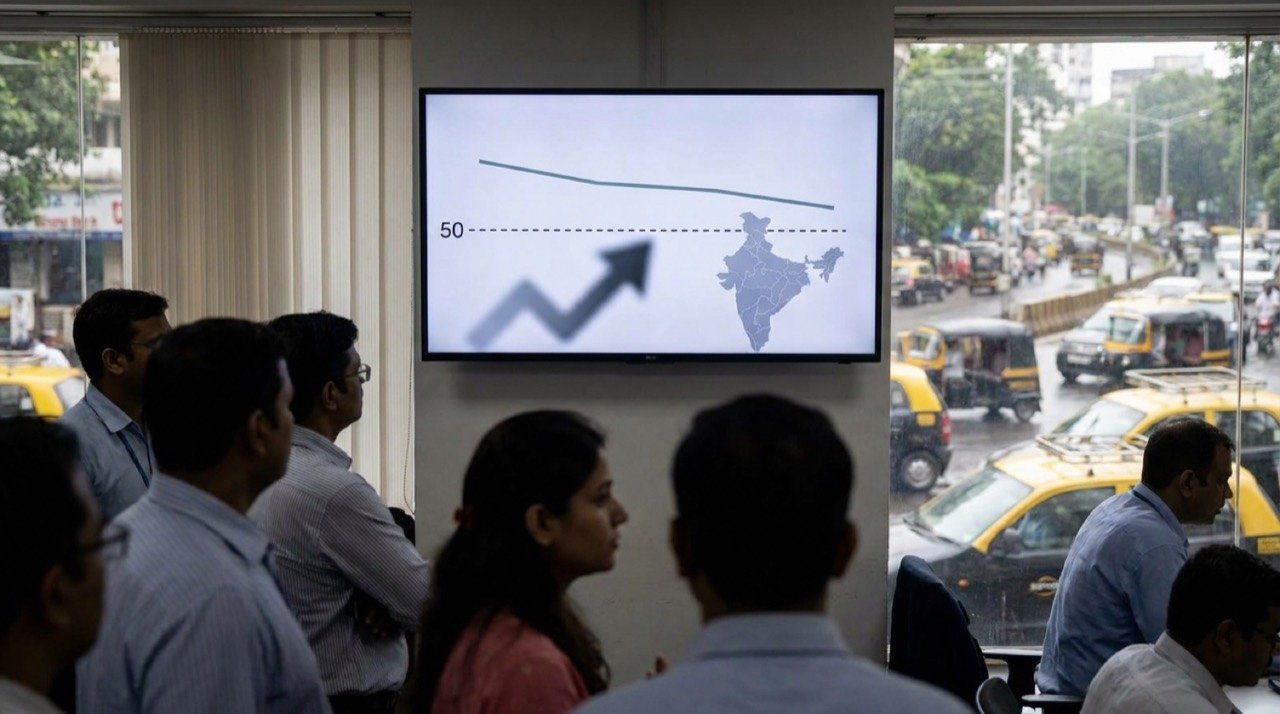
India Flash PMI Eases to 57.4 but Stays in Expansion
India's flash composite PMI slipped to 57.4 in June as demand and hiring lost momentum, yet the reading stayed well above the growth threshold, signalling resilient but more cautious activity.
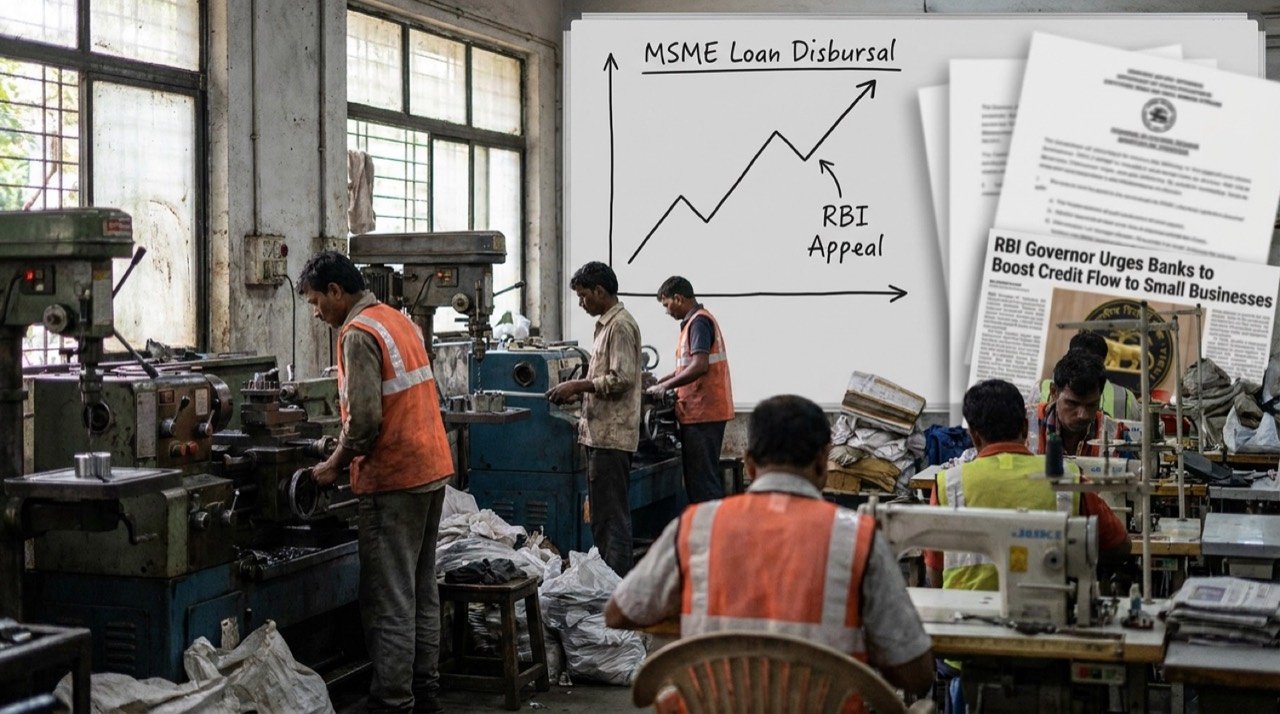
RBI Governor Urges Banks to Treat MSMEs as Growth Partners, Not Just Borrowers
RBI Governor Sanjay Malhotra has called on banks to see micro, small and medium enterprises as growth partners, reviving focus on credit access for the firms that employ millions across India.

India Steel Emission Targets: Draft Rules Push Decarbonisation
The Centre's draft emission cut targets for the iron and steel sector move India's climate policy from broad pledges to sector-specific rules, placing one of its hardest-to-abate industries under a defined framework.
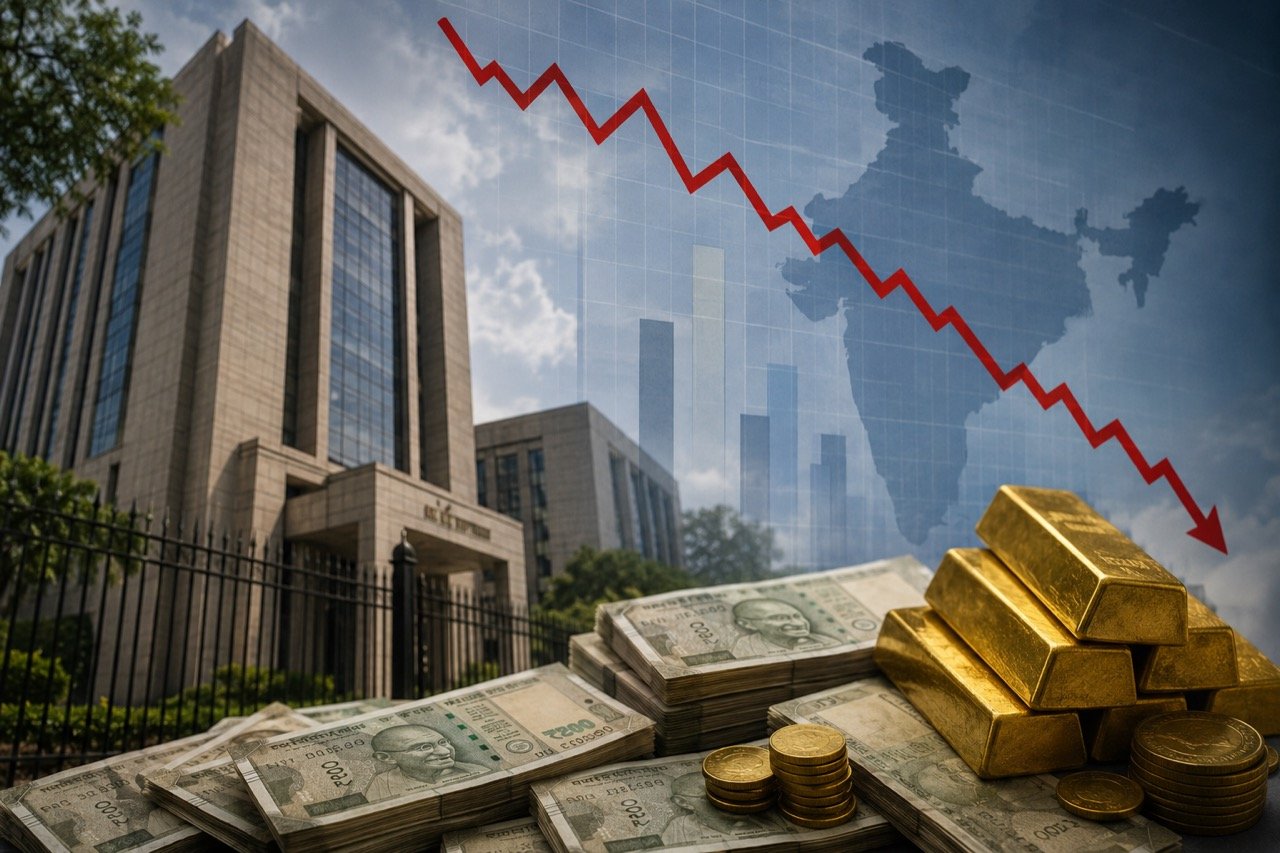
India's Forex Reserves Slip to 15-Month Low: Why the Buffer Matters
India's foreign exchange reserves have dropped to their lowest level in 15 months, narrowing the external buffer the RBI relies on to steady the rupee and reassure markets.
More from this section
More
Adani Case: US DOJ Pushes for Permanent Dismissal of Charges
The US Department of Justice has urged a judge to permanently dismiss charges against Gautam Adani, calling the case legally flawed — a reversal with consequences for markets, diplomacy and cross-border enforcement.

Akasa Air Inducts 40th Aircraft in Indian Aviation Scale-Up
Akasa Air's 40th aircraft, ferried to Bengaluru via Seattle, Reykjavik and Cairo, marks a fleet milestone for the young carrier and a fresh signal that India's aviation market remains firmly in expansion mode.
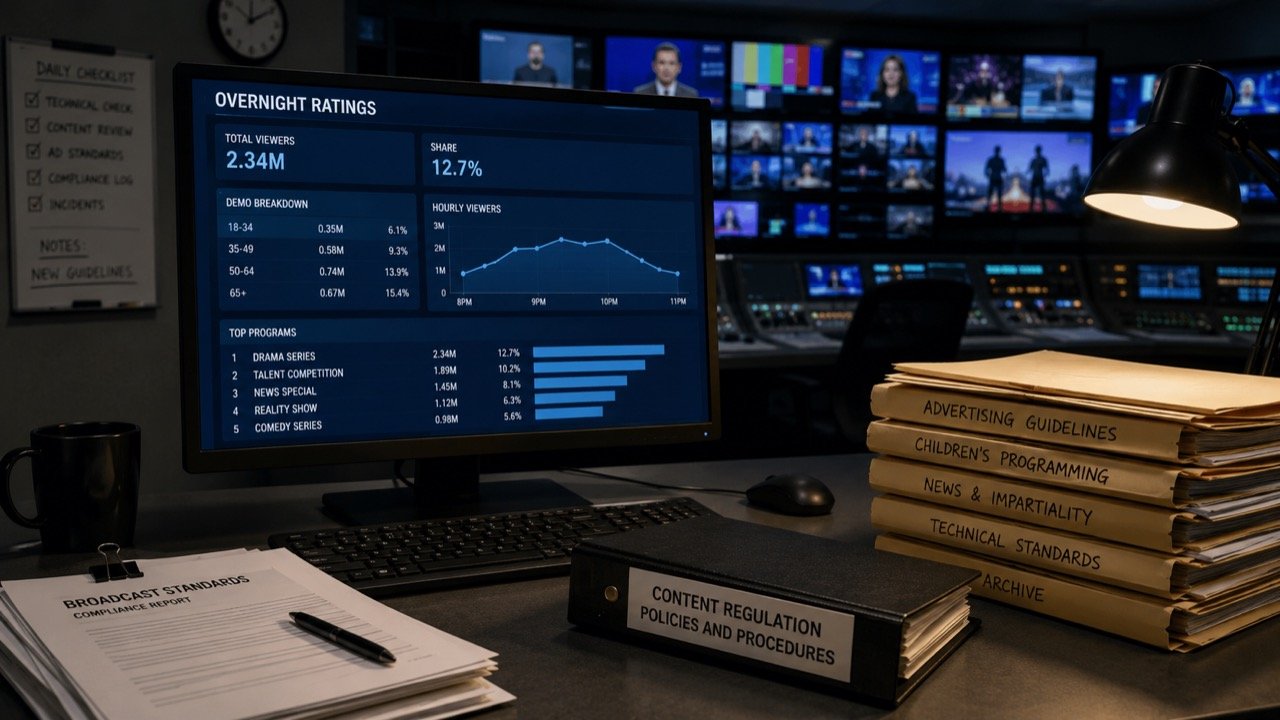
BARC Ratings Suspension Leaves Indian TV Industry Flying Blind
BARC's pause on television ratings has put India's broadcast measurement system under fresh scrutiny, leaving broadcasters, advertisers and media planners without the weekly audience data that anchors the TV economy.