BARC Ratings Suspension Leaves Indian TV Industry Flying Blind
BARC's pause on television ratings has put India's broadcast measurement system under fresh scrutiny, leaving broadcasters, advertisers and media planners without the weekly audience data that anchors the TV economy.
Commentary & Analysis ·
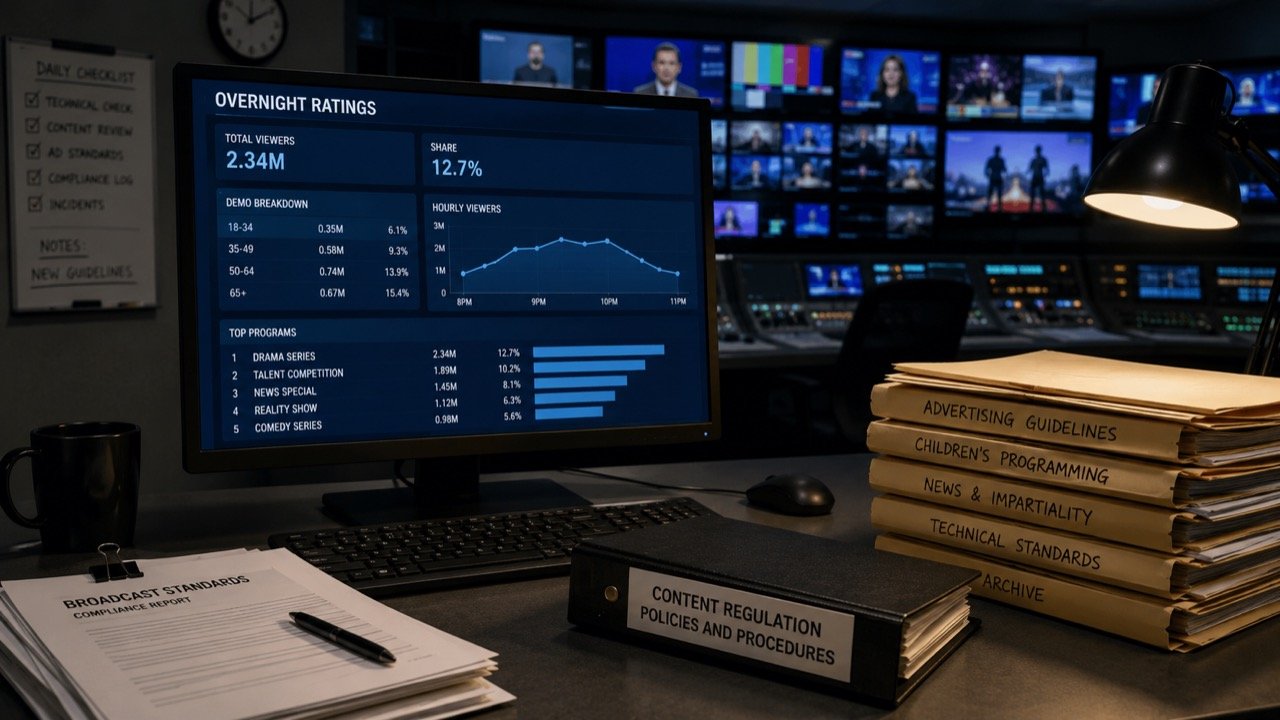
The suspension of television ratings by the Broadcast Audience Research Council (BARC) has thrown India's broadcast measurement system back under the microscope. The pause has raised immediate questions for broadcasters, advertisers and media planners, all of whom rely on weekly audience data to price advertising inventory and judge how programmes are performing. In an industry accustomed to a steady weekly drumbeat of numbers, even a temporary halt is enough to unsettle planning cycles that stretch across news, entertainment and sports genres alike.
Why ratings are the TV economy's backbone
TV ratings are far more than an industry scoreboard. They determine how advertising budgets are allocated, shape programming strategy and underpin the perceived strength of news, entertainment and sports channels. Every rupee spent on a prime-time slot, a news bulletin or a weekend sports broadcast is, in effect, priced against a shared understanding of how many people are watching and who they are. When the numbers stop flowing, the entire media economy is forced to operate with far less certainty about what audiences are actually watching.
This is not a minor inconvenience confined to a handful of executives. It touches the working assumptions of an entire ecosystem: channel owners who use ratings to negotiate carriage and advertising rates, media buying agencies who allocate client budgets across dozens of channels, and even programming teams who greenlight or axe shows based on weekly performance. Remove the common yardstick, and each of these decisions has to be made with more guesswork and less accountability.
The immediate fallout for advertisers, broadcasters and planners
For advertisers, the absence of ratings complicates campaign planning and makes it harder to justify spending on particular channels or time slots. A marketing team that would normally point to a channel's weekly viewership numbers to defend a media plan to its own management now has to fall back on softer, less verifiable justifications. This is particularly awkward for performance-conscious advertisers who are used to tying spend directly to measurable reach.
For broadcasters, the suspension removes the evidence base used to defend ad rates. Channels that have invested in content, talent and production values rely on ratings to demonstrate that their audience numbers justify premium pricing. Without that data, rate negotiations risk becoming subjective, potentially disadvantaging channels that would otherwise have strong numbers to point to.
Media planners, meanwhile, lose the common currency that lets buyers and sellers agree on value. Ratings function much like a shared unit of account in the advertising marketplace: both sides trust the same number, even if they disagree on its implications. When that shared reference point disappears, negotiations slow down, and the risk of disputes over value rises. This is precisely the kind of friction that a mature, high-volume advertising market like India's television industry can ill afford.
A process issue, not a verdict
The measured reading is that a suspension is a process issue rather than proof of wrongdoing by any single channel or advertiser. It would be a mistake to read into the pause any implication of guilt on the part of particular broadcasters, and it is important that the narrative around the suspension does not drift into speculation that outpaces the facts. The more important question is how quickly the measurement system can restore confidence and resume supplying data that stakeholders trust.
Until then, the industry will lean on internal analytics, digital proxies and past trends — imperfect substitutes for a common, audited yardstick. Internal analytics, drawn from a broadcaster's own distribution and viewership systems, can offer some signal, but they are not independently verified and cannot easily be compared across channels. Digital proxies, such as streaming engagement or social media chatter, capture only a partial and skewed slice of the audience. Past trends, useful as a baseline, cannot account for how viewing habits shift week to week, especially during a period as eventful as a ratings suspension itself. None of these substitutes carries the same weight as an audited, industry-wide measurement system, and all of them introduce a degree of interpretive latitude that a shared ratings framework is specifically designed to remove.
What restoring trust actually requires
Rebuilding confidence in a measurement system is rarely just a matter of switching the numbers back on. Stakeholders across the industry — broadcasters, advertisers, agencies and regulators — will want assurance that whatever prompted the suspension has been addressed at a structural level, not merely paused and resumed without change. That means the way forward likely involves scrutiny of the underlying methodology, the panel design, and the safeguards meant to prevent manipulation or error in the data collection process.
The longer a suspension persists, the greater the temptation for the industry to develop workaround habits — informal benchmarks, private data-sharing arrangements, or reliance on digital metrics that were never designed to substitute for a national ratings system. Once such habits take hold, restoring a single, universally trusted measurement standard becomes harder, because different players will have grown used to different, sometimes conflicting, versions of the truth. This is one of the quieter risks of a prolonged suspension: it is not just that ratings are missing now, but that the vacuum can be filled by fragmented alternatives that make restoring consensus more difficult later.
The NE Times View
India's television market is too large to run on guesswork, and every interruption to ratings chips away at trust in the measurement system itself. The lasting fix is not just resuming the weekly numbers but making the methodology robust and transparent enough that suspensions become unnecessary. A system that has to be paused periodically to restore confidence is, by definition, not yet delivering the boring reliability that a market of this scale requires.
This episode should also push the industry to diversify how audiences are measured, blending panel data with digital signals. No single methodology is likely to be perfect, but a measurement framework that draws on multiple independent sources of evidence is inherently more resilient to the kind of disruption a single-system suspension causes. A media economy of this scale deserves measurement infrastructure that is boringly reliable — and it is in every stakeholder's interest to build it. Broadcasters, advertisers, agencies and regulators all have a shared stake in getting this right, even though their immediate commercial interests may sometimes pull in different directions. That shared stake is precisely why the response to this suspension matters far beyond the weeks it remains in effect.
Key takeaways
- BARC's suspension of TV ratings has removed the shared data standard that broadcasters, advertisers and media planners use to price advertising and evaluate programming.
- In the absence of official ratings, the industry is relying on internal analytics, digital proxies and historical trends, none of which can fully substitute for an audited, common measurement system.
- The suspension should be read as a process issue rather than an indictment of any particular broadcaster or advertiser, though the length of the pause matters for how much disruption it causes.
- Restoring trust will likely require more than simply resuming weekly numbers; it calls for a demonstrably more robust and transparent measurement methodology.
- The episode strengthens the case for diversifying audience measurement by combining traditional panel data with digital viewership signals, reducing reliance on any single system.
You may also like to read

India Emerges as a Hybrid Video Entertainment Economy as Audiences Splinter Across Screens
A new industry report shows India's video market abandoning the simple subscription-versus-advertising split, as platforms blend streaming, short video, commerce and live events to win price-sensitive viewers.

India Retail Inflation Rises to 4.38% in June 2026 as Food Prices Push CPI Above RBI’s Target
The first breach of the central bank’s 4% midpoint in 17 months puts household budgets, monsoon conditions and the interest-rate outlook back in focus.

India’s New IIP Base Year 2022-23: Why the Industrial Production Index Has Been Rebuilt
The revised index aims to capture today’s manufacturing structure more accurately, but users must understand what changed before comparing new and old growth numbers.

India Steel Emission Targets: Draft Rules Push Decarbonisation
The Centre's draft emission cut targets for the iron and steel sector move India's climate policy from broad pledges to sector-specific rules, placing one of its hardest-to-abate industries under a defined framework.
More from this section
More
Adani Case: US DOJ Pushes for Permanent Dismissal of Charges
The US Department of Justice has urged a judge to permanently dismiss charges against Gautam Adani, calling the case legally flawed — a reversal with consequences for markets, diplomacy and cross-border enforcement.

Akasa Air Inducts 40th Aircraft in Indian Aviation Scale-Up
Akasa Air's 40th aircraft, ferried to Bengaluru via Seattle, Reykjavik and Cairo, marks a fleet milestone for the young carrier and a fresh signal that India's aviation market remains firmly in expansion mode.

Bharti Airtel Leads Weekly Market Cap Gains Among Top Six Firms
Six of India's most valuable companies added to their combined market capitalisation this week, with Bharti Airtel leading the wealth gain in a snapshot of where large-cap investor confidence is accumulating.