Bharti Airtel Leads Weekly Market Cap Gains Among Top Six Firms
Six of India's most valuable companies added to their combined market capitalisation this week, with Bharti Airtel leading the wealth gain in a snapshot of where large-cap investor confidence is accumulating.
Commentary & Analysis ·
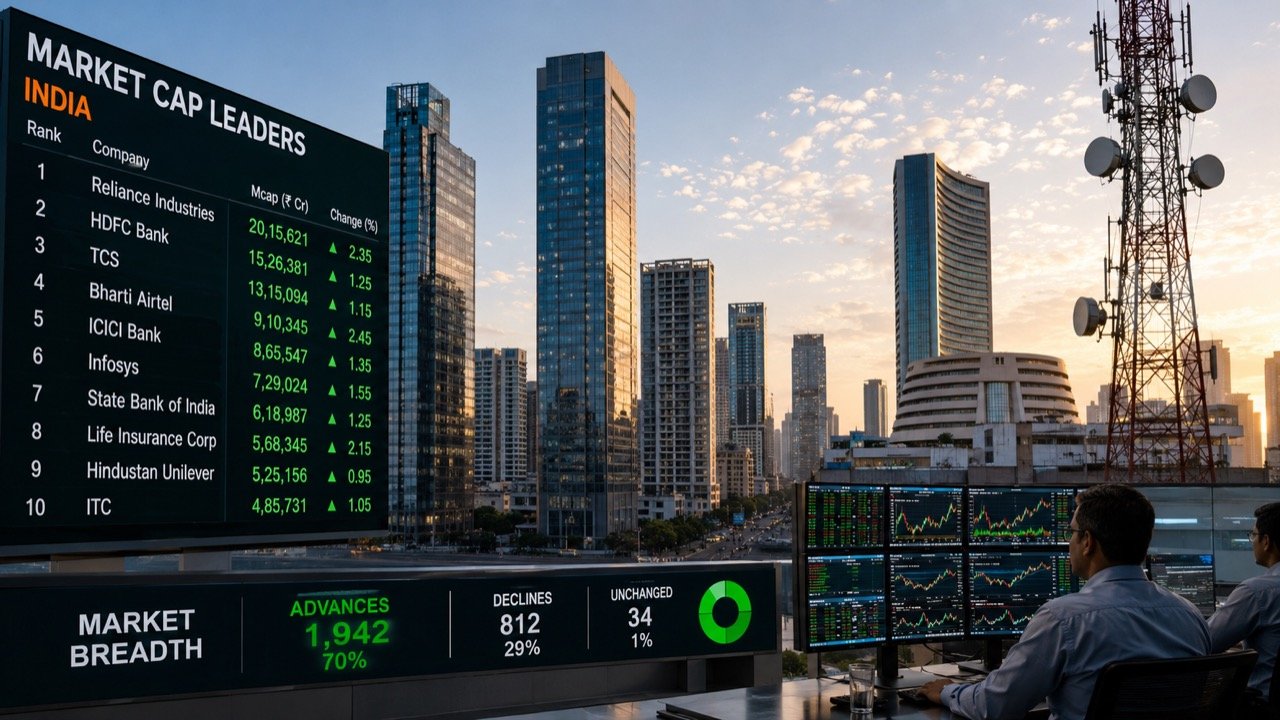
The combined market valuation of six of India's top listed firms rose over the past week, with Bharti Airtel leading the wealth gain, according to business-news coverage of the weekly market-cap tally. The routine update, which tracks how much value the country's largest companies have added or shed over a seven-day window, offers investors a quick map of where confidence accumulated among the country's biggest names. On the surface it is a simple scoreboard. Beneath it, however, lies a more layered story about how capital is currently being allocated across India's blue-chip universe, and why one sector in particular appears to be regaining favour after a long period in the wilderness.
What the weekly tally actually measures
Market-cap movements are not operating results. A company's valuation can climb on sector rotation, index flows or shifting expectations without a single rupee changing on its profit line. This distinction matters enormously for how such tallies should be read. A firm can post flat quarterly earnings and still see its market capitalisation swell simply because global funds are rebalancing towards a theme, or because domestic mutual funds have received fresh inflows that need to be deployed into large-cap names. Conversely, a company with improving fundamentals can see its valuation dip in a week dominated by broader risk-off sentiment. What the weekly numbers do capture, reliably, is sentiment: telecom strength, banking momentum, IT expectations and consumer-stock trends all leave fingerprints on where the big gains and losses land. Airtel topping the table this week suggests investors are currently rewarding the telecom story — tariffs, subscriber quality and data growth — more richly than other large-cap themes such as banking or information technology, at least for this particular seven-day stretch.
Why Airtel's position deserves attention
India's telecom sector spent much of the past decade locked in a punishing price war, one that eroded balance sheets, forced consolidation, and left even the strongest operators nursing thin margins for years at a stretch. A weekly market-cap table showing a telecom operator at the very top of value creation among the country's largest firms is therefore not a trivial detail. It reflects, at least provisionally, a market that believes pricing power is returning to an industry that had almost none of it for a very long time. Subscriber quality — the shift towards higher-paying users rather than sheer subscriber count — and data consumption growth are the levers most often cited when telecom valuations move, and both speak to a maturing market rather than a speculative spike. None of this is confirmed by a single week of gains, but it is the kind of signal that, if sustained, would represent a genuine structural change rather than a one-off market quirk.
A pulse, not a verdict
The equally important caveat is speed: weekly market-cap gains can reverse just as quickly as they appear. One favourable week tells an investor very little on its own, and it would be a mistake to treat this tally as anything resembling a verdict on Airtel, or on any of the other five firms whose valuations moved in the same period. The tally is best read as a market pulse alongside earnings, valuations and broader macro cues — useful context, but never investment advice. Readers who track it over months, rather than reacting to a single week, will see the more meaningful pattern of which sectors the market is consistently backing, and which are merely enjoying a temporary tailwind from index flows or short-term positioning ahead of results season.
What retail investors tend to get wrong
The danger with headlines built around weekly wealth gains is that they invite exactly the kind of short-term reaction that tends to hurt smaller investors. A retail investor who sees "Airtel leads weekly gains" and treats it as a buy signal is, in effect, chasing a number that may already have reversed by the time the trade settles. Institutional investors, by contrast, tend to use such tallies as one data point among many — a way of confirming or questioning a thesis they have already built from earnings calls, regulatory filings and sector-wide capital expenditure trends. The gap between how professional and retail investors use the same piece of information is often the difference between disciplined positioning and reactive trading. This is not a criticism of the data itself, which is accurate and genuinely informative, but of the instinct to over-read a single week's movement.
The broader context: sector rotation in Indian large caps
Weekly tallies of this kind, when read over a longer horizon, effectively function as a running commentary on sector rotation among India's largest companies. Telecom leading one week, banking another, and IT a third is a normal feature of a market where different themes come in and out of favour based on earnings cycles, global interest-rate expectations and domestic policy signals. What makes this particular week notable is less the fact that six large firms added value together, and more which firm led that gain. A banking major topping the table would tell a story about credit growth and asset quality. An IT major topping it would speak to global services demand. A telecom operator topping it speaks to something narrower and, in some ways, more consequential for ordinary Indian consumers: the possibility that the tariff increases and subscriber-quality push of recent years are now translating into valuation credibility with the market, rather than merely showing up in company presentations.
The NE Times View
Weekly wealth tables make satisfying headlines, but they reward exactly the short-termism that hurts retail investors. The more interesting signal in this week's numbers is structural: a telecom operator leading India's value creation says something about pricing power returning to a sector that spent a decade destroying capital. That shift, if it holds, matters far more than any seven-day scoreboard. It would represent a genuine turning point for an industry whose investors have grown accustomed to disappointment, and it would carry knock-on implications for capital expenditure, network investment and even consumer tariffs over the medium term. But one week is one week, and the market's memory of telecom's difficult decade has not vanished simply because Airtel leads a single tally. Our advice to readers is unglamorous but consistent — watch the trend, ignore the weekly noise, and never mistake a market pulse for a business result.
Key takeaways
- Bharti Airtel led weekly market-cap gains among six of India's top listed firms, according to business-news coverage of the routine weekly tally.
- Market-cap movements reflect sentiment and capital flows, not confirmed operating performance, and can reverse within a week.
- Airtel's lead points to a possible structural shift towards pricing power in Indian telecom after a decade of capital-destructive competition.
- Retail investors should avoid treating a single week's gains as a signal for action, and instead track patterns over months.
- This article is original commentary and analysis by The NE Times; background facts were referenced from Business Standard.
You may also like to read
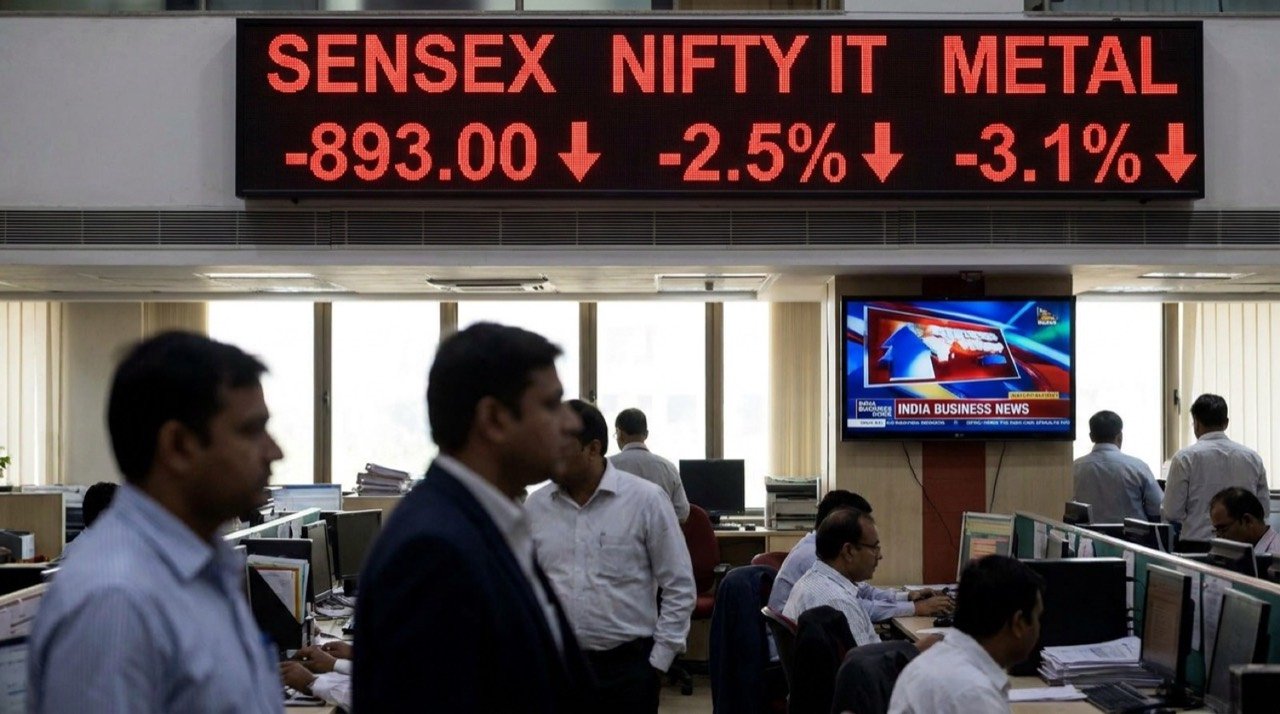
Sensex Tumbles 893 Points as IT and Metal Stocks Lead Broad Market Selloff
Indian equities slid sharply on 23 June, with the Sensex down 893 points and the Nifty closing at 23,824, as IT, metals and PSU banks led a broad-based selloff driven by weak global cues.

Sensex Climbs Around 291 Points, Nifty Closes Above 24,100 as IT and Pharma Shares Lift Market
Indian equities rebounded on June 22, 2026, with the Sensex gaining about 291 points and the Nifty closing above 24,100, led by IT and pharmaceutical stocks despite lingering Middle East tensions.

HCLTech $1.14 Billion Deal and Pharma Rally Lift Market Mood
A reported $1.14 billion HCLTech contract and renewed buying in pharmaceutical shares gave Indian markets a distinctly sectoral flavour, offering investors signals that go beyond the headline Sensex and Nifty moves.
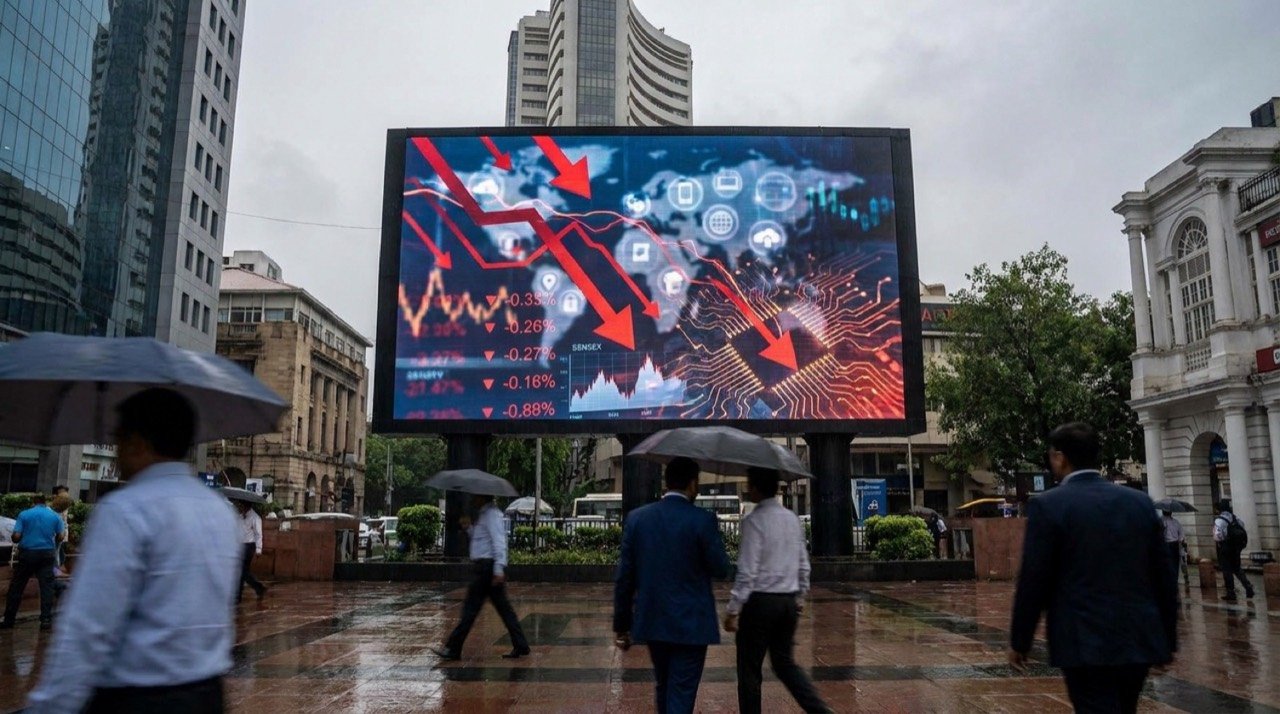
Sensex and Nifty Slide as Global Tech Selloff Hits Indian Market Sentiment
Indian equities fell on Tuesday as weak global cues, including a sharp slide in South Korean technology shares, dragged the Sensex down nearly 900 points and pulled the Nifty lower.
More from this section
More
Adani Case: US DOJ Pushes for Permanent Dismissal of Charges
The US Department of Justice has urged a judge to permanently dismiss charges against Gautam Adani, calling the case legally flawed — a reversal with consequences for markets, diplomacy and cross-border enforcement.

Akasa Air Inducts 40th Aircraft in Indian Aviation Scale-Up
Akasa Air's 40th aircraft, ferried to Bengaluru via Seattle, Reykjavik and Cairo, marks a fleet milestone for the young carrier and a fresh signal that India's aviation market remains firmly in expansion mode.
BARC Ratings Suspension Leaves Indian TV Industry Flying Blind
BARC's pause on television ratings has put India's broadcast measurement system under fresh scrutiny, leaving broadcasters, advertisers and media planners without the weekly audience data that anchors the TV economy.