Akasa Air Inducts 40th Aircraft in Indian Aviation Scale-Up
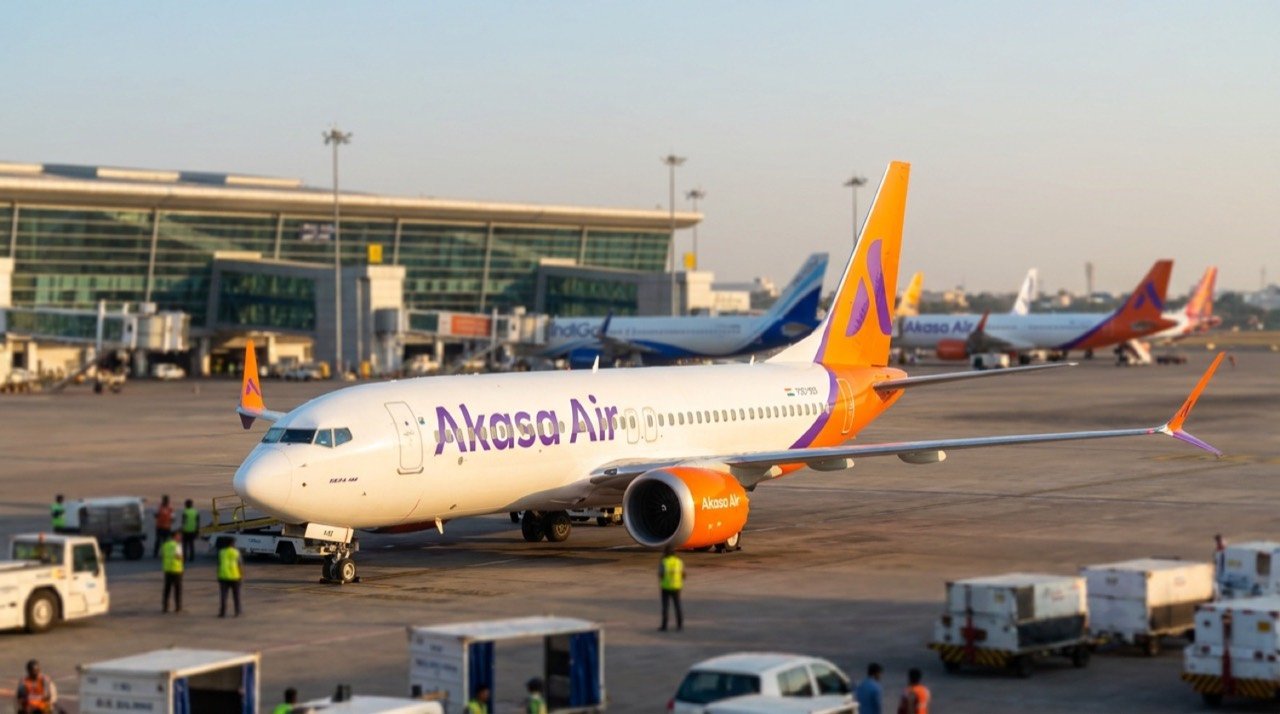
Akasa Air's 40th aircraft, ferried to Bengaluru via Seattle, Reykjavik and Cairo, marks a fleet milestone for the young carrier and a fresh signal that India's aviation market remains firmly in expansion mode.
Commentary & Analysis ·

Akasa Air has taken delivery of its 40th aircraft, a milestone for one of India's youngest carriers and another data point in the world's fastest-moving aviation growth story. Mint reported on July 4 that the jet reached Bengaluru after a ferry route through Seattle, Reykjavik and Cairo. On its face this is a routine fleet-induction story, the kind of update airlines issue almost as a matter of course. Read more carefully, though, it is a marker of how quickly a carrier that only began flying in 2022 has moved from start-up curiosity to a fleet of meaningful scale, and of how India's domestic aviation market continues to expand even as it remains one of the toughest in the world to compete in profitably.
Why fleet size is the real scoreboard
Fleet size drives nearly everything in an airline's business model. Forty aircraft supports higher frequencies, new routes, backup capacity and schedule resilience — and, just as importantly, it signals credibility to airports, lenders, lessors, employees and passengers weighing a newer brand against entrenched rivals. Airlines are capital-intensive, network businesses: a bigger fleet is not simply more metal in the sky, it is more slots to bid for, more codeshare and interline potential, more room to smooth out disruptions when a single aircraft goes unserviceable, and a stronger balance sheet argument when negotiating with financiers and aircraft lessors. For a carrier still short of its fourth birthday, reaching 40 aircraft is also a statement to the market that its growth plan is being executed on schedule rather than merely announced in investor presentations.
The ferry routing itself — Seattle to Reykjavik to Cairo before arriving in Bengaluru — is a reminder of the unglamorous logistics behind every fleet addition. New-build aircraft delivered from manufacturers in North America must be flown across oceans and continents before they ever carry a fare-paying passenger, and each such delivery flight involves crew planning, overflight permissions, fuel stops and weather routing. It is a small operational detail, but it underlines that a fleet milestone is the end product of months of procurement, financing and scheduling work rather than a single day's news event.
Growth inside a punishing market
India's aviation sector is intensely competitive. Incumbents hold deep networks, loyalty programmes and international partnerships, leaving younger carriers to earn reliability route by route. A newer entrant cannot simply buy its way into passenger trust; it must prove itself on punctuality, baggage handling, fare transparency and consistency over many thousands of flights before travellers and corporate accounts treat it as a default choice rather than an experiment. That is a slow, unglamorous grind, and it is precisely the kind of grind that a bigger, more resilient fleet is meant to support.
A bigger fleet strengthens the schedule but raises execution pressure: every new aircraft needs pilots, engineers, airport slots, maintenance planning and working capital behind it. Growth of this kind is not free optionality — each additional tail number brings recurring costs in crew training, spare parts inventory, hangar and line-maintenance capacity, and slot coordination at often-congested Indian airports. Scaling too fast, without matching investment in these supporting functions, is one of the classic ways ambitious airlines have come undone in the past. The test for Akasa is not whether it can take delivery of aircraft, which is largely a function of orders placed years in advance, but whether it can keep utilisation, on-time performance and unit costs in a healthy range as the fleet multiplies.
A structural shift in Indian air travel
The expansion also rides a structural shift. Domestic flying in India has moved from an elite product to mass-market transport, propelled by regional airport development, rising incomes, tourism and business travel — even as high fuel costs, currency swings and global aircraft delivery constraints keep the economics demanding. This is the paradox at the heart of Indian aviation right now: demand is genuinely expanding, driven by a growing middle class, expanding regional connectivity schemes and a tourism sector that treats flying as increasingly ordinary, yet the cost base airlines operate under — jet fuel priced largely in dollars, aircraft leases denominated in foreign currency, and global supply-chain bottlenecks slowing manufacturer deliveries — has not eased in step. Airlines that can grow their fleets despite these headwinds are, in effect, betting that demand growth will outpace cost pressure over the medium term.
Global aircraft delivery constraints deserve particular emphasis. Manufacturers worldwide have struggled with production bottlenecks in recent years, meaning airlines that do secure timely deliveries gain a real competitive advantage over rivals stuck waiting. Reaching a 40th aircraft on schedule, against that backdrop, is not a trivial achievement — it reflects successful navigation of a global supply environment that has frustrated larger and better-resourced carriers elsewhere in the world.
What it means for passengers
For travellers, the practical payoff may show up as more flight choices and sharper fares on contested routes, with Bengaluru and other growth markets likely beneficiaries. A larger fleet typically translates into higher frequencies on existing routes and the opening of new city pairs, both of which tend to intensify fare competition wherever an airline's network overlaps with incumbents. Bengaluru, as a major technology and business hub with a young, price-conscious travelling population, is a logical beneficiary of this kind of capacity growth, though the same dynamic should gradually extend to other metro and tier-two markets as the fleet grows further.
For the industry, it is evidence that India's skies are not a two-player story: new entrants are still carving out room. That matters for market structure. A domestic aviation sector dominated by only one or two large players tends to produce weaker competitive discipline on pricing and service quality over time. A credible, growing third force changes that calculus, forcing every carrier in the market to defend its fares and service standards rather than simply harvesting a captive customer base.
The NE Times View
A 40th aircraft is a genuine achievement, but Indian aviation's graveyard is filled with airlines that confused fleet count with strength. The country's commercial aviation history offers no shortage of cautionary tales in which rapid, headline-grabbing expansion was later exposed as unsustainable once fuel prices rose, currencies moved, or financing dried up. The lesson is not that growth is bad, but that growth without operational and financial discipline is fragile.
The question that matters is discipline: whether Akasa is adding capacity on routes with durable demand, sweating its aircraft efficiently and pricing sensibly rather than buying market share. Aircraft utilisation rates, load factors on newly added routes, and the pace at which the airline can staff and train crews to match its fleet growth are the metrics that will separate durable expansion from a fleet count that outruns the business supporting it. If it can pair this growth with on-time performance and financial restraint, India gets what its passengers badly need — a credible third force keeping fares honest. The milestone is worth applauding; the consistency test starts now, and it will be measured not in single delivery-flight headlines but in on-time statistics, fare trends and financial results over the coming years.
Key takeaways
- Akasa Air's 40th aircraft arrived in Bengaluru on July 4 after a ferry route via Seattle, Reykjavik and Cairo, as reported by Mint.
- Fleet growth of this scale demands matching investment in pilots, engineers, airport slots and working capital, or expansion risks outrunning operational capacity.
- India's aviation demand is genuinely rising on the back of regional connectivity, tourism and business travel, even as fuel costs, currency swings and global delivery constraints keep economics tight.
- A larger, more competitive third force in Indian skies should benefit passengers through more choice and sharper fares, particularly in growth markets like Bengaluru.
- The real test for Akasa is discipline — durable route selection, efficient aircraft utilisation and sensible pricing — rather than fleet size alone.
You may also like to read
Akasa Air Eyes IPO in Two to Four Years: A Question of When, Not If
Akasa Air CFO Ankur Goel has signalled the young carrier could pursue a stock-market listing within two to four years, framing an IPO as a matter of timing rather than intent.

IndiGo Charts Path To 550-Plus Aircraft And 200 Million Passengers By 2030
At its June analyst day, IndiGo laid out an audacious blueprint to grow its fleet beyond 550 aircraft and nearly double international capacity, aiming to carry 200 million passengers a year by fiscal 2030.
Indian Airlines May Roll Back Fuel Surcharges as Oil Prices Ease
Air travellers in India could see fare relief as carriers review fuel surcharges following a decline in aviation turbine fuel and crude oil prices, though demand and airport charges may temper any cuts.

Hygenco lands $105 million from IFC, Siemens and Fullerton to scale green hydrogen
Global development and strategic investors are backing one of India's earliest commercial green-hydrogen operators as it readies a wave of new plants.
More from this section
More
Adani Case: US DOJ Pushes for Permanent Dismissal of Charges
The US Department of Justice has urged a judge to permanently dismiss charges against Gautam Adani, calling the case legally flawed — a reversal with consequences for markets, diplomacy and cross-border enforcement.

BARC Ratings Suspension Leaves Indian TV Industry Flying Blind
BARC's pause on television ratings has put India's broadcast measurement system under fresh scrutiny, leaving broadcasters, advertisers and media planners without the weekly audience data that anchors the TV economy.

Bharti Airtel Leads Weekly Market Cap Gains Among Top Six Firms
Six of India's most valuable companies added to their combined market capitalisation this week, with Bharti Airtel leading the wealth gain in a snapshot of where large-cap investor confidence is accumulating.