IndiGo Charts Path To 550-Plus Aircraft And 200 Million Passengers By 2030
At its June analyst day, IndiGo laid out an audacious blueprint to grow its fleet beyond 550 aircraft and nearly double international capacity, aiming to carry 200 million passengers a year by fiscal 2030.
Commentary & Analysis ·

India's largest airline has spelled out the scale of its ambition. At its analyst day in June, IndiGo unveiled an expansion blueprint to grow from around 441 aircraft today to more than 550, lift annual passengers from roughly 123 million to 200 million, and nearly double its share of international capacity to about 40 percent by fiscal year 2030. Taken together, the figures amount to one of the most explicit growth commitments any Indian carrier has put to investors and analysts, and they arrive at a moment when the country's aviation sector is already expanding faster than almost any other major market in the world.
Scaling the world's busiest growth market
The plan envisions IndiGo operating around 4,000 daily flights at the end of the decade, a step-change that would cement its position at the centre of the fastest-growing major aviation market on the planet. To put that in perspective, a carrier moving from roughly 123 million to 200 million annual passengers within a few years is not simply adding a handful of routes; it is effectively rebuilding its scale of operations while continuing to fly, refuel, crew and maintain the fleet it already has. The carrier's strategy leans on a deep order book and steady inductions to sustain capacity additions even as airports and airspace strain to keep pace. That reliance on a pre-committed pipeline of aircraft is a deliberate hedge: rather than negotiating incremental purchases as demand materialises, IndiGo is betting that locking in deliveries years in advance will let it capture growth before rivals can respond, provided the aircraft actually arrive on schedule.
What makes this expansion notable is not merely its size but its timing. India's domestic air travel market has already demonstrated resilience through fuel price swings and periodic route disruptions, and IndiGo's dominant domestic position gives it a base from which to expand rather than a market it must first win. Growing the fleet by more than a hundred aircraft while nearly doubling passenger volumes suggests the airline expects underlying demand, from business travel, tourism and a growing middle class, to keep compounding through the rest of the decade.
The international pivot
The international push is the most striking element of the blueprint. Long known for its dense domestic network, IndiGo is positioning itself to capture more of the lucrative overseas traffic that has historically flowed through foreign hubs, part of a wider national effort to make India a global aviation gateway. This is a meaningful strategic shift for a carrier that built its reputation on point-to-point domestic efficiency. Overseas routes carry different economics, longer sectors, different aircraft requirements, greater exposure to bilateral traffic rights, and more direct competition with well-established Gulf and Southeast Asian hub carriers that have spent decades funnelling Indian travellers through their own airports.
Nearly doubling international capacity share to about 40 percent implies IndiGo intends to compete head-on for passengers who might otherwise transit through Dubai, Doha, Singapore or Abu Dhabi. If successful, this would keep more outbound Indian travel revenue within Indian carriers and support the broader policy goal of positioning the country as an aviation hub rather than a mere feeder market. It also raises the stakes: international expansion demands wide-body or extended-range aircraft, additional crew training, new maintenance arrangements, and negotiated slots at congested foreign airports, all of which are harder to control than domestic scheduling.
An industry-wide order surge
IndiGo's plans sit within an extraordinary procurement cycle across Indian carriers. Air India, IndiGo and Akasa Air have collectively committed to well over a thousand aircraft in recent years, with Air India's outstanding firm orders alone running to several hundred planes as part of its modernisation under Tata ownership. Analysts expect IndiGo and Air India to dominate roughly 85 percent of the fleet through 2030, a concentration that effectively narrows India's aviation growth story down to two large groups executing simultaneously enormous fleet expansions.
This scale of collective ordering is itself a signal. Aircraft manufacturers do not receive commitments of this size unless carriers and manufacturers alike expect the underlying demand curve to hold for a decade or more. But it also means Indian aviation's growth trajectory is now tightly linked to a small number of counterparties, the planemakers' production lines, and the pace at which those two dominant groups can absorb new aircraft into functioning schedules. Should either group stumble on execution, the ripple effects would be felt market-wide, since between them they are expected to control the overwhelming majority of capacity.
Execution risks loom
The biggest questions are about execution. Engine reliability issues, supply-chain delays at planemakers, airport congestion and a tight pool of pilots and engineers could all temper the pace. Each of these constraints operates somewhat independently of demand: even if passenger appetite for flying continues to grow exactly as projected, a shortage of engineers to maintain new aircraft, or a lack of available airport slots at peak hours, could still cap how quickly IndiGo can turn its order book into flying capacity. Airports in India's largest cities are already operating close to their practical limits at popular times of day, and expanding runway and terminal capacity is a slower, more capital-intensive process than ordering aircraft.
IndiGo's ability to fund the build-out while protecting margins in a notoriously thin-margin business will determine whether the 2030 vision lands as planned. Aviation is a capital-intensive industry with historically slim profitability even for well-run carriers, and financing a fleet expansion of this magnitude, while simultaneously building out a costlier international network, will test the balance sheet discipline that has underpinned IndiGo's reputation as India's most efficient major airline. As one aviation sector analyst put it, "the demand is clearly there; the constraint is whether infrastructure and the supply chain can deliver aircraft and slots fast enough."
Even allowing for headwinds, the trajectory is unmistakable. India's skies are set for another decade of rapid expansion, and IndiGo intends to be flying at the front of it. For passengers, this could eventually mean more direct international options departing from Indian cities and less reliance on connecting through foreign hubs. For competitors, both domestic and international, it signals that IndiGo intends to defend its home market lead while simultaneously contesting long-haul routes that have long been the preserve of Gulf and Asian carriers.
The NE Times View
A fleet beyond 550 aircraft and 200 million passengers is ambition befitting India's aviation growth, but it bets heavily on airports, airspace and skilled crew keeping pace. IndiGo's scale gives it real cost advantages; its risk is that infrastructure becomes the binding constraint, not demand. Execution at this size is unforgiving. We watch whether the ground, airports, air traffic control capacity, and the supply of trained pilots and engineers, can grow as fast as the order book. The distinction matters because demand-side risk and supply-side risk call for very different remedies: one is solved by economic growth continuing, the other requires sustained public and private infrastructure investment on a timeline that does not always bend to a single airline's ambitions.
Key takeaways
- IndiGo aims to grow its fleet from about 441 to more than 550 aircraft and lift annual passengers from roughly 123 million to 200 million by FY2030.
- International capacity share is targeted to nearly double to about 40 percent, marking a strategic pivot from IndiGo's traditionally domestic-focused network.
- The plan is part of a broader Indian aviation procurement boom, with Air India, IndiGo and Akasa Air collectively committing to well over a thousand aircraft, and IndiGo and Air India expected to hold roughly 85 percent of the fleet through 2030.
- Execution risks, including engine reliability, supply-chain delays, airport congestion and shortages of pilots and engineers, are the principal threats to the timeline.
- The central question is whether infrastructure and workforce capacity can scale as fast as the order book, since demand alone will not guarantee the 2030 vision is realised.
You may also like to read
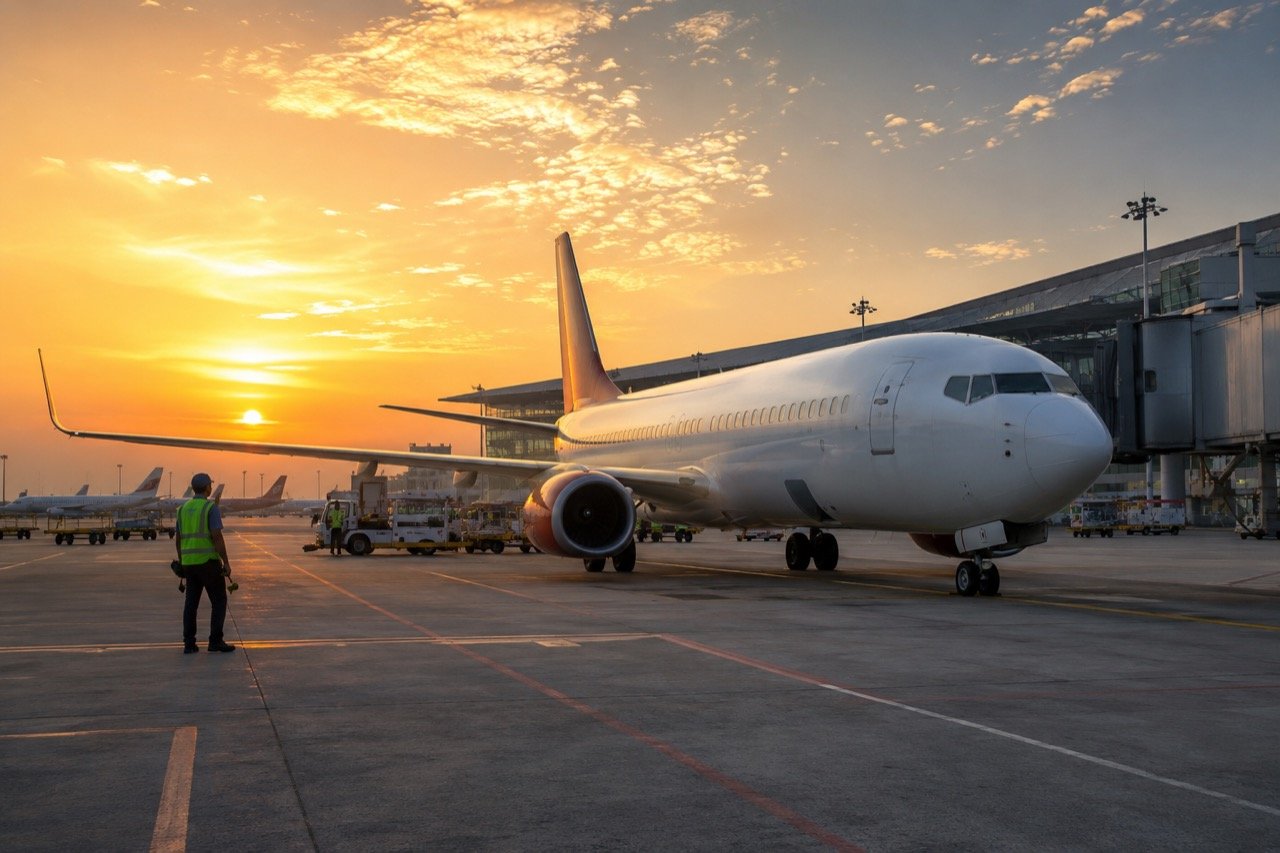
Akasa Air Inducts 40th Aircraft in Indian Aviation Scale-Up
Akasa Air's 40th aircraft, ferried to Bengaluru via Seattle, Reykjavik and Cairo, marks a fleet milestone for the young carrier and a fresh signal that India's aviation market remains firmly in expansion mode.
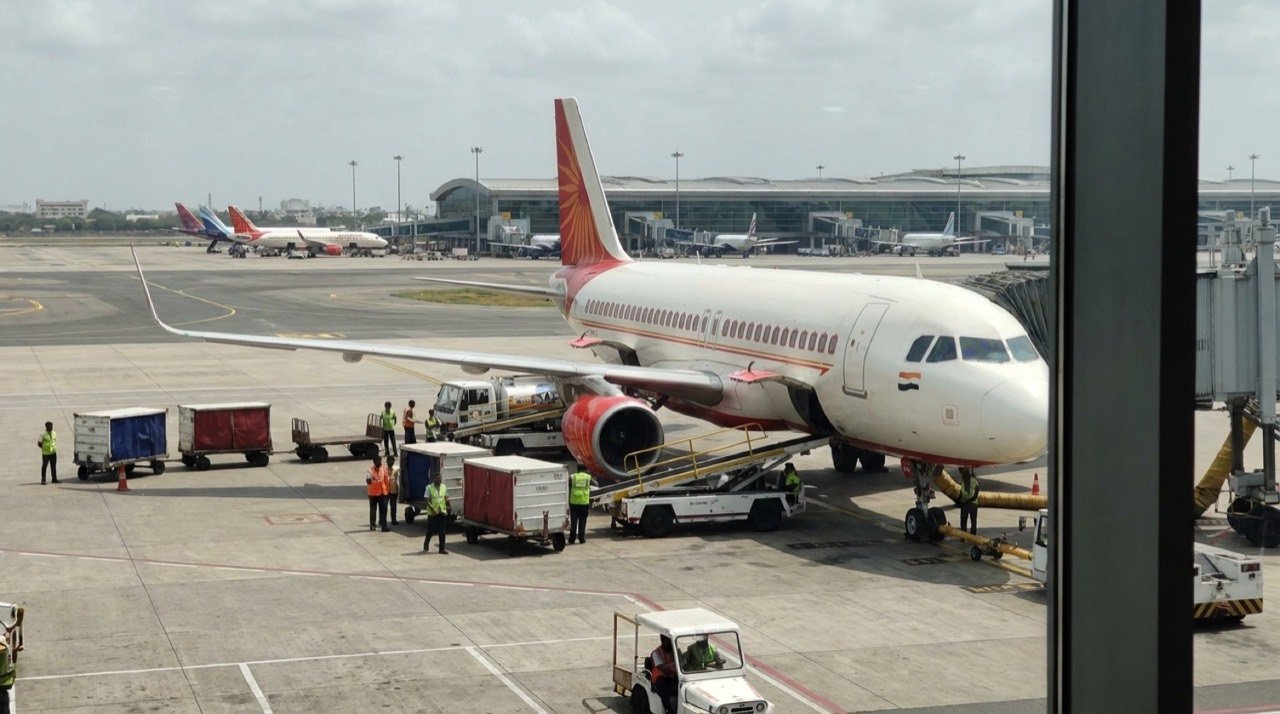
Indian Airlines May Roll Back Fuel Surcharges as Oil Prices Ease
Air travellers in India could see fare relief as carriers review fuel surcharges following a decline in aviation turbine fuel and crude oil prices, though demand and airport charges may temper any cuts.
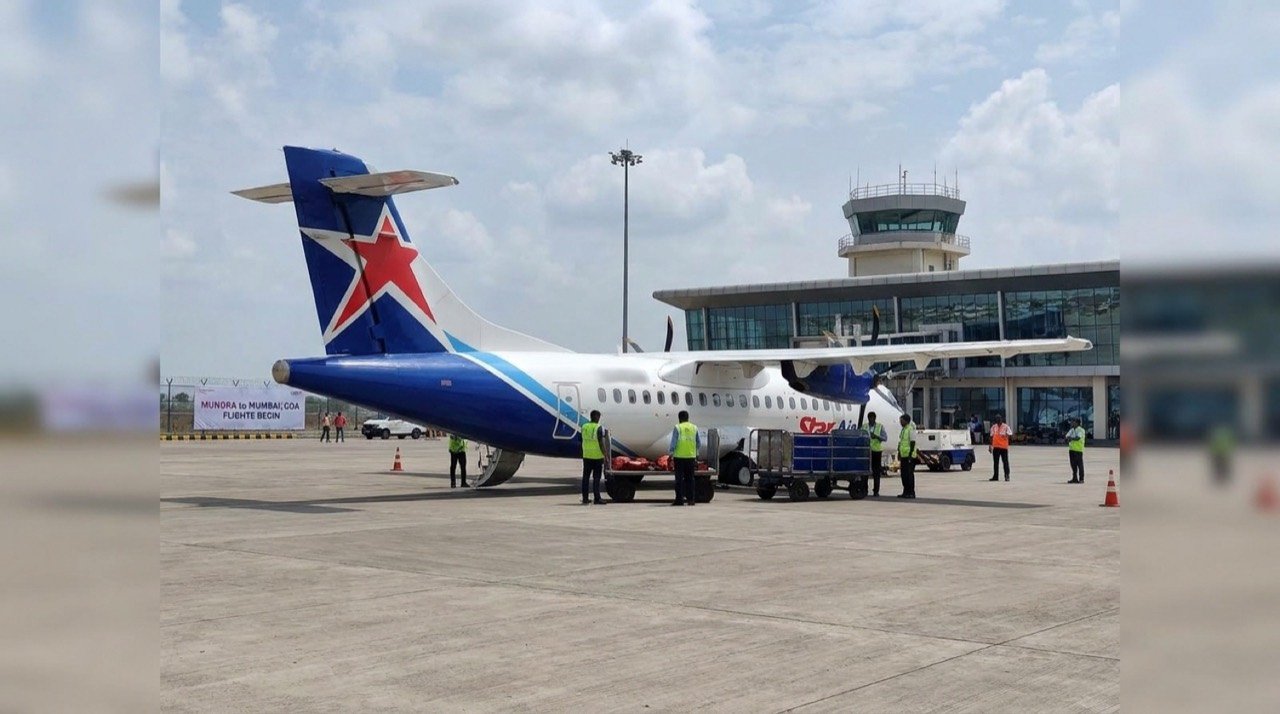
Mundra Airport Launches First Scheduled Flights, Linking Kutch to Mumbai and Goa
Adani's Mundra Airport began scheduled commercial operations on June 23, with Star Air connecting the Gujarat port town to Mumbai and Goa in a milestone for regional air connectivity in Kutch.
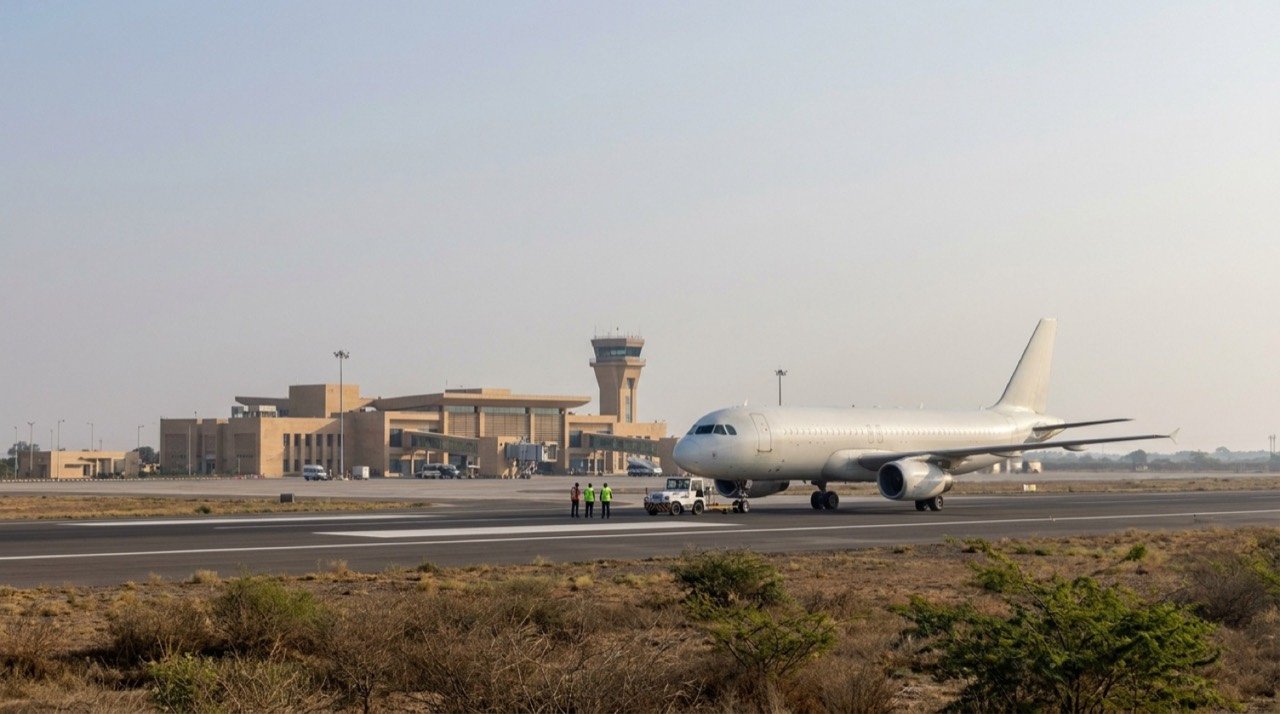
Adani's Mundra Airport Begins Commercial Flights, Opening a New Air Link for Kutch
Gujarat's Adani Mundra Airport has launched commercial operations with an inaugural flight from Goa, promising eight new air services and faster connectivity for trade, logistics and tourism around India's largest private port.
More from this section
More
Adani Case: US DOJ Pushes for Permanent Dismissal of Charges
The US Department of Justice has urged a judge to permanently dismiss charges against Gautam Adani, calling the case legally flawed — a reversal with consequences for markets, diplomacy and cross-border enforcement.
Akasa Air Inducts 40th Aircraft in Indian Aviation Scale-Up
Akasa Air's 40th aircraft, ferried to Bengaluru via Seattle, Reykjavik and Cairo, marks a fleet milestone for the young carrier and a fresh signal that India's aviation market remains firmly in expansion mode.

BARC Ratings Suspension Leaves Indian TV Industry Flying Blind
BARC's pause on television ratings has put India's broadcast measurement system under fresh scrutiny, leaving broadcasters, advertisers and media planners without the weekly audience data that anchors the TV economy.