Mundra Airport Launches First Scheduled Flights, Linking Kutch to Mumbai and Goa
Adani's Mundra Airport began scheduled commercial operations on June 23, with Star Air connecting the Gujarat port town to Mumbai and Goa in a milestone for regional air connectivity in Kutch.
Commentary & Analysis ·
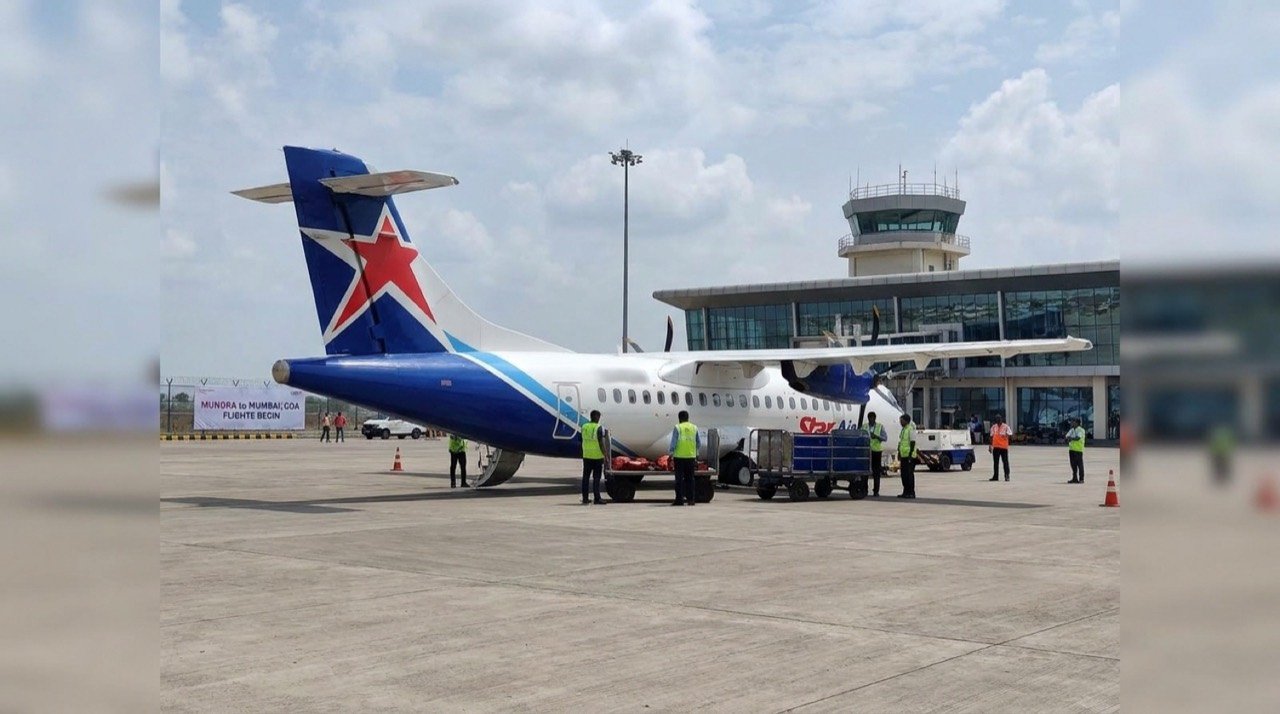
Adani Mundra Airport began scheduled commercial operations on June 23, marking a significant new chapter for aviation in Gujarat's Kutch region. Star Air launched services linking Mundra to Mumbai and Goa, with the inaugural flight arriving from Goa, and further regional routes are planned. The launch brings scheduled passenger air travel to a port-linked industrial belt that has long depended on lengthy road journeys to reach the nearest major hubs. For a region defined by its industrial heft and its historical isolation from India's aviation map, the moment carries weight well beyond the ribbon-cutting itself.
A milestone for Kutch
The first scheduled flight from Goa was more than a ceremonial event; it signalled the entry of Mundra into India's network of regional airports. For Kutch and the surrounding industrial corridor anchored by one of the country's busiest commercial ports, direct air links promise to compress travel times that previously stretched across hours of road travel. Anyone who has worked in or visited Kutch's industrial belt knows the arithmetic of distance: a business meeting in Mumbai or a medical emergency requiring specialist care has, until now, meant a long drive to Ahmedabad or Bhuj before any flight could be caught. Cutting that overland leg out of the journey changes the calculus for companies, families and institutions operating in the district.
Star Air's choice of Mumbai and Goa as the first destinations connects Mundra to both a major commercial hub and a leading tourism centre, offering immediate utility for business and leisure travellers alike. Mumbai gives the region a fast link to India's financial capital and its onward network of domestic and international connections, useful for the executives, contractors and logistics personnel who move in and out of the port and industrial zone. Goa, meanwhile, opens a leisure and tourism channel that could, over time, encourage a two-way flow of visitors rather than the one-directional traffic that industrial towns typically generate.
Why smaller airports matter
Regional airports can transform mobility in areas otherwise reliant on long road trips. By cutting travel time, they support business activity, tourism, access to healthcare and family travel. These are not abstract benefits. In practice, a functioning regional airport can mean the difference between a specialist doctor being reached in an hour rather than half a day, or a supplier being able to visit a factory floor on the same day rather than losing an entire trip to travel. For an industrial region like Mundra, faster connectivity can also enhance its appeal to investors and skilled workers who value ease of access. Talent mobility is increasingly a factor in where companies choose to base senior staff, and an airport on the doorstep of a major port removes one of the more persistent frictions that has kept Kutch dependent on Ahmedabad for much of its air travel needs.
There is also a quieter, longer-term dividend: proximity to air travel tends to nudge ancillary economic activity, from hospitality and logistics services to real estate demand near the airport itself. None of this is guaranteed, and it depends heavily on whether the initial routes prove commercially durable, but the mere existence of scheduled flights changes how planners, investors and residents think about the region's future.
Part of a wider connectivity push
The launch fits squarely within India's broader regional-connectivity strategy, under which airlines test thinner, lower-volume routes and smaller airports seek passenger traffic beyond the established metro hubs. This is a pattern that has played out across the country over the past decade, as carriers experiment with routes connecting tier-two and tier-three towns to nearby metros, often with an eye on both business travel and India's fast-growing domestic tourism market. Mundra's entry into this network is notable precisely because it is tied to an industrial and port economy rather than a purely administrative or tourist destination, giving it a different demand profile from many of the smaller airports that have opened in recent years.
The success of such efforts depends on building sustainable demand rather than relying on one-off inaugural fanfare. India's aviation history is littered with routes that launched to enthusiastic coverage and folded within a year or two once initial curiosity wore off and load factors failed to justify the aircraft deployed. The Mundra routes will only prove their worth once the initial excitement fades and the numbers are tested against the quieter realities of weekday demand, off-season travel and competing modes of transport.
What comes next for Mundra
The next test for Mundra will be reliability, fares, onward connectivity and whether local demand can sustain regular operations through the year. Reliability matters because business travellers in particular will not shift permanently to a new airport if flights are frequently delayed, rescheduled or cancelled for lack of passengers. Fares will need to strike a balance that is attractive enough to draw travellers away from road journeys while remaining commercially viable for Star Air to sustain over the medium term. Onward connectivity, whether through codeshare arrangements, convenient connections at Mumbai, or eventually a wider set of direct routes from Mundra itself, will determine whether the airport becomes a genuine gateway or remains a niche option for a narrow set of travellers.
If the early routes prove viable, the airport could anchor a denser regional network and strengthen Kutch's links to the rest of the country. That would mean not just retaining the Mumbai and Goa services but adding further destinations, potentially including other business hubs or leisure markets that see steady interest from the industrial and trading communities based in the region. For now, the launch stands as a notable step in extending air travel to India's industrial periphery, an area of the country that has often been better served by roads, rail and ports than by the skies.
As one aviation sector analyst observed, a first flight makes headlines, but sustained demand, reliable schedules and sensible fares make an airport. That distinction is worth holding onto amid the understandable enthusiasm surrounding the launch. Ceremonial openings generate coverage; what determines whether Mundra becomes a genuine fixture on India's aviation map is the far less photogenic grind of maintaining occupancy rates through ordinary months, not just the inaugural week.
The NE Times View
Connecting Kutch to Mumbai and Goa is a genuine win for a region long starved of fast links, and regional aviation remains one of India's clearest infrastructure gaps. The real question is durability: too many regional routes launch with fanfare and quietly fold once subsidies thin and load factors disappoint. If demand on these routes proves real, Mundra could anchor Kutch's economy; if not, it joins a long list of underused airstrips. The coming months, rather than the launch day itself, will tell the real story.
Key takeaways
- Adani Mundra Airport began scheduled commercial flights on June 23, with Star Air linking the airport to Mumbai and Goa and the inaugural flight arriving from Goa.
- The airport serves Kutch and Gujarat's port-linked industrial belt, a region long dependent on lengthy road journeys for air travel access.
- The launch is part of India's wider regional-connectivity push, which depends on sustainable passenger demand rather than inaugural-week enthusiasm.
- Reliability, fares and onward connectivity will determine whether Mundra can sustain regular operations and expand its route network.
- Success would strengthen Kutch's economic links nationally; failure would add Mundra to the list of regional airports that struggled to retain early routes.
You may also like to read
Adani's Mundra Airport Begins Commercial Flights, Opening a New Air Link for Kutch
Gujarat's Adani Mundra Airport has launched commercial operations with an inaugural flight from Goa, promising eight new air services and faster connectivity for trade, logistics and tourism around India's largest private port.

Sanand Semiconductor Plant: What CG Semi's Launch Means for India
Commercial production at CG Semi's chip assembly and test facility in Sanand, marked by remarks from Prime Minister Modi, has renewed focus on how far India's semiconductor manufacturing push has actually come.
Gujarat Reworks Land Compensation Rules for Power Transmission
Gujarat has revised its land compensation policy for power transmission projects, a move that could ease landowner disputes and speed the grid expansion India's energy transition depends on.

India's Ship Recycling Share Rises to 35.4 Percent, Leading the World in 2025
India became the world's leading ship recycling nation in 2025 with a 35.4 percent global share, a gain the shipping ministry credits to policy reform, Hong Kong Convention compliance and the Alang expansion.
More from this section
More
Adani Case: US DOJ Pushes for Permanent Dismissal of Charges
The US Department of Justice has urged a judge to permanently dismiss charges against Gautam Adani, calling the case legally flawed — a reversal with consequences for markets, diplomacy and cross-border enforcement.

Akasa Air Inducts 40th Aircraft in Indian Aviation Scale-Up
Akasa Air's 40th aircraft, ferried to Bengaluru via Seattle, Reykjavik and Cairo, marks a fleet milestone for the young carrier and a fresh signal that India's aviation market remains firmly in expansion mode.

BARC Ratings Suspension Leaves Indian TV Industry Flying Blind
BARC's pause on television ratings has put India's broadcast measurement system under fresh scrutiny, leaving broadcasters, advertisers and media planners without the weekly audience data that anchors the TV economy.