Sanand Semiconductor Plant: What CG Semi's Launch Means for India
Commercial production at CG Semi's chip assembly and test facility in Sanand, marked by remarks from Prime Minister Modi, has renewed focus on how far India's semiconductor manufacturing push has actually come.
Commentary & Analysis ·
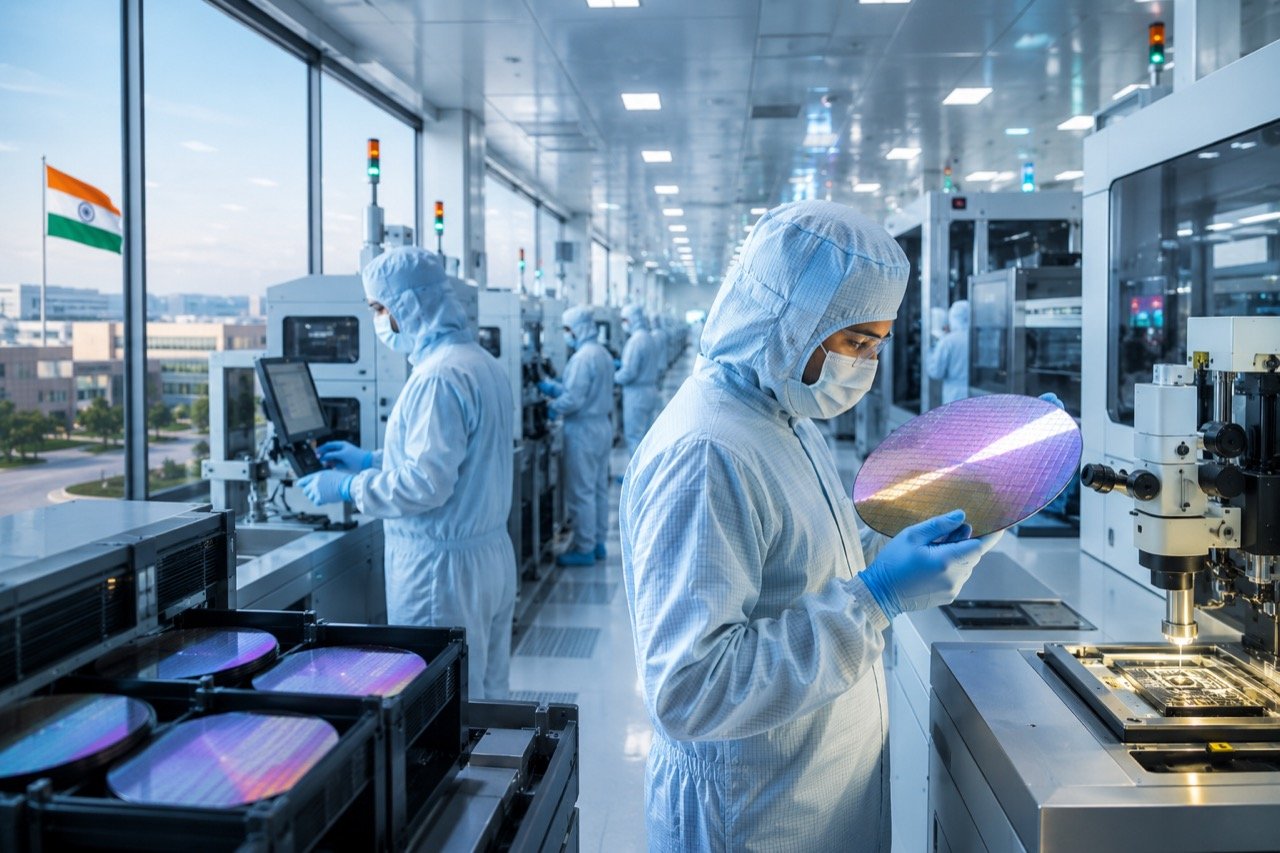
India's semiconductor ambitions are back in the spotlight after Prime Minister Narendra Modi marked the start of commercial production at CG Semi's outsourced semiconductor assembly and test (OSAT) facility in Sanand, Gujarat. According to The Indian Express, Modi recalled wanting a chip factory in India two decades ago, framing the launch as evidence that the country is now pursuing bigger industrial goals. The remarks were, on their face, a routine piece of political theatre attached to a ribbon-cutting. But they also crystallise a question that has hovered over India's industrial policy for years: after two decades of aspiration, subsidy schemes and diplomatic courtship of global chipmakers, is there now something tangible to show for it, and if so, how much does it actually amount to.
What the Sanand facility actually does
It is worth being precise about where Sanand sits in the chip value chain. An OSAT plant assembles, packages and tests semiconductors; it is not an advanced wafer fabrication plant. That distinction matters, but it does not diminish the milestone. Assembly and testing are essential, high-precision stages of electronics manufacturing, and building them domestically is how countries typically climb toward more advanced capability step by step. No country has gone from zero semiconductor infrastructure to cutting-edge fabrication in a single leap; the conventional path runs through packaging and testing, then mature-node fabrication, and only later toward the most advanced process nodes that dominate headlines about chip geopolitics. Seen in that light, Sanand is not the destination but a rung on a long ladder, and the question worth asking is not whether it is glamorous but whether it is load-bearing.
For ordinary readers unfamiliar with the jargon, it helps to think of chip manufacturing as having two very different halves. The first half, wafer fabrication, is where raw silicon is transformed into the microscopic circuitry that does the actual computing; it is fantastically capital-intensive and concentrated among a handful of firms worldwide. The second half, assembly and testing, takes those finished wafers, cuts them into individual chips, encases them in protective packaging and verifies that each one works before it goes into a phone, a car or a server. Sanand belongs to the second half. That is a meaningful and employable slice of the industry, but it is not the part that determines who controls the world's most strategically sensitive technology.
Gujarat's growing electronics footprint
Sanand carries symbolic weight too. Gujarat has steadily positioned itself as a hub for industrial and electronics investment, and a chip-related facility entering commercial production adds another manufacturing credential to the state's portfolio. The state has spent years courting large-scale manufacturing investment across sectors, and semiconductors were always going to be the marquee prize given the global attention the industry attracts. For the national semiconductor mission, each operational plant is a proof point that incentives and partnerships can translate into real output rather than announcements. That distinction between announcement and output is not a small one in Indian industrial policy, where memoranda of understanding and inauguration ceremonies have historically outpaced the machinery that actually starts running.
There is also a broader economic geography argument at play. Manufacturing clusters tend to be self-reinforcing: once a state builds a reputation for delivering land, power, logistics and skilled labour for a particular industry, it becomes the default answer the next time a company is scouting locations. Gujarat's accumulated experience in large industrial projects, from petrochemicals to automobiles, gives it an institutional muscle memory that newer entrants to the semiconductor race may lack. Whether that translates into a genuine electronics corridor around Sanand, rather than a single isolated plant, is one of the more important second-order questions raised by this launch.
The global backdrop and India's positioning
The global backdrop makes the timing significant. Governments worldwide are working to reduce dependence on concentrated chip supply chains, and India wants a meaningful role in that rebalancing through subsidies, technology partnerships and domestic capability building. The last several years have seen semiconductor supply chains treated less as a purely commercial matter and more as a question of national resilience, as disruptions exposed how few countries and companies actually control the production of chips that underpin everything from consumer electronics to defence systems. That environment has made governments more willing to underwrite the enormous capital costs of semiconductor manufacturing, and India's policy apparatus has been built explicitly to take advantage of that willingness among global partners to diversify.
The prime minister's remarks were political, but the underlying story is industrial: can India convert policy momentum into a durable ecosystem of suppliers, skills and scale? Political announcements are, by design, moments of maximum optimism; they are the ceremonial bookend to years of negotiation, land acquisition, regulatory clearance and capital arrangement that rarely make headlines. The harder and less photogenic work is what happens after the cameras leave, when a facility has to hit production targets, retain workers, secure a steady pipeline of orders and prove to global customers that it is a reliable node in their supply chain rather than a one-off subsidised experiment.
Why the assembly-versus-fabrication distinction matters for India's ambitions
India's stated ambition, articulated repeatedly by officials over the years, has never been simply to package chips; it has been to build a comprehensive semiconductor ecosystem that eventually includes fabrication of advanced logic and memory chips. That is a much harder and more expensive proposition than an OSAT facility, requiring enormous upfront capital, specialised engineering talent, reliable ultra-pure water and power supplies, and access to lithography and other equipment controlled by a small number of global suppliers. Sanand does not solve any of that directly. What it can do, if managed well, is generate the operational experience, workforce training and investor confidence that make the next, harder step more plausible. Countries that eventually built fabrication capability generally did not start there; they built up through less glamorous stages first, accumulating engineers, suppliers and institutional know-how along the way.
This is why commentary that treats Sanand as either a triumphant arrival or a hollow photo-op both miss the point. It is neither. It is one component in what would need to be a much larger, multi-decade industrial buildout, and its value depends entirely on whether it is followed by further investment rather than treated as a standalone achievement to be cited in speeches.
The NE Times View
The honest measure of India's chip push is not ribbon-cuttings but repeat orders. Sanand's OSAT line is a genuine start, yet the gap between packaging chips and fabricating them remains vast, and closing it will take a decade of consistent policy, not election-cycle enthusiasm. Political systems everywhere are prone to celebrating the moment of commissioning far more than the years of unglamorous follow-through that determine whether a factory becomes a genuine anchor of an industry or a stranded asset kept alive by subsidy. India's semiconductor mission cannot afford the latter outcome, given how much diplomatic and financial capital has already been invested in courting global partners.
What India should watch now is whether CG Semi attracts anchor customers, whether component suppliers cluster around Sanand, and whether engineering talent stays in Gujarat rather than migrating abroad. Anchor customers matter because a packaging plant without a steady book of orders from major chip designers is simply idle capacity; supplier clustering matters because it is the difference between one plant and an ecosystem; and talent retention matters because India has historically exported some of its best semiconductor engineers to fabs and design houses abroad, and reversing even a fraction of that flow would do more for the long-term mission than any single new facility. If those three things happen, the two-decade-old dream Modi invoked becomes a supply-chain reality rather than a talking point. If they do not, Sanand risks becoming a well-intentioned data point in a much longer story of ambition that has yet to fully mature into scale.
Key takeaways
- CG Semi's Sanand facility is an OSAT plant, handling assembly, packaging and testing of chips, not advanced wafer fabrication.
- The launch adds to Gujarat's broader industrial and electronics investment credentials, positioning the state as a hub within India's semiconductor mission.
- India's participation reflects a global push by governments to diversify concentrated chip supply chains through subsidies and technology partnerships.
- The real test of the mission lies beyond the inauguration: whether CG Semi secures anchor customers, attracts a cluster of component suppliers, and retains engineering talent in Gujarat.
- Closing the gap between packaging capability and true fabrication capability will require sustained policy commitment over a decade, not a single milestone.
You may also like to read
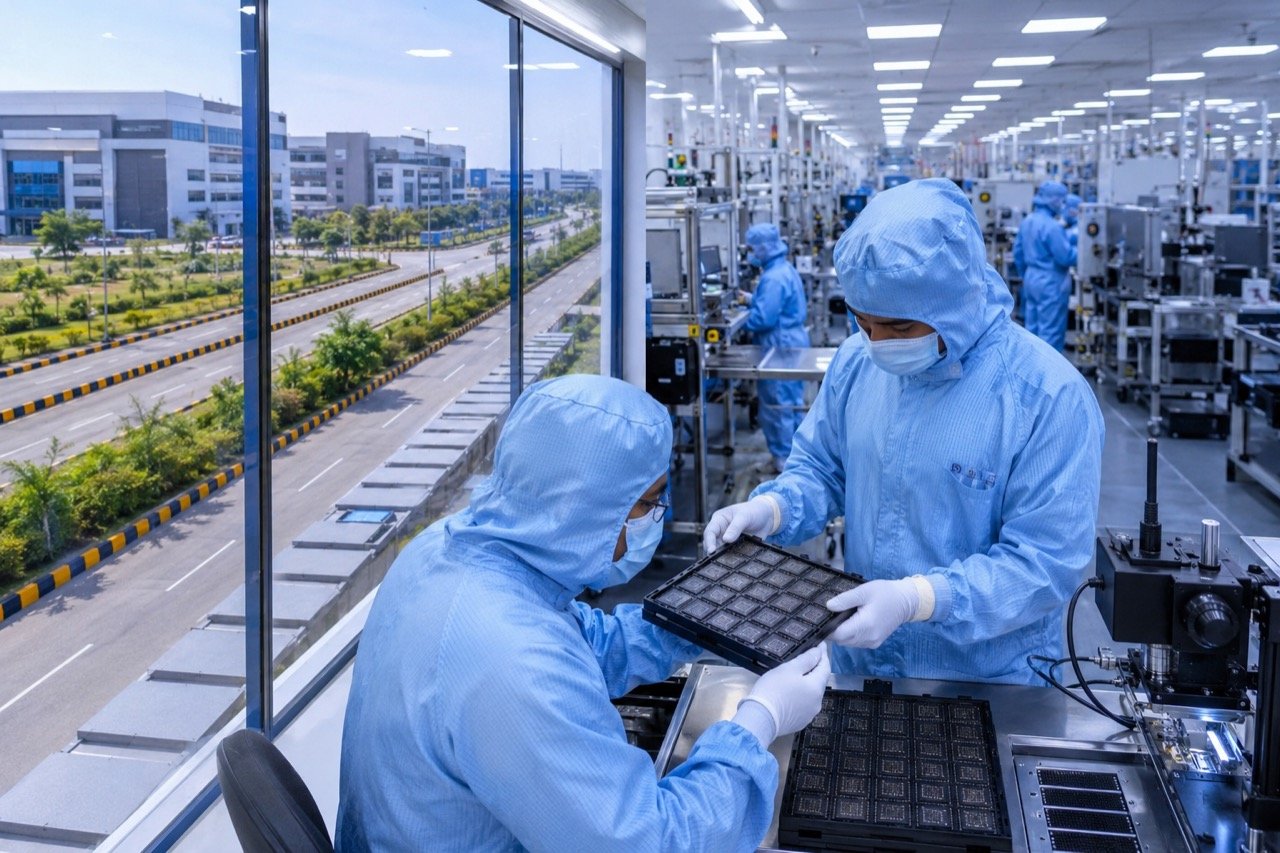
CG Semi Sanand Plant Opens, Boosting India's Semiconductor Drive
Prime Minister Narendra Modi inaugurated CG Semi's chip assembly and test facility in Sanand, Gujarat, giving India's semiconductor mission a working manufacturing milestone rather than another policy promise.
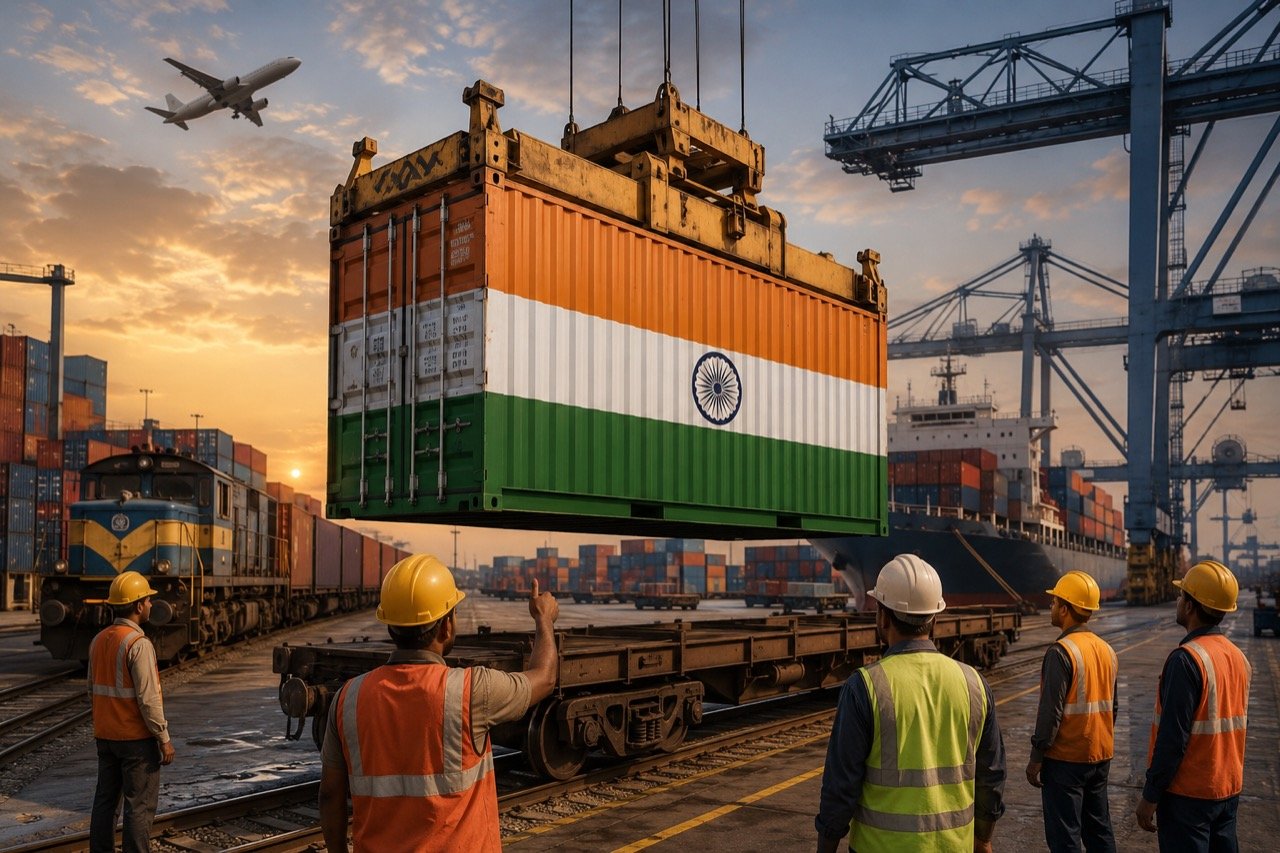
Maersk Orders 1,000 India-Made Containers From DCM Shriram
Maersk has unveiled its first India-made EXIM shipping container and placed an order for 1,000 more with DCM Shriram, a commercial vote of confidence in India's push to manufacture the hardware of global trade.

Mundra Airport Launches First Scheduled Flights, Linking Kutch to Mumbai and Goa
Adani's Mundra Airport began scheduled commercial operations on June 23, with Star Air connecting the Gujarat port town to Mumbai and Goa in a milestone for regional air connectivity in Kutch.
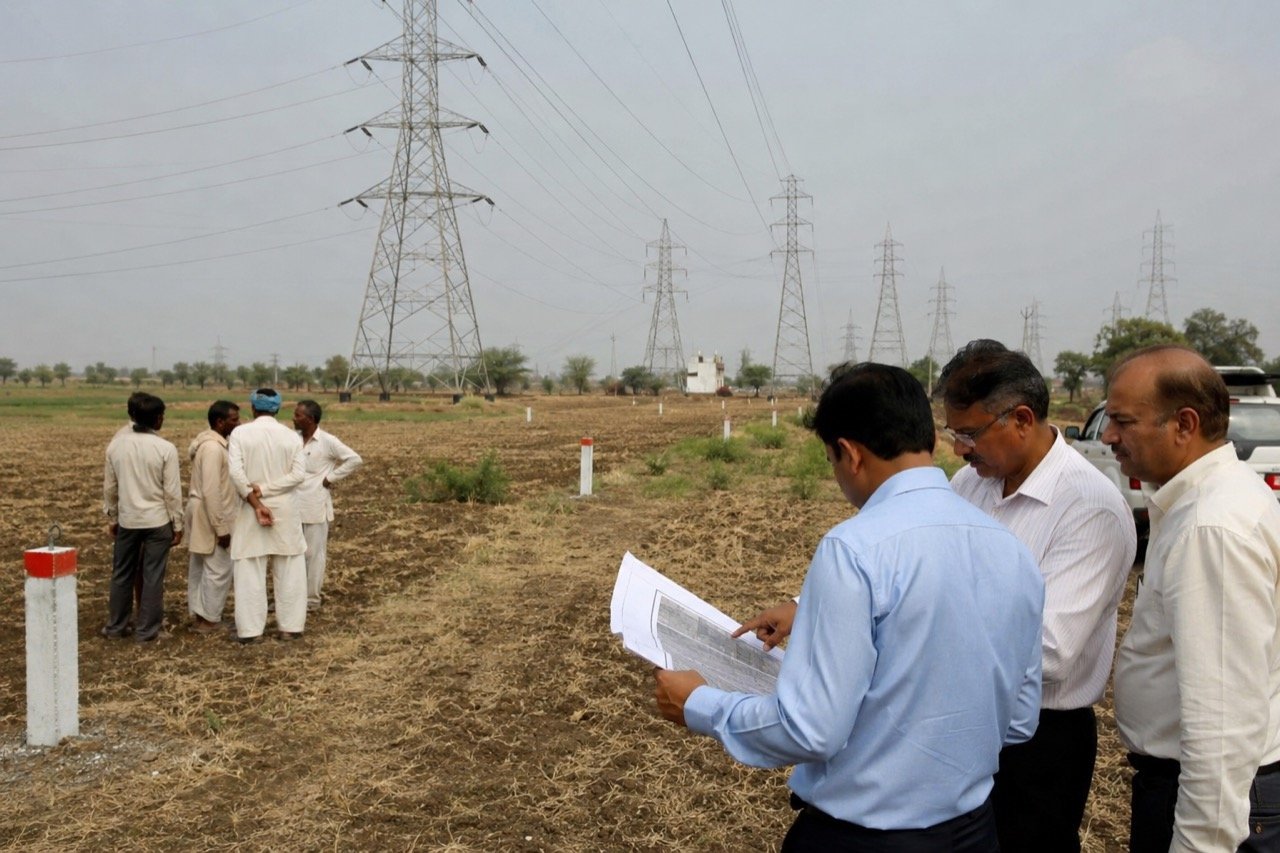
Gujarat Reworks Land Compensation Rules for Power Transmission
Gujarat has revised its land compensation policy for power transmission projects, a move that could ease landowner disputes and speed the grid expansion India's energy transition depends on.
More from this section
More
Adani Case: US DOJ Pushes for Permanent Dismissal of Charges
The US Department of Justice has urged a judge to permanently dismiss charges against Gautam Adani, calling the case legally flawed — a reversal with consequences for markets, diplomacy and cross-border enforcement.

Akasa Air Inducts 40th Aircraft in Indian Aviation Scale-Up
Akasa Air's 40th aircraft, ferried to Bengaluru via Seattle, Reykjavik and Cairo, marks a fleet milestone for the young carrier and a fresh signal that India's aviation market remains firmly in expansion mode.
BARC Ratings Suspension Leaves Indian TV Industry Flying Blind
BARC's pause on television ratings has put India's broadcast measurement system under fresh scrutiny, leaving broadcasters, advertisers and media planners without the weekly audience data that anchors the TV economy.