Gujarat Reworks Land Compensation Rules for Power Transmission
Gujarat has revised its land compensation policy for power transmission projects, a move that could ease landowner disputes and speed the grid expansion India's energy transition depends on.
Commentary & Analysis ·
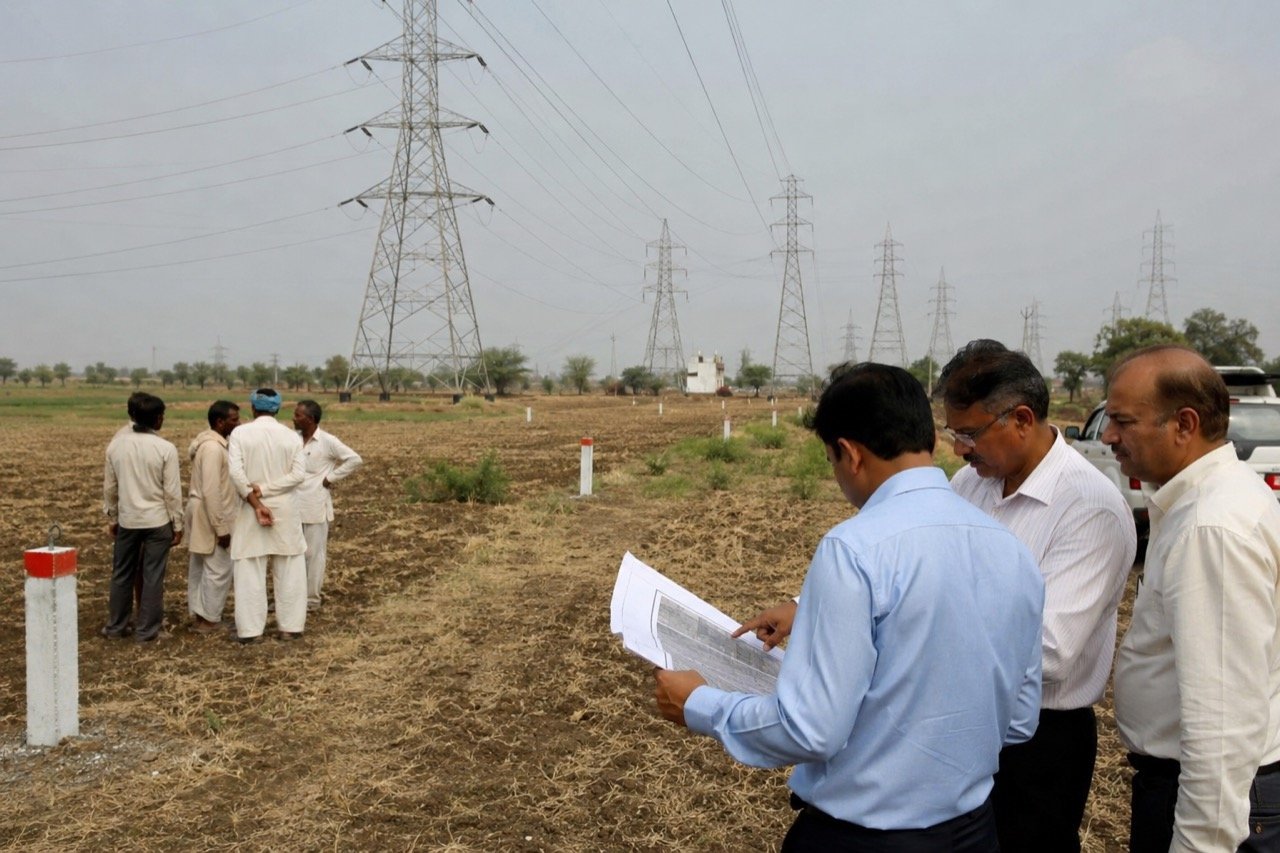
Gujarat has reportedly revised its land compensation policy for power transmission projects, addressing one of the most persistent friction points in energy infrastructure: how to string lines across farms and private land while treating landowners fairly. On the surface this may read as a routine administrative update, the sort of regulatory housekeeping that rarely makes headlines. In practice, compensation frameworks of this kind sit at the intersection of some of the biggest questions facing India's power sector today — how quickly the country can build out its grid, how much friction landowners are willing to tolerate, and whether the state can turn ambitious renewable energy targets into electricity that actually reaches homes and factories.
Why transmission depends on land deals
Transmission lines carry electricity from generation sites to homes, industries and cities, but building them requires land access, tower foundations, right-of-way permissions and construction across privately held plots. Unlike a solar park or a wind farm, which can often be sited on a single contiguous parcel bought or leased from one or a handful of owners, a transmission corridor by its very nature cuts across dozens or hundreds of separate landholdings. Each tower foundation, each stretch of right-of-way, each access road represents a discrete negotiation with a family that may have farmed that land for generations. Compensation rules therefore shape both how fast projects move and how willingly communities accept them. A single holdout, a single unresolved grievance, can delay a project by months or years, even when every other landowner along the route has settled.
This is why compensation policy is not a peripheral detail bolted onto transmission planning after the fact — it is, in many respects, the actual bottleneck. Engineering a transmission line is largely a solved problem; negotiating fair and timely access to the land beneath it is not.
The stakes for India's energy transition
India is expanding renewable generation, industrial power demand and grid capacity simultaneously, and without matching transmission upgrades, new generation capacity can sit stranded. A solar or wind installation that generates power nobody can draw off the grid is, from an economic standpoint, close to worthless. This is the paradox that has increasingly defined India's clean-energy build-out over the past several years: the country has had little difficulty attracting capital and developers for generation projects, but the wires needed to move that power from remote generation sites to demand centres have lagged behind. Every gigawatt of installed renewable capacity that cannot be evacuated because of an unresolved transmission bottleneck represents wasted investment and a missed opportunity to displace fossil generation.
For landowners, though, compensation is no technical footnote: they want clarity on payment, crop and property damage, access restrictions and long-term impacts on their land. A farmer asked to accept a transmission tower on his field is not merely losing the small footprint of the tower base — he is often accepting restrictions on what he can plant, build or dig near the corridor for as long as the line stands. He wants to know, in plain terms, how much he will be paid, when he will be paid, what happens if construction damages his standing crop, and who he can turn to if the compensation offered feels inadequate or arbitrary. Where these questions go unanswered, or are answered inconsistently from one project to the next, resentment builds, and that resentment translates directly into delay.
What will determine whether the revision works
The details of the revised policy will determine its effect — eligibility criteria, compensation rates, dispute-resolution mechanisms, and whether the rules differ by tower location or corridor use. These are not abstract design choices; they are the difference between a policy that genuinely de-escalates conflict and one that merely restates good intentions. Eligibility criteria determine who qualifies for compensation at all — tenant farmers, joint landholders and those with informal or disputed titles have historically fallen through the cracks of such frameworks in various parts of India. Compensation rates determine whether landowners feel they are being paid something close to the true cost imposed on them, or merely a token sum calculated to minimise project expenditure. Dispute-resolution mechanisms determine what happens when the two sides disagree — whether there is a fast, accessible, low-cost avenue for grievance redress, or whether landowners are pushed toward lengthy litigation as their only recourse.
Whether compensation differs by tower location or corridor use also matters a great deal in practice. A tower foundation occupies a small, permanent footprint, while a right-of-way corridor imposes an ongoing restriction over a much larger area without necessarily removing the land from cultivation. Treating these two categories of impact identically, or too crudely, can itself become a source of grievance, since landowners affected in different ways may reasonably expect different treatment.
A transparent framework versus a vague one
A transparent, timely and consistently applied framework can cut disputes significantly; a vague one merely relocates them to the courts. This is perhaps the single most important lesson from India's long history of land acquisition disputes across sectors — roads, railways, mining and power alike. Ambiguity in compensation policy does not make conflict disappear; it simply defers it, often to a more expensive and more adversarial forum. Litigation is slow, costly for both sides, and tends to harden positions rather than resolve them. A landowner who feels cheated by an opaque process is far more likely to approach a court, a local political representative, or even organise collective resistance with neighbours facing the same predicament, than one who received a clear, documented, promptly paid settlement under rules he could understand in advance.
Predictability, in other words, is itself a form of fairness. Landowners do not necessarily need the highest possible compensation rate to cooperate — they need confidence that the rate offered is consistent, that the process will not be reopened arbitrarily, and that payment will actually arrive on the timeline promised. Policies that deliver on these basic expectations tend to see far faster on-ground execution than those that offer generous rates on paper but leave the process murky.
The NE Times View
Gujarat's revision matters well beyond one state, because India's clean-energy ambitions are increasingly bottlenecked not by solar parks or wind farms but by the wires between them and consumers. Every stalled right-of-way negotiation is a stranded megawatt. This is not a minor turn of phrase — it reflects a structural reality that policymakers across India are only beginning to fully internalise. Generation capacity has grown rapidly, driven by falling technology costs and sustained policy support, but transmission capacity has often struggled to keep pace, precisely because the land-acquisition and compensation puzzle at its heart has never been fully solved.
If Gujarat's new rates and processes genuinely give farmers predictable, prompt payment, other states should copy the template quickly. India's power grid is a national system, and transmission corridors frequently cross state boundaries. A patchwork of inconsistent compensation regimes, where farmers in one state receive prompt and fair treatment while those in a neighbouring state face delay and ambiguity, does little to serve the national interest in a faster, more resilient grid. There is a strong case for other state governments, and potentially the central government through model guidelines, to study what Gujarat has done and adapt the more effective elements for their own use.
The deeper principle is that landowners are stakeholders in the energy transition, not obstacles to it — and policies that price their cooperation fairly will build the grid faster than any amount of compulsory acquisition. This reframing matters. Too often, land acquisition for infrastructure has been approached as an adversarial exercise, where the state's task is to overcome resistance rather than earn cooperation. A more durable approach treats the farmer whose field hosts a transmission tower as a participant in a national project from which he, too, stands to benefit, whether through the electricity supply that reaches his own village or through fair compensation that reflects the genuine value of what he has given up. Whether Gujarat's revised policy embodies this principle in its fine print, or merely gestures at it, will only become clear as the rules are implemented and tested against real disputes on the ground.
Key takeaways
- Gujarat has revised its land compensation policy for power transmission projects, aiming to reduce a major source of friction in grid expansion.
- Transmission corridors cross numerous private landholdings, making compensation policy, not engineering, the real bottleneck to faster project delivery.
- India's renewable energy push risks stranded generation capacity if transmission upgrades continue to lag behind new power plants.
- The policy's real impact will hinge on eligibility criteria, compensation rates, dispute-resolution mechanisms and whether rules vary by tower location or corridor use.
- Transparent, consistent and promptly paid compensation reduces disputes far more effectively than generous but vaguely applied rules, and other states may benefit from following Gujarat's approach.
You may also like to read

Ambuja Cements Partners UK's Leilac for Low-Carbon Cement Project in Gujarat
Ambuja Cements has tied up with British clean-tech firm Leilac to build a commercial-scale low-carbon cement pathway at its Sanghipuram plant in Kutch, targeting one of India's hardest-to-abate industries.
India Extends ALMM Solar Manufacturing Rules to Wafers and Ingots From 2028
New Delhi will widen its Approved List of Models and Manufacturers framework to cover solar wafers and ingots from June 2028, pushing deeper into the supply chain to cut reliance on China.

Sanand Semiconductor Plant: What CG Semi's Launch Means for India
Commercial production at CG Semi's chip assembly and test facility in Sanand, marked by remarks from Prime Minister Modi, has renewed focus on how far India's semiconductor manufacturing push has actually come.

Mundra Airport Launches First Scheduled Flights, Linking Kutch to Mumbai and Goa
Adani's Mundra Airport began scheduled commercial operations on June 23, with Star Air connecting the Gujarat port town to Mumbai and Goa in a milestone for regional air connectivity in Kutch.
More from this section
More
Adani Case: US DOJ Pushes for Permanent Dismissal of Charges
The US Department of Justice has urged a judge to permanently dismiss charges against Gautam Adani, calling the case legally flawed — a reversal with consequences for markets, diplomacy and cross-border enforcement.

Akasa Air Inducts 40th Aircraft in Indian Aviation Scale-Up
Akasa Air's 40th aircraft, ferried to Bengaluru via Seattle, Reykjavik and Cairo, marks a fleet milestone for the young carrier and a fresh signal that India's aviation market remains firmly in expansion mode.

BARC Ratings Suspension Leaves Indian TV Industry Flying Blind
BARC's pause on television ratings has put India's broadcast measurement system under fresh scrutiny, leaving broadcasters, advertisers and media planners without the weekly audience data that anchors the TV economy.