Adani's Mundra Airport Begins Commercial Flights, Opening a New Air Link for Kutch
Gujarat's Adani Mundra Airport has launched commercial operations with an inaugural flight from Goa, promising eight new air services and faster connectivity for trade, logistics and tourism around India's largest private port.
Commentary & Analysis ·
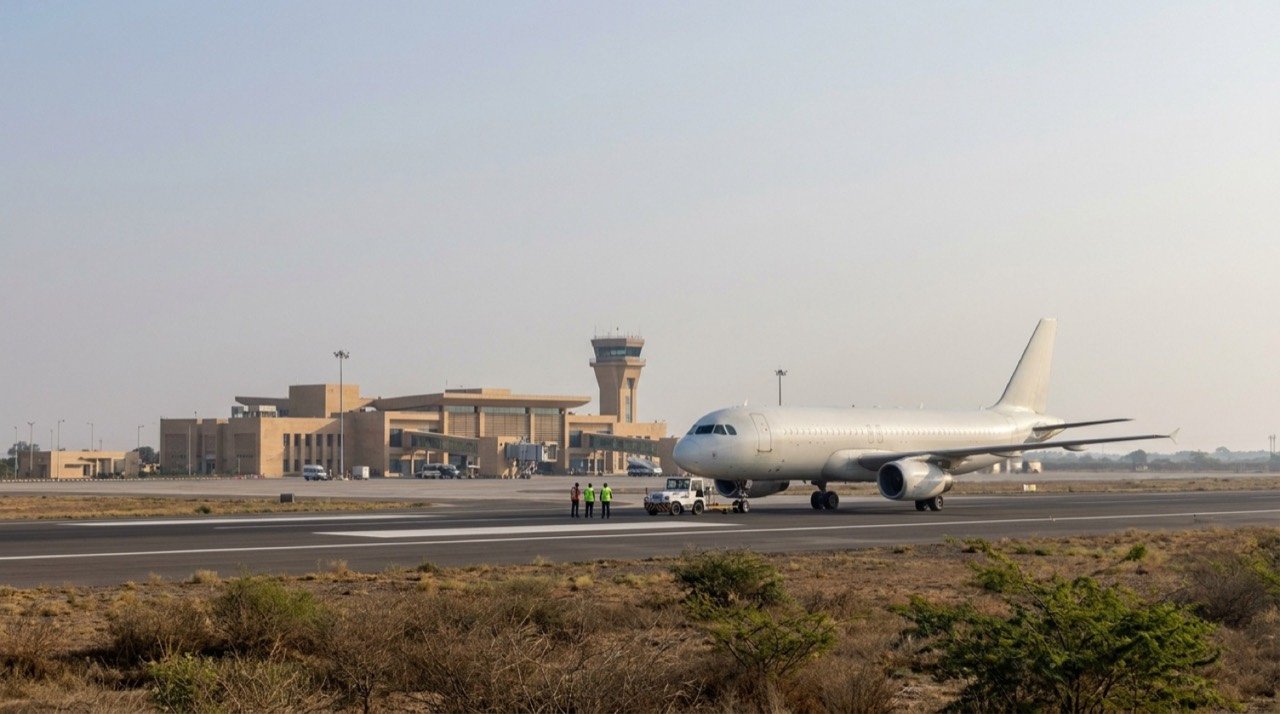
Adani Mundra Airport in Gujarat has begun commercial operations, welcoming an inaugural flight from Goa and adding a passenger-air link to a region best known for hosting India's largest private port. The launch turns Mundra, long a hub for cargo and heavy industry, into a node on the country's regional aviation map, a shift that is as much about signalling ambition as it is about immediate passenger volumes. Citing PTI and an Adani Group statement, Business Standard reported that the new service is part of a strategic partnership with Star Air, with eight new air services planned from Mundra. The airport is set to connect with destinations including Hindon, Surat, Belagavi, Bengaluru, Kolhapur and Nanded, weaving the Kutch region into a wider network of business and leisure routes. Equipped with a 1,900-metre runway and terminal facilities, the airport is positioned as a connector between port-led industry and regional travel, giving passengers an alternative to long road journeys across western Gujarat.
A cargo hub adds a passenger terminal
For decades, Mundra's identity has been defined almost entirely by freight: containers, bulk cargo and the machinery of a major private port operation moving goods in and out of Gujarat. The arrival of scheduled commercial flights marks a deliberate widening of that identity. Rather than existing purely as an industrial and logistics site, Mundra now also functions as a place people can fly into and out of for business or leisure. This is not a trivial distinction. Ports and industrial zones the world over often struggle to attract the ancillary infrastructure, such as air connectivity, that make them attractive to a broader base of executives, technicians, contractors and visitors. By building out passenger aviation alongside its cargo operations, Mundra is attempting to become a more complete economic hub rather than a single-purpose facility.
Why it matters for trade and tourism
The company says the air link will cut travel time for trade, commerce, logistics and tourism around the Mundra port and the adjoining Special Economic Zone. For businesses operating in the SEZ, faster passenger movement can ease the flow of executives, technicians and clients who previously depended on distant airports, likely Ahmedabad or other larger hubs, for onward connections. Every hour saved in travel time for a technician flying in to service equipment, or an executive arriving to close a deal, has a compounding effect on how efficiently a business zone can operate. Tourism stands to gain as well, with Kutch's landscapes and seasonal festivals drawing visitors who have historically faced limited direct connectivity. Kutch is not short of attractions, but it has long been comparatively difficult to reach without a lengthy road trip from Ahmedabad or Bhuj. A direct air link, even a modest one built around a handful of routes, changes the calculus for travellers deciding whether a trip to the region is worth the logistical effort.
Linking port-led industry to the skies
The launch reflects a broader trend of private capital expanding India's aviation footprint beyond the metros, bringing scheduled flights to industrial and tier-two regions that airlines and airport operators have traditionally overlooked. The inaugural commercial flight arrived from Goa, opening passenger services at Mundra, and eight new air services are planned in partnership with Star Air, a carrier that has built a niche in regional connectivity using smaller aircraft suited to routes with limited demand. The destinations named, Hindon, Surat, Belagavi, Bengaluru, Kolhapur and Nanded, form an interesting mix. Some, like Bengaluru and Surat, are major commercial centres; others, like Belagavi, Kolhapur and Nanded, are themselves tier-two cities, suggesting Mundra's air links are intended to stitch together a network of secondary Indian cities rather than simply funnel traffic to and from the largest metros. A 1,900-metre runway and terminal support regional aircraft operations of this scale, positioning Mundra as suited to smaller narrow-body and turboprop aircraft rather than the long-haul or high-capacity flights associated with India's biggest airports.
Reading the corporate statement
An Adani Group statement framed the development plainly: the connection is expected to reduce travel time for trade, commerce, logistics and tourism around India's largest private port. That framing is worth sitting with, because it positions the airport not as a standalone aviation venture but as an extension of the port's commercial logic. Whether the eight planned services materialise on schedule will depend on passenger demand and route economics, a caveat that applies to any new regional air route in India, where load factors on thin routes can be unforgiving and airlines have historically been quick to withdraw services that fail to fill seats. Still, the start of commercial operations marks a notable step in tying industrial Kutch to the rest of the country. For a region defined by its port, the addition of regular flights signals a bid to diversify how people and business reach Mundra, rather than relying solely on road and rail connections that can be slow and, at times, seasonally disrupted.
What to watch next
The real test for Mundra's new air link will not be the inaugural flight itself but the months that follow. Route economics on regional Indian aviation are notoriously fragile, and airlines frequently trim schedules when early bookings disappoint. Observers will want to track whether all eight planned services actually launch, whether frequencies are maintained once the initial publicity fades, and whether fares remain accessible enough to draw genuine leisure and business traffic rather than a handful of curiosity-driven early flyers. Equally worth watching is how the SEZ and the wider Kutch business community respond: if local firms begin routing more of their travel needs through Mundra rather than Ahmedabad, that would be a clearer signal of durable demand than the launch itself. Tourism boards and local operators in Kutch may also use the new connectivity as a selling point for the region's festivals and landscapes, and it will be worth seeing whether visitor numbers move in step with the new routes.
The NE Times View
Pairing India's largest private port with a commercial airport is a logical logistics play, and Kutch genuinely stands to gain from faster connectivity for trade and tourism. The NE Times View: the promised eight services will only matter if they are sustained and affordable rather than inaugural flourishes designed for a single day of favourable headlines. Regional aviation in India has a mixed record of turning ribbon-cuttings into lasting schedules, and Mundra's fate will be decided less by the optics of its first flight than by occupancy rates a year from now. The deeper question is whether regional aviation finally serves underserved hinterlands or merely thickens the footprint of a single conglomerate that already dominates the port, the SEZ and now the skies above it. Both things can be true at once: a genuine public benefit in connectivity can coexist with the consolidation of infrastructure control in one corporate group. That tension is likely to define how this story is read in Kutch and beyond as the coming months clarify whether the airport becomes a durable regional asset or a modest cargo-hub sideline.
Key takeaways
- Adani Mundra Airport has begun commercial passenger operations with an inaugural flight from Goa, adding aviation to a site long known for cargo and port activity.
- Eight new air services are planned in partnership with Star Air, connecting Mundra to Hindon, Surat, Belagavi, Bengaluru, Kolhapur and Nanded.
- The 1,900-metre runway and terminal are built for regional aircraft, supporting trade, logistics, the Mundra SEZ and tourism rather than long-haul traffic.
- Success will hinge on whether the eight planned routes launch on schedule and remain viable, given the historical fragility of thin regional air routes in India.
- The development highlights a broader pattern of private capital extending aviation into industrial and tier-two regions, raising questions about diversified connectivity versus concentrated corporate control.
You may also like to read
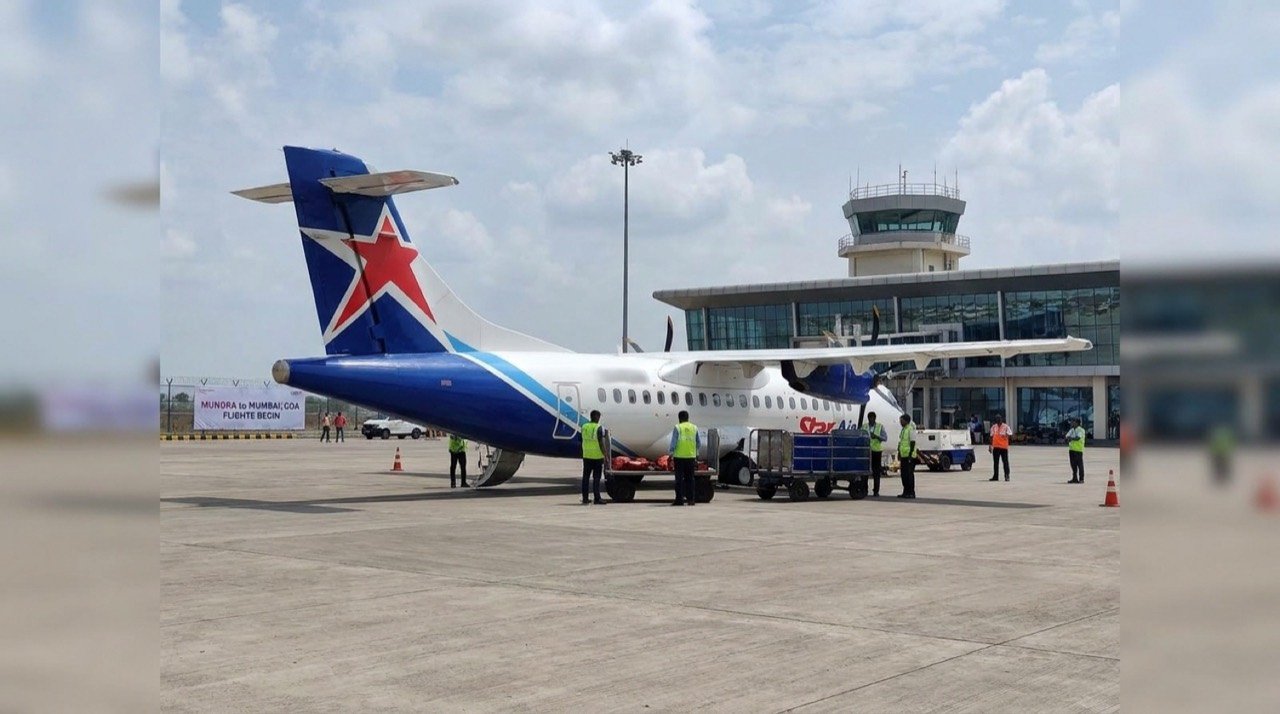
Mundra Airport Launches First Scheduled Flights, Linking Kutch to Mumbai and Goa
Adani's Mundra Airport began scheduled commercial operations on June 23, with Star Air connecting the Gujarat port town to Mumbai and Goa in a milestone for regional air connectivity in Kutch.
Tata Leads, Reliance Dominates, Adani Expands: Hurun Maps India's New Corporate Order
The Hurun India 500 list released around 24 June 2026 confirmed Tata's grip on the top spot, Reliance's reign as the most valuable company and Adani's relentless expansion across sectors.

Sanand Semiconductor Plant: What CG Semi's Launch Means for India
Commercial production at CG Semi's chip assembly and test facility in Sanand, marked by remarks from Prime Minister Modi, has renewed focus on how far India's semiconductor manufacturing push has actually come.
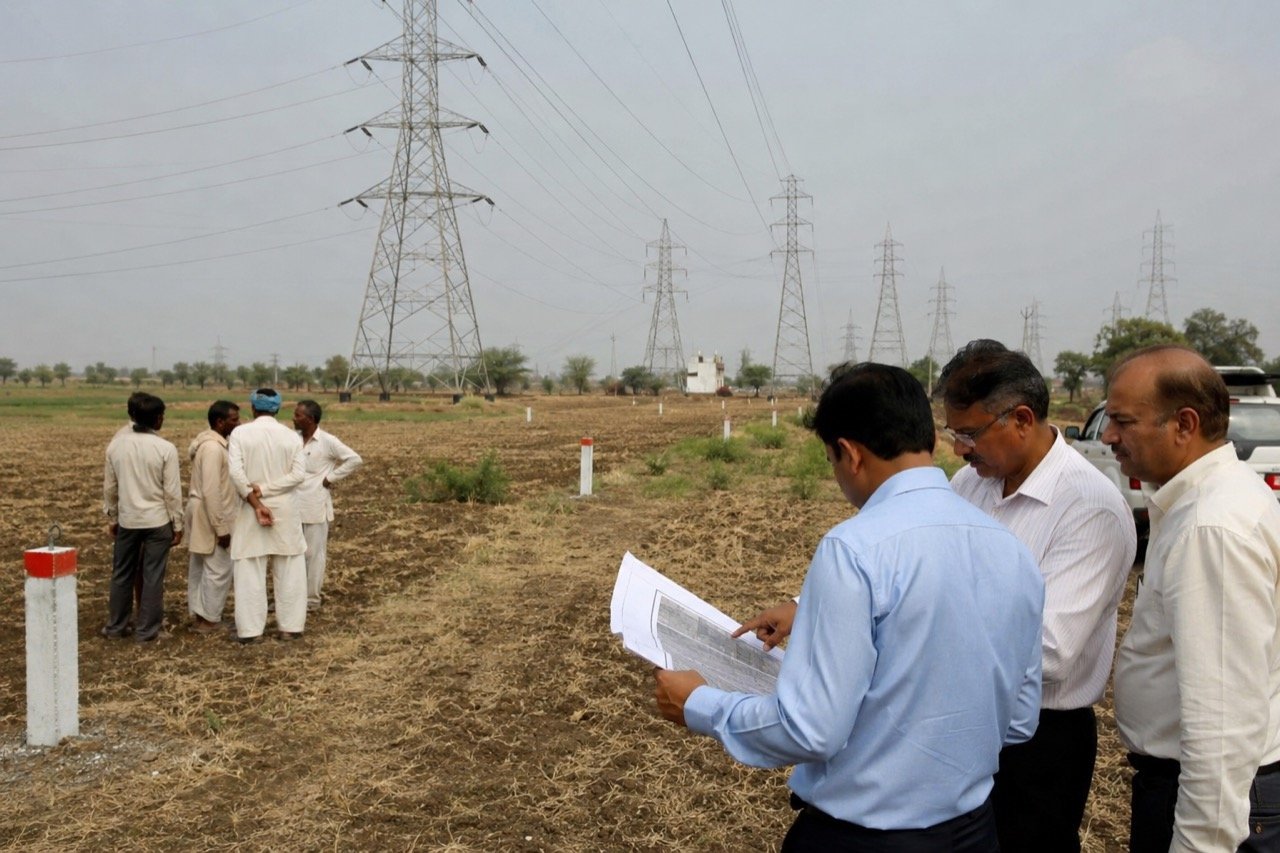
Gujarat Reworks Land Compensation Rules for Power Transmission
Gujarat has revised its land compensation policy for power transmission projects, a move that could ease landowner disputes and speed the grid expansion India's energy transition depends on.
More from this section
More
Adani Case: US DOJ Pushes for Permanent Dismissal of Charges
The US Department of Justice has urged a judge to permanently dismiss charges against Gautam Adani, calling the case legally flawed — a reversal with consequences for markets, diplomacy and cross-border enforcement.

Akasa Air Inducts 40th Aircraft in Indian Aviation Scale-Up
Akasa Air's 40th aircraft, ferried to Bengaluru via Seattle, Reykjavik and Cairo, marks a fleet milestone for the young carrier and a fresh signal that India's aviation market remains firmly in expansion mode.

BARC Ratings Suspension Leaves Indian TV Industry Flying Blind
BARC's pause on television ratings has put India's broadcast measurement system under fresh scrutiny, leaving broadcasters, advertisers and media planners without the weekly audience data that anchors the TV economy.