India Steel Emission Targets: Draft Rules Push Decarbonisation
The Centre's draft emission cut targets for the iron and steel sector move India's climate policy from broad pledges to sector-specific rules, placing one of its hardest-to-abate industries under a defined framework.
Commentary & Analysis ·
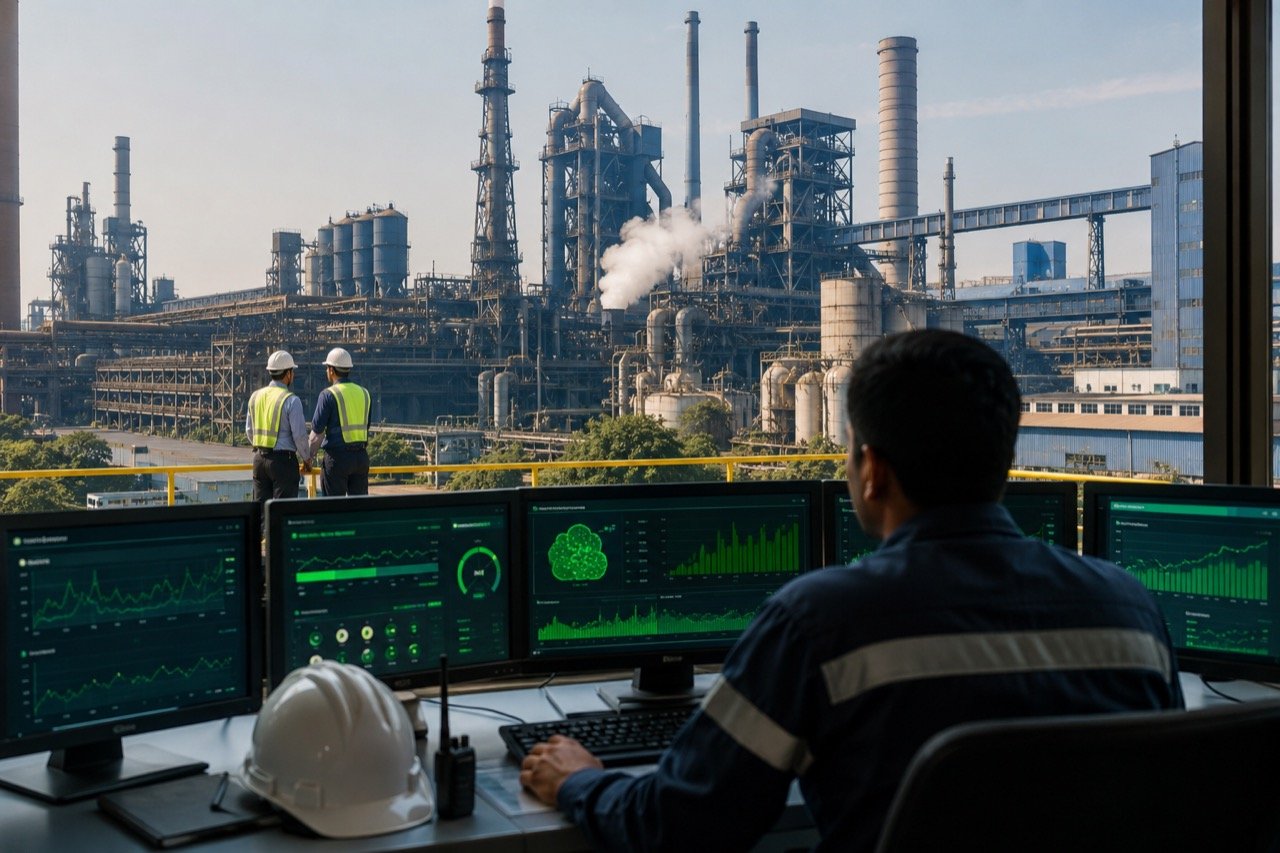
The Centre has released fresh draft emission cut targets for the iron and steel sector, according to a July 5 report by the Indian Express. On its face, this is a technical regulatory update. In substance, it places one of India's most strategically important industries squarely at the centre of the country's climate-and-competitiveness debate, and it signals that the era of vague climate ambition is giving way to something far more concrete: sector-specific numbers that companies must actually plan against.
Why steel is the hard case
Steel underpins India's infrastructure, construction and manufacturing ambitions. Every metro line, housing project, bridge and factory shed depends on domestic steel supply, which is precisely why the sector cannot simply be told to slow down in the name of emissions reduction. Yet steel remains among the most difficult industrial sectors to decarbonise anywhere in the world, and India is no exception. The chemistry of conventional steelmaking, which relies heavily on coal-based processes, makes emissions reduction technically harder than in sectors such as power generation, where switching to renewables is comparatively straightforward.
Producers must expand capacity to meet surging domestic demand while simultaneously lowering emissions intensity through efficiency gains, cleaner fuels, greater scrap use, green hydrogen pilots and emerging carbon capture options. This is a genuinely difficult balancing act. Expansion and decarbonisation are often framed as opposing forces, but the draft targets implicitly reject that framing: they assume growth and emissions cuts must happen in parallel, not in sequence. That is a demanding ask for an industry still building out capacity to serve a growing economy.
From aspiration to operational detail
The significance of the draft lies in its specificity. For years, India's climate commitments have largely lived at the level of national pledges and broad decarbonisation goals. What is happening now is different in kind: regulatory direction is shifting from broad national climate goals toward sector-level expectations, the point at which policy stops being aspirational and becomes operational for company boardrooms and investment committees. Once targets are attached to a specific sector, with specific timelines and specific compliance expectations, they stop being background noise for corporate planners and start becoming inputs into capital expenditure decisions, financing terms and technology procurement.
This shift matters because steelmakers plan investment cycles years in advance. Blast furnaces, direct reduced iron plants and electric arc furnace facilities all involve long lead times and decades-long asset lives. A company deciding today what kind of furnace to build, or whether to invest in hydrogen-based reduction pilots, is effectively making a bet on where regulation is headed. Draft targets, even before they are finalised, become a signal that shapes those bets.
Consultation, not final rules
It is important to note that these are draft targets, part of a consultation and policy-formation process rather than binding rules. That distinction matters both for industry and for public understanding of what has actually changed. Industry will scrutinise timelines, compliance costs and the support mechanisms on offer before the framework is finalised. Steel producers, particularly smaller and mid-sized ones without the balance sheets of the largest integrated players, will be watching closely to see whether the final rules come paired with financing support, technology transfer or phased timelines that make compliance achievable rather than punitive.
Still, draft targets of this kind typically shape investment planning well before they take legal effect. Companies rarely wait for a rule to become law before adjusting their strategy; the mere existence of a credible draft, backed by government intent, is often enough to reorient procurement decisions, R&D spending and long-term capacity planning. In that sense, the consultation period is not a pause in consequence but an extension of it.
The global trade dimension
The global context adds urgency. Trade is increasingly linked to carbon performance, with mechanisms such as carbon border levies gaining ground in key export markets. For an export-oriented steel industry, this is not an abstract concern. Cleaner production may soon be a condition of competitiveness for Indian steelmakers, not merely a domestic regulatory requirement. If major importing markets begin taxing the carbon content of steel at the border, Indian producers who have not moved to reduce emissions intensity risk facing an effective tariff on their exports, regardless of what domestic Indian law requires.
Seen this way, the draft targets are not purely a domestic climate policy exercise. They can also be read as an attempt to get ahead of external pressure, aligning Indian industry with the direction international markets are already moving in, so that compliance becomes a competitive asset rather than a belated reaction to foreign trade barriers.
The NE Times View
This draft marks a quiet but consequential shift: industrial decarbonisation in India is moving from rhetoric into practical detail. Steel can no longer be discussed only as a growth engine; it is now a test case for whether India can build at scale while cutting emissions. The credibility of India's broader climate commitments will, in no small part, be judged by how this one hard sector is handled, because if steel can decarbonise while continuing to expand, it offers a template for other emissions-intensive industries to follow.
The government should pair firm targets with credible support: technology finance, green hydrogen infrastructure and transition timelines that smaller producers can realistically meet. Ambitious targets without matching support risk becoming either unenforceable on paper or punitive in practice, squeezing exactly the smaller producers least equipped to absorb the cost of transition. If it gets that balance right, the sector could turn a compliance burden into an export advantage, positioning Indian steel as a preferred supplier in markets that are themselves tightening carbon rules. If it gets the balance wrong, there is a real risk of penalising capacity expansion at precisely the moment India's infrastructure and manufacturing ambitions require more steel, not less.
Key takeaways
- The Centre's draft emission cut targets for iron and steel, reported July 5 by the Indian Express, mark a shift from broad climate goals to sector-specific, operational expectations.
- Steel is a uniquely hard sector to decarbonise, requiring efficiency gains, cleaner fuels, scrap use, green hydrogen pilots and carbon capture, even as domestic demand keeps rising.
- These are draft, not final, rules, but such drafts routinely influence investment planning well ahead of formal enactment.
- International carbon border mechanisms mean cleaner production is becoming a competitiveness issue for Indian exporters, not just a domestic compliance matter.
- Success will depend on pairing firm targets with financing, infrastructure and realistic timelines, especially for smaller producers, so decarbonisation becomes an export advantage rather than a compliance burden.
You may also like to read
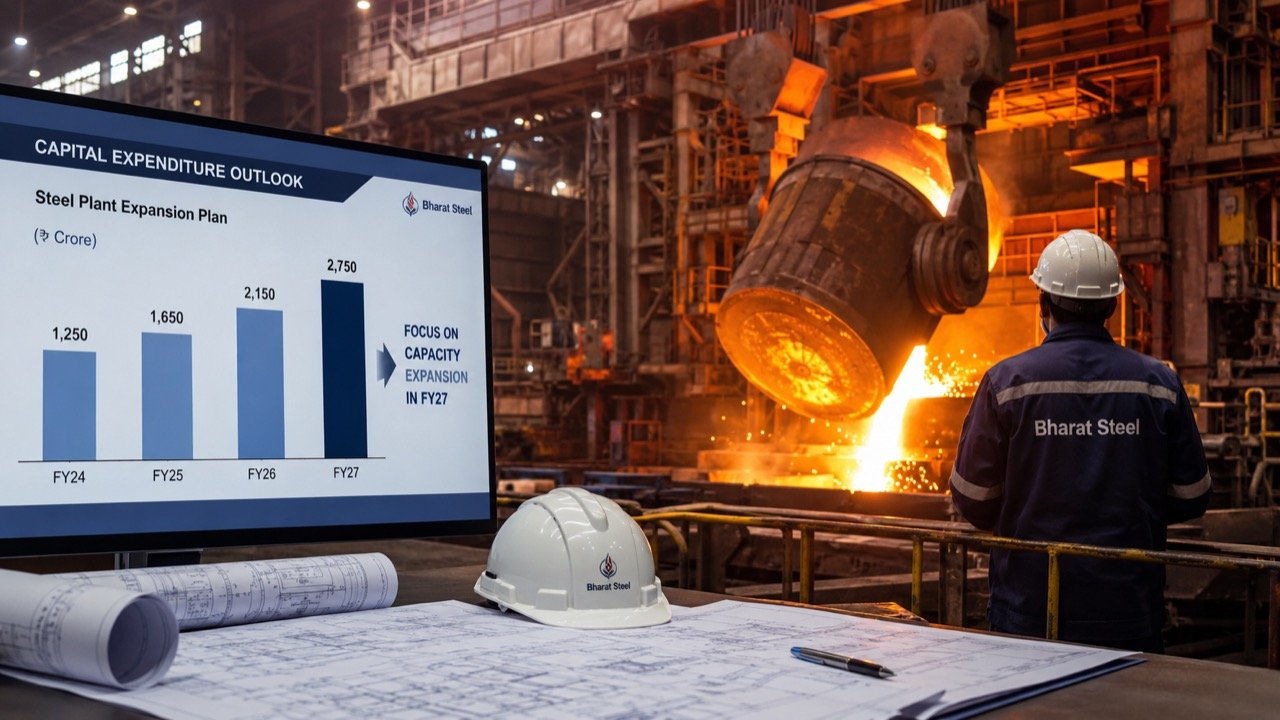
Tata Steel Plans Rs 20,000 Crore FY27 Capex for India Growth
Tata Steel's roughly Rs 20,000 crore capital spending plan for FY27 signals sustained confidence in Indian steel demand, even as execution risks, raw-material costs and emissions pressures loom over the sector.
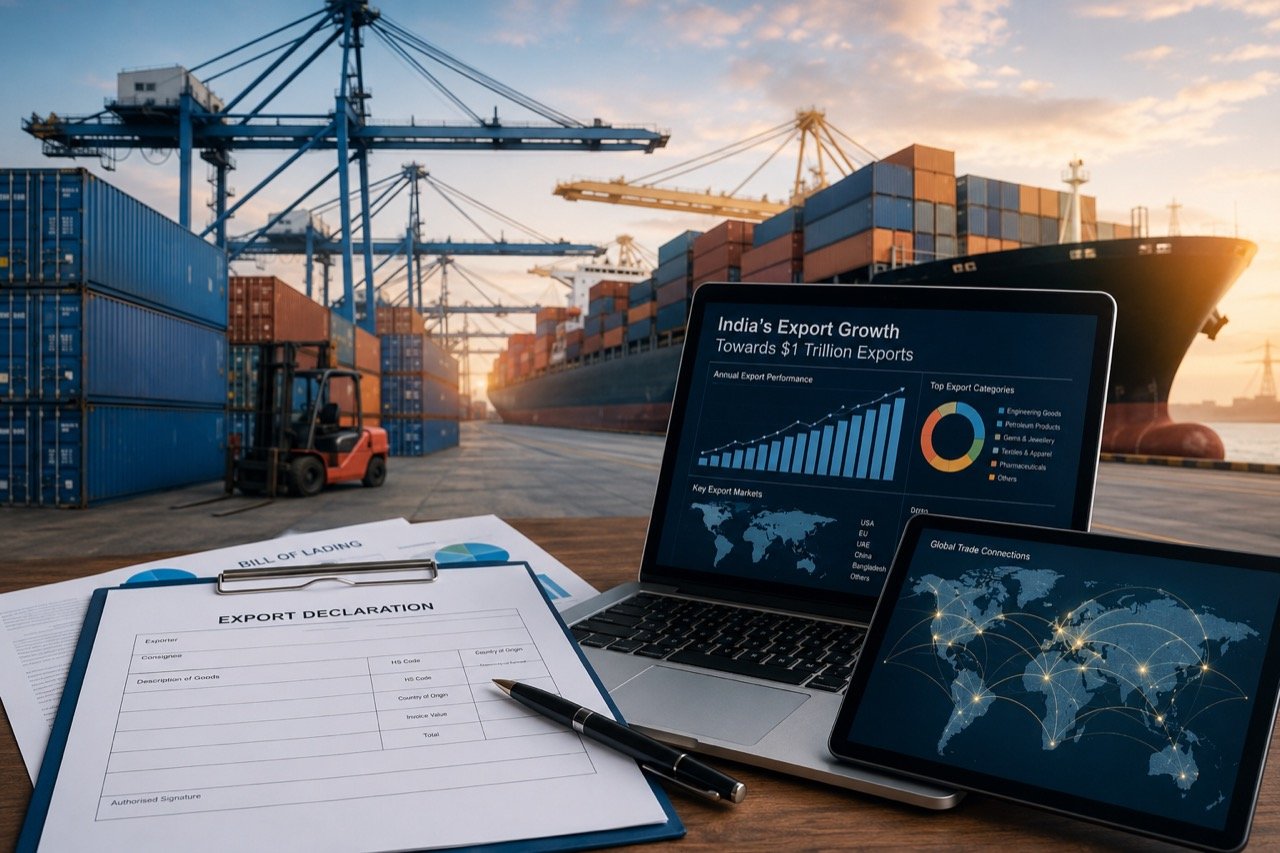
India Targets $1 Trillion in FY26 Exports as Trade Push Widens
The commerce ministry has reaffirmed a $1 trillion export goal for FY26 at a Board of Trade meeting led by Piyush Goyal, leaning on a seven-point action plan spanning merchandise, services and defence exports.
India's Forex Reserves Slip to 15-Month Low: Why the Buffer Matters
India's foreign exchange reserves have dropped to their lowest level in 15 months, narrowing the external buffer the RBI relies on to steady the rupee and reassure markets.

Sitharaman Credits Middle-Class Spending for India's Growth Run
Speaking at a panel in France, Finance Minister Nirmala Sitharaman said middle-class consumption helped India stay the fastest-growing large economy after Covid, putting the consumer economy back at the heart of the growth debate.
More from this section
More
Adani Case: US DOJ Pushes for Permanent Dismissal of Charges
The US Department of Justice has urged a judge to permanently dismiss charges against Gautam Adani, calling the case legally flawed — a reversal with consequences for markets, diplomacy and cross-border enforcement.

Akasa Air Inducts 40th Aircraft in Indian Aviation Scale-Up
Akasa Air's 40th aircraft, ferried to Bengaluru via Seattle, Reykjavik and Cairo, marks a fleet milestone for the young carrier and a fresh signal that India's aviation market remains firmly in expansion mode.
BARC Ratings Suspension Leaves Indian TV Industry Flying Blind
BARC's pause on television ratings has put India's broadcast measurement system under fresh scrutiny, leaving broadcasters, advertisers and media planners without the weekly audience data that anchors the TV economy.