Tata Steel Plans Rs 20,000 Crore FY27 Capex for India Growth
Tata Steel's roughly Rs 20,000 crore capital spending plan for FY27 signals sustained confidence in Indian steel demand, even as execution risks, raw-material costs and emissions pressures loom over the sector.
Commentary & Analysis ·
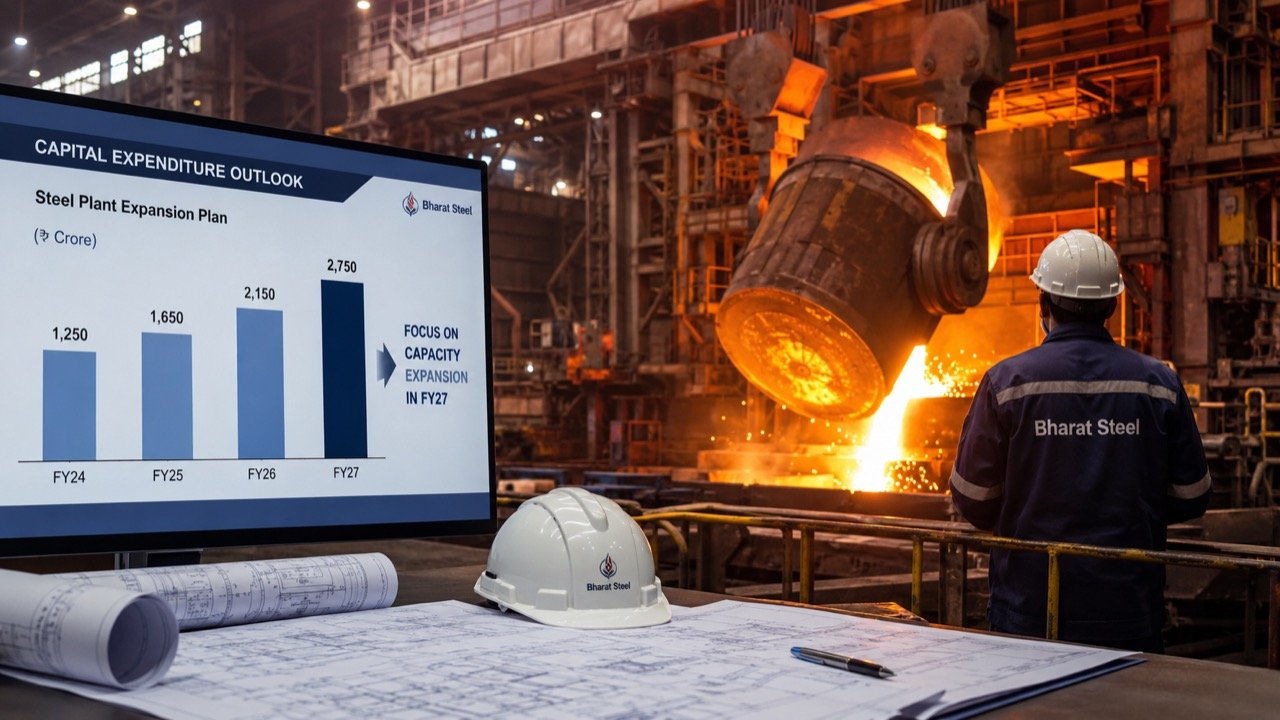
Tata Steel intends to spend around Rs 20,000 crore in FY27, a capital-expenditure plan that ranks among the year's bigger industrial investment stories. Business Standard reported the outlay in the context of expansion and modernisation, with the company keeping India firmly at the centre of its growth strategy. On its own, a single-year capex figure of this size might read as routine corporate housekeeping. In the context of Indian heavy industry, it is not. Steel is one of those foundational sectors whose spending decisions ripple outward for years, and a commitment of this scale from one of the country's oldest industrial houses deserves to be read carefully rather than filed away as one more headline number.
Why a single capex number carries so much weight
Steel capacity feeds directly into infrastructure, construction, automobiles, railways and manufacturing, so a commitment of this magnitude is best understood as a proxy for how Tata Steel views domestic demand over the next decade, not merely over the next financial year. Companies do not commit tens of thousands of crores to expansion and modernisation on the basis of short-term order books. Capex of this kind is typically underwritten by a multi-year view of where the economy is headed, and steelmakers in particular have to take a long view because the lead times between sanctioning a project and commissioning it can run into years. When a company of Tata Steel's size and history signals that it is willing to keep deploying capital in India at this scale, it is effectively telling the market that it expects the underlying demand drivers, infrastructure build-out, urban construction, vehicle manufacturing and railway expansion, to remain intact well beyond FY27.
That is also why the number resonates beyond the steel sector itself. Analysts and policymakers watching for signs of a broader private-investment cycle often look to core industries such as steel, cement and power as leading indicators. A large capex announcement from Tata Steel does not by itself confirm a broader industrial upcycle, but it is one more data point in favour of the thesis that private capital is willing to commit alongside the government's own infrastructure push.
Confidence with caveats
A large capex programme signals confidence, but it also demands disciplined execution. Announcing an outlay is the easy part; converting it into commissioned, productive capacity on schedule and on budget is considerably harder. Raw-material costs remain volatile, and steelmakers have limited ability to pass through sudden input-cost swings without hurting competitiveness. Global steel markets, meanwhile, are crowded with low-priced supply, which keeps pressure on realisations even for domestic producers who are largely insulated from direct import competition in certain product categories. On top of this, environmental compliance is becoming more expensive rather than less, as regulatory expectations tighten both in India and among trading partners who are increasingly attaching carbon-related conditions to steel imports.
How efficiently Tata Steel converts spending into commissioned capacity will determine whether the plan strengthens or strains its finances. A capex programme of this size, if executed well, expands the asset base, lowers per-unit costs through scale and modernisation, and positions the company more competitively for the next decade. If execution slips, through cost overruns, delayed commissioning, or a mismatch between capacity additions and actual demand growth, the same programme can weigh on balance-sheet strength and returns for years. This is the tension at the heart of any large industrial capex story: the announcement is a statement of intent, but the financial outcome is decided project by project, quarter by quarter, well after the headline has faded.
The decarbonisation balancing act
For investors and policymakers alike, the central question is how the outlay translates into capacity, efficiency and long-term competitiveness. India's steel sector is being asked to do two things at once: grow output to meet infrastructure ambitions while cutting emissions intensity and lifting productivity. These two goals are not automatically compatible. Adding conventional blast-furnace capacity is often the fastest and cheapest way to grow output, but it also locks in higher emissions intensity for the operational life of that plant, which can stretch across decades. Investing instead in greener steelmaking routes, or in efficiency upgrades to existing facilities, tends to cost more upfront and take longer to pay off, but it reduces long-term exposure to tightening environmental regulation both at home and abroad.
Capex plans of this size are precisely where that dual mandate either gets funded or deferred. A company allocating a large share of a Rs 20,000 crore programme toward capacity expansion alone is making a different strategic bet than one directing a meaningful portion toward decarbonisation and efficiency. Both choices are defensible in the short term, but they carry very different implications for how exposed the company will be to future carbon-related trade measures, domestic emissions norms, and shifts in customer preference toward lower-carbon steel, particularly among automotive and infrastructure clients who are themselves under pressure to green their supply chains.
What the numbers do and do not tell us
The measured takeaway is that the plan reflects continued investment momentum, with final outcomes resting on project delivery and market conditions. It is worth being honest about the limits of what a single capex figure can tell an outside observer. It does not, on its own, specify how much of the spend goes toward brownfield modernisation versus new capacity, how much is earmarked for emissions-reduction technology, or how sensitive the plan is to steel-price cycles. Those details matter enormously for assessing the quality of the investment, even if the headline figure is what makes news. Readers should treat the Rs 20,000 crore number as an opening data point rather than a complete picture, one that will be filled in over subsequent quarters as the company discloses project-level detail and as commissioning milestones either arrive on schedule or slip.
There is also a broader signalling function at play. Domestic and international investors alike use capex announcements from bellwether companies to calibrate their own expectations for sectoral growth. A steady cadence of large, credible capex commitments from a company such as Tata Steel can help anchor expectations that India's underlying steel demand growth is durable, which in turn can influence decisions by suppliers, downstream manufacturers and even competing steelmakers who may recalibrate their own expansion plans in response.
The NE Times View
Tata Steel's willingness to keep writing Rs 20,000 crore cheques for India is a vote of confidence the economy should not take for granted. Private industrial capex of this scale is exactly what the infrastructure push needs alongside government spending, and it is a useful counterweight to concerns that India's investment cycle remains overly dependent on public capital expenditure. But the composition of the spend matters as much as the headline. If a meaningful share goes into greener steelmaking routes and efficiency, the company future-proofs itself against carbon border taxes and tightening domestic norms; if it is capacity alone, the bet is riskier, both for the company's own competitiveness and for how well India's steel sector as a whole is positioned for a world in which carbon intensity increasingly affects trade and financing terms.
Readers should watch commissioning timelines, not announcements: in Indian steel, the gap between the two is where value is made or lost. A capex plan is, in the end, only as good as its execution, and the coming quarters will offer the first real tests of whether Tata Steel's FY27 ambitions translate into steel on the ground, on schedule and within budget.
Key takeaways
- Tata Steel's planned Rs 20,000 crore FY27 capex signals continued confidence in India's domestic demand for steel-intensive sectors such as infrastructure, construction, automobiles and railways.
- Execution risk is significant: volatile raw-material costs, competition from low-priced global steel supply, and rising environmental-compliance costs all bear on whether the spend strengthens or strains the company's finances.
- How much of the outlay goes toward greener steelmaking and efficiency versus pure capacity expansion will shape Tata Steel's exposure to carbon border taxes and tightening emissions norms.
- The headline capex figure is only an opening data point; the real story will be told through project-level disclosures and commissioning timelines in the quarters ahead.
- Large private capex commitments of this kind serve as a broader signal for India's industrial investment cycle, complementing public infrastructure spending.
You may also like to read
India Steel Emission Targets: Draft Rules Push Decarbonisation
The Centre's draft emission cut targets for the iron and steel sector move India's climate policy from broad pledges to sector-specific rules, placing one of its hardest-to-abate industries under a defined framework.
Adani Green Seeks $1 Billion Offshore Loan As Capex Cycle Accelerates
Adani Green Energy is tapping international markets for up to $1 billion, its first overseas borrowing since the group settled US legal matters, as the renewables arm pushes past 12,000 MW of capacity.

Odisha Launches Rs 500 Crore Push To Revive Riverfronts And Urban Water Bodies
Odisha has approved a Rs 500 crore, five-year waterfront development programme to restore riverfronts and urban water bodies, improve public access and boost eco-tourism across selected cities.
India's Core Sector Growth Slows to a Seven-Month Low in May
India's eight core infrastructure industries grew just 0.5 percent in May, the weakest in seven months, as contractions in coal, crude oil and gas dragged on the index despite support from cement and steel.
More from this section
More
Adani Case: US DOJ Pushes for Permanent Dismissal of Charges
The US Department of Justice has urged a judge to permanently dismiss charges against Gautam Adani, calling the case legally flawed — a reversal with consequences for markets, diplomacy and cross-border enforcement.

Akasa Air Inducts 40th Aircraft in Indian Aviation Scale-Up
Akasa Air's 40th aircraft, ferried to Bengaluru via Seattle, Reykjavik and Cairo, marks a fleet milestone for the young carrier and a fresh signal that India's aviation market remains firmly in expansion mode.
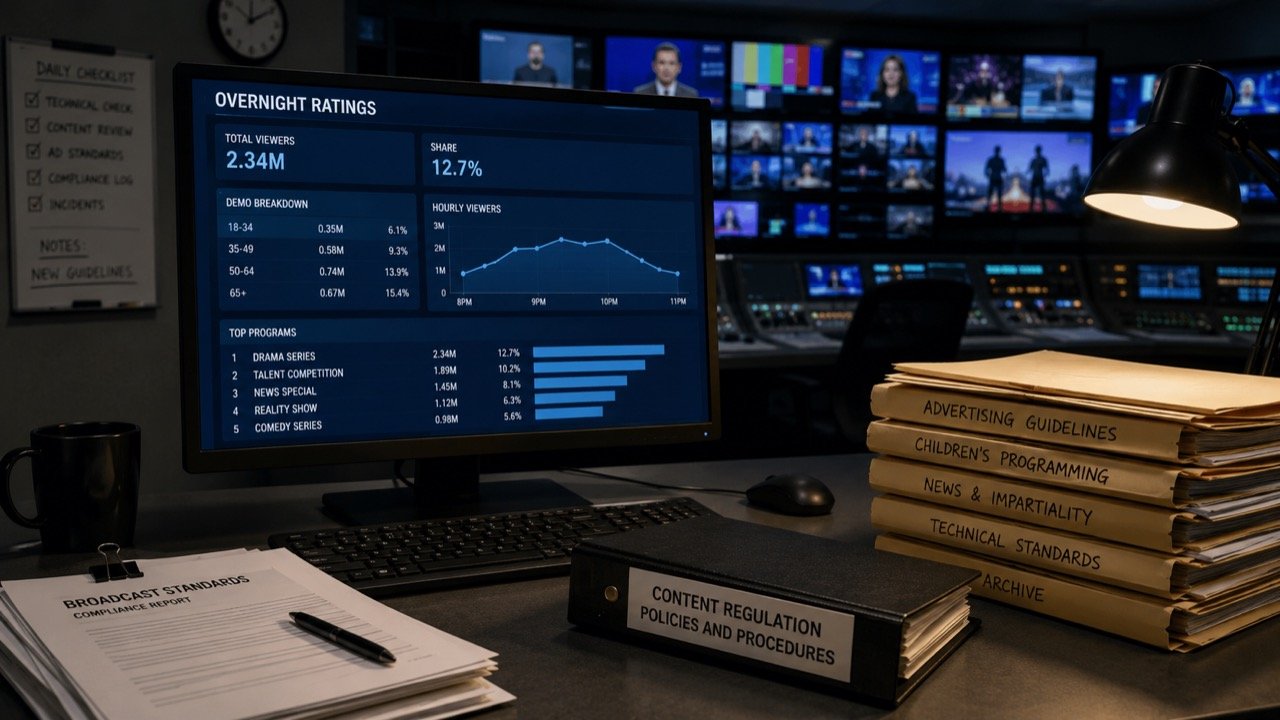
BARC Ratings Suspension Leaves Indian TV Industry Flying Blind
BARC's pause on television ratings has put India's broadcast measurement system under fresh scrutiny, leaving broadcasters, advertisers and media planners without the weekly audience data that anchors the TV economy.