India Targets $1 Trillion in FY26 Exports as Trade Push Widens
The commerce ministry has reaffirmed a $1 trillion export goal for FY26 at a Board of Trade meeting led by Piyush Goyal, leaning on a seven-point action plan spanning merchandise, services and defence exports.
Commentary & Analysis ·
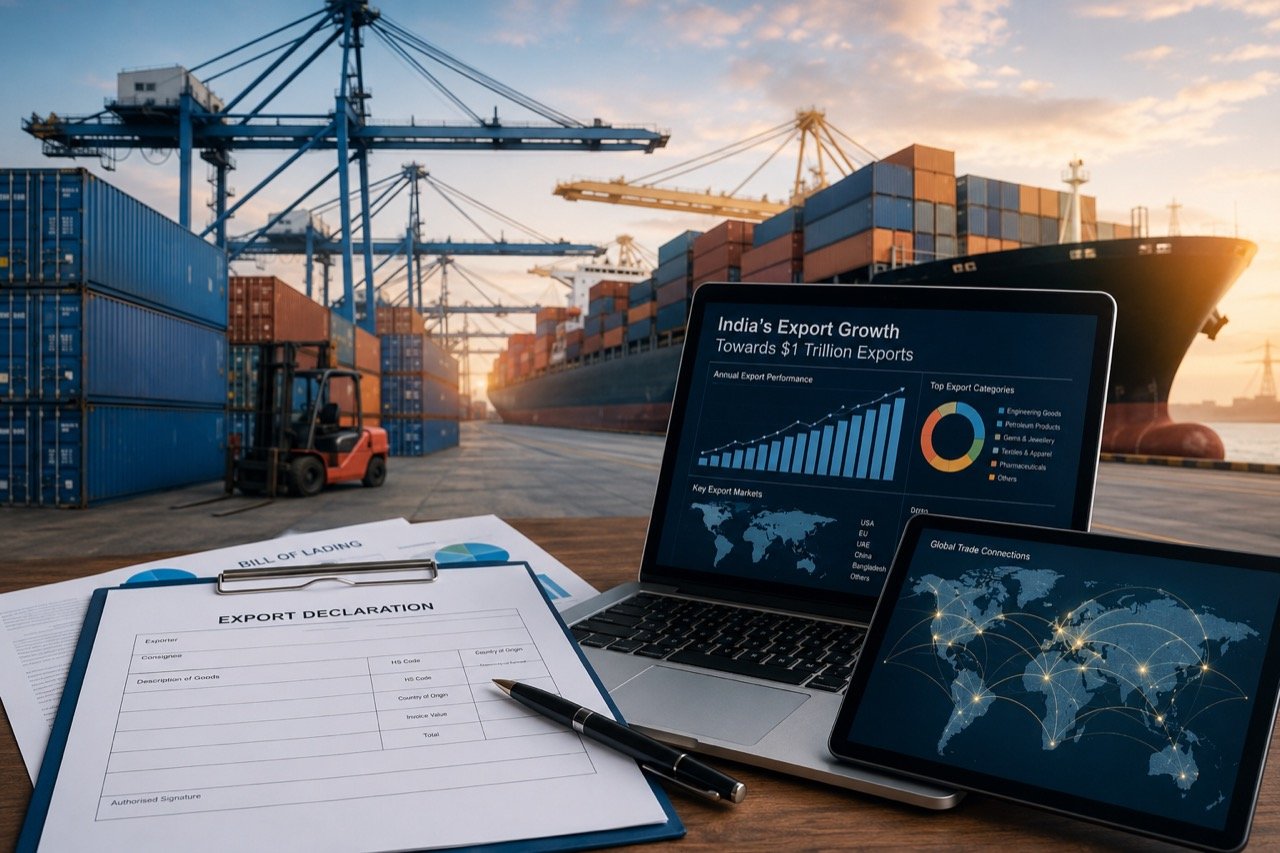
India has reaffirmed an ambitious $1 trillion export target for the current financial year, making it one of the strongest business-policy stories of the moment. Times of India reported that the goal was underscored at a Board of Trade meeting chaired by Commerce and Industry Minister Piyush Goyal, with both merchandise and services trade placed at the centre of the push. The reaffirmation is notable less for its novelty than for its timing: restating a headline figure at a formal Board of Trade meeting signals that the government wants ministries, exporters and state governments to treat the number as a live planning input rather than a slogan left over from a budget speech.
Why the number matters
A trillion-dollar export goal is not merely a headline figure. Exports are tied directly to jobs, manufacturing scale, currency stability and India's standing in global supply chains. Every dollar of exports touches a chain of domestic activity — raw material sourcing, component manufacturing, assembly, testing, packaging and freight forwarding — each link employing workers and consuming credit. A rupee that moves in step with a healthy trade account is a rupee less vulnerable to sudden capital-flow shocks, which is why the finance ministry and the central bank watch export trends almost as closely as the commerce ministry does. Reaching the target requires coordination across ports, logistics, trade finance, quality standards, free trade agreements and sector-by-sector competitiveness — a whole-of-government exercise rather than a single ministry's campaign. That breadth is itself the challenge: a shortfall in any one of these areas, whether a congested port terminal or a delayed trade financing scheme, can quietly erode the gains made elsewhere.
The plan and the headwinds
The reported seven-point action plan signals a wider strategy that includes global market outreach and a growing role for defence exports. Placing defence exports within a broader trade strategy is a meaningful shift in itself: it treats what was once a niche, security-sensitive category as a mainstream growth lever, implying that policymakers see genuine scope for India to build export volumes in an area where it has historically been a net importer. Services exports remain India's dependable engine, benefiting from established strengths in information technology, business process outsourcing and a widening range of professional and digital services that face fewer of the logistical constraints that dog physical goods. Merchandise exports, by contrast, need continued depth in electronics, engineering goods and pharmaceuticals to carry their share of the load. These three sectors are worth dwelling on precisely because they sit at different points of maturity: pharmaceuticals is a proven strength built over decades, engineering goods reflect a manufacturing base that has scaled steadily, and electronics represents the newer, more contested frontier where India is competing directly against established Asian manufacturing hubs.
The risks are largely external. Soft global demand, tariff uncertainty and geopolitical disruptions to shipping lanes can all blow the trajectory off course, no matter how well-designed the domestic playbook is. This is the uncomfortable truth underlying any export target set against a backdrop of global uncertainty: India can streamline its own ports, cut red tape and sign trade agreements, but it cannot control whether its trading partners are absorbing goods at pace, whether shipping routes remain open and affordable, or whether tariff regimes shift with little warning. Monthly trade data will quickly reveal whether momentum matches ambition, and it is this data — rather than any single ministerial statement — that will ultimately determine whether the target is credible.
The domestic execution challenge
Behind the seven-point plan lies an execution problem that is easy to underestimate. Free trade agreements, once signed, do not automatically generate order books; they require exporters, particularly smaller manufacturers, to be aware of preferential tariff lines, to meet the quality and compliance standards demanded by partner markets, and to have the working capital to fulfil larger orders on tighter timelines. Port and logistics reforms follow a similar pattern: announcements of digitisation or turnaround-time targets matter only if they translate into fewer days between a container leaving a factory and clearing a foreign port. These are unglamorous, granular improvements, but they are precisely the kind of change that separates an ambitious target from an achieved one.
Stakeholder perspectives
For large exporters and industry bodies, a headline target of this scale is generally welcome, since it signals sustained government attention and the likelihood of continued policy support, from export incentives to trade facilitation measures. For smaller exporters, the calculus is different. They tend to have less capacity to absorb currency volatility, less access to affordable trade finance, and less room to manoeuvre if shipping costs rise or a key market imposes new tariffs. For India's trading partners, the target is a signal of intent rather than a demand, but one that will likely accompany continued Indian pressure to conclude or expand free trade agreements. For the domestic labour market, the composition of the growth matters as much as its scale: services-led growth supports a different set of jobs, concentrated in urban, skilled segments, than merchandise-led growth, which has historically been more effective at creating factory employment across a wider geographic and skill base.
What to watch next
The most useful signals in the coming months will not be further announcements but the underlying data releases. Monthly merchandise and services export figures will show whether the current trajectory is consistent with a trillion-dollar annual run rate or whether it is falling behind. Sector-level detail will indicate whether electronics, engineering goods and pharmaceuticals are genuinely expanding their share or whether growth remains concentrated in services. Progress on free trade agreements will be worth tracking not just in terms of signatures but in terms of whether exporters report increased orders attributable to preferential access. And any shift in global shipping conditions or tariff policy from major trading partners will need to be weighed against the domestic plan, since these are the variables most capable of disrupting an otherwise sound strategy.
The NE Times View
Targets concentrate minds, and this one usefully forces every arm of India's trade machinery to plan against a single number. But the credibility test lies in conversion: whether new free trade agreements translate into actual order books, whether port and logistics reforms shave real days off shipment times, and whether small exporters — not just large conglomerates — feel the tailwind. India should also resist the temptation to declare victory on services alone; broad-based merchandise growth is what builds factory jobs. A trillion-dollar figure achieved predominantly through services strength, however welcome, would tell a narrower story about the economy's transformation than one built on a genuine broadening of manufacturing exports. Watch the monthly numbers, not the announcements.
Key takeaways
- India has reaffirmed a $1 trillion export target for the current financial year, discussed at a Board of Trade meeting chaired by Commerce and Industry Minister Piyush Goyal.
- A reported seven-point action plan includes global market outreach and a growing role for defence exports, alongside continued reliance on services exports and merchandise sectors such as electronics, engineering goods and pharmaceuticals.
- Key external risks include soft global demand, tariff uncertainty and geopolitical disruptions to shipping lanes.
- Execution — through free trade agreement conversion, port and logistics reforms, and support for small exporters — will determine whether the target is credible.
- Monthly trade data, not policy announcements, will be the real test of whether momentum matches ambition.
You may also like to read
India Pushes for Tariff Advantage Over Rivals in US Trade Deal, Says Goyal
India is seeking a US trade agreement that gives its exporters a comparative tariff edge over rival economies, Commerce Minister Piyush Goyal said, even as talks run long over the central question of tariff treatment.
India Seeks Preferential Market Access in US Trade Talks, Says Goyal
Commerce Minister Piyush Goyal says India wants a US trade deal that hands its exporters a competitive edge, with market access, tariff lines and rules of origin now at the heart of negotiations.
US Trade Chief Greer's India Visit Puts First Tranche of Trade Deal in Focus
USTR Jamieson Greer's New Delhi talks with Piyush Goyal have pushed the long-stalled India-US trade agreement into a decisive phase, with tariffs, market access and an early package on the table.
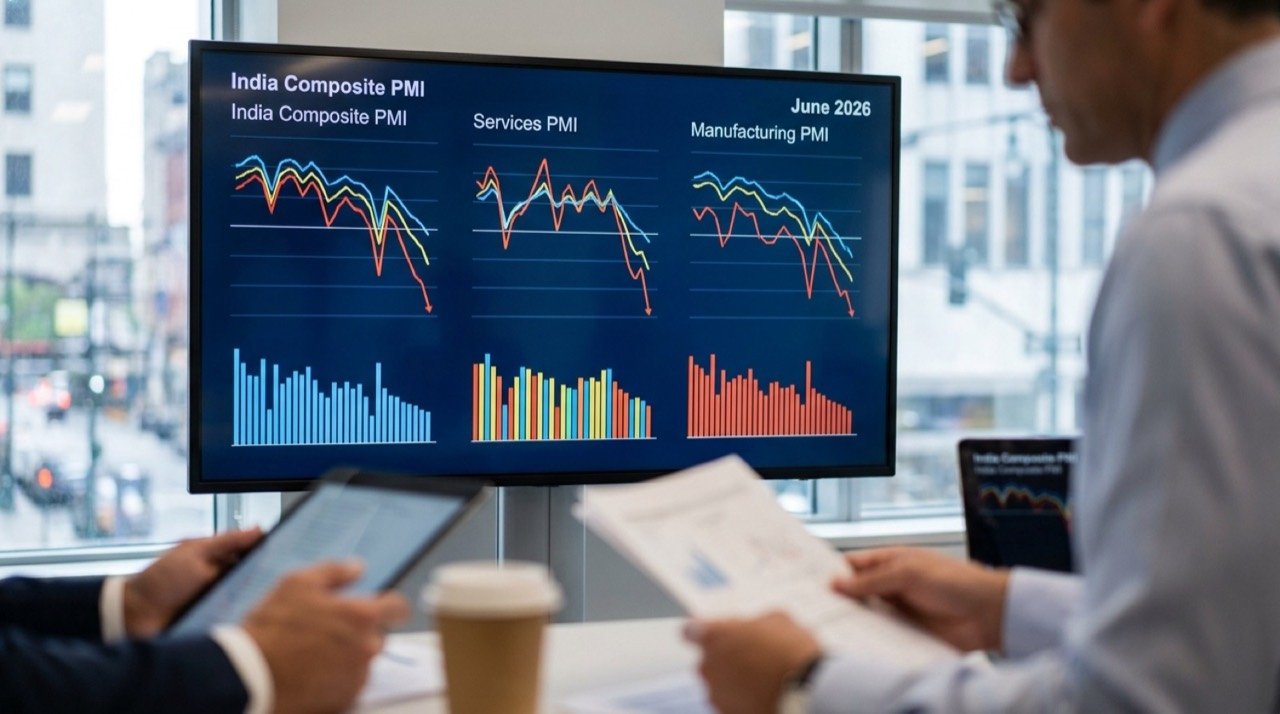
India's June Private Sector PMI Slows to a Three-Month Low
India's private sector kept expanding in June but at its weakest pace in three months, as softer demand and cooler business confidence struck a more cautious note across services and manufacturing.
More from this section
More
Adani Case: US DOJ Pushes for Permanent Dismissal of Charges
The US Department of Justice has urged a judge to permanently dismiss charges against Gautam Adani, calling the case legally flawed — a reversal with consequences for markets, diplomacy and cross-border enforcement.

Akasa Air Inducts 40th Aircraft in Indian Aviation Scale-Up
Akasa Air's 40th aircraft, ferried to Bengaluru via Seattle, Reykjavik and Cairo, marks a fleet milestone for the young carrier and a fresh signal that India's aviation market remains firmly in expansion mode.
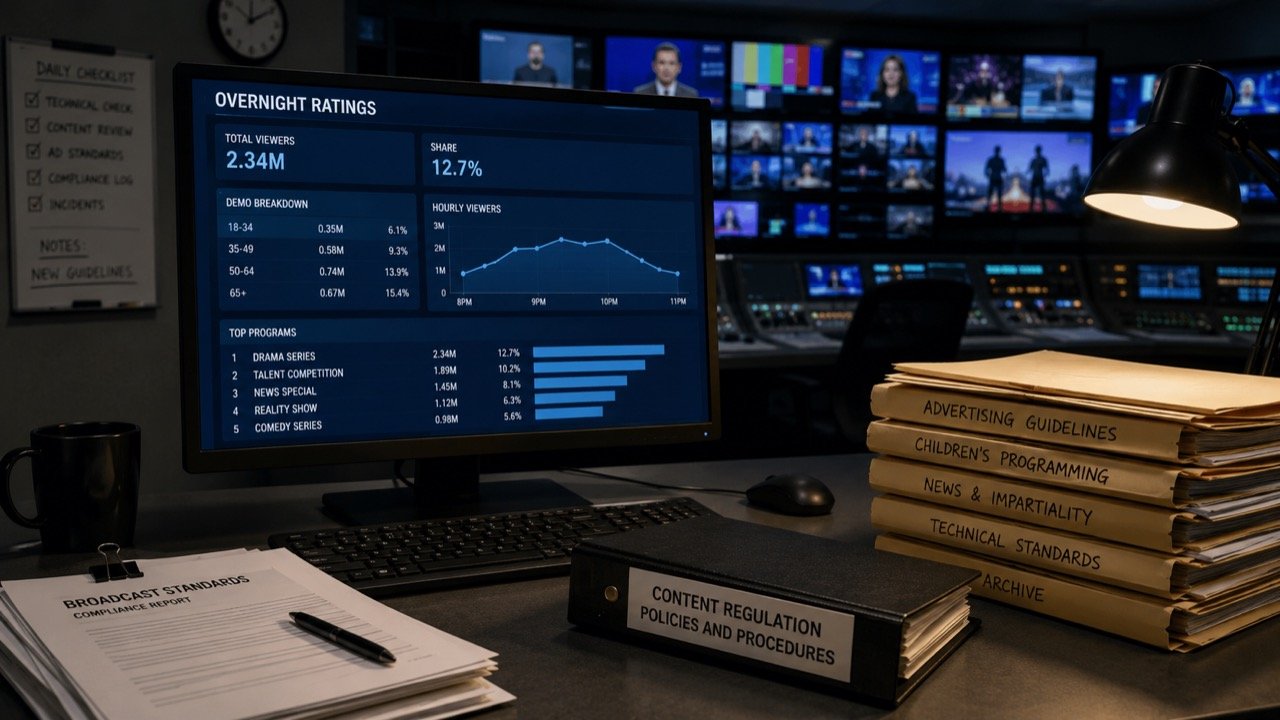
BARC Ratings Suspension Leaves Indian TV Industry Flying Blind
BARC's pause on television ratings has put India's broadcast measurement system under fresh scrutiny, leaving broadcasters, advertisers and media planners without the weekly audience data that anchors the TV economy.