India's June Private Sector PMI Slows to a Three-Month Low
India's private sector kept expanding in June but at its weakest pace in three months, as softer demand and cooler business confidence struck a more cautious note across services and manufacturing.
Commentary & Analysis ·
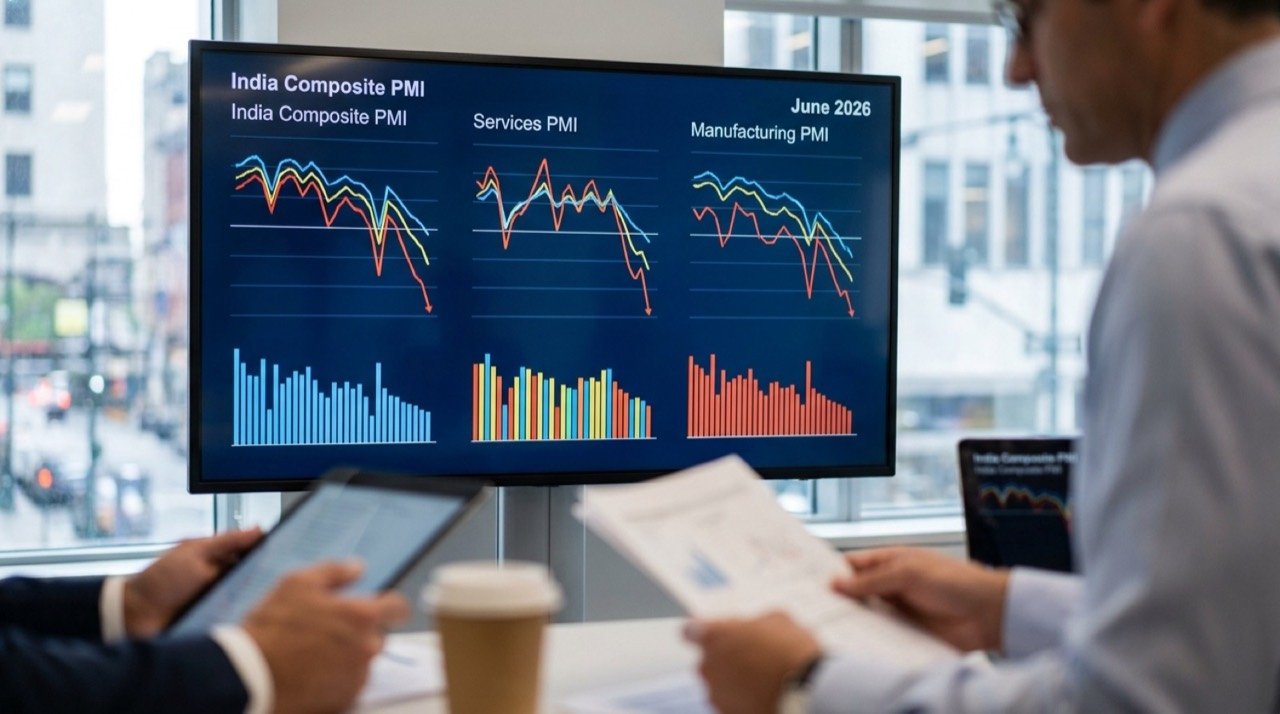
India's private sector grew again in June, but at the slowest pace in three months, according to the latest composite Purchasing Managers' Index (PMI) survey. The reading remained comfortably in expansion territory, signalling that the economy's underlying engine is still running, even as the momentum behind it visibly cooled. On the surface, this is an unremarkable data point: another month of growth, another survey confirming India remains one of the faster-expanding major economies. Yet the details beneath the headline number are worth examining closely, because PMI readings are as much about direction of travel as they are about the absolute level of activity.
Still growing, but more slowly
A PMI above the 50 mark indicates expansion, and June's composite figure stayed clearly on that side of the line. New orders and output continued to rise across both services and manufacturing, suggesting that the broad-based growth seen earlier in the year has not reversed. What changed was the speed: the index eased to its lowest level in three months, pointing to a gentler pace of activity rather than a contraction. This distinction matters. A slowdown within expansion is fundamentally different from a slide into contraction, and conflating the two risks overstating the significance of a single month's data. For businesses, the data describes a mixed picture. Demand remains positive, but the softer reading hints that the post-pandemic surge in orders may be settling into a steadier, less frenetic rhythm, a maturing of the growth cycle rather than a reversal of it.
That maturing process is itself worth dwelling on. Economies that have enjoyed an extended run of above-trend expansion rarely sustain the same velocity indefinitely; at some point, order books that were being replenished after a period of pent-up demand begin to normalise. The question this raises for India is whether June's easing reflects that kind of natural deceleration towards a more sustainable pace, or whether it is the first sign of something more structural. The PMI survey alone cannot answer that question definitively, which is precisely why the coming months of data will carry disproportionate weight in shaping the narrative.
What is weighing on confidence
Survey coverage attributes the cooling to softer demand and a dip in business confidence. Firms are weighing inflation, global uncertainty and uneven export conditions as they make hiring and investment decisions. That combination tends to make companies more selective about adding capacity, even when current order books look healthy. This is a familiar pattern in business-cycle dynamics: confidence often turns before activity does, because forward-looking decisions on staffing and capital expenditure are shaped by expectations of future demand, not merely present order flows. When firms sense uncertainty ahead, whether from price pressures, geopolitical friction, or unevenness in export markets, they tend to delay commitments rather than reverse existing output, which is consistent with the picture the June survey paints of continued expansion alongside greater caution.
The specific ingredients cited, inflation, global uncertainty and export unevenness, each carry their own weight. Inflation concerns affect both the cost side of business planning and the purchasing power of end consumers, making firms wary of over-committing to expansion plans that assume steady demand growth. Global uncertainty, a broad but persistent feature of the current international environment, complicates supply chain planning and investment horizons for firms with cross-border exposure. And uneven export conditions suggest that not all sectors or regions are experiencing the slowdown identically, some external-facing industries may be more exposed to softening overseas demand than domestically oriented ones. Taken together, these pressures explain why confidence has dipped even as headline output figures remain positive.
Why the next prints matter
The central question for markets and policymakers is whether June's slowdown is a one-month blip or the leading edge of a softer second-quarter trend. A single dip within expansion territory is not alarming on its own, but a sustained slide would carry implications for growth forecasts and monetary policy. This is the crux of how such data should be read: PMI surveys are inherently noisy on a month-to-month basis, and one reading rarely justifies a wholesale revision of economic expectations. But policymakers and market participants alike understand that trends are built from individual data points, and a series of successive declines would be a materially different story from an isolated dip.
For monetary policy specifically, sustained softening in private sector activity would feed into the broader calculus around interest rates and liquidity conditions, since central banks weigh real-economy momentum alongside inflation readings when setting policy. For growth forecasters, a confirmed second-quarter deceleration would likely prompt downward revisions to annual output projections, with knock-on effects for corporate earnings expectations and, potentially, investment flows. None of this is guaranteed by June's number alone, but it is the reason the reading is being watched as closely as it is.
Stakeholder perspectives
For businesses themselves, the survey results validate a cautious approach to hiring and capital expenditure that many firms may already be adopting informally in response to the pressures described above. For investors, the data offers a signal to watch corporate guidance and forward order books more closely in the coming quarter, rather than relying solely on backward-looking growth figures. For policymakers, the survey serves as an early warning indicator, one of several inputs that will inform decisions on interest rates, fiscal support, and trade policy in the months ahead. Each of these groups will be parsing the same data differently, but all share an interest in distinguishing a temporary soft patch from the start of a more durable slowdown.
The NE Times View
Growth that slows but does not stall is hardly cause for alarm, yet the cooling in demand and confidence deserves attention before it hardens into a trend. The NE Times reads June's PMI as a useful caution against complacency: India's expansion remains real but increasingly dependent on momentum that policymakers should not take for granted. The signal is to watch consumption, not to panic. New orders and output are still rising, yet companies are turning more cautious on hiring and investment, and that gap between current activity and forward-looking sentiment is precisely where the risk, if any, is likely to first show up. For now, the June numbers describe an economy that is expanding with more caution rather than losing steam. Whether that caution hardens into a slower second-quarter pace will depend on how demand, prices and the external environment evolve in the weeks ahead.
Key takeaways
- Composite PMI stayed in expansion territory but hit a three-month low in June, with both services and manufacturing continuing to record rising output.
- Softer demand and weaker business confidence, driven by inflation concerns, global uncertainty and uneven export conditions, are behind the slowdown in pace.
- Firms are becoming more selective about hiring and investment even as current order books remain healthy, a classic sign of confidence turning before activity does.
- The key question ahead is whether June's dip is a one-month blip or the start of a softer second-quarter trend, a distinction that matters for growth forecasts and monetary policy.
- The NE Times view: India's expansion remains genuine but increasingly dependent on momentum that should not be taken for granted; consumption trends, not the headline PMI print alone, are what to watch next.
You may also like to read
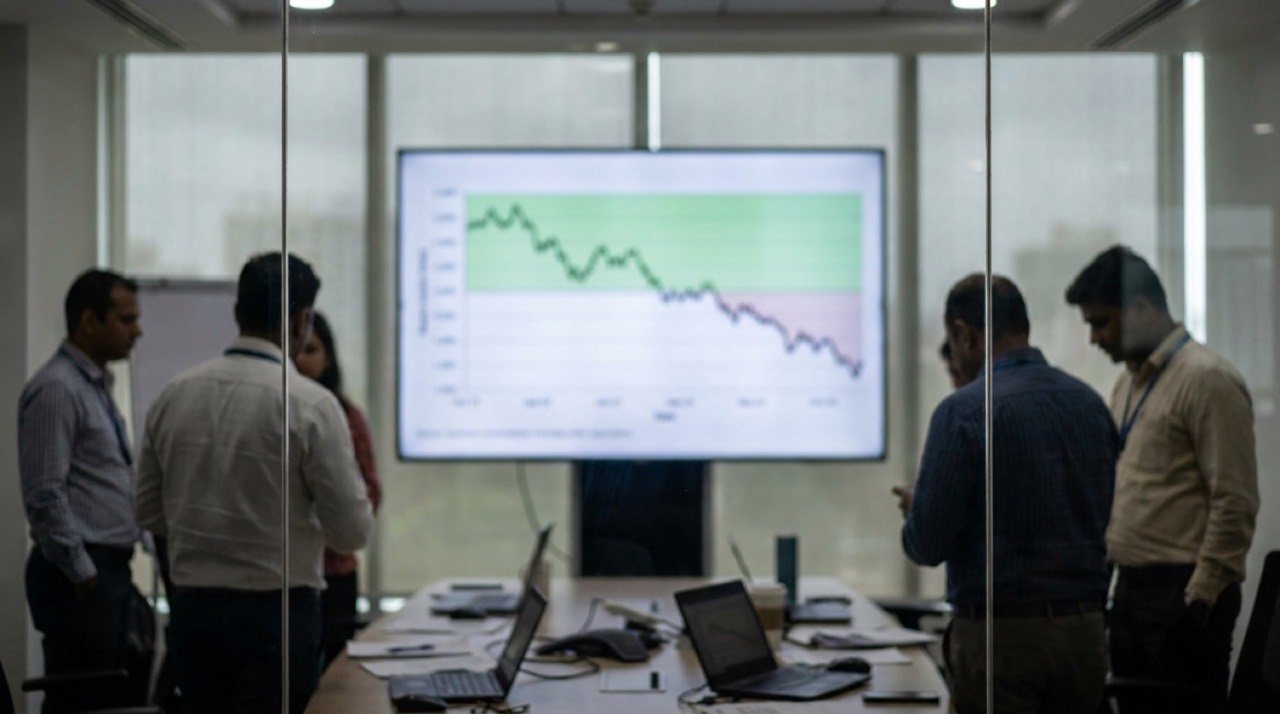
India's June PMI Eases but Holds Firmly in Expansion Zone
India's flash June PMI readings show private-sector momentum cooling across services and manufacturing, even as the economy stays comfortably above the line that separates growth from contraction.
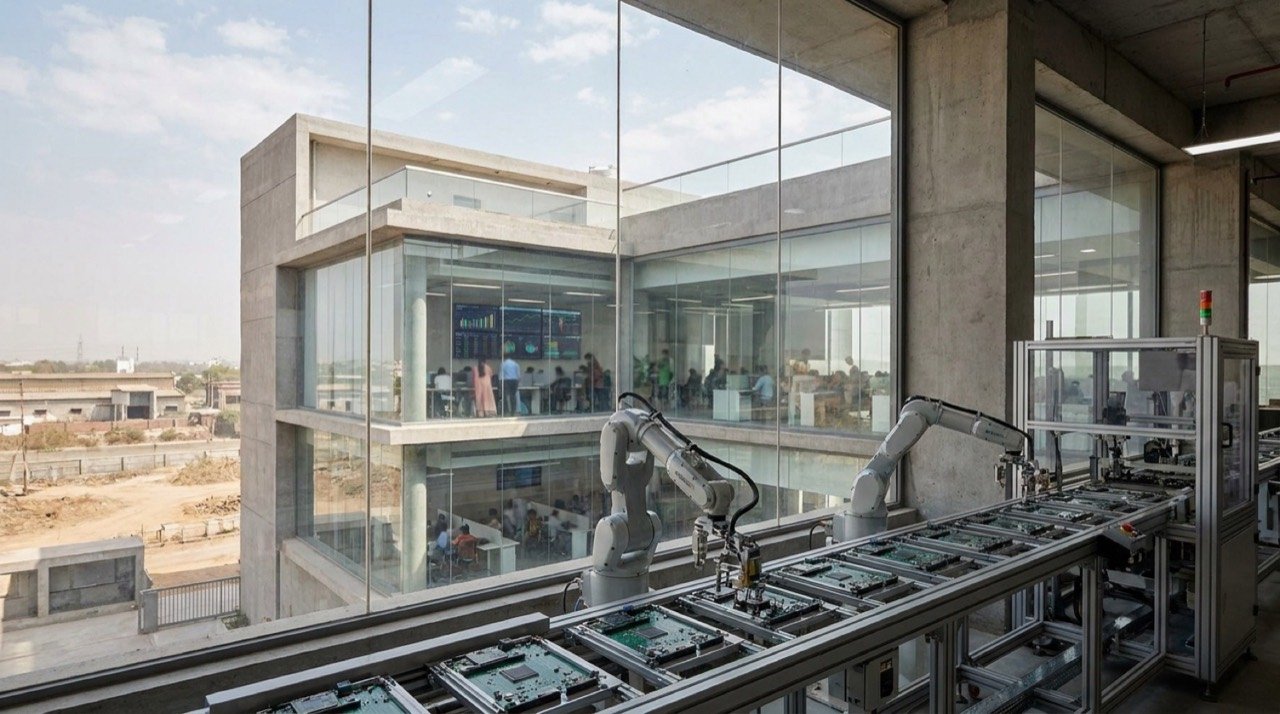
India's Flash PMI Slows in June but Still Signals Solid Expansion
India's flash PMI eased to 57.4 in June from May's 12-month high, cooling momentum while staying firmly in expansion territory and pointing to continued resilience in manufacturing and services.

India's Economy Grows 7.7% in FY26, Fastest Since Post-Covid Rebound
March-quarter growth of 7.8% beat forecasts as services and construction powered the full-year expansion, cementing India's lead among major economies.

India Targets $1 Trillion in FY26 Exports as Trade Push Widens
The commerce ministry has reaffirmed a $1 trillion export goal for FY26 at a Board of Trade meeting led by Piyush Goyal, leaning on a seven-point action plan spanning merchandise, services and defence exports.
More from this section
More
Adani Case: US DOJ Pushes for Permanent Dismissal of Charges
The US Department of Justice has urged a judge to permanently dismiss charges against Gautam Adani, calling the case legally flawed — a reversal with consequences for markets, diplomacy and cross-border enforcement.

Akasa Air Inducts 40th Aircraft in Indian Aviation Scale-Up
Akasa Air's 40th aircraft, ferried to Bengaluru via Seattle, Reykjavik and Cairo, marks a fleet milestone for the young carrier and a fresh signal that India's aviation market remains firmly in expansion mode.
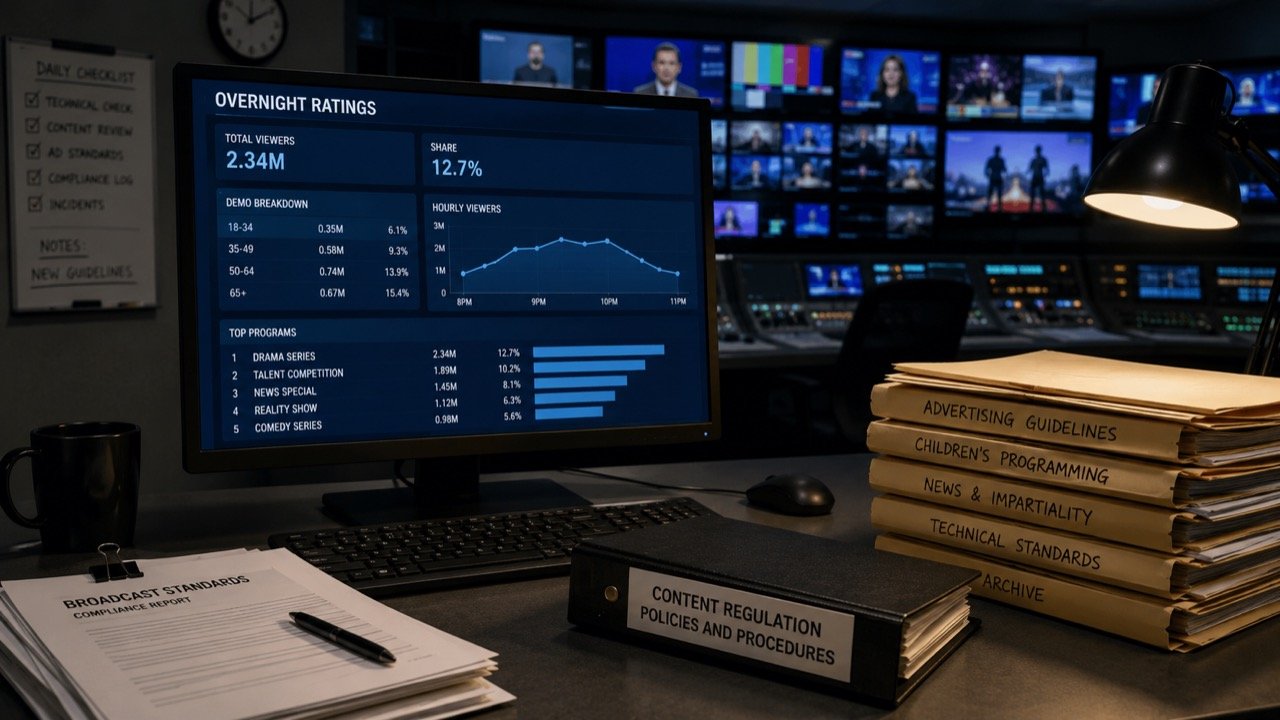
BARC Ratings Suspension Leaves Indian TV Industry Flying Blind
BARC's pause on television ratings has put India's broadcast measurement system under fresh scrutiny, leaving broadcasters, advertisers and media planners without the weekly audience data that anchors the TV economy.