India's Flash PMI Slows in June but Still Signals Solid Expansion
India's flash PMI eased to 57.4 in June from May's 12-month high, cooling momentum while staying firmly in expansion territory and pointing to continued resilience in manufacturing and services.
Commentary & Analysis ·
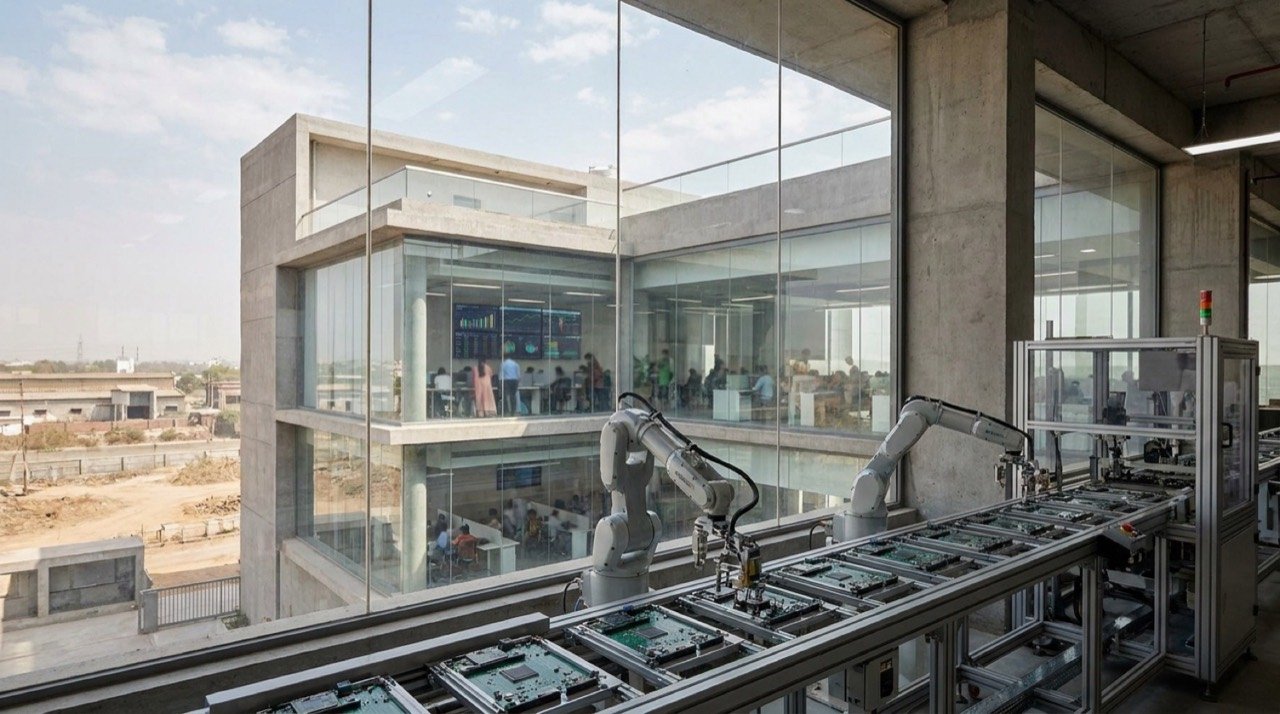
India's economy entered the second half of June showing a familiar mix of strength and caution. The flash Purchasing Managers' Index (PMI) eased during the month, slipping from May's twelve-month high, yet remained firmly above the threshold that separates growth from contraction, signalling that activity across factories and services kept expanding even as momentum cooled. For an economy that has spent much of the past year positioning itself as one of the more dependable growth stories in a subdued global environment, this is precisely the kind of data point that invites careful reading rather than snap judgement.
What the flash numbers show
The composite flash reading came in at 57.4, down from the recent peak recorded in May, with any figure above 50 indicating expansion. A reading in the high 50s still denotes a healthy pace of growth, so the softening reflects a moderation rather than a reversal. Both manufacturing and services continued to contribute to the expansion, underscoring that the slowdown in pace was broad-based and gentle rather than concentrated in a single sector. That breadth matters. When a composite index eases because one sector stumbles while another holds firm, it can mask an emerging weak spot. Here, the fact that both the factory floor and the services economy eased in tandem, while both stayed comfortably in expansionary territory, suggests a synchronised cooling rather than a sector-specific problem building beneath the surface.
It is worth pausing on what a flash PMI actually captures. These are preliminary, survey-based readings gathered from purchasing managers before the month closes, designed to give an early indication of order books, output, hiring intentions and price pressures. They are not a perfect substitute for hard output data such as the Index of Industrial Production or GDP, but their value lies precisely in their timeliness. A composite figure of 57.4 tells markets and policymakers, well ahead of official statistics, that the expansion that has characterised India's economy through the first half of the year has not broken down.
Why the PMI matters for policy and business
The flash PMI is closely watched because it offers one of the earliest reads on the health of the economy, capturing signals on new demand, hiring intentions, input costs and overall business confidence before official data arrive. A slower but still-positive print therefore tells policymakers and companies two things at once: underlying activity remains resilient, but the easing in momentum is worth monitoring as the quarter closes. For the Reserve Bank of India, PMI readings feed into the broader mosaic of indicators used to calibrate monetary policy. A cooling that stays well within expansionary territory is unlikely to alter the central bank's stance materially, but a string of successive declines toward the 50 mark would carry a different weight altogether.
For businesses, the signal is more operational than strategic. Firms use PMI trends to gauge whether to expand hiring, build inventory or hold steady on capital expenditure. A composite reading still comfortably above 50, even if lower than the prior month, generally supports continued investment planning rather than retrenchment. Exporters and manufacturers reliant on global demand will nonetheless want to see whether the moderation persists into July, since a single month's softening is not yet a trend.
The risks beneath the resilience
The survey also serves as a reminder that cost pressures and global uncertainty remain live risks. Elevated input prices can squeeze margins, particularly for manufacturers who may find it harder to pass rising costs on to consumers in a competitive market. Meanwhile, an unsettled external environment, ranging from shifts in global trade conditions to uneven demand from key export markets, can weigh on export demand and sentiment in the months ahead. None of this is new to observers of the Indian economy, but the June flash data is a useful reminder that resilience is not the same as immunity. An economy that is expanding at a strong clip can still carry embedded vulnerabilities that surface only when external shocks intensify or cost pressures compound over several quarters.
It is also worth considering how businesses on the ground experience these pressures differently depending on their position in the supply chain. Firms further from end consumers, such as raw material processors, tend to feel input cost inflation first and most acutely, while consumer-facing services firms may have more flexibility to adjust pricing. This uneven distribution of pressure is part of why headline composite figures, however useful as a first read, need to be unpacked further before drawing firm conclusions about the health of any single segment of the economy.
Reading the trend, not just the print
Taken together, the June flash data depict an economy that is still expanding at a respectable clip while losing a little steam. For now, the resilience is the headline, but businesses and policymakers will be watching whether the cooling deepens or stabilises in the final readings of the quarter. A single data point rarely settles the question of direction. What will matter more is whether the July and August flash readings confirm a gentle plateau around current levels, or whether they show a more pronounced downward drift that would warrant closer scrutiny from both the central bank and fiscal authorities.
Markets, for their part, tend to react less to the absolute level of a PMI print and more to its trajectory relative to expectations. A reading that undershoots forecasts even while remaining in expansionary territory can still unsettle sentiment if it feeds a narrative of slowing momentum. Conversely, a stabilisation in the high 50s over the coming months would likely be read as confirmation that India's growth engine, while not accelerating, remains solidly intact.
The NE Times View
A reading of 57.4 cooling from a peak is a soft landing, not a stumble, and the distinction matters for policy. Momentum easing while staying firmly expansionary gives the RBI room without panic, allowing policymakers to observe rather than react. The more telling signals lie beneath the headline, in new orders, employment and input prices, components that will reveal whether this is a natural breather after a strong run or the early edge of a more sustained deceleration. India's edge has long been consistency of growth relative to global peers; the risk now is mistaking healthy moderation for the start of a slowdown, and reacting with policy urgency that the underlying data does not yet justify. The sensible course, for now, is patience paired with vigilance: watch the sub-indices, watch the next two prints, and resist the temptation to over-interpret a single month's cooling in either direction.
Key takeaways
- Flash composite PMI eased to 57.4 in June, down from May's twelve-month high, but stayed well above the 50-point expansion threshold.
- Both manufacturing and services continued to expand, indicating the slowdown in momentum was broad-based rather than sector-specific.
- The PMI's value lies in its timeliness, offering an early read on demand, hiring and input costs ahead of official economic data.
- Elevated input prices and an unsettled global environment remain risks that could pressure margins and export sentiment in coming months.
- Policymakers and businesses are likely to focus less on the single print and more on whether upcoming readings show stabilisation or a deeper cooling trend.
You may also like to read
India's June PMI Eases but Holds Firmly in Expansion Zone
India's flash June PMI readings show private-sector momentum cooling across services and manufacturing, even as the economy stays comfortably above the line that separates growth from contraction.
India Flash PMI Eases to 57.4 but Stays in Expansion
India's flash composite PMI slipped to 57.4 in June as demand and hiring lost momentum, yet the reading stayed well above the growth threshold, signalling resilient but more cautious activity.
India's June Private Sector PMI Slows to a Three-Month Low
India's private sector kept expanding in June but at its weakest pace in three months, as softer demand and cooler business confidence struck a more cautious note across services and manufacturing.

India's Economy Grows 7.7% in FY26, Fastest Since Post-Covid Rebound
March-quarter growth of 7.8% beat forecasts as services and construction powered the full-year expansion, cementing India's lead among major economies.
More from this section
More
Adani Case: US DOJ Pushes for Permanent Dismissal of Charges
The US Department of Justice has urged a judge to permanently dismiss charges against Gautam Adani, calling the case legally flawed — a reversal with consequences for markets, diplomacy and cross-border enforcement.

Akasa Air Inducts 40th Aircraft in Indian Aviation Scale-Up
Akasa Air's 40th aircraft, ferried to Bengaluru via Seattle, Reykjavik and Cairo, marks a fleet milestone for the young carrier and a fresh signal that India's aviation market remains firmly in expansion mode.
BARC Ratings Suspension Leaves Indian TV Industry Flying Blind
BARC's pause on television ratings has put India's broadcast measurement system under fresh scrutiny, leaving broadcasters, advertisers and media planners without the weekly audience data that anchors the TV economy.