India Flash PMI Eases to 57.4 but Stays in Expansion
India's flash composite PMI slipped to 57.4 in June as demand and hiring lost momentum, yet the reading stayed well above the growth threshold, signalling resilient but more cautious activity.
Commentary & Analysis ·
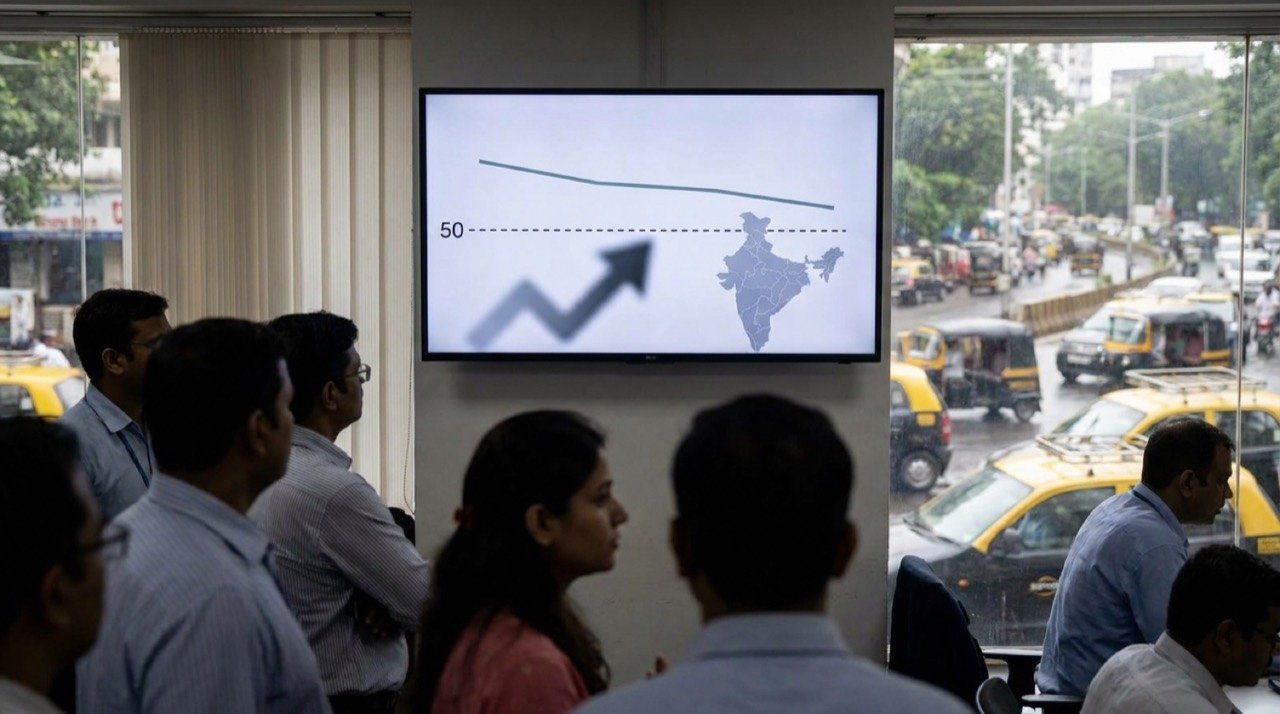
India's flash composite PMI eased to 57.4 in June, according to private survey data cited in business reports, signalling that overall activity continued to expand but at a slower pace. The reading remained comfortably above the 50 mark that separates growth from contraction, even as softer demand and hiring momentum pointed to businesses turning more cautious. On the surface, this is an unremarkable data point in a long run of readings that have kept India among the faster-growing large economies. Yet the direction of travel, rather than the level itself, is what deserves attention, and it is worth setting out carefully why a dip of this kind matters to businesses, workers and policymakers alike.
Reading the numbers
The Purchasing Managers' Index is a closely watched gauge of private-sector health, drawn from surveys of firms across manufacturing and services. A figure above 50 indicates expansion, so 57.4 still reflects a healthy pace of growth, even though it marks a step down from the stronger momentum seen earlier. The flash estimate offers an early read before the final monthly data, making it a useful, if preliminary, signal of where the economy is heading. Because the flash reading arrives ahead of the fuller data set, it is best treated as a directional indicator rather than a definitive verdict. Analysts, investors and government departments use it precisely for this reason: it allows an early sense of momentum without waiting for the more comprehensive figures that follow later in the cycle. That said, the preliminary nature of the number also means it should be read with a degree of caution until the final PMI print confirms or revises the picture.
Where the softening showed up
The survey pointed to demand and hiring losing some momentum, suggesting companies are weighing future orders more carefully and slowing the pace of recruitment. While the underlying expansion remains intact, the moderation hints at a more measured business mood after a robust run. Both services and manufacturing have shown resilience, but firms are increasingly attentive to costs, export conditions and the pipeline of new orders, all of which shape decisions on investment and employment. This pattern is consistent with what one would expect in an economy that has enjoyed a sustained period of above-trend growth: firms that expanded output and payrolls quickly in the preceding months are now taking stock, checking that order books justify further hiring, and factoring in cost pressures before committing to fresh expansion. It is not a signal of retrenchment, but it is a signal of recalibration.
Why the hiring signal matters most
Of the various components within a composite PMI reading, employment intentions tend to carry outsized significance for the real economy, because hiring decisions are typically stickier and more consequential than short-term output adjustments. A firm can trim production in a given month without much disruption, but a decision to slow recruitment reflects a more considered view of the medium-term outlook. When hiring momentum softens alongside demand, it suggests that businesses are not simply managing a temporary blip in orders but are genuinely recalibrating their expectations for the coming months. For a country where job creation remains a pressing policy concern, any cooling in private-sector hiring intentions, however modest, is the kind of detail that officials, employers' associations and households will want to watch closely in the months ahead.
What it means for the economy
For policymakers and businesses, the data adds nuance rather than alarm. Expansion continuing at a slower clip is consistent with an economy normalising after strong growth, but the dip in hiring and demand momentum is worth tracking, especially against a backdrop of global uncertainty and watchful consumers. Flash composite PMI eased to 57.4 in June. The reading stayed well above the 50 expansion threshold. Demand and hiring momentum showed signs of softening. Services and manufacturing remained broadly resilient. Firms are watching costs, exports and new orders closely. Taken together, these elements paint a picture of an economy that is still expanding at a rate many peers would envy, but doing so with a more watchful eye on the variables that could disrupt that trajectory. Global demand conditions, input costs and the broader appetite of consumers all feed into the calculations that firms are now making more carefully than they were during the earlier, more buoyant phase of the cycle.
What to watch next
The coming months will reveal whether June's moderation is a brief pause or the start of a gentler trend. With activity still firmly in expansion, the broader outlook remains constructive, but the easing momentum gives businesses and policymakers reason to stay alert to shifts in demand and global conditions. The final PMI print for June, along with subsequent monthly readings, will help clarify whether this is simply noise around a still-strong trend line or the beginning of a more sustained deceleration. Export orders, in particular, bear watching given their sensitivity to conditions outside India's control, as do any further signs of hesitancy in hiring plans, which would be a more telling indicator of underlying business confidence than headline output alone.
The NE Times View
A reading of 57.4 is hardly alarming, but the direction matters more than the level. Softening demand and slower hiring suggest the post-pandemic surge is settling into a more sober rhythm, and the cooling in jobs is the line worth watching. The economy is not stalling; it is being asked to grow on stronger fundamentals rather than momentum alone. That distinction matters: an economy that grows because everything is being ordered and staffed up at once is different in character from one that grows because underlying demand, cost discipline and export competitiveness are genuinely aligned. Steady, not spectacular, is the honest verdict, and it is the kind of verdict that rewards patience over either excessive optimism or premature concern.
Key takeaways
- India's flash composite PMI eased to 57.4 in June, still comfortably above the 50 expansion threshold.
- Demand and hiring momentum both showed signs of softening, even as manufacturing and services remained broadly resilient.
- The moderation looks more like a business mood turning cautious than any underlying weakness in the expansion itself.
- Firms are keeping a close watch on costs, export conditions and new order pipelines as they calibrate hiring and investment.
- The final June PMI print and subsequent monthly readings will show whether this is a brief pause or the start of a gentler trend.
You may also like to read
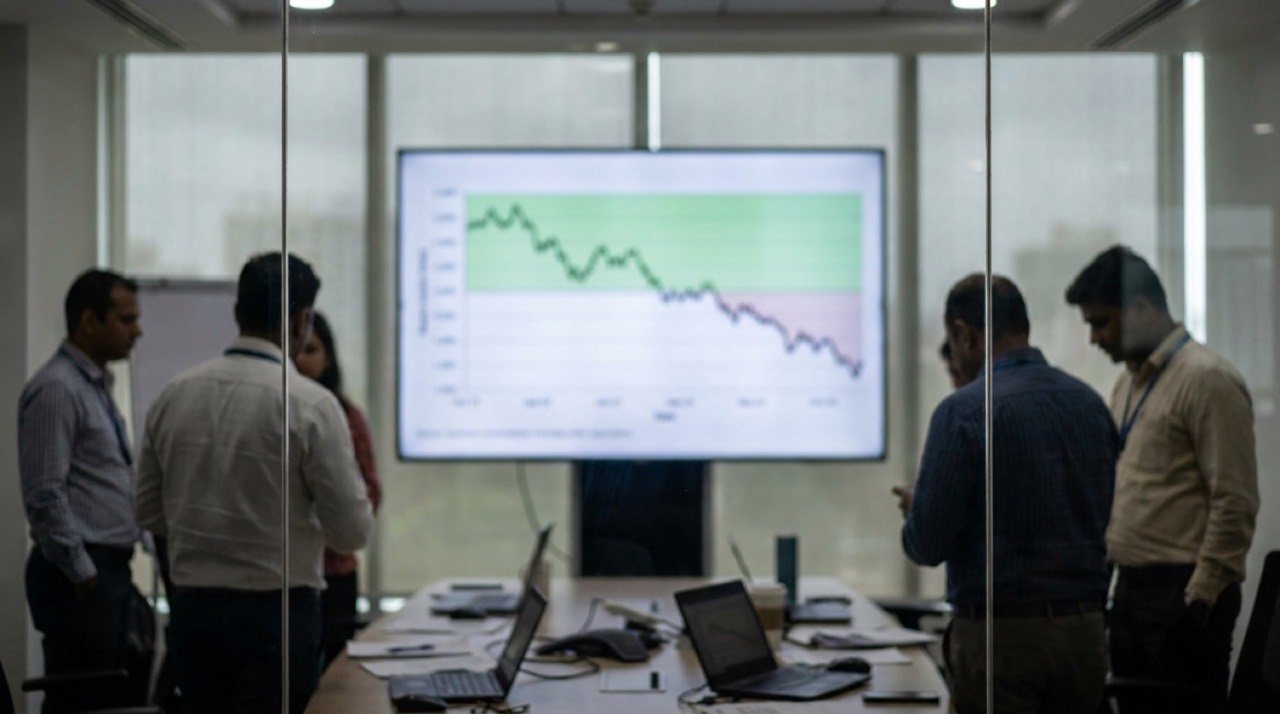
India's June PMI Eases but Holds Firmly in Expansion Zone
India's flash June PMI readings show private-sector momentum cooling across services and manufacturing, even as the economy stays comfortably above the line that separates growth from contraction.
India's Flash PMI Slows in June but Still Signals Solid Expansion
India's flash PMI eased to 57.4 in June from May's 12-month high, cooling momentum while staying firmly in expansion territory and pointing to continued resilience in manufacturing and services.

Sitharaman Credits Middle-Class Spending for India's Growth Run
Speaking at a panel in France, Finance Minister Nirmala Sitharaman said middle-class consumption helped India stay the fastest-growing large economy after Covid, putting the consumer economy back at the heart of the growth debate.
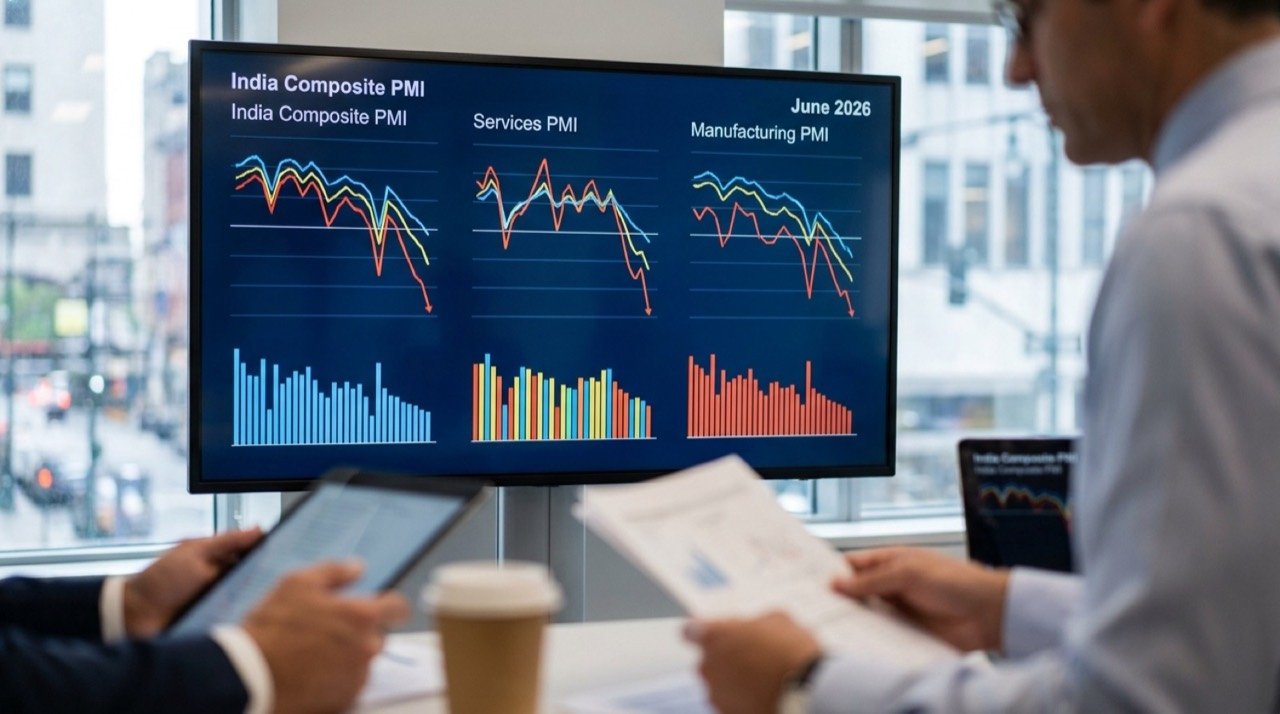
India's June Private Sector PMI Slows to a Three-Month Low
India's private sector kept expanding in June but at its weakest pace in three months, as softer demand and cooler business confidence struck a more cautious note across services and manufacturing.
More from this section
More
Adani Case: US DOJ Pushes for Permanent Dismissal of Charges
The US Department of Justice has urged a judge to permanently dismiss charges against Gautam Adani, calling the case legally flawed — a reversal with consequences for markets, diplomacy and cross-border enforcement.

Akasa Air Inducts 40th Aircraft in Indian Aviation Scale-Up
Akasa Air's 40th aircraft, ferried to Bengaluru via Seattle, Reykjavik and Cairo, marks a fleet milestone for the young carrier and a fresh signal that India's aviation market remains firmly in expansion mode.
BARC Ratings Suspension Leaves Indian TV Industry Flying Blind
BARC's pause on television ratings has put India's broadcast measurement system under fresh scrutiny, leaving broadcasters, advertisers and media planners without the weekly audience data that anchors the TV economy.