India's Forex Reserves Slip to 15-Month Low: Why the Buffer Matters
India's foreign exchange reserves have dropped to their lowest level in 15 months, narrowing the external buffer the RBI relies on to steady the rupee and reassure markets.
Commentary & Analysis ·
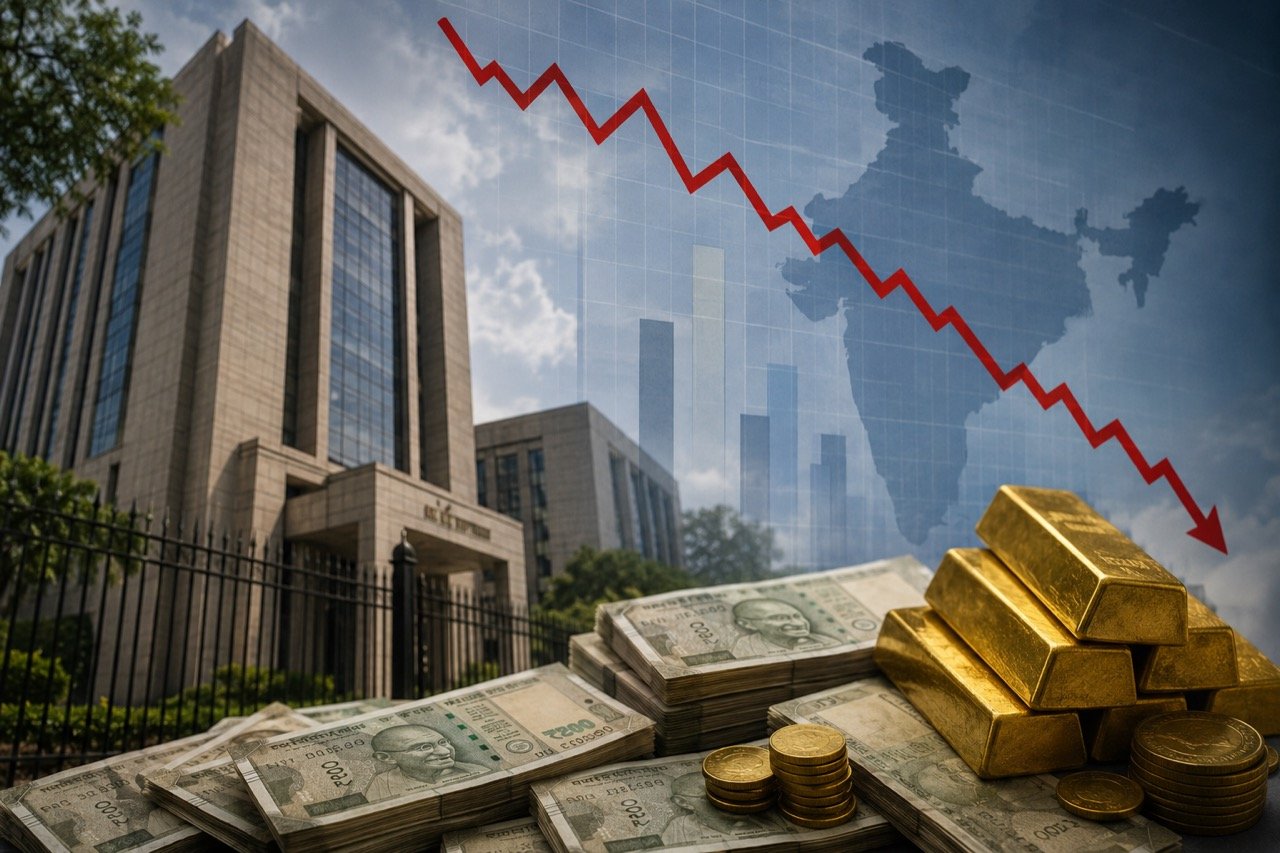
India's foreign exchange reserves have fallen to their lowest level in 15 months, putting the country's external financial cushion back in the spotlight at a moment when currency movements, trade flows and foreign capital are all being closely watched. Forex reserves are one of the Reserve Bank of India's most important tools. They allow the central bank to smooth out volatility in the rupee, maintain confidence in external payments and reassure global investors that India can meet its obligations. A narrowing buffer does not change the economy overnight, but it reduces the room the RBI has to act when markets turn turbulent.
The renewed attention to reserve levels is not incidental. Forex reserves sit at the intersection of monetary policy, trade policy and investor psychology, which is why even a single data print can generate outsized commentary. For a country like India, which imports a large share of its energy needs and runs a persistent trade deficit, the reserve buffer functions as a form of insurance. It exists precisely for periods when external conditions turn unfavourable, whether through a spike in crude oil prices, a bout of global risk aversion, or a sudden reversal of foreign portfolio flows. A 15-month low, therefore, is not simply a statistic to be noted and forgotten; it is a signal that the insurance policy has grown a little thinner than it was.
What drives reserves up and down
Reserve levels move for many reasons beyond simple inflows and outflows. Valuation changes in the dollar, euro and other holdings, shifts in the price of gold, RBI interventions in the currency market, foreign portfolio flows and the country's trade bill all feed into the headline number. That is why analysts caution against reading a single data point as a verdict on the economy. A fall in reserves can reflect the RBI actively selling dollars to defend the rupee against depreciation pressure, which is arguably a sign of the central bank doing its job rather than losing control. Equally, it can reflect currency translation effects, where reserves held in non-dollar assets simply shrink in dollar terms because of exchange rate movements among major currencies, with no change in the underlying quantity of assets held.
This layered composition of the reserves figure is important context for anyone trying to interpret the current decline. By global standards, India still holds substantial reserves, and a decline of this kind is not in itself a crisis signal. Economies with far smaller buffers relative to their import bills or external debt have managed periods of stress without the kind of disorder that policymakers fear. The concern arises if the slide is sustained and coincides with pressure on the rupee or a widening external deficit, because that combination can start to affect market sentiment, potentially triggering the kind of self-reinforcing pessimism that makes a manageable situation harder to manage.
Why the buffer matters beyond the headline number
The practical significance of reserves lies less in the absolute figure and more in what economists call import cover, the number of months of imports the reserves can finance in the event that other sources of foreign exchange dry up. This is the metric that international investors, credit rating agencies and the RBI itself watch most closely, because it translates an abstract dollar figure into a concrete measure of resilience. A falling headline number that still leaves import cover comfortably above conventional benchmarks tells a very different story from one where cover is eroding towards uncomfortable territory.
Reserves also underpin confidence in India's ability to meet external obligations, including sovereign and corporate debt repayments denominated in foreign currency. When global investors assess sovereign risk, the size and trajectory of reserves feed directly into how they price Indian assets, from government bonds to equities to the rupee itself. A shrinking buffer, even one that remains large in absolute terms, can nudge risk premiums higher if it is perceived as part of a broader deterioration rather than a temporary fluctuation. This is precisely why the trend matters more than any single week's print.
Stakeholder perspectives on the decline
For the RBI, the reserve figure is both a policy tool and a signal it must manage carefully. If the central bank has been drawing down reserves to defend the rupee, it faces a balancing act between preventing disorderly currency depreciation and preserving the very buffer that gives it credibility to intervene in the first place. For exporters and importers, the reserve trend feeds into expectations about rupee stability, which in turn shapes decisions on hedging, pricing and investment. For foreign portfolio investors, reserve trends are one input among many in assessing whether India remains an attractive and stable destination for capital, alongside growth prospects, corporate earnings and global risk appetite. For the government, the reserve position bears on its room for manoeuvre on trade policy, subsidies tied to imported commodities, and the broader narrative of macroeconomic stability that it presents to both domestic and international audiences.
What to watch next
The more meaningful indicators in the weeks ahead will be RBI commentary, the import cover that reserves provide, the direction of the rupee and the behaviour of foreign portfolio investors. Together these will show whether the 15-month low is a passing dip or the start of a trend that demands a policy response. If the RBI's communications frame the decline as a deliberate and temporary intervention to stabilise the currency, markets are likely to treat it with relative equanimity. If, however, the decline persists alongside sustained rupee weakness or a widening current account gap, the narrative could shift quickly from routine fluctuation to a matter requiring more active policy attention, potentially including adjustments to interest rates, capital flow measures or trade policy settings.
The NE Times View
The fall in reserves is a warning light, not an alarm bell. India's buffer remains large, but buffers matter precisely because they are tested at inconvenient times. The prudent reading is that policymakers now have less slack than they did a year ago, and markets know it. The RBI should communicate clearly about the drivers of the decline, and the government should treat export competitiveness and stable capital inflows as first-order priorities rather than background concerns. Watching the trend, not the headline, is the discipline this moment requires. A single month's data, however striking the 15-month framing may sound, should not be allowed to dictate policy responses; but nor should it be dismissed. The appropriate posture for observers, investors and policymakers alike is heightened attention without premature alarm, precisely the balance that distinguishes measured economic stewardship from reactive policymaking.
Key takeaways
- India's forex reserves have dropped to a 15-month low, narrowing the RBI's cushion against currency volatility and external shocks.
- The decline reflects a mix of factors, including valuation changes, gold price movements, RBI currency interventions, portfolio flows and the trade bill, not a single simple cause.
- India's reserves remain large by global standards, so the fall is not inherently a crisis signal, but a sustained slide combined with rupee pressure would raise the stakes.
- Key signals to monitor include RBI commentary, import cover levels, the rupee's trajectory and foreign portfolio investor behaviour.
- The NE Times view is that this is a warning light demanding clear communication and policy focus on export competitiveness and capital inflows, not an emergency.
You may also like to read
RBI Governor Urges Banks to Treat MSMEs as Growth Partners, Not Just Borrowers
RBI Governor Sanjay Malhotra has called on banks to see micro, small and medium enterprises as growth partners, reviving focus on credit access for the firms that employ millions across India.
RBI Sells Nearly $9 Billion in April as Rupee Faces Sustained Pressure
The central bank's net dollar sales in the spot forex market signal another month of intervention to smooth volatility, with importer demand and West Asia uncertainty weighing on the rupee.

India's Gold Loan Defaults Ease Even as Sanctions Double
India's gold-loan market is expanding fast, with loan sanctions reportedly doubling even as default ratios shrink, pointing to stronger repayment behaviour and rising demand for secured credit.
RBI Calls Rate-Hike Talk Premature, Rolls Out Liquidity Support As Rupee Steadies
The Reserve Bank moved to calm nerves in late June 2026, signalling that interest-rate hikes were premature and unveiling liquidity measures even as the rupee drew comfort from a softer crude outlook.
More from this section
More
Adani Case: US DOJ Pushes for Permanent Dismissal of Charges
The US Department of Justice has urged a judge to permanently dismiss charges against Gautam Adani, calling the case legally flawed — a reversal with consequences for markets, diplomacy and cross-border enforcement.

Akasa Air Inducts 40th Aircraft in Indian Aviation Scale-Up
Akasa Air's 40th aircraft, ferried to Bengaluru via Seattle, Reykjavik and Cairo, marks a fleet milestone for the young carrier and a fresh signal that India's aviation market remains firmly in expansion mode.
BARC Ratings Suspension Leaves Indian TV Industry Flying Blind
BARC's pause on television ratings has put India's broadcast measurement system under fresh scrutiny, leaving broadcasters, advertisers and media planners without the weekly audience data that anchors the TV economy.