India's Gold Loan Defaults Ease Even as Sanctions Double
India's gold-loan market is expanding fast, with loan sanctions reportedly doubling even as default ratios shrink, pointing to stronger repayment behaviour and rising demand for secured credit.
Commentary & Analysis ·

India's gold-loan market is drawing fresh attention after reports indicated that loan sanctions have doubled even as default ratios have shrunk. On the surface, this is an unusual pairing. Rapid credit expansion typically arrives with looser underwriting and rising delinquency, yet the reported data runs the other way, with lenders extending considerably more secured credit against household gold at precisely the moment repayment discipline appears to be improving. For an economy where formal credit access remains uneven, this is a combination worth examining closely, both for what it says about household finances and for what it implies about how banks and non-bank finance companies are managing risk in one of the oldest forms of collateral lending in the country.
Why gold loans are booming
Loans against gold have a straightforward appeal. They are quick to process, require minimal documentation, and are fully secured by collateral that the lender physically holds until the loan is repaid. For millions of Indian households, jewellery that would otherwise sit idle in a locker or almirah can be converted into usable working capital almost instantly, without the paperwork, credit history checks or waiting periods that typically accompany unsecured personal loans. That combination of speed and security has made gold loans a natural fallback for a wide range of needs, including business expenses, farm-related costs, medical emergencies and education. It is precisely because the need is often urgent that the format has such enduring appeal, borrowers do not have to prove creditworthiness on paper when the asset itself provides the assurance a lender needs.
As awareness of the product has grown and as both banks and non-bank finance companies have expanded their branch networks and digital origination capabilities, the gold loan segment has become an increasingly visible part of the retail lending landscape. The reported doubling of sanctions reflects this deepening penetration, more households in more locations are now able to access this form of credit than before, and lenders have clearly found it commercially attractive to compete for this business.
Stronger repayment, lower defaults
The more striking element of the story is the reported drop in default ratios alongside this surge in lending volumes. Conventional wisdom in lending markets holds that fast growth invites weaker credit quality, as lenders chase volume and inevitably extend credit to marginal borrowers who are more likely to default. That the data appears to point in the opposite direction suggests something more disciplined is at work, both in how loans are being priced and structured, and in how borrowers are behaving.
Part of the explanation lies in the nature of the collateral itself. Gold is liquid, relatively easy to value, and its price is transparent and continuously quoted, which allows lenders to manage loan-to-value ratios more tightly than they could in categories such as unsecured personal loans or even some forms of business lending. Borrowers, for their part, have a powerful incentive to repay, gold jewellery in Indian households is rarely just an asset, it carries deep sentimental and social value, often tied to family occasions, weddings and inheritance. That emotional weight likely reinforces the financial incentive to reclaim pledged items promptly, which in turn supports the healthier repayment behaviour reflected in falling default ratios.
What lenders and regulators will watch
Even so, rapid expansion of any credit segment demands careful guardrails, and gold loans are no exception. Accurate and consistent valuation of pledged gold is essential, since any laxity here directly affects the lender's risk cushion. Equally important are transparent auction rules in the event of default, borrowers need clarity and fair process if their collateral is ever sold to recover dues, and regulators have historically paid close attention to ensuring these processes are not opaque or exploitative. Clear borrower protections more broadly, covering disclosure of interest rates, charges and the terms under which gold can be reclaimed, will be central to keeping this segment healthy as it continues to scale.
For banks and NBFCs, the current trend of doubling sanctions alongside shrinking defaults is broadly encouraging, it suggests a business line that is both growing and performing well on asset quality. For the families who pledge jewellery in moments of need, it is a signal that the system is, for now, working reasonably efficiently, credit is available quickly and most borrowers are managing to repay and reclaim their gold. The test ahead will be whether lenders can sustain this pace of growth without loosening the very valuation and recovery standards that have kept defaults in check so far, a balance that regulators are likely to monitor closely as the market matures and competition among lenders intensifies.
The wider economic signal
There is also a broader story here about the state of household credit access in India. The fact that gold loans continue to grow so strongly, and that so many households across income levels rely on them for business, farm, health and education expenses, is itself a signal about the limits of unsecured credit penetration in the country. Many borrowers turning to gold loans may simply lack the credit history, income documentation or formal employment records that would make them eligible for cheaper unsecured products. In that sense, the boom in gold lending is not purely a story of financial innovation or lender confidence, it is also a reminder of how many Indian households still depend on tangible family assets, rather than credit scores, to access formal finance in moments of need.
This dynamic cuts both ways. On one hand, it demonstrates the resilience and inclusiveness of a collateral-based lending model that does not discriminate on the basis of formal credit history. On the other, it underscores a structural gap, the absence of cheaper, unsecured alternatives for large segments of the population who are creditworthy in practice but invisible to conventional underwriting. As the gold loan market matures, this gap may narrow if lenders begin using repayment data from gold loans themselves to build broader credit profiles, but for now, gold remains the more reliable gateway to formal credit for many households.
The NE Times View
Falling defaults alongside doubling sanctions is, on its face, a healthy combination, reflecting both strong demand for secured credit and disciplined repayment behaviour among borrowers. It is the kind of data point that lenders will understandably highlight as evidence of a well-functioning market. But gold loans are inherently pro-cyclical in a way that is easy to overlook when conditions are favourable, their safety rests fundamentally on collateral prices, and a sharp correction in gold prices could expose lenders to losses far more quickly than the current default ratios suggest. Loan-to-value buffers that look comfortable at today's prices may look considerably thinner if gold were to fall meaningfully, and lenders with concentrated exposure to this segment would feel that shift first.
The trend also signals something worth sitting with beyond the immediate lending data, that a great many Indians still lack ready access to cheaper unsecured credit and continue to fall back on family gold when they need funds quickly. That is not necessarily a criticism of the gold loan model, which serves a genuine and valuable purpose, but it is a reminder of the work still to be done in deepening broader credit access. Going forward, the two things worth watching are loan-to-value discipline among lenders as competition for this business intensifies, and concentration risk, both at the level of individual lenders and across the financial system, in the event that the current gold price rally were to reverse.
Key takeaways
- Gold loan sanctions have reportedly doubled even as default ratios have shrunk, an unusual combination of rapid growth and improving credit quality.
- Speed, minimal documentation and liquid, easily valued collateral explain why gold loans remain a preferred fallback for business, farm, health and education needs.
- Lenders' tighter loan-to-value management and borrowers' strong incentive to reclaim pledged jewellery likely underpin the improved repayment performance.
- Accurate valuation, transparent auction rules and clear borrower protections will be critical as the segment continues to scale.
- The reliance on gold loans also highlights a structural gap in access to cheaper unsecured credit, and the market's safety remains tied to gold price stability, a risk regulators and lenders should continue to monitor.
You may also like to read

RBI Warns AI-Driven Cyberattacks Are Top Risk for Banks, NBFCs
The Reserve Bank of India has flagged AI-powered cyberattacks as a leading threat to banks and NBFCs, pushing cybersecurity to the centre of India's increasingly digital financial system.
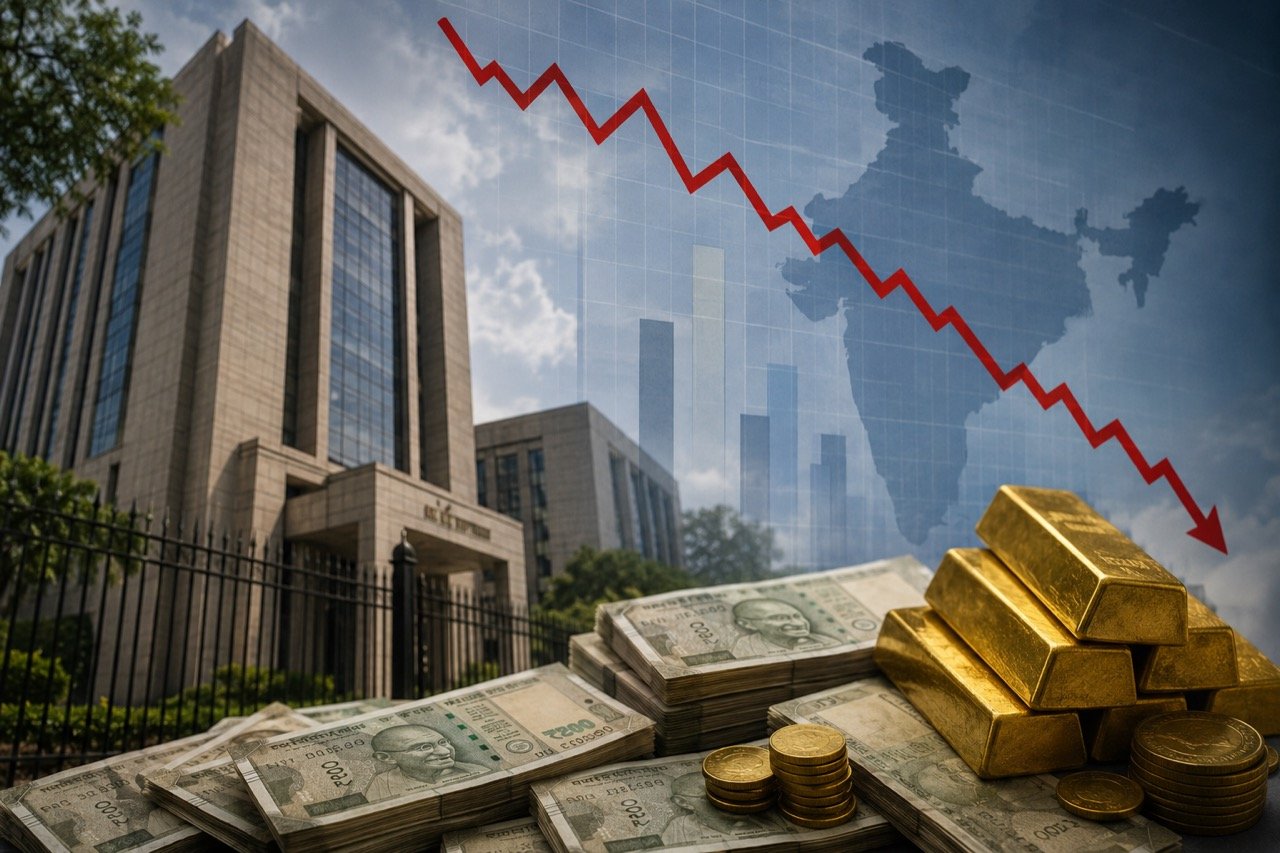
India's Forex Reserves Slip to 15-Month Low: Why the Buffer Matters
India's foreign exchange reserves have dropped to their lowest level in 15 months, narrowing the external buffer the RBI relies on to steady the rupee and reassure markets.
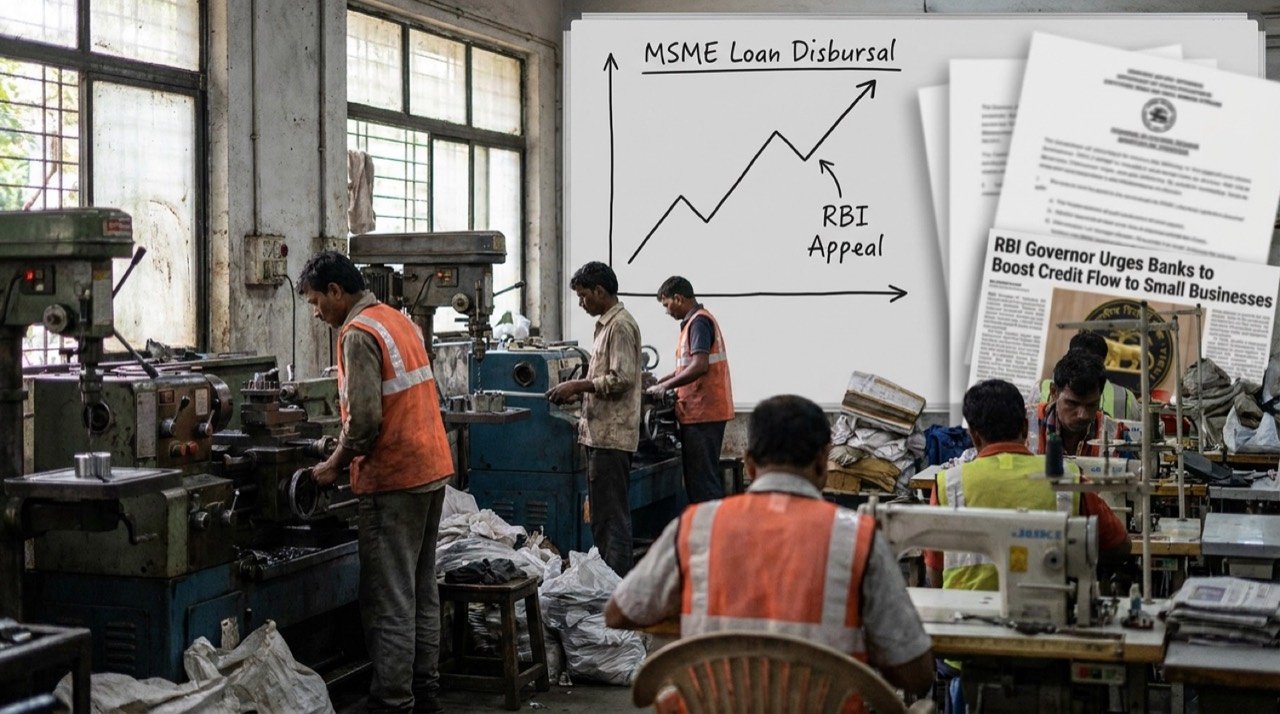
RBI Governor Urges Banks to Treat MSMEs as Growth Partners, Not Just Borrowers
RBI Governor Sanjay Malhotra has called on banks to see micro, small and medium enterprises as growth partners, reviving focus on credit access for the firms that employ millions across India.

RBI Aligns UPI-Linked Credit Line Rules With Underlying Loan Norms
The Reserve Bank of India has clarified that credit lines delivered over UPI must follow the prudential rules of the underlying loan, closing a regulatory gap as banks and fintechs race to build payment-linked lending.
More from this section
More
Adani Case: US DOJ Pushes for Permanent Dismissal of Charges
The US Department of Justice has urged a judge to permanently dismiss charges against Gautam Adani, calling the case legally flawed — a reversal with consequences for markets, diplomacy and cross-border enforcement.

Akasa Air Inducts 40th Aircraft in Indian Aviation Scale-Up
Akasa Air's 40th aircraft, ferried to Bengaluru via Seattle, Reykjavik and Cairo, marks a fleet milestone for the young carrier and a fresh signal that India's aviation market remains firmly in expansion mode.

BARC Ratings Suspension Leaves Indian TV Industry Flying Blind
BARC's pause on television ratings has put India's broadcast measurement system under fresh scrutiny, leaving broadcasters, advertisers and media planners without the weekly audience data that anchors the TV economy.