Modi Likely to Tour Indonesia, Australia and New Zealand in July
Prime Minister Narendra Modi is reported to be planning a three-nation Indo-Pacific tour from 6 to 11 July, spanning Indonesia, Australia and New Zealand, though the itinerary is not yet official.
Commentary & Analysis ·

Prime Minister Narendra Modi is likely to undertake a three-nation Indo-Pacific tour from 6 to 11 July, taking in Indonesia, Australia and New Zealand, according to reports citing people familiar with the preparations. The itinerary has not been formally announced and remains subject to change, but the prospect has already sharpened attention on India's diplomatic calendar in a strategically crowded region. A tour of this shape, spanning Southeast Asia, the South Pacific's largest economy and a long-neglected Pacific partner, would be among the more ambitious single outings of Mr Modi's foreign-policy calendar this year, and it is worth examining why each stop matters, and why the sequencing itself carries a message.
Why this itinerary, and why now
The Indo-Pacific has become the organising idea of Indian foreign policy over the past decade, and a tour that links an ASEAN heavyweight with two Quad-adjacent democracies in the South Pacific is a fairly literal expression of that idea. It signals that New Delhi sees its interests running in a continuous arc from the Malacca Strait to the Tasman Sea, rather than as separate regional files to be managed independently. The fact that the trip has been reported but not confirmed is itself unremarkable; prime ministerial itineraries of this scale are routinely finalised close to travel dates for security and logistical reasons. What is notable is that the broad contours, Indonesia, Australia, New Zealand, in that order, are already circulating with enough specificity to suggest the planning is well advanced.
Indonesia: anchoring the ASEAN link
Indonesia, the largest economy in Southeast Asia and a pivotal ASEAN member, is expected to be the first stop. Talks there are likely to touch on maritime security, defence cooperation, trade and connectivity, areas where New Delhi and Jakarta share an interest in keeping sea lanes open and balancing the regional order. Opening the tour in Jakarta rather than Canberra or Wellington is a deliberate signal in itself: it places ASEAN, and Indonesia's leadership within it, at the front of the sequence rather than treating Southeast Asia as a staging post en route to the Pacific. For India, a strong relationship with Indonesia underpins its wider Act East approach and its bid to deepen engagement with ASEAN as a bloc rather than only through bilateral channels. Given the volume of shipping that passes through Indonesian waters and the Malacca Strait, even modest gains on maritime security cooperation would carry outsized strategic value, while connectivity and trade talks would speak to India's ambition to be seen as a reliable economic partner to Southeast Asia, not merely a security actor.
Australia: Quad partner and minerals supplier
In Australia, the agenda is expected to include critical minerals, education, defence and trade. Canberra is a core partner in the Quad framework alongside the United States and Japan, and a potential supplier of the minerals India needs for its clean-energy and electronics ambitions. As India tries to build out solar manufacturing, battery production and electronics assembly at scale, secure access to critical minerals is not a peripheral concern but a structural constraint on how fast those industries can grow, which is why this strand of the relationship deserves as much attention as the more familiar defence and Quad dimensions. Education ties are also significant, given the large number of Indian students in Australian universities and ongoing discussions about mobility and qualification recognition. That people-to-people dimension, students, skilled migrants, and the diaspora more broadly, tends to be underweighted in commentary that focuses only on strategic geometry, yet it is often what gives a bilateral relationship its durability between high-level visits.
New Zealand: a long-awaited stop
The New Zealand leg would be watched most closely of all, because it would mark the first visit by an Indian prime minister to the country since Rajiv Gandhi in 1986. That gap of nearly four decades is striking given the size and engagement of the Indian diaspora in New Zealand and the two countries' shared membership of Commonwealth and Indo-Pacific groupings. Wellington offers room to expand economic and community ties, and a visit would carry symbolic weight after nearly four decades of prime-ministerial absence. Precisely because expectations have been allowed to build over such a long interval, the New Zealand stop may face the highest bar for producing something tangible rather than ceremonial; a visit that is heavy on symbolism but light on substance would likely draw comment given how long New Delhi has kept Wellington waiting.
Cross-cutting themes and what remains unsettled
Across all three stops, two threads run consistently: diaspora outreach and India's broader Indo-Pacific strategy. Diaspora communities in Australia and New Zealand in particular are significant enough, in size and economic weight, that engagement with them is now treated as a standing feature of any high-level Indian visit to the region, alongside the formal government-to-government agenda. The Indo-Pacific framing, meanwhile, is the connective tissue that explains why these three countries, and not others, were chosen for a single tour. As things stand, the itinerary is reported but not yet officially confirmed, and the specific outcomes, on trade, mobility, defence cooperation, education and supply chains, have not been detailed. That leaves genuine uncertainty about how much of what is being discussed will convert into agreements with real operational content, as opposed to joint statements restating existing positions.
The NE Times View
An Indo-Pacific swing through Jakarta, Canberra and Wellington fits India's larger pivot toward a region where China looms over every conversation, whether or not it is named explicitly in any communiqué. Optics aside, the trip's worth will be measured in deliverables: trade movement with Indonesia, critical-minerals and defence ties with Australia, and substance rather than symbolism with New Zealand. A tour that produces warm statements but no forward movement on minerals supply agreements, student mobility arrangements or maritime cooperation frameworks would be a missed opportunity, particularly given how rare a New Zealand visit of this kind has become. Until the itinerary is confirmed, treat the buzz as intent, and watch what actually gets signed. This article is original commentary and analysis by The NE Times. Background facts were referenced from The Times of India and the Ministry of External Affairs.
Key takeaways
- A three-nation tour of Indonesia, Australia and New Zealand from 6 to 11 July has been reported but not officially confirmed.
- Indonesia talks are expected to focus on maritime security, defence, trade and connectivity, reinforcing India's Act East policy and ASEAN engagement.
- Australia's agenda is likely to centre on critical minerals, education, defence and trade, reflecting its role as a Quad partner and resource supplier.
- A New Zealand stop would be the first visit by an Indian prime minister since Rajiv Gandhi in 1986, carrying significant symbolic weight.
- The real test of the tour will be concrete deliverables on trade, mobility, defence and supply chains, not just diplomatic optics.
You may also like to read
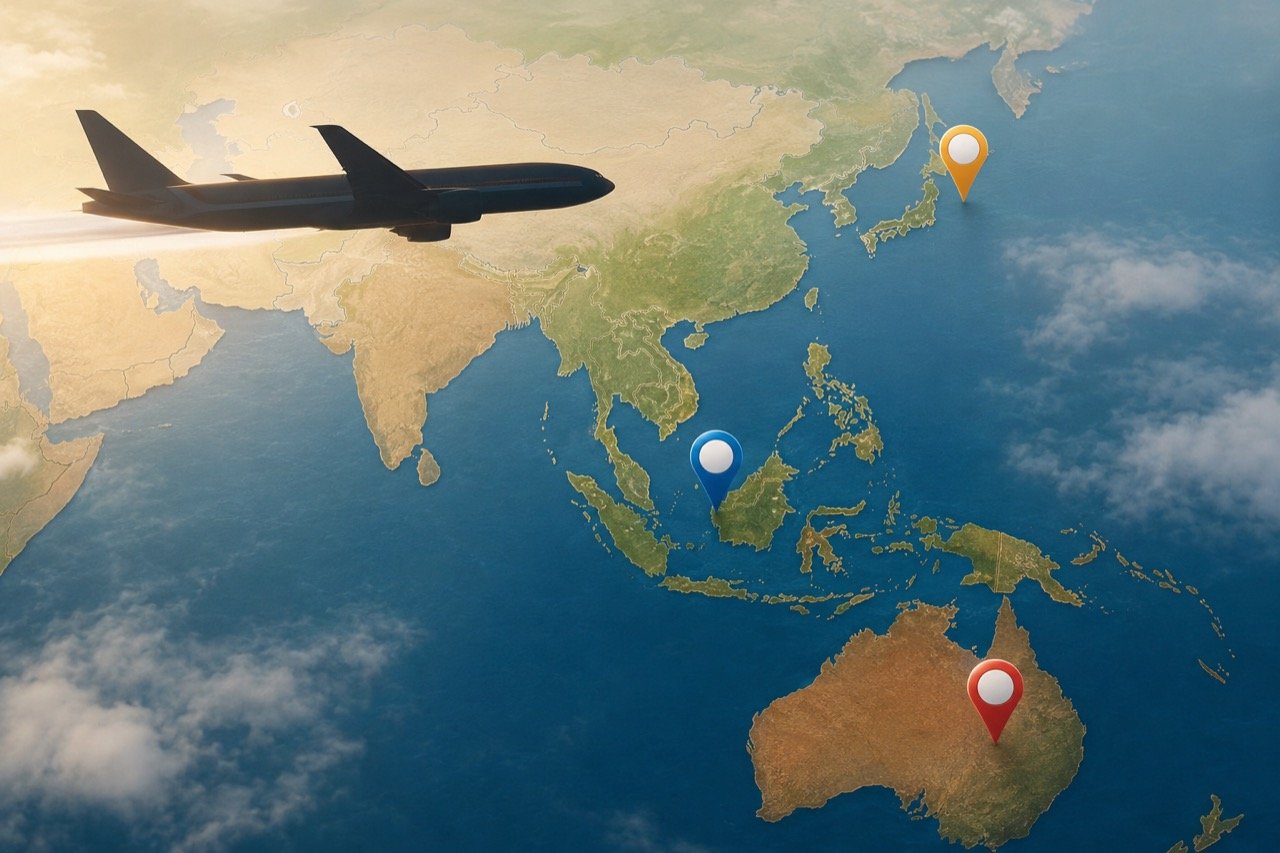
PM Modi Begins Three-Nation Indo-Pacific Tour on July 6
Prime Minister Narendra Modi travels to Indonesia, Australia and New Zealand from July 6 to 11 in a trip New Delhi frames as a concerted push to deepen India's strategic footprint across the Indo-Pacific.
Modi's Indo-Pacific Swing: Three Nations, One Diaspora-Driven Strategy
Prime Minister Narendra Modi travels to Indonesia, Australia and New Zealand from July 6 to 11, weaving diaspora outreach, trade ambitions and Indo-Pacific strategy into a single six-day diplomatic push.
BrahMos Talks With Indonesia Sharpen India's Defence Export Push
A possible BrahMos missile agreement with Jakarta, in focus ahead of Prime Minister Modi's Indonesia engagement, underlines India's ambition to become a serious defence exporter across Southeast Asia.
Modi's G7 Outing In Evian Turns On A Crowded Schedule Of Bilaterals
Attending the G7 summit in Evian, Prime Minister Modi packed in a series of bilateral meetings, including with Canada's Mark Carney and the UK's Keir Starmer, signalling a busy phase of personal diplomacy.
More from this section
More
K Kavitha Party Denied TRS Name by Election Commission
The Election Commission has refused to register K Kavitha's Telangana Rakshana Sena under the TRS acronym after objections, forcing a branding reset for the new party at a politically sensitive moment in Telangana.
Lalu Prasad Yadav Security Downgrade, Bungalow Order Stir Bihar
A government order downgrading Lalu Prasad Yadav's security cover and asking him to vacate an official bungalow has opened a fresh political flashpoint in Bihar, with the RJD chief's reaction fuelling the row.
Manipur CM's Churachandpur Visit: First Since 2023 Unrest
The Manipur Chief Minister travelled to Churachandpur for a BJP MLA's funeral, his first visit to the district since the 2023 violence, lending the sombre occasion an unmistakable political significance.