PM Modi Begins Three-Nation Indo-Pacific Tour on July 6
Prime Minister Narendra Modi travels to Indonesia, Australia and New Zealand from July 6 to 11 in a trip New Delhi frames as a concerted push to deepen India's strategic footprint across the Indo-Pacific.
Commentary & Analysis ·
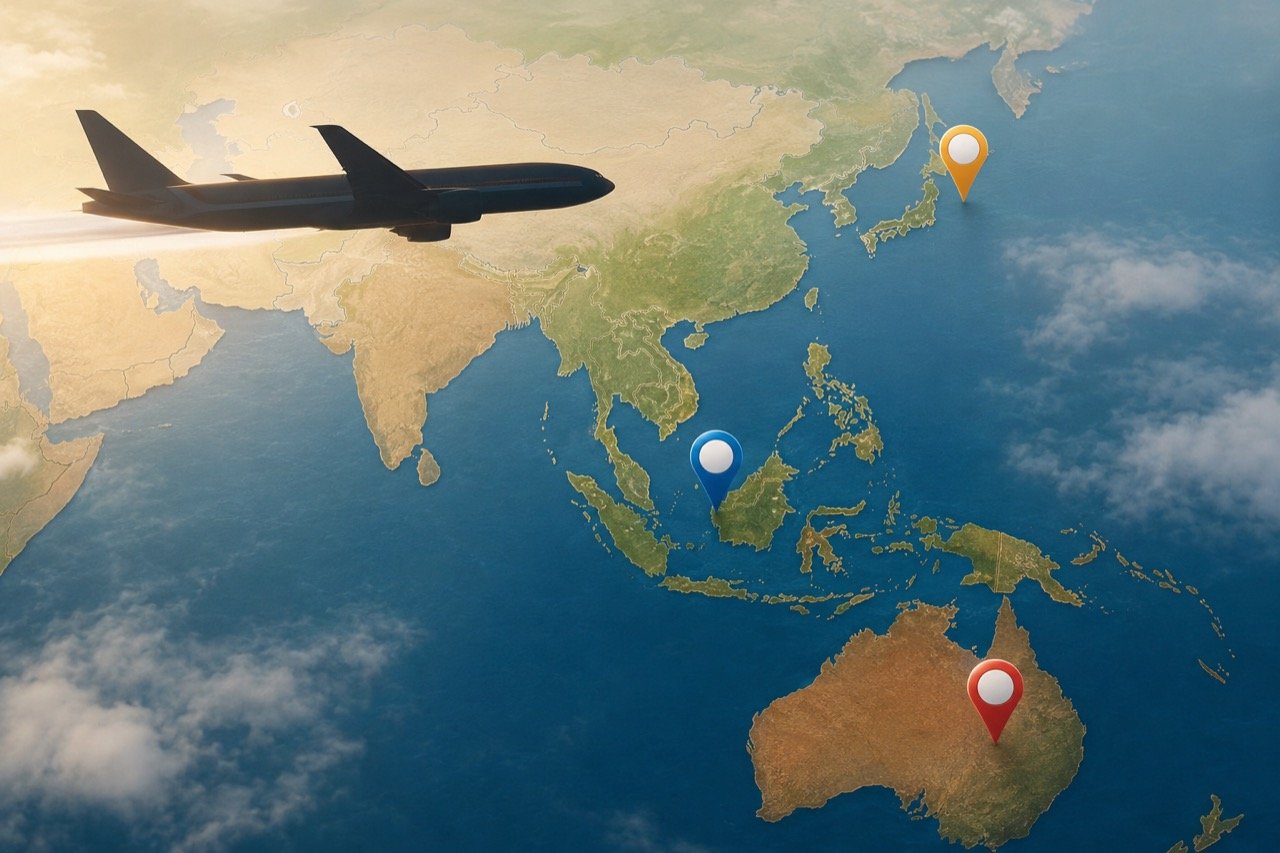
Prime Minister Narendra Modi departed on July 6 for a six-day, three-nation tour taking in Indonesia, Australia and New Zealand, in what the Ministry of External Affairs has described as an effort to deepen engagement with three consequential Indo-Pacific partners in a single sweep. The itinerary, running July 6 to 11, bundles together three quite different relationships. Indonesia sits at the heart of India's outreach to Southeast Asia; Australia has grown into one of New Delhi's most substantial strategic partners in the region; and New Zealand, while smaller, offers a steady democratic and trade relationship that India has been keen to nurture. Taken together, the three stops form a single, deliberate arc across the Indo-Pacific rather than a set of unrelated bilateral visits, and that framing itself is a signal worth examining closely.
Why this trip matters
The tour lands at a moment when India's foreign policy is being pulled by several forces at once: resilient supply chains, maritime security, technology cooperation, education links and a large diaspora spread across all three destinations. Each stop touches a different mix of those priorities, from Jakarta's centrality in ASEAN diplomacy to Canberra's role in Indo-Pacific security architecture. That a single journey can plausibly serve all of these agendas is itself telling. It suggests that New Delhi no longer views its Indo-Pacific outreach as a series of discrete transactions with individual capitals, but as one continuous effort to build a web of relationships that reinforce each other. Indonesia gives India standing and access within ASEAN's institutional processes; Australia offers a security and resource partnership that has matured rapidly over the past decade; and New Zealand, though a smaller economy, provides a dependable partner whose interests rarely conflict with India's own. A prime ministerial visit that touches all three in one trip is, in effect, an attempt to advance three fronts simultaneously rather than sequentially, saving diplomatic bandwidth while maximising visibility.
Officials have been careful not to pre-announce outcomes, and the confirmed facts remain the essentials: the trip begins on July 6, covers the three countries in sequence, and is intended to strengthen diplomatic and strategic cooperation. This reticence is itself instructive. Governments that are confident of landing headline-grabbing agreements often signal as much in advance, if only to manage expectations and generate coverage. The absence of such signalling here points either to a preference for quieter, working-level progress, or to the reality that firm agreements are still being negotiated and may only crystallise once leaders sit down together. Concrete agreements, if any, will emerge only as the meetings unfold, and readers should treat any pre-visit speculation about specific deals with appropriate caution.
Indonesia: anchoring the ASEAN relationship
Indonesia's position as the largest economy and most populous nation in Southeast Asia makes it a natural anchor for India's engagement with the wider ASEAN bloc. A visit here is never simply about the bilateral relationship in isolation; it is also a statement about India's broader ambitions in Southeast Asia, a region through which much of India's trade with East Asia flows and where China's economic and infrastructural presence has grown substantially. For India, deepening ties with Jakarta offers a foothold that resonates across the ten-member ASEAN grouping, given Indonesia's informal leadership role within it. Any progress on trade facilitation, connectivity or maritime cooperation with Indonesia is likely to be read by other ASEAN capitals as a marker of India's seriousness about the region as a whole.
Australia: the maturing strategic partnership
Australia's growing importance to New Delhi over the past several years reflects a convergence of interests: both countries share concerns about freedom of navigation, supply chain resilience, and balancing an increasingly assertive China. The relationship has moved well beyond the largely trade-and-diaspora framing of a decade ago into one that now sits closer to the core of India's strategic calculations in the Indo-Pacific. A visit to Canberra in this context is an opportunity to consolidate gains already made and to test whether the two governments are prepared to move from statements of intent to operational cooperation, whether in defence logistics, critical minerals, or education and skilled migration pathways that matter enormously to the large Indian student and professional community in Australia.
New Zealand: steady ties, modest scale
New Zealand is the smallest of the three stops by economic weight, but its inclusion in the itinerary should not be read as an afterthought. Wellington offers India a stable, low-friction partner with shared democratic values and an interest in expanding trade and educational exchange. Precisely because the relationship carries less strategic baggage than the other two, it can serve as a useful testing ground for initiatives — in areas such as agritech, dairy trade, or student mobility — that might later be scaled into India's engagement with other Pacific nations. A visit here also acknowledges the sizeable Indian diaspora in New Zealand, for whom high-level attention from New Delhi carries real symbolic weight.
The regional backdrop
Packaging Indonesia, Australia and New Zealand into one journey signals how New Delhi now treats the Indo-Pacific as a single strategic canvas rather than a set of disconnected bilateral files. It also underlines India's intent to be visible across both the northern and southern ends of the region at a time of intensifying great-power competition. For countries in the region watching the contest between major powers play out, a visible and sustained Indian presence offers at least the prospect of a partner whose interests are not simply an extension of any one bloc's agenda. Whether that prospect translates into practical outcomes for the countries involved will depend far less on the optics of the visit than on what follows it.
The NE Times View
The real test of this tour will not be the photo opportunities but the follow-through. India's Indo-Pacific rhetoric has often run ahead of delivery on trade, defence logistics and student mobility, and each of these three capitals has heard ambitious language from New Delhi before. If the visit produces working timelines rather than communiques, it will mark genuine progress. For Indian readers, the trip is best judged in six months, when we can see whether engagement translated into agreements that touch jobs, exports and security. A useful discipline for observers will be to track specific, checkable commitments — timelines for trade negotiations, defence exercises actually scheduled, education pathways actually opened — rather than the broad language of partnership that so often accompanies these visits without altering underlying realities.
Key takeaways
- PM Modi's six-day tour, from July 6 to 11, covers Indonesia, Australia and New Zealand in sequence, framed by the Ministry of External Affairs as an effort to deepen Indo-Pacific engagement.
- The three stops serve distinct but complementary purposes: Indonesia anchors India's ASEAN outreach, Australia deepens a maturing strategic partnership, and New Zealand offers steady, lower-friction ties.
- Officials have avoided pre-announcing specific outcomes, meaning any concrete agreements will only become clear as the visits actually unfold.
- The bundled itinerary reflects a shift in India's approach, treating the Indo-Pacific as one strategic canvas rather than isolated bilateral relationships.
- The genuine measure of success will be visible only in the months ahead, through whether the visit yields working timelines on trade, defence and education rather than rhetoric alone.
You may also like to read
PM Modi Begins Ghana, Trinidad and Argentina Tour on July 6
Prime Minister Narendra Modi departs on July 6 for a three-nation tour of Ghana, Trinidad and Tobago and Argentina, folding Africa, the Caribbean and Latin America into one diplomatic push.
Modi's Indo-Pacific Swing: Three Nations, One Diaspora-Driven Strategy
Prime Minister Narendra Modi travels to Indonesia, Australia and New Zealand from July 6 to 11, weaving diaspora outreach, trade ambitions and Indo-Pacific strategy into a single six-day diplomatic push.

Modi Likely to Tour Indonesia, Australia and New Zealand in July
Prime Minister Narendra Modi is reported to be planning a three-nation Indo-Pacific tour from 6 to 11 July, spanning Indonesia, Australia and New Zealand, though the itinerary is not yet official.
Jaishankar Begins Four-Nation Gulf Tour as India Deepens West Asia Ties
External Affairs Minister S Jaishankar's July 5-10 visit to Qatar, Bahrain, Kuwait and Oman opens a packed diplomatic week, underscoring how central the Gulf has become to India's energy, trade and diaspora interests.
More from this section
More
AICTE Industry Fellowship 2026: Rs 1.5 Lakh Scheme Closes July 5
The AICTE Industry Fellowship Programme 2026, which places technical-education faculty inside leading companies on a Rs 1.5 lakh monthly stipend, reached its application deadline on July 5.
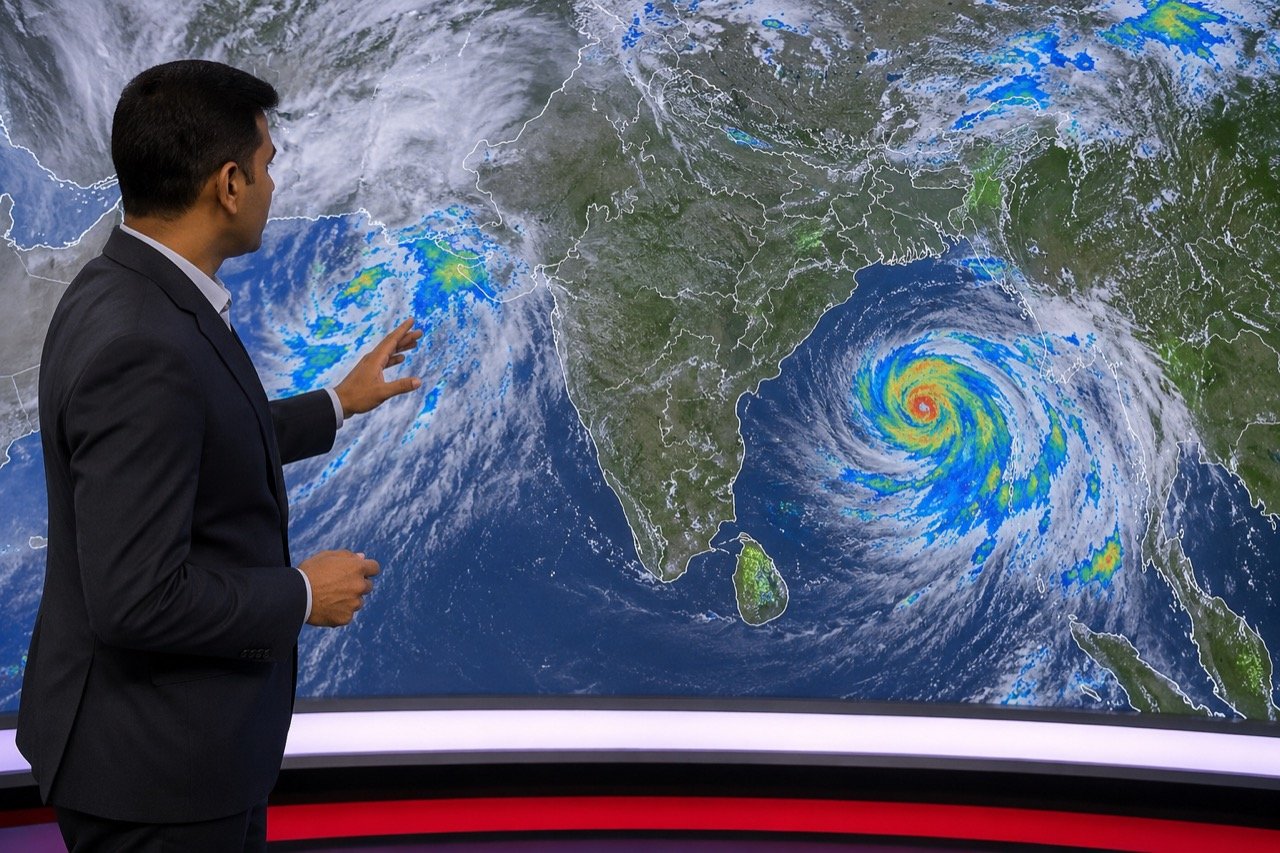
Bay of Bengal Low Pressure System Revives Monsoon Over Western India
A low-pressure system over the Bay of Bengal has pushed the monsoon back into an active phase, bringing steady heavy rain to Kerala, coastal Karnataka and Maharashtra, and putting Mumbai and Pune on preparedness watch.
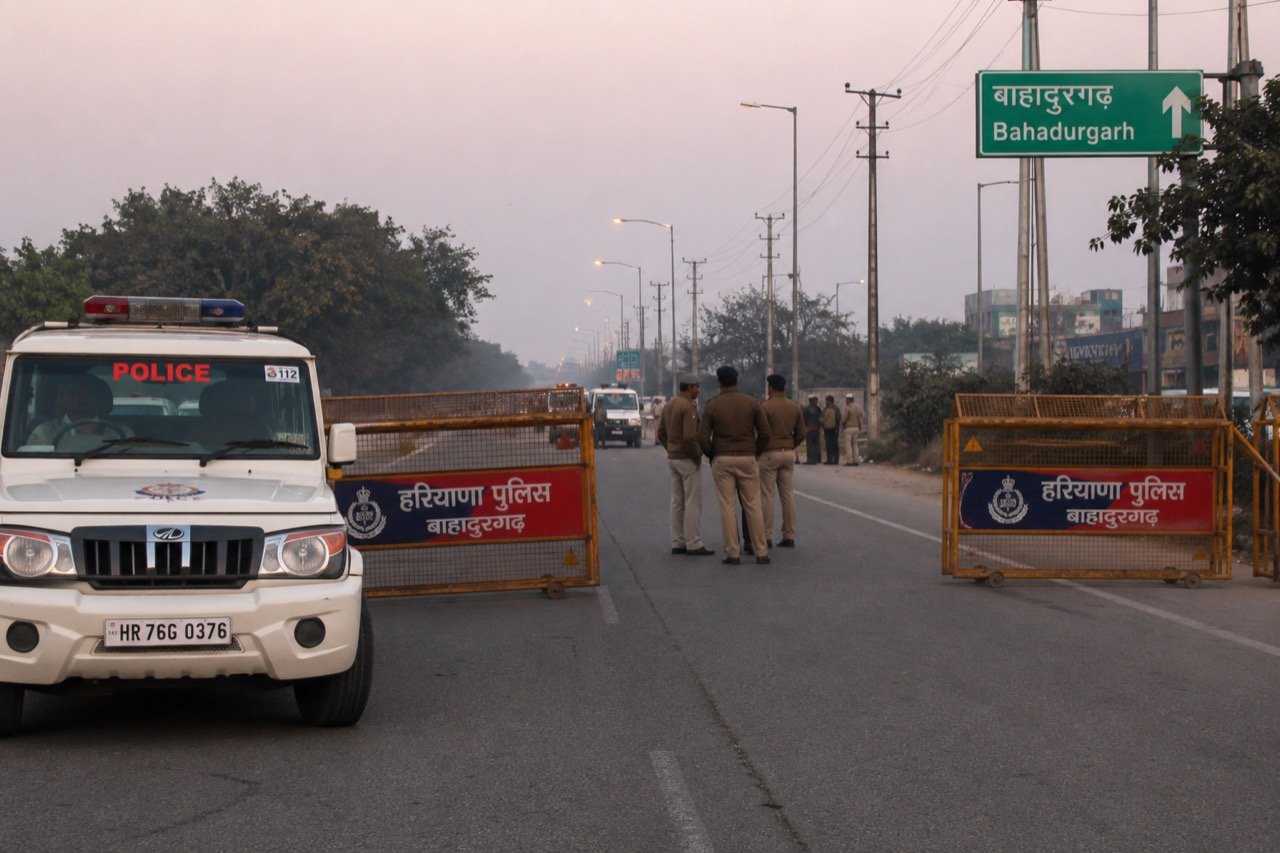
Bishnoi Gang Suspects Injured in Haryana Encounter as Police Tighten Net
A joint Haryana-Delhi Police operation in Bahadurgarh left two suspected Lawrence Bishnoi gang members injured, spotlighting the multi-state coordination now central to India's fight against organised crime networks.