Jaishankar Begins Four-Nation Gulf Tour as India Deepens West Asia Ties
External Affairs Minister S Jaishankar's July 5-10 visit to Qatar, Bahrain, Kuwait and Oman opens a packed diplomatic week, underscoring how central the Gulf has become to India's energy, trade and diaspora interests.
Commentary & Analysis ·
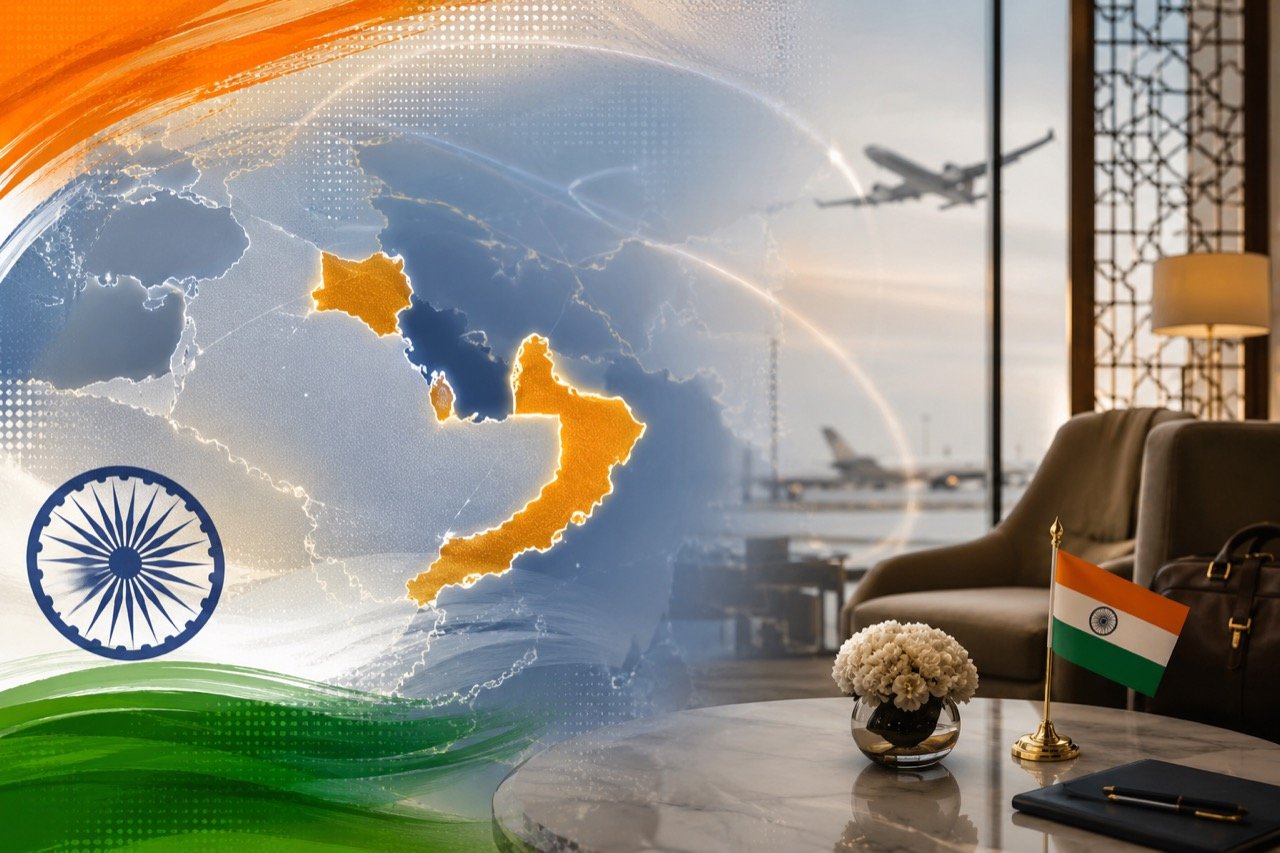
External Affairs Minister S Jaishankar has set off on a four-nation swing through West Asia, visiting Qatar, Bahrain, Kuwait and Oman between July 5 and 10. The trip opens an unusually busy stretch for Indian diplomacy, with the Ministry of External Affairs saying the minister will work on strengthening bilateral relations and exchanging views on regional developments and issues of mutual interest. On the surface, a four-nation itinerary compressed into six days might read as a routine diplomatic exercise. Read more carefully, though, it says a great deal about how New Delhi views the Gulf: not as a cluster of separate bilateral files to be worked through one at a time, but as a single, interconnected theatre that demands sustained, near-simultaneous attention.
Why the Gulf matters to New Delhi
West Asia sits at the heart of India's foreign policy calculus for reasons that are as practical as they are strategic. The region supplies a large share of India's energy needs, meaning that political stability, pricing decisions and supply arrangements in Qatar, Bahrain, Kuwait and Oman have a direct bearing on India's energy security and, by extension, on inflation and growth at home. The Gulf also anchors vital shipping lanes that carry not just energy but a significant share of India's broader trade, making the security and predictability of these routes a quiet but constant concern for policymakers in New Delhi.
Just as important is the human dimension. The region hosts millions of Indian workers, whose remittances flow back home every month and support households across states that have long depended on Gulf employment. The welfare of that diaspora remains a standing priority for every Indian government, regardless of which party is in power, because the political and economic stakes of getting this relationship wrong are too high to ignore. A labour dispute, a sudden change in visa or employment rules, or an outbreak of regional instability can have an almost immediate effect on remittance flows and on the sense of security that Indian families feel about relatives working abroad.
Trade and investment links have also deepened steadily over recent years, with Gulf sovereign funds and businesses increasingly looking at India as a growth market. This adds an economic layer to the relationship that goes beyond energy and labour: capital flows, joint ventures and long-term investment commitments now sit alongside oil contracts and worker remittances as pillars of the India-Gulf relationship. Regional security, from the safety of maritime routes to the broader stability of West Asia, adds yet another layer of urgency to sustained engagement, since instability in the region rarely stays contained within it.
More than a courtesy call
The itinerary is notable less for any single headline deliverable than for its breadth. Covering four capitals in six days signals that New Delhi wants working relationships maintained across the region simultaneously, rather than concentrating on one or two partners at the expense of others. This is a deliberate choice. It would be simpler, in some ways, for Indian diplomacy to prioritise its largest or most strategically prominent Gulf partner and let the others receive attention on a slower rotation. Instead, the decision to visit four countries in quick succession suggests a conscious effort to avoid the appearance, or the reality, of neglect toward any one relationship.
The visit also comes at a time of wider regional uncertainty, when steady, in-person contact carries extra weight. In periods of calm, diplomatic engagement can afford to be more sporadic, relying on lower-level contacts, phone calls and periodic reviews. When a region is unsettled, however, the value of a minister physically present, capital by capital, rises considerably. It signals continuity of attention, reassures partners that India is not distracted by other priorities, and creates the kind of direct channel that can be activated quickly if a crisis does emerge.
Engagement with Gulf partners typically blends political dialogue, economic cooperation and people-to-people concerns, and there is little reason to expect this tour to differ in structure. Outcomes from such tours are often incremental — agreements reviewed, mechanisms nudged forward, consular issues raised — rather than sweeping in nature. But the cumulative effect of this kind of patient, capital-by-capital diplomacy is a denser web of ties that serves India well when crises hit, whether those crises are economic, security-related or humanitarian in nature.
The diaspora dimension deserves closer attention
It is worth dwelling a little longer on what is at stake for the millions of Indian workers across Qatar, Bahrain, Kuwait and Oman. For many of these workers and their families, diplomatic visits of this kind are not abstract exercises in statecraft; they are the mechanism through which consular protections, labour welfare arrangements and dispute-resolution channels are periodically reviewed and reinforced. A minister's visit can open doors to raise specific concerns about working conditions, wage protections or repatriation procedures that might otherwise take much longer to resolve through routine embassy channels.
This is also where the economic and human dimensions of the relationship converge most visibly. Remittances from Gulf-based Indian workers are not a peripheral detail of the bilateral relationship; they are one of its central pillars, supporting household consumption and, in aggregate, contributing meaningfully to India's external accounts. Any disruption to the flow of workers or to their conditions of employment has consequences that ripple well beyond the individuals directly affected.
What the tour signals about India's wider strategy
Diplomatic tours of this nature also serve a signalling function that extends beyond the four countries actually visited. By demonstrating a willingness to engage consistently and broadly across West Asia, India positions itself as a reliable, present partner in a region where several major powers compete for influence and access. This is particularly relevant given the strategic importance that Gulf states themselves place on diversifying their international partnerships beyond traditional Western allies, and on deepening ties with major Asian economies such as India.
For Qatar, Bahrain, Kuwait and Oman, sustained high-level engagement from New Delhi offers its own advantages: access to a large and growing market, a substantial and largely stable expatriate workforce, and a partner whose economic trajectory makes it an increasingly significant destination for investment. The relationship, in other words, is not one-directional. Both sides have concrete interests in keeping the channels of engagement active and well-tended.
The NE Times View
This tour is a reminder that India's most consequential diplomacy is often the least dramatic. The Gulf is where India's energy security, its remittance economy and the daily lives of millions of its citizens intersect, and that demands constant tending rather than occasional summitry. It is easy for such visits to be overshadowed in public attention by more headline-grabbing diplomatic episodes elsewhere, yet in terms of direct impact on ordinary Indian households, few relationships matter as consistently as this one.
Jaishankar's multi-capital approach reflects a mature, multi-vector strategy: keep every channel open, because developments in West Asia reach Indian households faster than almost anywhere else. A shift in oil markets, a change in labour regulations, or a flashpoint in regional security can all translate into immediate consequences for Indian consumers, workers and businesses. Diplomacy that anticipates and manages these risks through steady contact is, by its nature, less visible than diplomacy built around dramatic breakthroughs, but it is arguably more valuable.
The test will be whether this steady contact translates into concrete protections for workers and resilient energy arrangements when the region next turns volatile. Goodwill built through visits such as this one is only as valuable as the institutional mechanisms and habits of cooperation it leaves behind. The real measure of this tour's success will not be visible in July, but in how smoothly India and its Gulf partners are able to coordinate the next time the region faces a genuine shock.
Key takeaways
- Jaishankar's six-day tour of Qatar, Bahrain, Kuwait and Oman, running July 5 to 10, reflects a deliberate strategy of simultaneous engagement across multiple Gulf capitals rather than a focus on one or two partners.
- The Gulf relationship rests on three pillars for India: energy security, trade and investment links, and the welfare of millions of Indian workers whose remittances support households at home.
- Outcomes from such tours tend to be incremental rather than dramatic, but the cumulative effect is a denser, more resilient network of ties across the region.
- Sustained, in-person diplomatic engagement carries added weight during periods of regional uncertainty, reassuring partners of continuity and opening direct channels for future crises.
- The ultimate test of this diplomacy will be whether it delivers concrete protections for Indian workers and stable energy arrangements when West Asia next experiences volatility.
You may also like to read
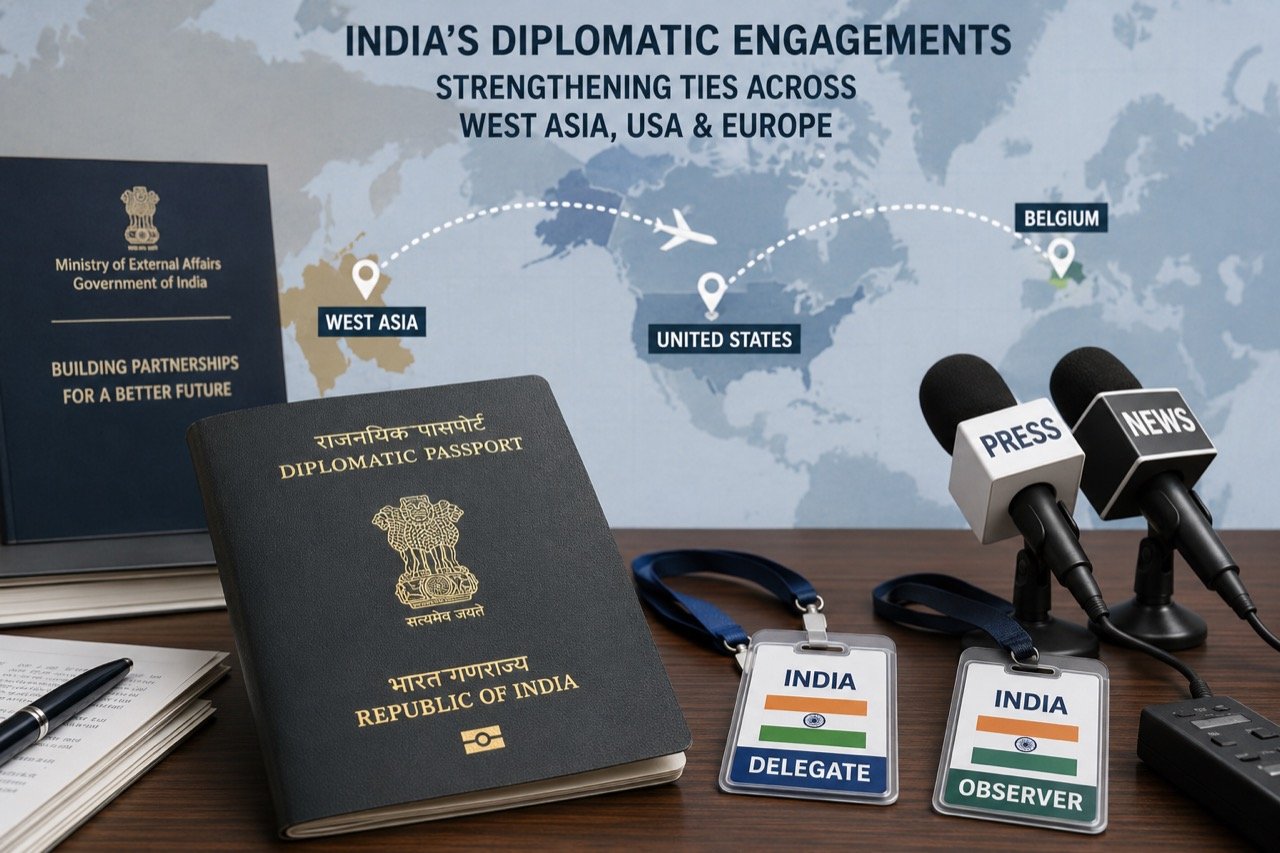
Jaishankar's Travel Week: West Asia, US and Belgium on One Itinerary
External Affairs Minister S. Jaishankar's reported travel schedule packs West Asia, the United States and Europe into a single diplomatic window, signalling where New Delhi is spending its foreign-policy attention.
Supreme Court Notes CBSE Policy for West Asia Class 12 Students, Disposes Plea
The Supreme Court closed a Saudi Arabia-based candidate's petition after the Centre cited a fresh CBSE policy to declare Class 12 results for West Asian students whose board exams were cancelled amid regional conflict.
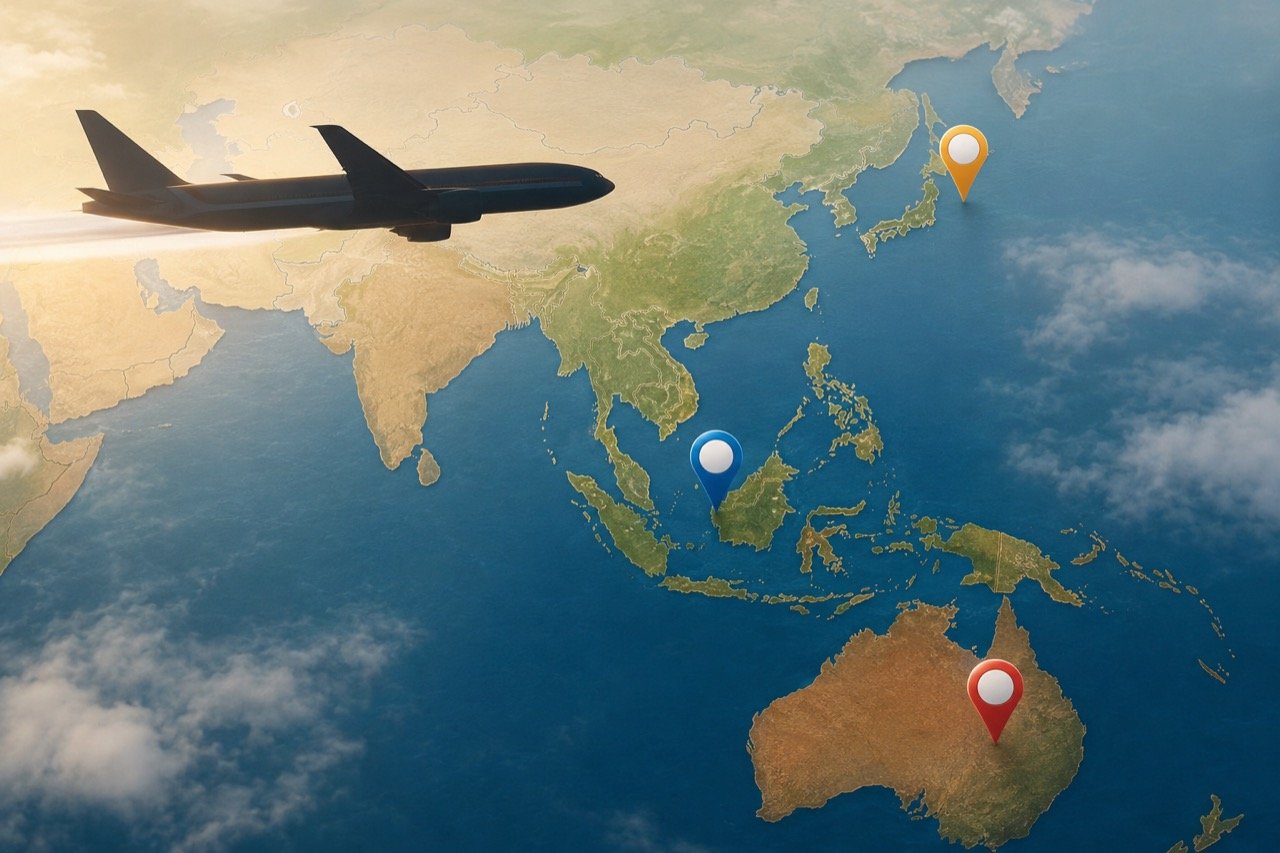
PM Modi Begins Three-Nation Indo-Pacific Tour on July 6
Prime Minister Narendra Modi travels to Indonesia, Australia and New Zealand from July 6 to 11 in a trip New Delhi frames as a concerted push to deepen India's strategic footprint across the Indo-Pacific.
Jaishankar's Six-Nation Tour Kicks Off India's UNSC Seat Campaign
External Affairs Minister S. Jaishankar's July 5-15 tour of Qatar, Bahrain, Kuwait, Oman, the United States and Belgium doubles as bilateral outreach and the opening move of India's UN Security Council campaign.
More from this section
More
AICTE Industry Fellowship 2026: Rs 1.5 Lakh Scheme Closes July 5
The AICTE Industry Fellowship Programme 2026, which places technical-education faculty inside leading companies on a Rs 1.5 lakh monthly stipend, reached its application deadline on July 5.
Bay of Bengal Low Pressure System Revives Monsoon Over Western India
A low-pressure system over the Bay of Bengal has pushed the monsoon back into an active phase, bringing steady heavy rain to Kerala, coastal Karnataka and Maharashtra, and putting Mumbai and Pune on preparedness watch.
Bishnoi Gang Suspects Injured in Haryana Encounter as Police Tighten Net
A joint Haryana-Delhi Police operation in Bahadurgarh left two suspected Lawrence Bishnoi gang members injured, spotlighting the multi-state coordination now central to India's fight against organised crime networks.