Jaishankar's Six-Nation Tour Kicks Off India's UNSC Seat Campaign
External Affairs Minister S. Jaishankar's July 5-15 tour of Qatar, Bahrain, Kuwait, Oman, the United States and Belgium doubles as bilateral outreach and the opening move of India's UN Security Council campaign.
Commentary & Analysis ·
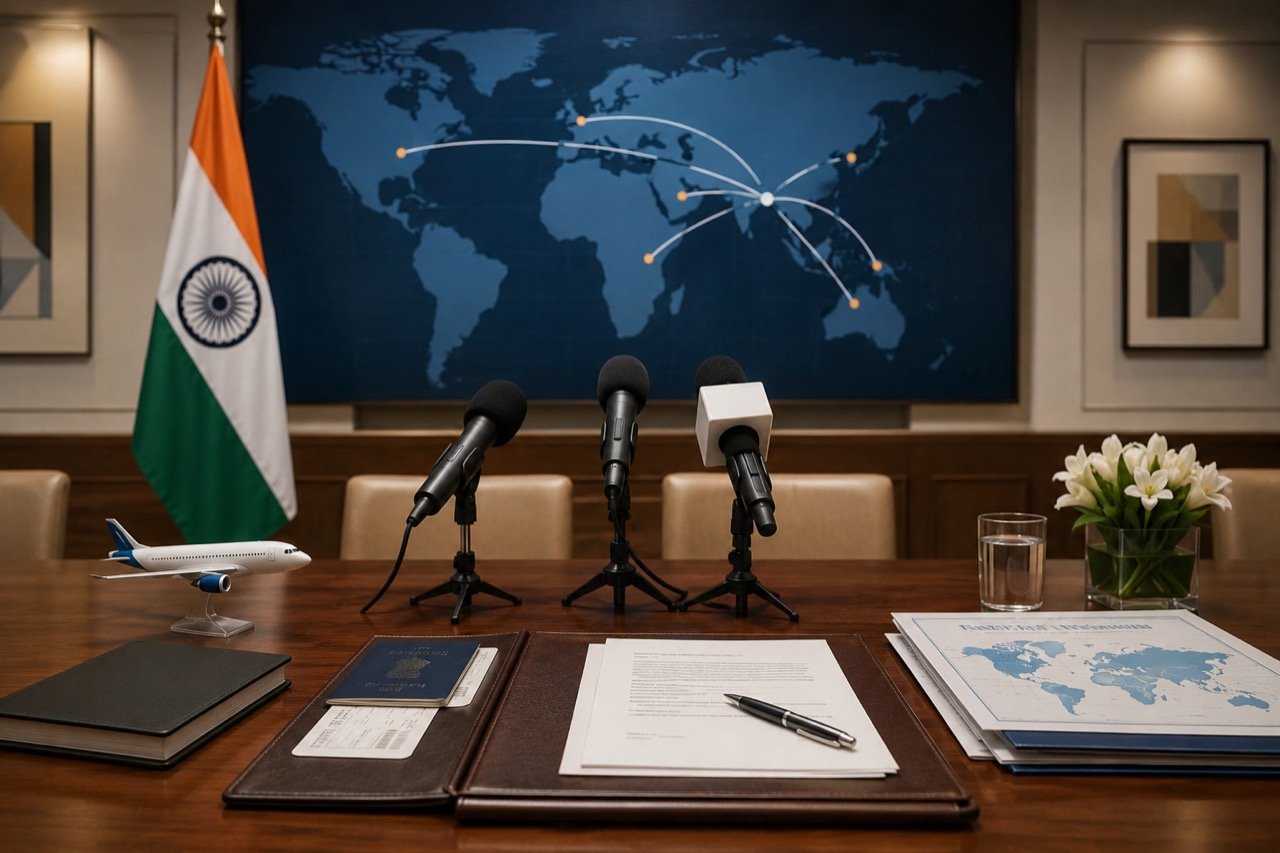
India's foreign policy calendar enters a busy stretch as External Affairs Minister S. Jaishankar begins a six-country tour covering Qatar, Bahrain, Kuwait, Oman, the United States and Belgium. The July 5-15 visit is expected to strengthen bilateral ties and formally launch India's campaign for a United Nations Security Council seat, the Times of India reported. Coming so soon after the halfway point of the year, the tour is being read in diplomatic circles as a signal that New Delhi intends to use the second half of 2026 to press its institutional ambitions on multiple fronts simultaneously, rather than treating Security Council reform as a distant, occasional talking point.
A carefully constructed itinerary
The itinerary is carefully constructed. The four Gulf stops touch countries vital to India's energy supplies, trade, remittances and the welfare of millions of Indian workers. Qatar, Bahrain, Kuwait and Oman are not incidental stops on the way to bigger capitals; each hosts a substantial Indian expatriate population, each is a significant partner in energy trade, and each represents a channel of remittance income that matters directly to Indian households. Diplomatic visits to this cluster of states typically combine high-level political engagement with quieter, practical business: labour agreements, consular arrangements, investment discussions and energy-security conversations that rarely make headlines but underpin the relationship in a very concrete way.
The United States remains a key technology, defence and diaspora partner, while Belgium adds a European Union dimension at a moment when trade, supply chains and global governance reform are live themes. Pairing a Gulf swing with stops in Washington and Brussels within the same ten-day window is itself a statement of intent. It suggests India wants to present a single, coherent narrative to very different audiences: to the Gulf states, a message about economic interdependence and worker welfare; to the United States, a message about strategic and technological partnership; and to Belgium, effectively a proxy for the European Union's institutions, a message about India's role in reforming global governance structures more broadly.
The UNSC bid as the larger frame
India has long argued that both permanent and elected representation on the Security Council should reflect contemporary global realities rather than the world of 1945. This argument rests on the observation that the Council's permanent membership was fixed in the aftermath of the Second World War and has never been expanded to account for the emergence of large, populous and economically significant states since then. India, as the world's most populous country and one of its largest economies, has repeatedly made the case that its absence from permanent membership is an anomaly rather than a reflection of its current standing.
Running a credible campaign demands more than public messaging: it requires repeated diplomatic engagement, issue-based coalitions and confidence-building with states that can support or influence India's bid. This is precisely why a tour of this nature matters more than a single speech or statement might. Security Council reform ultimately requires the support, or at least the acquiescence, of a wide and diverse set of countries, including smaller and mid-sized states whose votes and voices carry weight in the broader multilateral system even if they do not hold Council seats themselves. Cultivating that support is a cumulative process, built visit by visit, agreement by agreement, rather than achieved through any single diplomatic breakthrough.
Why the Gulf and Europe legs matter beyond symbolism
It would be a mistake to view the Gulf and Belgium stops merely as supporting cast to the UNSC narrative. For India, energy security is a national priority that touches inflation, industrial output and household budgets alike, and the Gulf states are central suppliers in that equation. Similarly, the welfare of Indian workers in the Gulf is a matter of direct political consequence at home, given the scale of remittances flowing back to Indian states and families. Any agreements reached on labour mobility, worker protections or consular support during this leg of the tour would have tangible effects independent of whatever progress is made on the Security Council question.
Belgium's inclusion, meanwhile, signals India's recognition that European institutions, even when not formally part of the Security Council reform debate, shape the climate of opinion in which that debate unfolds. Trade arrangements, supply chain cooperation and shared positions on global governance reform between India and the European Union can reinforce India's broader case, even indirectly, by demonstrating that India is a reliable and engaged partner across multiple multilateral forums, not solely at the United Nations.
The slow arithmetic of Security Council reform
None of this will yield quick results — Security Council reform is a slow, contested process. The five permanent members hold veto power precisely because the postwar settlement gave them a permanent stake in preserving the postwar order, and any expansion of permanent membership, with or without veto rights, would require amending the UN Charter itself. That is a high bar, requiring approval from two-thirds of the General Assembly and ratification by all five existing permanent members, including whichever ones might feel their relative influence diminished by reform. Decades of intermittent negotiation at the United Nations on this very question illustrate how difficult consensus has proven to reach.
But tours of this kind keep the question alive internationally while deepening practical cooperation on trade, technology, security and labour mobility along the way. In other words, even a campaign that does not achieve its ultimate institutional goal within any predictable timeframe can still generate real, measurable benefits for India through the bilateral relationships strengthened along the route. This dual character, aspirational on one level and pragmatic on another, is likely to define how India approaches this campaign for years to come.
The NE Times View
The sequencing of this tour tells its own story: India is stitching its Gulf lifelines, its American partnership and its European engagement into a single argument for institutional weight. That is smart campaigning, because UNSC reform will be decided as much in capitals like Doha and Brussels as in New York. The logic is sound: a campaign for a permanent seat cannot be won through advocacy at UN headquarters alone; it must be built through a broad base of bilateral relationships that collectively signal India's indispensability to the international system.
Yet India should be clear-eyed — veto-holding powers have little incentive to dilute their privilege, and the campaign could run for years. Expecting a near-term breakthrough would be unrealistic, and Indian diplomacy appears to understand this, given how much of the tour's substance lies in bilateral deliverables rather than solely in Security Council messaging. The wiser measure of success is the practical cooperation harvested along the route: energy security, worker welfare agreements and technology ties that strengthen India whether or not the Council ever expands. Judged by that standard, this tour can be considered a success on its own terms, quite apart from the multi-year, uncertain arc of Security Council reform itself.
Key takeaways
- Jaishankar's six-nation tour from July 5-15 spans Qatar, Bahrain, Kuwait, Oman, the United States and Belgium, and is expected to formally launch India's UNSC campaign.
- The Gulf leg addresses energy supplies, trade, remittances and the welfare of Indian workers, while the US and Belgium stops add technology, defence and EU-level dimensions.
- India's core argument is that Security Council composition reflects 1945 realities rather than the contemporary world, requiring sustained coalition-building rather than one-off appeals.
- Reform remains a slow, contested process given the vested interests of veto-holding powers, meaning tangible results are unlikely in the near term.
- The tour's practical value lies in the bilateral cooperation it generates on energy, labour and technology, benefits that accrue to India regardless of the Council's eventual composition.
You may also like to read
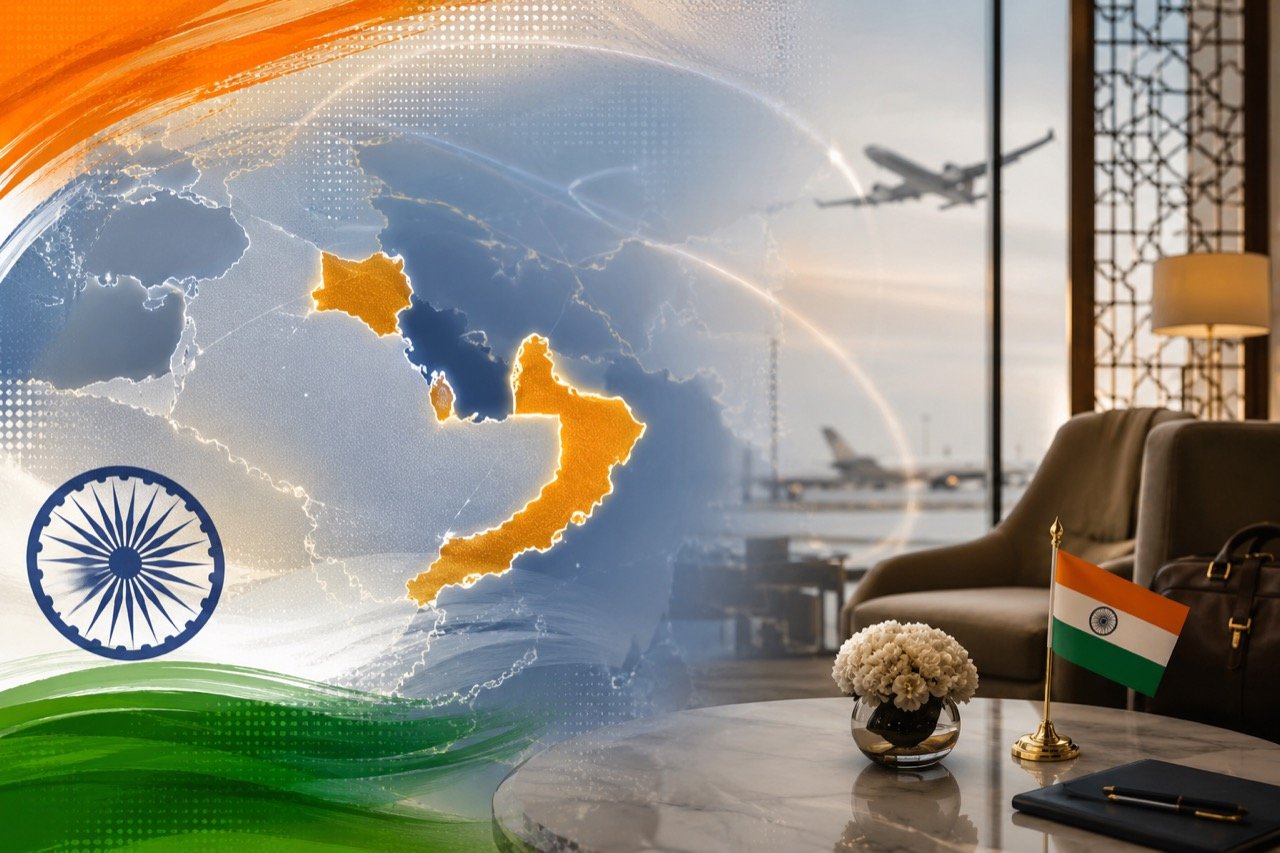
Jaishankar Begins Four-Nation Gulf Tour as India Deepens West Asia Ties
External Affairs Minister S Jaishankar's July 5-10 visit to Qatar, Bahrain, Kuwait and Oman opens a packed diplomatic week, underscoring how central the Gulf has become to India's energy, trade and diaspora interests.

Doval Welcomes US-Iran Understanding at BRICS Security Meet, Citing Hormuz Calm
National Security Adviser Ajit Doval has welcomed a reported US-Iran understanding that eased fears around the Strait of Hormuz, framing India's stake in energy security, shipping and citizen safety in West Asia.

Modi Likely to Tour Indonesia, Australia and New Zealand in July
Prime Minister Narendra Modi is reported to be planning a three-nation Indo-Pacific tour from 6 to 11 July, spanning Indonesia, Australia and New Zealand, though the itinerary is not yet official.
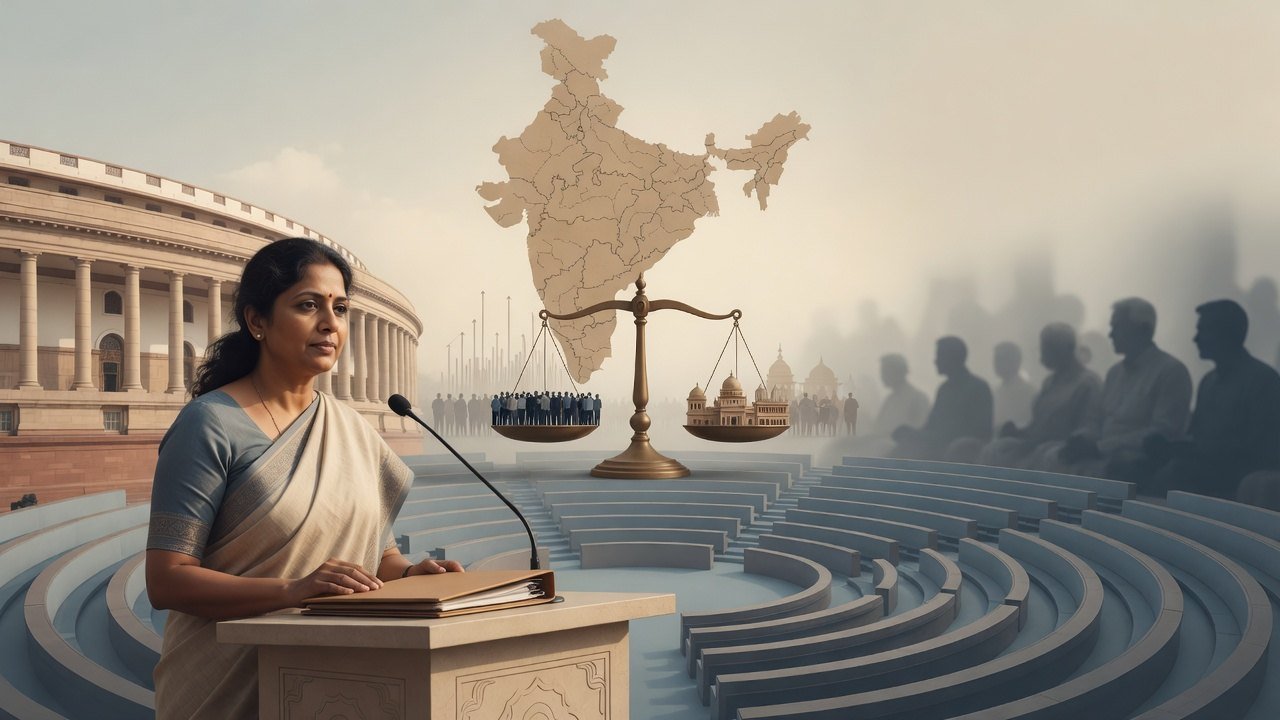
Supriya Sule Signals Conditional NCP (SP) Support for Delimitation Bill While Rejecting Alliance Speculation
Supriya Sule says NCP (SP) may support the Centre's delimitation proposal if Lok Sabha seats rise by 50% across all states, while denying an imminent NDA switch.
More from this section
More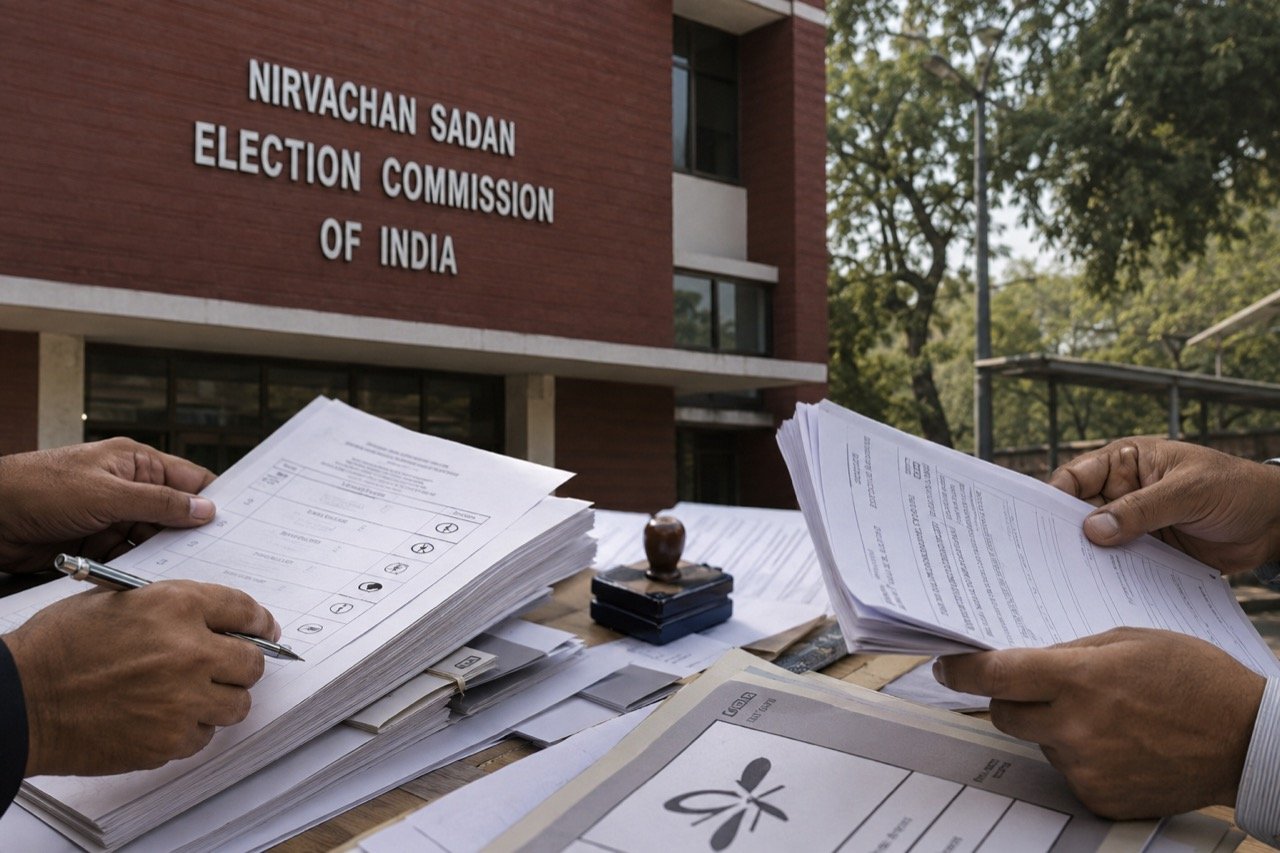
K Kavitha Party Denied TRS Name by Election Commission
The Election Commission has refused to register K Kavitha's Telangana Rakshana Sena under the TRS acronym after objections, forcing a branding reset for the new party at a politically sensitive moment in Telangana.
Lalu Prasad Yadav Security Downgrade, Bungalow Order Stir Bihar
A government order downgrading Lalu Prasad Yadav's security cover and asking him to vacate an official bungalow has opened a fresh political flashpoint in Bihar, with the RJD chief's reaction fuelling the row.
Manipur CM's Churachandpur Visit: First Since 2023 Unrest
The Manipur Chief Minister travelled to Churachandpur for a BJP MLA's funeral, his first visit to the district since the 2023 violence, lending the sombre occasion an unmistakable political significance.