Lalu Prasad Yadav Security Downgrade, Bungalow Order Stir Bihar
A government order downgrading Lalu Prasad Yadav's security cover and asking him to vacate an official bungalow has opened a fresh political flashpoint in Bihar, with the RJD chief's reaction fuelling the row.
Commentary & Analysis ·
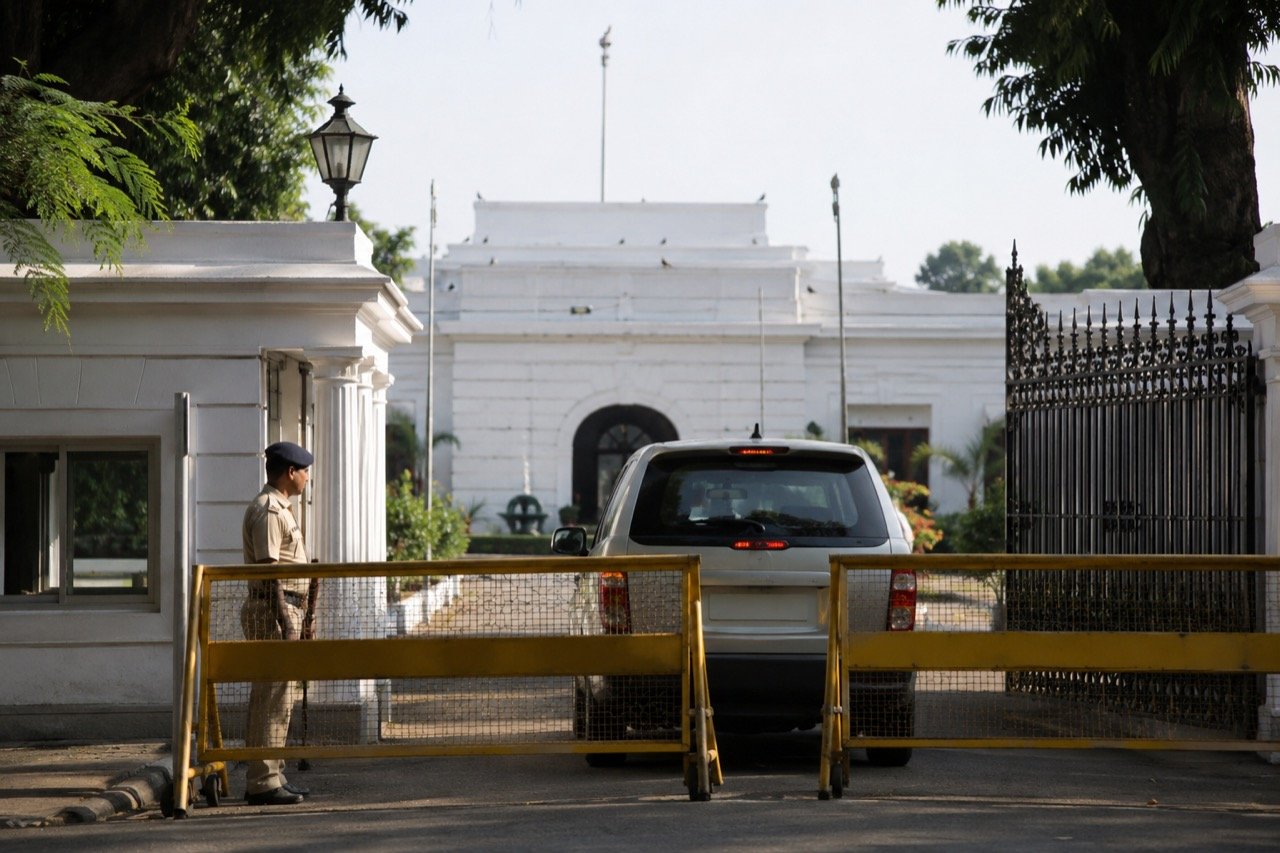
Bihar's political temperature has risen again after a government order downgraded the security cover of Rashtriya Janata Dal chief Lalu Prasad Yadav and directed him to vacate a government bungalow. The veteran leader's sharp reaction to the move quickly pushed the issue into the day's national political conversation. On paper, both decisions are administrative. Security cover is periodically reviewed on threat assessments, and official accommodation is tied to entitlements that lapse or change with a leader's status. But when the person affected is one of the state's most recognisable opposition figures, the procedural quickly becomes political.
Two readings of one order
The government's position is that such orders flow from routine reviews conducted by committees that weigh threat perception and eligibility against a fixed set of criteria. This is the standard defence offered whenever a high-profile figure loses a perk of office, and it is not inherently implausible. Security assessments are meant to be dynamic instruments, not permanent grants, and bungalow allotments in most states are explicitly tied to a person's current office or designation rather than to their historical stature.
Lalu's supporters, however, are inclined to read the timing and the target through a political lens, as a signal aimed at the opposition rather than a neutral housekeeping exercise. For a leader of Lalu's standing, the RJD's base is likely to view any withdrawal of state courtesies as an attempt to visibly diminish him in the eyes of the public, regardless of the technical justification offered. Both readings can coexist, and the confirmed facts remain the order itself and the RJD chief's public response to it. That gap between what is documented and what is inferred is precisely where political controversies of this kind tend to live.
Why timing matters
State benefits like security detail and bungalows are more than conveniences; in Indian politics they are markers of stature. A leader's security category and the address on his government allotment letter function almost as public certificates of continued relevance, which is why their removal is rarely received as a mere paperwork update. Stripping them from a senior leader in a politically sensitive season inevitably feeds an election-flavoured narrative, whatever the administrative merits of the individual order.
That intersection of entitlements, status and political messaging is what gives this story its charge in Bihar. It is worth noting that this dynamic is not unique to any one party or state; the pattern of high-profile figures losing security cover or housing just as political contests intensify has recurred across the country for decades, feeding a broader public scepticism about whether such reviews are ever conducted in a political vacuum.
The administrative case and its limits
Committees that decide security categories typically rely on intelligence inputs, past threat history and current assessments of risk exposure, while bungalow entitlements are usually governed by rules linking accommodation to rank, position or a defined post-retirement grace period. Officials can point to these frameworks and argue that Lalu's case has simply run its course under the applicable rules. The difficulty is that these frameworks are rarely made public in granular detail, which means the government's explanation, however sincere, is asking for trust rather than offering verification.
This is not a problem unique to the present order. Across India, the opacity of security-review processes has long made them vulnerable to the charge of selective application, precisely because outsiders cannot easily check whether the criteria were applied consistently to allies and opponents alike. In the absence of published benchmarks, the public is left to choose between two unverifiable narratives: that the process was scrupulously neutral, or that it was quietly weaponised.
The opposition's vantage point
From the RJD's perspective, a downgrade of this kind lands at a moment when perceptions of momentum and stature matter disproportionately. Lalu Prasad Yadav remains a totemic figure for the party's base, and any state action that can be framed as a slight against him is likely to be mobilised as evidence of a ruling establishment uneasy about its opposition. Whether or not that framing reflects the government's actual intent, it is a predictable and, in political terms, rational response for a party whose identity is closely bound to its founding leader.
The episode also illustrates a recurring asymmetry in Indian political life: incumbents control the administrative levers that confer or withdraw status, while opposition figures control only the narrative response to those decisions. That asymmetry is itself a source of grievance, independent of whether any particular order is justified, and it explains why such stories generate heat far beyond their technical substance.
The NE Times View
Security and accommodation reviews should be boringly routine, and the fact that they rarely feel that way is the real problem. Governments of every stripe have used the machinery of perks and protection to reward allies and needle opponents, which is why even a defensible order invites suspicion. The cleanest remedy is transparency: publish the criteria, the review calendar and the threat-assessment basis, so a downgrade reads as procedure rather than payback.
Until that happens, every such order in Bihar, or any state, will double as political theatre, and voters will be left guessing where administration ends and signalling begins. A more transparent process would not eliminate political disagreement over individual outcomes, but it would at least narrow the space in which suspicion of manipulation can flourish. That narrower space is worth pursuing, given how frequently these disputes recur and how corrosive they are to public trust in ostensibly neutral state functions.
Key takeaways
- A government order downgraded Lalu Prasad Yadav's security cover and directed him to vacate a government bungalow, prompting a sharp public reaction from the RJD chief.
- The government frames both moves as routine outcomes of periodic threat and eligibility reviews, while Lalu's supporters read the timing as politically targeted.
- Security cover and official housing function as markers of political stature in India, so their withdrawal from a senior leader carries symbolic weight beyond its administrative substance.
- The opacity of review criteria for security and accommodation decisions is what allows both the official and the political readings of this episode to coexist without resolution.
- Publishing clear, standing criteria and review timelines would help such orders read as procedure rather than political signalling, in Bihar and elsewhere.
You may also like to read
Mohan Yadav Family's Ujjain Land Purchases Draw Scrutiny in Madhya Pradesh
An Indian Express investigation reports that Madhya Pradesh Chief Minister Mohan Yadav's family and linked real estate firms bought 137 plots across 168 acres in Ujjain after he took office, in areas later touched by road projects.

Doval Welcomes US-Iran Understanding at BRICS Security Meet, Citing Hormuz Calm
National Security Adviser Ajit Doval has welcomed a reported US-Iran understanding that eased fears around the Strait of Hormuz, framing India's stake in energy security, shipping and citizen safety in West Asia.
Supriya Sule Signals Conditional NCP (SP) Support for Delimitation Bill While Rejecting Alliance Speculation
Supriya Sule says NCP (SP) may support the Centre's delimitation proposal if Lok Sabha seats rise by 50% across all states, while denying an imminent NDA switch.
Uddhav Thackeray Backs Cockroach Janta Party Protest as Youth Movement Plans 20 July Parliament March
A satirical online formation has grown into a wider campaign over examination accountability, drawing support from established political leaders while testing whether digital anger can sustain organised action.
More from this section
More
K Kavitha Party Denied TRS Name by Election Commission
The Election Commission has refused to register K Kavitha's Telangana Rakshana Sena under the TRS acronym after objections, forcing a branding reset for the new party at a politically sensitive moment in Telangana.
Manipur CM's Churachandpur Visit: First Since 2023 Unrest
The Manipur Chief Minister travelled to Churachandpur for a BJP MLA's funeral, his first visit to the district since the 2023 violence, lending the sombre occasion an unmistakable political significance.
Odisha SIR: 20 Lakh Voter List Deletions Spark Opposition Alarm
Odisha's special intensive revision has placed electoral-roll accuracy under scrutiny after officials reported roughly 20 lakh deletions from the draft voter list and opposition parties raised fears of wrongful exclusion.