K Kavitha Party Denied TRS Name by Election Commission
The Election Commission has refused to register K Kavitha's Telangana Rakshana Sena under the TRS acronym after objections, forcing a branding reset for the new party at a politically sensitive moment in Telangana.
Commentary & Analysis ·
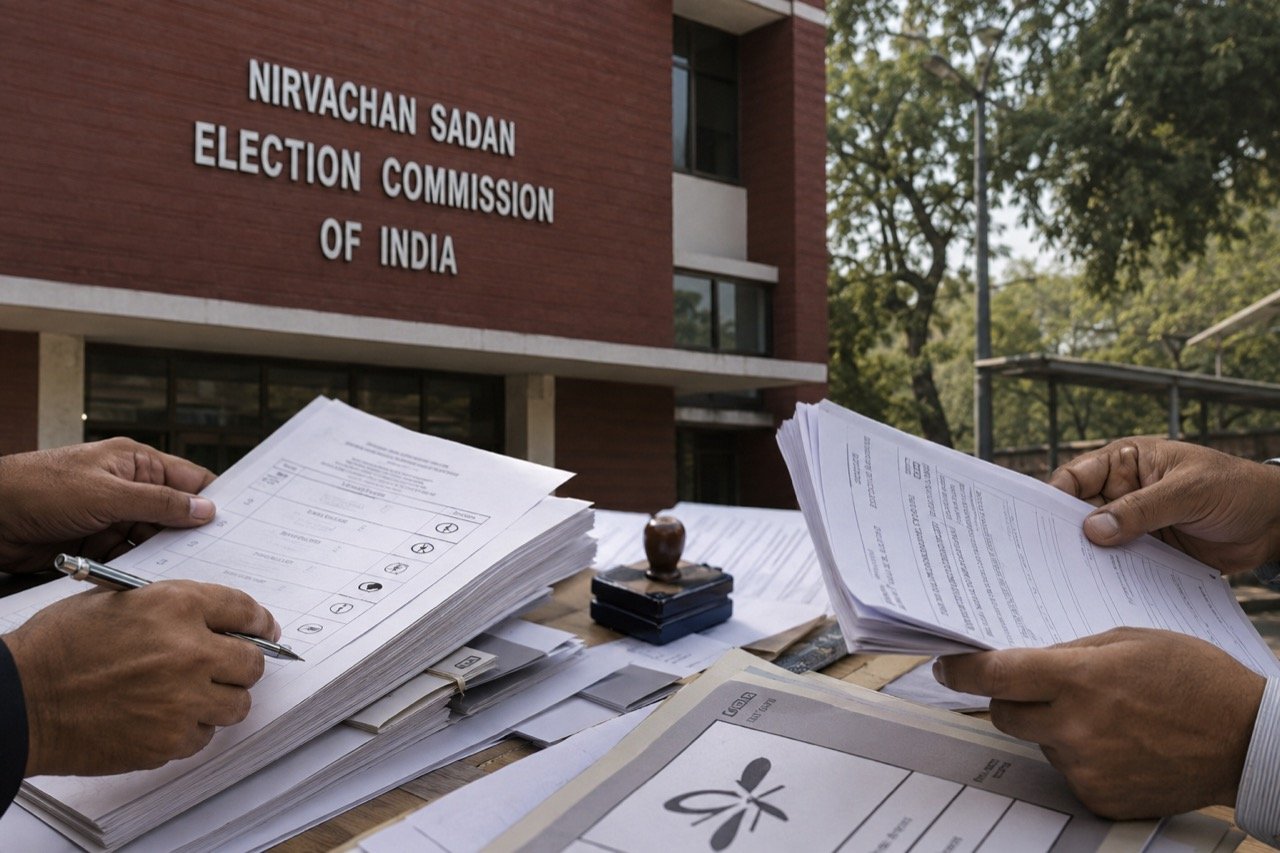
The Election Commission's refusal to register K Kavitha's new political outfit under the TRS name has handed the fledgling party a procedural setback with larger political meaning in Telangana. The Commission declined to register Telangana Rakshana Sena under the TRS acronym after receiving objections from stakeholders and members of the public, and has asked Kavitha to suggest alternate names. On the surface this is a bureaucratic housekeeping matter, the sort of naming dispute that election authorities in India adjudicate routinely. But in a state where party identity is bound up with a decades-long statehood movement, family political inheritance and a still-unsettled realignment of regional forces, the decision carries weight well beyond the paperwork involved.
Why a name is more than a label
Party names and symbols are not cosmetic in Indian elections. They help voters identify political history, leadership claims and continuity, often serving as a shorthand that substitutes for detailed manifestos in the minds of the electorate. The TRS acronym carries strong association with the Telangana Rashtra Samithi, the party that led the statehood movement before rebranding as BRS, and the Commission's concern was that a similar acronym could confuse voters. This is precisely the kind of risk that election authorities exist to police: not the content of a party's politics, but the clarity of the choices placed before voters on the ballot. When two political actors seek overlapping identities, whether deliberately or through the ordinary use of a well-known abbreviation, the Commission's role is to reduce confusion and preserve fairness in the electoral field.
It is worth pausing on why this matters so much in a state like Telangana specifically. The TRS-to-BRS transition was itself a significant rebranding moment, one that altered how the party presented itself to voters even as its core leadership and organisational base remained largely intact. Against that backdrop, any new entrant seeking to use the TRS acronym, even coincidentally, risks reviving old associations in ways that could mislead voters about lineage, endorsement or continuity. The Commission's caution here reflects an institutional memory of how naming disputes can distort electoral choice rather than merely irritate rival camps.
A branding reset at a sensitive moment
For Kavitha, the naming dispute complicates the launch phase of her political platform. A new party must build recognition quickly, and an acronym loaded with existing political memory would have offered instant visibility, sparing her the slow, expensive work of introducing an unfamiliar name to voters from scratch. Losing that option forces a branding reset just when momentum matters most. Political launches are unforgiving in their early months: media attention, cadre enthusiasm and public curiosity are all finite resources that tend to peak once and then fade if not converted into visible organisational progress. A delay caused by a naming dispute, however procedurally routine, eats into that narrow window.
There is also a practical dimension beyond optics. Registering under a new name means reprinting materials, revising public communications, and potentially re-explaining the party's identity to grassroots workers and prospective allies who may have already begun associating the outfit with the Telangana Rakshana Sena or TRS framing. None of this is fatal to a political project, but it does impose real friction at a moment when a new entrant can least afford it.
Wider implications for Telangana's political landscape
For Telangana politics more broadly, the episode reflects the churn around regional party identity after years of realignment. Names, colours, slogans and symbols carry emotional weight in state politics, especially when tied to movements, leadership families and earlier electoral victories. Telangana's political history is unusually dense with symbolism: a statehood agitation that shaped an entire generation of political identity, followed by a ruling party's own rebranding, and now a family-linked figure seeking to stake a claim to some of that inherited sentiment through name alone. Each of these episodes adds another layer to an already crowded field of overlapping claims on the same emotional territory.
This also raises a question that will likely recur as more leaders exit or split from established parties across India: how much of a movement's identity can be claimed by an individual leader once organisational structures diverge? The Commission's intervention suggests that acronyms and names tied to significant political movements will be treated as a shared, contested resource rather than something any one faction can assume by default, particularly when objections are raised by stakeholders and the public.
What happens next
The next step depends on whether Kavitha's team proposes alternatives that avoid confusion while still signalling a clear Telangana-focused message. This is not a trivial task. A name needs to be distinctive enough to satisfy the Commission's concerns about voter confusion, yet resonant enough to carry some of the political energy that the original TRS-linked branding would have provided. Expect the party to test names that retain a Telangana identity marker, perhaps invoking themes of protection, regional pride or continuity with the statehood-era vocabulary, without directly overlapping with existing registered acronyms.
How quickly this is resolved will itself be a signal. A swift, uncontested renaming would suggest the party is prepared and organisationally nimble even under pressure. A prolonged back-and-forth with the Commission, by contrast, would feed a narrative of a launch beset by avoidable stumbles, one that rival parties are unlikely to let pass without comment.
The NE Times View
The Election Commission has done exactly what a referee should: applied naming scrutiny without passing judgment on the political legitimacy of a leader or faction. Kavitha's attempt to claim the TRS acronym was an understandable shortcut to inherited sentiment, but new parties earn durable loyalty through organisation and message, not borrowed initials. If her platform has genuine appeal among Telangana's voters, a fresh name will not stop it, and if it does not, no acronym could have saved it. The healthier outcome for Telangana's democracy is competition fought on ideas rather than on the residue of old brand equity. For observers, the more instructive story here may not be the name itself but what Kavitha's team chooses next, and how quickly they convert a procedural setback into a coherent, independent political identity.
Key takeaways
- The Election Commission rejected registration of K Kavitha's Telangana Rakshana Sena under the TRS acronym following objections from stakeholders and the public, and has asked for alternate name suggestions.
- The TRS acronym's close association with the Telangana Rashtra Samithi, now rebranded as BRS, was central to the Commission's concern about voter confusion.
- The setback forces an early branding reset for Kavitha's new party at a moment when quick recognition matters most for a fledgling political launch.
- The episode highlights broader tensions in Telangana over who can claim the symbolic legacy of the statehood movement and its associated political branding.
- The party's next move, proposing a name that signals Telangana identity without duplicating existing acronyms, will be an early test of its organisational readiness.
You may also like to read
TMC Leadership-List Dispute Reaches the Election Commission
A dispute inside the Trinamool Congress over office-bearer lists and organisational authority has reached the Election Commission, raising procedural questions with real stakes for West Bengal politics.
TMC Rebel Bloc Claims to Oust Mamata Banerjee, Vows Election Commission Fight
A breakaway Trinamool Congress faction says it has removed Mamata Banerjee as chairperson and installed Arup Roy, setting up a high-stakes battle over who is the real party.
Odisha SIR: 20 Lakh Voter List Deletions Spark Opposition Alarm
Odisha's special intensive revision has placed electoral-roll accuracy under scrutiny after officials reported roughly 20 lakh deletions from the draft voter list and opposition parties raised fears of wrongful exclusion.

Sikkim Electoral Roll Revision Flags 20,000 Voters for Possible Deletion, Putting Due Process to the Test
Sikkim's Special Intensive Revision of electoral rolls has placed about 20,000 names under scrutiny for possible deletion, raising questions about accuracy, transparency and the rights of eligible voters.
More from this section
More
Lalu Prasad Yadav Security Downgrade, Bungalow Order Stir Bihar
A government order downgrading Lalu Prasad Yadav's security cover and asking him to vacate an official bungalow has opened a fresh political flashpoint in Bihar, with the RJD chief's reaction fuelling the row.
Manipur CM's Churachandpur Visit: First Since 2023 Unrest
The Manipur Chief Minister travelled to Churachandpur for a BJP MLA's funeral, his first visit to the district since the 2023 violence, lending the sombre occasion an unmistakable political significance.
Odisha SIR: 20 Lakh Voter List Deletions Spark Opposition Alarm
Odisha's special intensive revision has placed electoral-roll accuracy under scrutiny after officials reported roughly 20 lakh deletions from the draft voter list and opposition parties raised fears of wrongful exclusion.