AICTE Industry Fellowship 2026: Rs 1.5 Lakh Scheme Closes July 5
The AICTE Industry Fellowship Programme 2026, which places technical-education faculty inside leading companies on a Rs 1.5 lakh monthly stipend, reached its application deadline on July 5.
Commentary & Analysis ·

The AICTE Industry Fellowship Programme 2026 reached its application deadline on July 5, The Indian Express reported, closing the window on a scheme that offers eligible faculty members a monthly fellowship of Rs 1.5 lakh to work inside leading industries. Applications were routed through the official AICTE portal. On the surface, this is a routine administrative milestone — a deadline that has come and gone, as deadlines do. But it is worth pausing on, because the fellowship touches one of the more persistent structural weaknesses in India's technical education system: the distance between what is taught in engineering classrooms and what is actually practised on factory floors, in research labs and in corporate product teams.
What the scheme actually offers
The mechanics are straightforward. Faculty members from AICTE-approved institutions who qualify can apply to be embedded inside leading industries for a defined period, drawing a fellowship of Rs 1.5 lakh a month for the duration of their placement. The application process itself was conducted entirely online through AICTE's official portal, which suggests a degree of procedural standardisation, at least at the intake stage. The programme sits under AICTE's broader mandate of faculty development, a category of intervention that has existed in various forms for years but has rarely been resourced this generously. A stipend at this level is not a token gesture; it is pitched at a rate that could plausibly compete with, or at least meaningfully supplement, a full-time academic salary, which is precisely the point — AICTE wants faculty who might otherwise view an industry stint as a financial sacrifice to see it instead as an attractive, fully compensated opportunity.
Why faculty-industry immersion matters
India's engineering education system has long been criticised for producing graduates whose theoretical grounding does not always translate into workplace readiness. Employers routinely report having to retrain new hires in tools, processes and problem-solving approaches that differ from what was taught in the classroom. One structural reason for this gap is that many faculty members, having moved from postgraduate study directly into teaching, have limited firsthand exposure to how industry actually operates day to day — what tools are current, what problems are being solved, what skills are in demand. A fellowship that places faculty inside functioning companies for an extended period is one of the more direct ways to address that gap, because it does not rely on secondhand accounts, guest lectures or occasional industry advisory board meetings. It puts the educator in the workplace itself, observing and participating in real projects, real deadlines and real constraints.
The potential payoff is threefold. First, faculty who return from such placements can bring back practical knowledge that directly updates how courses are taught, replacing outdated examples and case studies with ones grounded in current industry practice. Second, the immersion can seed new research questions — problems that industry is actually grappling with, which is often a richer source of applied research than problems generated purely within academic silos. Third, and perhaps most valuable for students, faculty with recent industry exposure are better positioned to offer placement-oriented guidance, having seen firsthand what skills and attitudes employers are actually looking for.
The deadline as a moment of reflection, not celebration
It would be easy to treat the July 5 deadline as the end of the story — the scheme launched, applications came in, the window closed. But the more useful way to think about this moment is as a checkpoint rather than a conclusion. A deadline closing tells us nothing about whether the scheme will actually work. The real test lies ahead: in who gets selected, where they are placed, what they are asked to do while embedded in these industries, and what changes when they return to their classrooms. The generous stipend signals serious intent on AICTE's part, and it should be effective in drawing a strong pool of applicants purely on financial terms. But money solving the recruitment problem is the easy half of the equation. The harder half — translating a well-funded opportunity into durable, systemic improvement in technical education — depends on decisions that have not yet been made public.
What success would actually require
For a scheme like this to deliver more than symbolic value, several things need to happen with a degree of rigour that Indian higher-education schemes have not always demonstrated. Selection needs to be transparent, so that the fellowship is seen — and is actually — a genuine competitive opportunity rather than a perk distributed through informal networks. The industry projects that fellows are matched with need to be substantive, not token attachments where a faculty member sits in on meetings without being given real work. And critically, there needs to be some mechanism for capturing and measuring outcomes: what skills did fellows actually acquire, what industry contacts and networks did they build, and did any of this translate into concrete changes in curriculum, teaching methods or research direction back at their home institutions. Without that closing loop, the fellowship risks becoming an attractive line item on a resume rather than a lever for institutional change.
The wider stakes for India's technical education system
This is not a small policy question. India produces one of the largest annual cohorts of engineering graduates in the world, and the employability gap among a meaningful share of them has been a recurring concern for policymakers, industry bodies and educators alike. Schemes that attempt to close this gap by working on the supply side — that is, by improving the readiness and currency of the faculty who teach these students — are, in principle, more scalable than schemes that try to intervene directly with each graduating student. If even a modest cohort of faculty return from meaningful industry immersion and meaningfully update how and what they teach, the ripple effects reach every subsequent batch of students they instruct, not just the fellows themselves. That multiplier effect is exactly why a scheme like this, if implemented well, could be disproportionately valuable relative to its cost. It is also why getting the implementation details right matters so much more than the headline stipend figure.
The NE Times View
AICTE has priced this fellowship attractively, and that alone should draw strong applicants — but money is the easy part. The scheme's credibility will rest on selection transparency and on what fellows are actually asked to do inside companies. AICTE should publish who was selected, where they were placed and what changed in their classrooms a year later. If it does, this could become a template for closing India's stubborn academia-industry gap; if it does not, it risks joining the long list of well-funded schemes with unmeasured outcomes. The test of this programme will not be visible on July 5, when applications closed, but many months from now, when this year's fellows are back in their institutions and it becomes possible to ask whether anything in their classrooms, their research or their students' placement outcomes has genuinely changed.
Key takeaways
- The AICTE Industry Fellowship Programme 2026 closed applications on July 5, offering selected faculty a monthly fellowship of Rs 1.5 lakh to work inside leading industries, with applications processed through AICTE's official portal.
- The scheme targets a long-standing structural problem in Indian technical education: limited firsthand industry exposure among faculty, which contributes to a gap between classroom theory and workplace practice.
- A generous stipend should help attract strong applicants, but the scheme's real test lies in selection transparency and the substance of the industry placements fellows are given.
- Success should be measured by concrete outcomes — updated curricula, new industry networks, and improved placement guidance — not merely by participation numbers.
- AICTE publishing data on selected fellows, their placements, and subsequent classroom changes would be the clearest signal of whether this scheme becomes a genuine reform template or another well-funded but unmeasured initiative.
You may also like to read
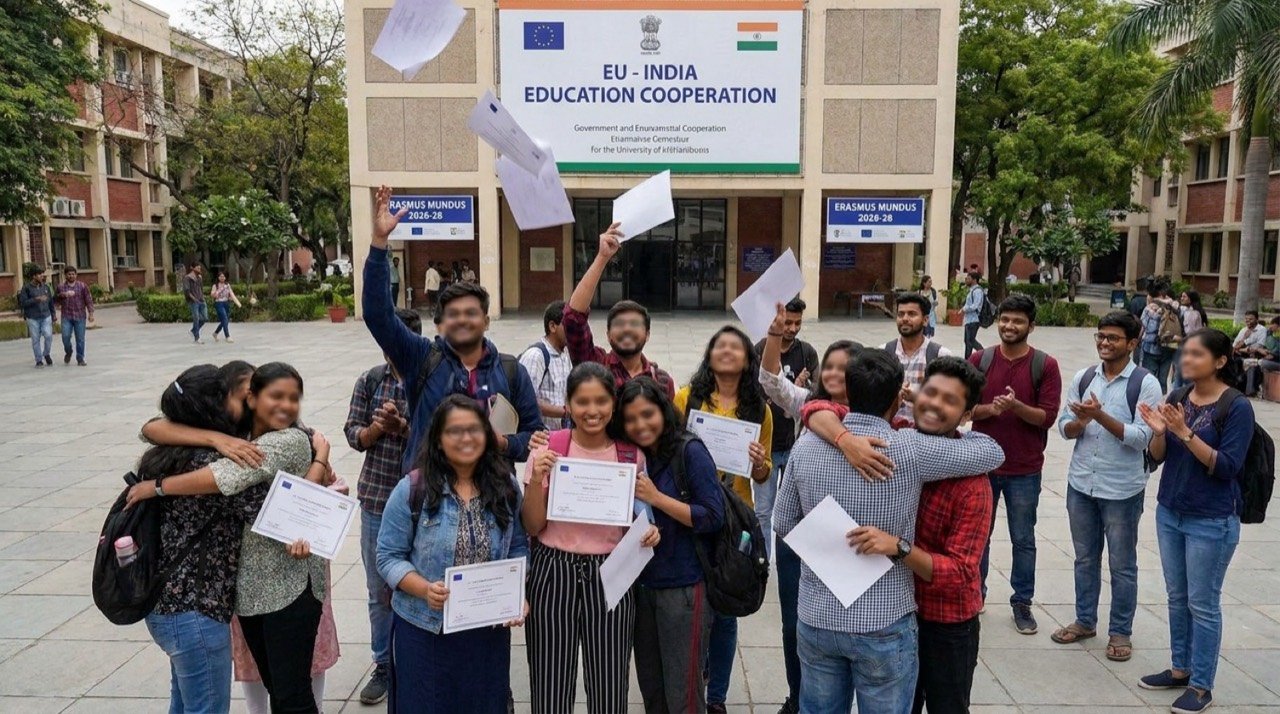
EU Awards 75 Erasmus Mundus Scholarships to Indian Students for 2026-28
The European Union has granted 75 Indian students fully funded Erasmus Mundus master's scholarships and launched a 40-member EU-India Student Ambassadors Network to deepen academic ties.

PM Modi Begins Three-Nation Indo-Pacific Tour on July 6
Prime Minister Narendra Modi travels to Indonesia, Australia and New Zealand from July 6 to 11 in a trip New Delhi frames as a concerted push to deepen India's strategic footprint across the Indo-Pacific.

PM Modi Begins Ghana, Trinidad and Argentina Tour on July 6
Prime Minister Narendra Modi departs on July 6 for a three-nation tour of Ghana, Trinidad and Tobago and Argentina, folding Africa, the Caribbean and Latin America into one diplomatic push.

Delhi Weather: Warmest July Day in Two Years, Orange Rain Alert Next
Delhi's maximum temperature climbed to 38.6 degrees Celsius on Sunday, its warmest July day in two years, even as the IMD issued an orange alert for moderate rain on Monday.
More from this section
More
Bay of Bengal Low Pressure System Revives Monsoon Over Western India
A low-pressure system over the Bay of Bengal has pushed the monsoon back into an active phase, bringing steady heavy rain to Kerala, coastal Karnataka and Maharashtra, and putting Mumbai and Pune on preparedness watch.
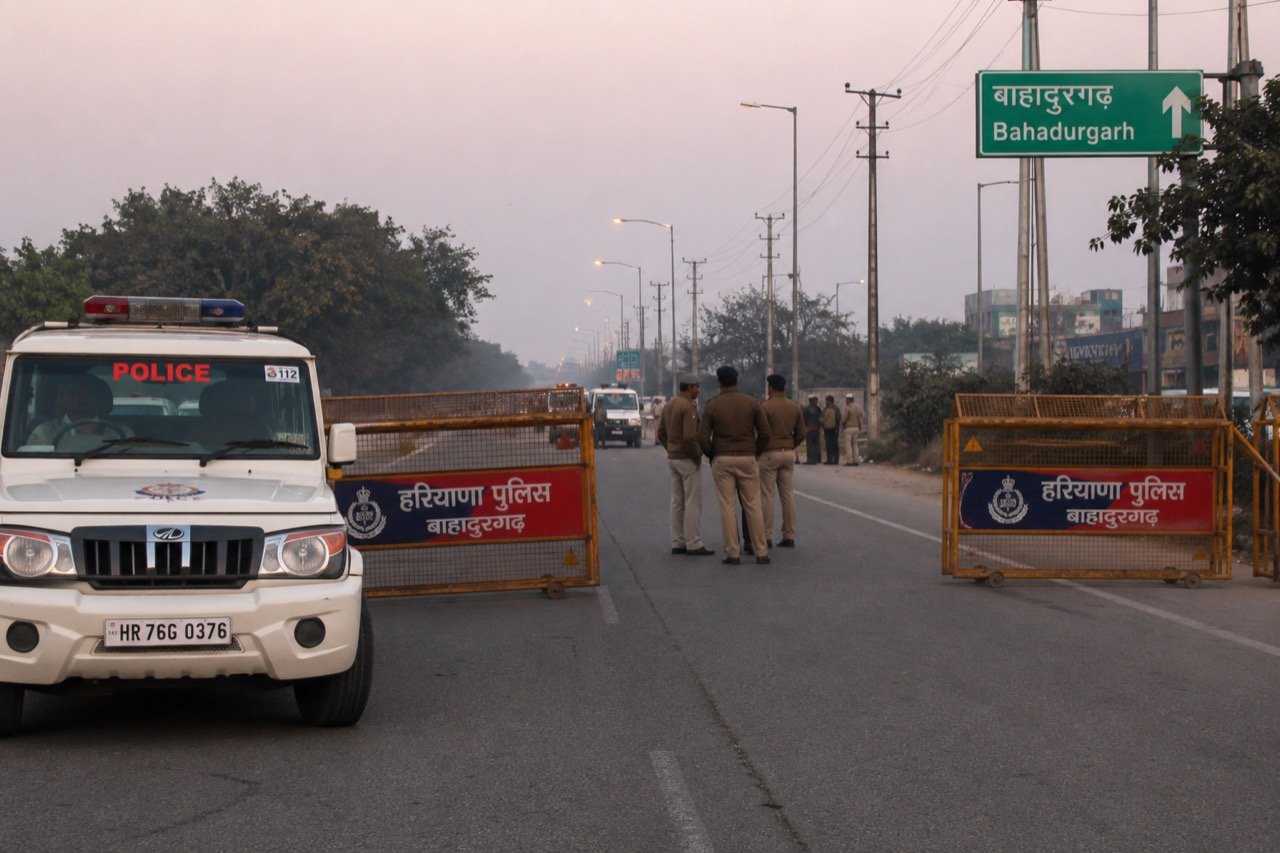
Bishnoi Gang Suspects Injured in Haryana Encounter as Police Tighten Net
A joint Haryana-Delhi Police operation in Bahadurgarh left two suspected Lawrence Bishnoi gang members injured, spotlighting the multi-state coordination now central to India's fight against organised crime networks.

Brahmapur-Udhna Amrit Bharat Express Goes Daily, Boosting Odisha Link
The Brahmapur-Udhna Amrit Bharat Express is set to run every day, giving passengers travelling between Odisha and Gujarat a more dependable and affordable long-distance rail option for work, study and family journeys.