Modi's Indo-Pacific Swing: Three Nations, One Diaspora-Driven Strategy
Prime Minister Narendra Modi travels to Indonesia, Australia and New Zealand from July 6 to 11, weaving diaspora outreach, trade ambitions and Indo-Pacific strategy into a single six-day diplomatic push.
Commentary & Analysis ·
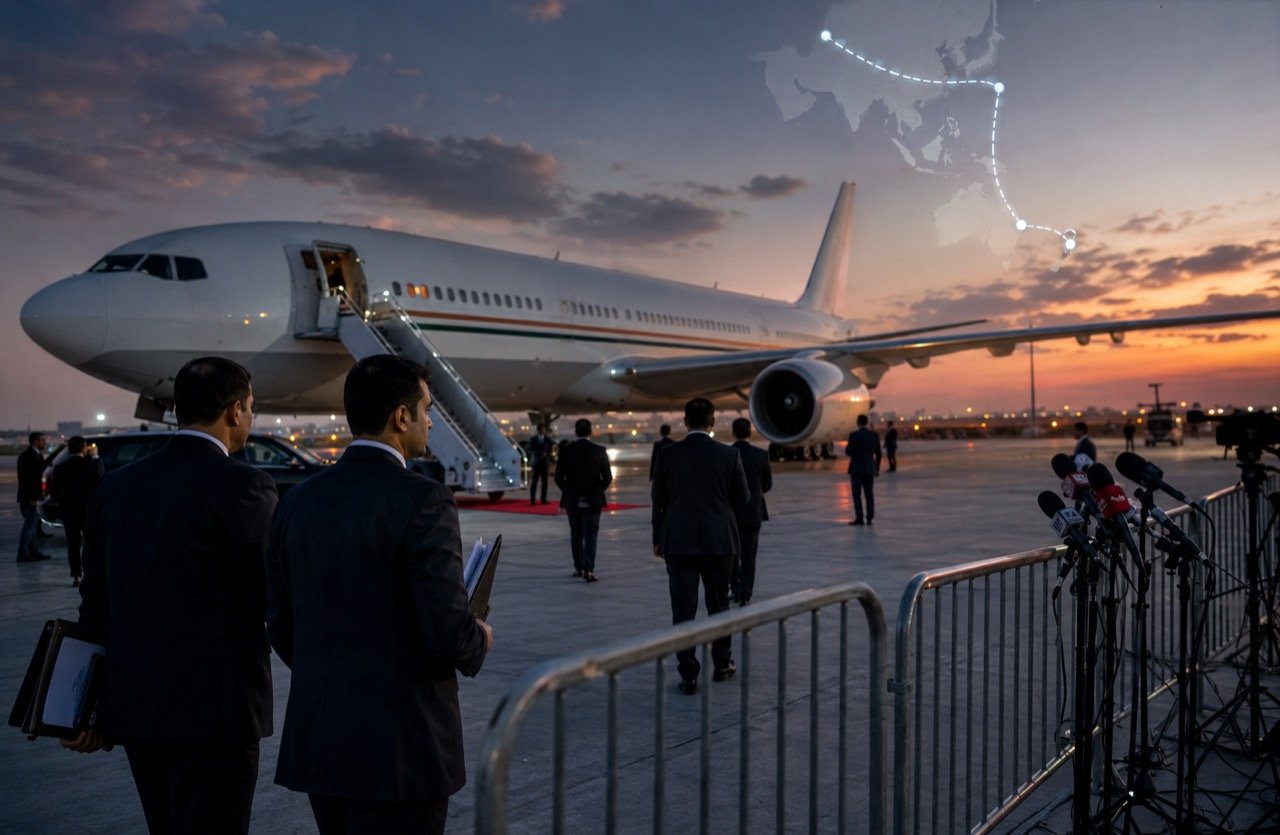
Prime Minister Narendra Modi is set to travel to Indonesia, Australia and New Zealand from July 6 to July 11, a six-day swing through the Indo-Pacific that brings India's strategic partnerships, trade ambitions and diaspora diplomacy into a single itinerary, according to reporting by the Indian Express. On paper, this looks like a routine diplomatic circuit. In practice, it is a carefully sequenced statement about how India intends to position itself in a region where economic weight, security anxiety and community ties are increasingly inseparable from one another.
Three stops, three distinct priorities
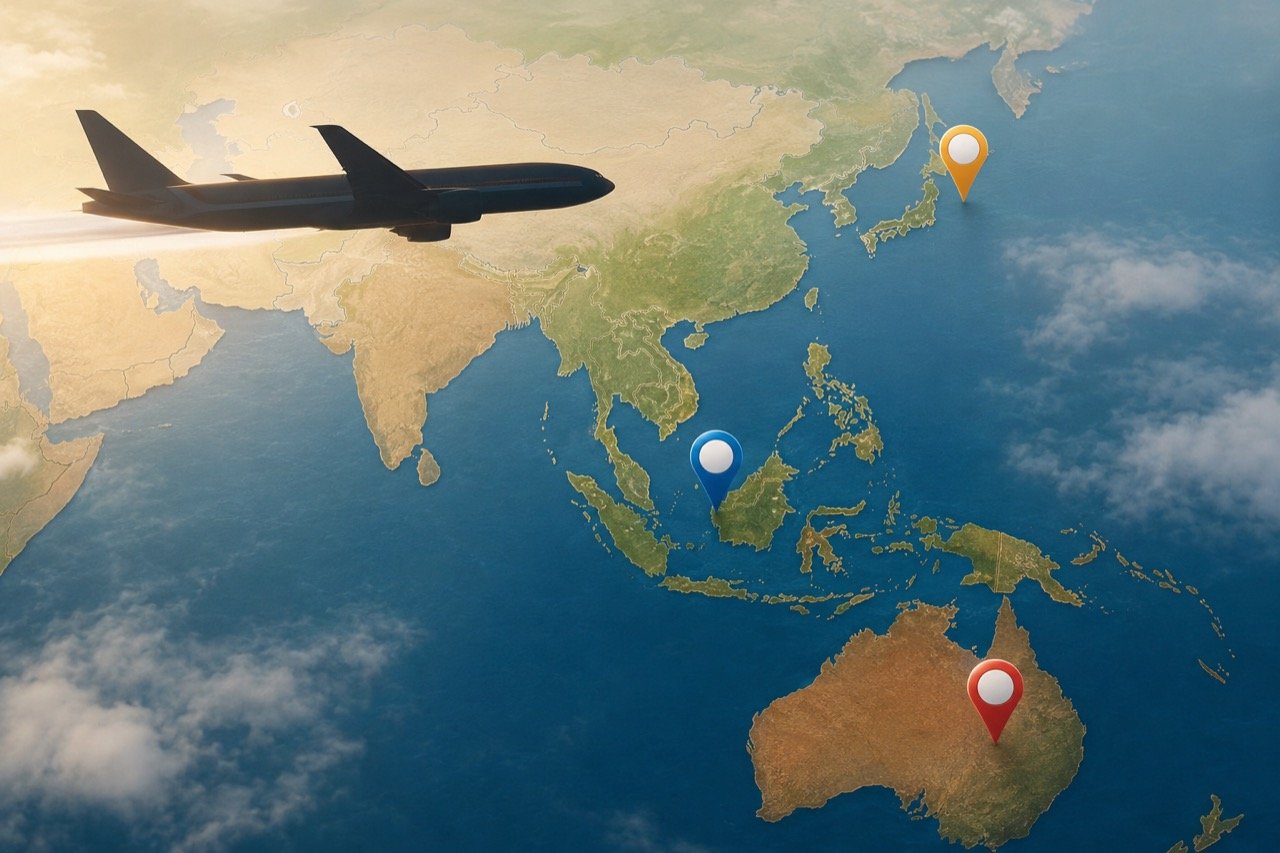
Each destination on this tour carries its own weight in India's regional calculus, and the itinerary reads almost like a deliberate cross-section of what New Delhi wants from the wider Indo-Pacific. Indonesia is a major Southeast Asian partner with maritime and strategic significance, sitting astride some of the world's busiest shipping lanes and holding a pivotal role in ASEAN's collective posture towards China's assertiveness in the South China Sea. Australia has become central to India's interests in education, critical minerals, defence cooperation and diaspora ties, having emerged over the past decade as one of India's most consequential Western-aligned partners outside the traditional Quad framing of the United States and Japan. New Zealand, though a smaller relationship by almost every measure, offers Pacific reach, people-to-people links and untapped trade potential that has historically been underexploited relative to the size and enthusiasm of its Indian-origin population.
Taken together, the three stops suggest a government that no longer treats the Indo-Pacific as a monolith to be addressed through a single umbrella policy, but as a mosaic of relationships, each requiring its own calibration of economic incentive, security cooperation and cultural engagement. That granularity is itself a signal of policy maturity.
Why the diaspora dimension matters
The scale of Indian-origin communities along the route underlines why diaspora outreach anchors the tour: roughly 1.4 lakh people of Indian origin in Indonesia, 9.7 lakh in Australia and around 3 lakh in New Zealand. These are not trivial numbers, and they are not evenly distributed by chance. In Australia in particular, the Indian-origin population has grown rapidly through skilled migration and student inflows, making it one of the fastest-growing diaspora communities in any developed economy. In New Zealand, the community is smaller but disproportionately visible in trade, small business and professional services. Indonesia's diaspora, while comparatively modest, has deep historical roots that predate the modern Indian state.
These communities are not merely audiences for stadium events, of the kind Mr Modi has addressed on previous overseas visits. They underpin education links, investment channels and long-term public diplomacy that outlasts any single government's tenure. A student who studies in Melbourne or Auckland today may become an investor, an alumni-network node, or an informal trade facilitator a decade later. Governments that recognise this compounding effect tend to invest in diaspora relations methodically rather than episodically, and this tour appears to be an attempt to do precisely that across three markets simultaneously.
What observers will be watching for
Observers will watch the visit for announcements on trade, mobility, technology, defence and regional cooperation. Each of these baskets carries a different kind of political and economic payoff. Trade announcements, if they materialise, would matter most concretely for Australia, given the existing economic cooperation framework between the two countries and the mutual interest in diversifying supply chains away from overexposure to any single partner. Mobility arrangements — easier visas, recognition of qualifications, streamlined pathways for students and skilled workers — would resonate directly with the diaspora communities the trip is designed to court, since these are the practical frictions that ordinary families and professionals encounter regardless of the warmth of any joint statement.
Critical minerals cooperation is arguably the most strategically loaded item on the list, particularly with Australia, which holds substantial reserves of lithium, rare earths and other inputs essential to clean energy and defence manufacturing. Any concrete steps here would feed directly into India's ambitions to reduce reliance on Chinese-dominated mineral supply chains. Defence cooperation, meanwhile, touches the harder security architecture of the Indo-Pacific, where India, Australia and, to a lesser extent, Indonesia and New Zealand share an interest in a rules-based maritime order even when they differ on how forcefully to articulate it.
A long game, not a single-issue arena
The trip also fits an established pattern: India treats the Indo-Pacific as a long-term diplomatic theatre to be cultivated continuously, rather than a single-issue security arena defined solely by concerns about China. This is a meaningful distinction. A security-only framing would predict visits clustered around moments of tension or multilateral summits. Instead, India has increasingly folded trade, education, climate cooperation, technology transfer and diaspora engagement into the same diplomatic apparatus that handles strategic dialogue, suggesting a belief that durable influence in the region is built cumulatively, through many small threads, rather than through episodic high-drama interventions.
This approach carries its own risks. Breadth can come at the expense of depth if follow-through lags behind the ambition of the itinerary. Three countries in six days is a demanding schedule, and the substantive outcomes from each leg will inevitably be compressed relative to what a dedicated bilateral visit might produce. The test, as ever with such tours, is not the itinerary itself but what is signed, agreed or set in motion afterwards.
The NE Times View
The real test of this tour will not be the crowd sizes but the follow-through. India's Indo-Pacific policy has matured from slogans to structure, and pairing strategic talks with diaspora engagement is smart statecraft — communities abroad are durable bridges when governments change, whereas government-to-government warmth can prove fickle with electoral cycles. But New Delhi must convert leader-level warmth into concrete outcomes on mobility agreements, critical minerals and defence co-production. If those materialise, this trip will read as consolidation of India's regional position rather than ceremony. If they do not, the tour risks being remembered chiefly for its optics rather than its substance, a familiar hazard for high-visibility diplomatic swings of this kind. Given the strategic stakes involved, particularly around critical minerals and maritime security, the coming months of implementation will matter considerably more than the six days of travel themselves.
Key takeaways
- Prime Minister Modi's July 6–11 tour covers Indonesia, Australia and New Zealand, combining strategic, trade and diaspora diplomacy in one itinerary.
- Diaspora populations along the route are substantial and strategically significant: roughly 1.4 lakh in Indonesia, 9.7 lakh in Australia and around 3 lakh in New Zealand.
- Key areas to watch for concrete outcomes include trade, mobility agreements, critical minerals cooperation and defence co-production.
- The visit reflects India's broader approach of treating the Indo-Pacific as a continuous diplomatic theatre rather than a narrow security arena.
- The tour's ultimate significance will depend on follow-through after the visit, not on the scale of public engagement during it.
You may also like to read
PM Modi Begins Three-Nation Indo-Pacific Tour on July 6
Prime Minister Narendra Modi travels to Indonesia, Australia and New Zealand from July 6 to 11 in a trip New Delhi frames as a concerted push to deepen India's strategic footprint across the Indo-Pacific.

Modi Likely to Tour Indonesia, Australia and New Zealand in July
Prime Minister Narendra Modi is reported to be planning a three-nation Indo-Pacific tour from 6 to 11 July, spanning Indonesia, Australia and New Zealand, though the itinerary is not yet official.
Modi's Balotra Push: Rs 1.06 Lakh Crore Projects and Energy Message
Prime Minister Narendra Modi's visit to Balotra in Rajasthan paired development projects worth around Rs 1.06 lakh crore with remarks crediting India's diplomacy for steering the country through West Asia-linked energy pressures.
PM Modi Calls on President Murmu as Cabinet Reshuffle Speculation Grows in Delhi
Prime Minister Narendra Modi met President Droupadi Murmu at Rashtrapati Bhavan on June 23, a call that drew sharp political attention amid mounting speculation over a possible Union Council of Ministers reshuffle.
More from this section
More
K Kavitha Party Denied TRS Name by Election Commission
The Election Commission has refused to register K Kavitha's Telangana Rakshana Sena under the TRS acronym after objections, forcing a branding reset for the new party at a politically sensitive moment in Telangana.
Lalu Prasad Yadav Security Downgrade, Bungalow Order Stir Bihar
A government order downgrading Lalu Prasad Yadav's security cover and asking him to vacate an official bungalow has opened a fresh political flashpoint in Bihar, with the RJD chief's reaction fuelling the row.
Manipur CM's Churachandpur Visit: First Since 2023 Unrest
The Manipur Chief Minister travelled to Churachandpur for a BJP MLA's funeral, his first visit to the district since the 2023 violence, lending the sombre occasion an unmistakable political significance.