Modi's Balotra Push: Rs 1.06 Lakh Crore Projects and Energy Message
Prime Minister Narendra Modi's visit to Balotra in Rajasthan paired development projects worth around Rs 1.06 lakh crore with remarks crediting India's diplomacy for steering the country through West Asia-linked energy pressures.
Commentary & Analysis ·
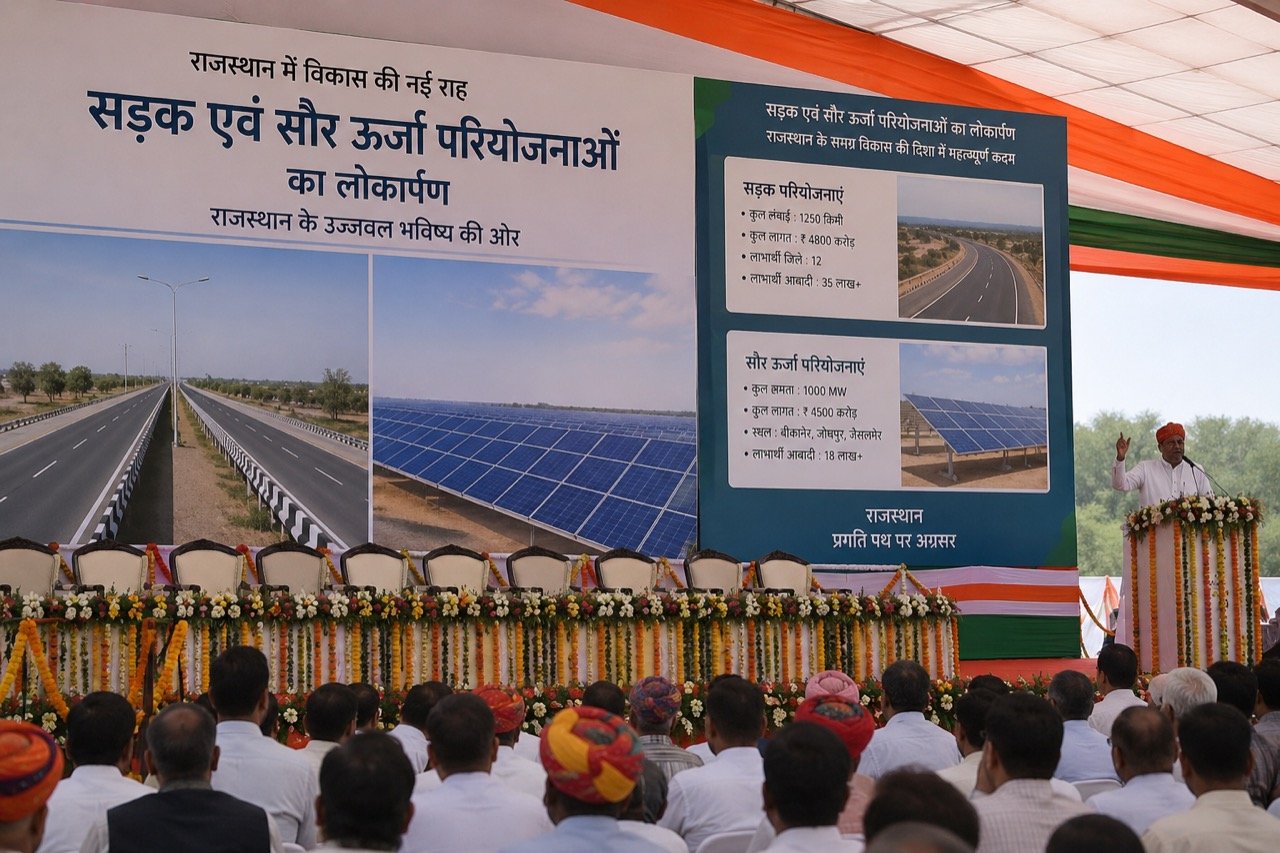
Prime Minister Narendra Modi's visit to Balotra in Rajasthan turned into a national story on two fronts. According to the Indian Express, he inaugurated and laid foundation stones for development projects worth around Rs 1.06 lakh crore — a package spanning roads, energy and connectivity — while also using the platform to credit India's diplomacy with helping the country weather West Asia-linked energy turbulence. Taken together, the two threads of the visit reveal a great deal about how India's political leadership now chooses to communicate: one message tailored for the state audience, another pitched at the national and even international level, both delivered from the same stage in a single afternoon.
A development pitch with national reach
Project announcements of this scale are never purely local events, and Balotra is a useful illustration of why. A package worth Rs 1.06 lakh crore, spread across roads, energy and connectivity infrastructure, is large enough to feature in national economic conversations even though its immediate audience is a district in Rajasthan. Such announcements feed into the Centre's broader narrative of investment-led growth, positioning Rajasthan as a direct beneficiary of the national push on infrastructure spending. This is a familiar pattern in Indian governance: big-ticket capital expenditure announcements are used simultaneously to address local development needs and to reinforce a wider story of a government that is building at scale.
For the state, the headline number promises jobs, better logistics and improved public services. Road and connectivity projects, in particular, tend to have a multiplier effect on local economies — they ease the movement of goods, reduce transport costs for farmers and small traders, and often open up peripheral regions to investment that would otherwise bypass them. Energy infrastructure carries similar promise, potentially improving reliability of supply for households and industry alike. But all of this potential is conditional. The benefits materialise only if the projects move from foundation stone to completion, a transition that in Indian infrastructure history has not always been smooth or swift. Foundation-laying ceremonies generate an immediate news cycle; the harder, less photogenic work of land acquisition, contractor execution, budget disbursement and quality control unfolds over years, often outside the media spotlight.
Energy security framed as kitchen-table economics
The second layer of the visit was the Prime Minister's energy message. As the Times of India reported, Modi said diplomacy and 'dosti' had helped India tackle the energy crisis, arguing that the government made the right call at every level. This is a notable rhetorical move: rather than treating energy security as an abstract matter of foreign policy or global supply chains, Modi chose to frame it in terms that ordinary households can immediately relate to — friendship between nations translating into stability at the fuel pump.
India's exposure to global energy shocks is real and well documented. As a country that imports a substantial share of its crude oil requirements, India remains vulnerable to shipping disruptions, geopolitical flare-ups in oil-producing regions, and the resulting price volatility that ripples through transport costs, inflation and household budgets. By linking energy security to foreign policy successes, Modi is effectively arguing that the diplomatic relationships his government has cultivated, described here loosely as 'dosti' with key partners, have functioned as a buffer against the kind of price shocks that have hit other import-dependent economies harder. This is a politically potent argument precisely because it translates a distant, technical policy area into something voters experience directly every time they fill a fuel tank or pay a household energy bill.
Separating record from rhetoric
It is worth being precise about what is confirmed fact and what is political interpretation here. The project values and the inaugurations themselves are on record — Rs 1.06 lakh crore in announced projects is a verifiable figure, and the ceremonies took place as reported. The claim that diplomacy has been responsible for insulating India from energy pain, however, is a political interpretation rather than an audited outcome. It is the kind of claim that can only be properly tested against future data: fuel prices at the pump, the stability of supply chains, and how India's energy costs compare with peer economies facing the same global pressures over the coming months.
This distinction matters because the two claims invite very different forms of accountability. Infrastructure spending can be tracked against disbursement schedules, tender awards and physical progress on the ground. Diplomatic success on energy security is harder to isolate from other factors, such as global oil prices, exchange rate movements and domestic tax policy on fuels, all of which also shape what households ultimately pay. Voters and observers would do well to keep these two yardsticks separate rather than allowing the scale of the infrastructure number to lend automatic credibility to the energy narrative, or vice versa.
Stakeholders and what they will be watching
For Rajasthan's state government and local administration, the immediate task is translating the Rs 1.06 lakh crore announcement into visible, on-the-ground progress — something that can be pointed to well before the next electoral cycle. For contractors and industry linked to the announced projects, the priority will be securing timely disbursements and regulatory clearances so that construction schedules are not held up by the usual bottlenecks of land acquisition or environmental approvals. For ordinary residents of Balotra and the wider region, the interest is more direct still: whether promised roads, energy infrastructure and connectivity actually shorten commutes, lower costs and create local employment.
At the national level, the energy security framing will be watched closely by opposition parties and independent commentators, who are likely to press the government on specifics whenever fuel prices rise or supply disruptions occur, testing whether the 'dosti' narrative holds up under real-world pressure. The framing also sets a rhetorical bar for the government itself: having explicitly tied diplomatic success to energy stability, any future price spike will invite scrutiny of whether the diplomatic relationships in question actually delivered the cushioning effect claimed in Balotra.
The NE Times View
Balotra shows the template of modern Indian political communication: a big development number for the state audience and a strategic storyline for the national one. Both are legitimate, but both invite the same scrutiny — execution. Foundation stones generate headlines; completion timelines, local employment and functioning services decide whether districts actually feel the Rs 1.06 lakh crore. Likewise, the diplomacy-and-dosti framing of energy security will be judged not by speeches but by what households pay at the pump. Voters increasingly track delivery, and that is the standard this visit should be held to. The true test of this visit will not be the applause it received in Balotra, but the paper trail of disbursements, completions and price data that follows it over the coming months and years.
Key takeaways
- Modi inaugurated and laid foundation stones for Rajasthan projects worth around Rs 1.06 lakh crore, spanning roads, energy and connectivity.
- The Prime Minister linked India's handling of a West Asia-linked energy crisis to diplomacy and 'dosti', framing energy security as a household-economy issue.
- Project values and inaugurations are confirmed facts, while claims of diplomatic success in cushioning energy pain remain political interpretation to be tested over time.
- Execution — completion timelines, local jobs and functioning services — will determine whether Balotra's announced investment translates into real district-level benefit.
- Future fuel prices and supply stability, not speeches, will be the real measure of whether the diplomacy-driven energy security narrative holds up.
You may also like to read
Modi's Indo-Pacific Swing: Three Nations, One Diaspora-Driven Strategy
Prime Minister Narendra Modi travels to Indonesia, Australia and New Zealand from July 6 to 11, weaving diaspora outreach, trade ambitions and Indo-Pacific strategy into a single six-day diplomatic push.
PM Modi Calls on President Murmu as Cabinet Reshuffle Speculation Grows in Delhi
Prime Minister Narendra Modi met President Droupadi Murmu at Rashtrapati Bhavan on June 23, a call that drew sharp political attention amid mounting speculation over a possible Union Council of Ministers reshuffle.
Modi's G7 Outing In Evian Turns On A Crowded Schedule Of Bilaterals
Attending the G7 summit in Evian, Prime Minister Modi packed in a series of bilateral meetings, including with Canada's Mark Carney and the UK's Keir Starmer, signalling a busy phase of personal diplomacy.
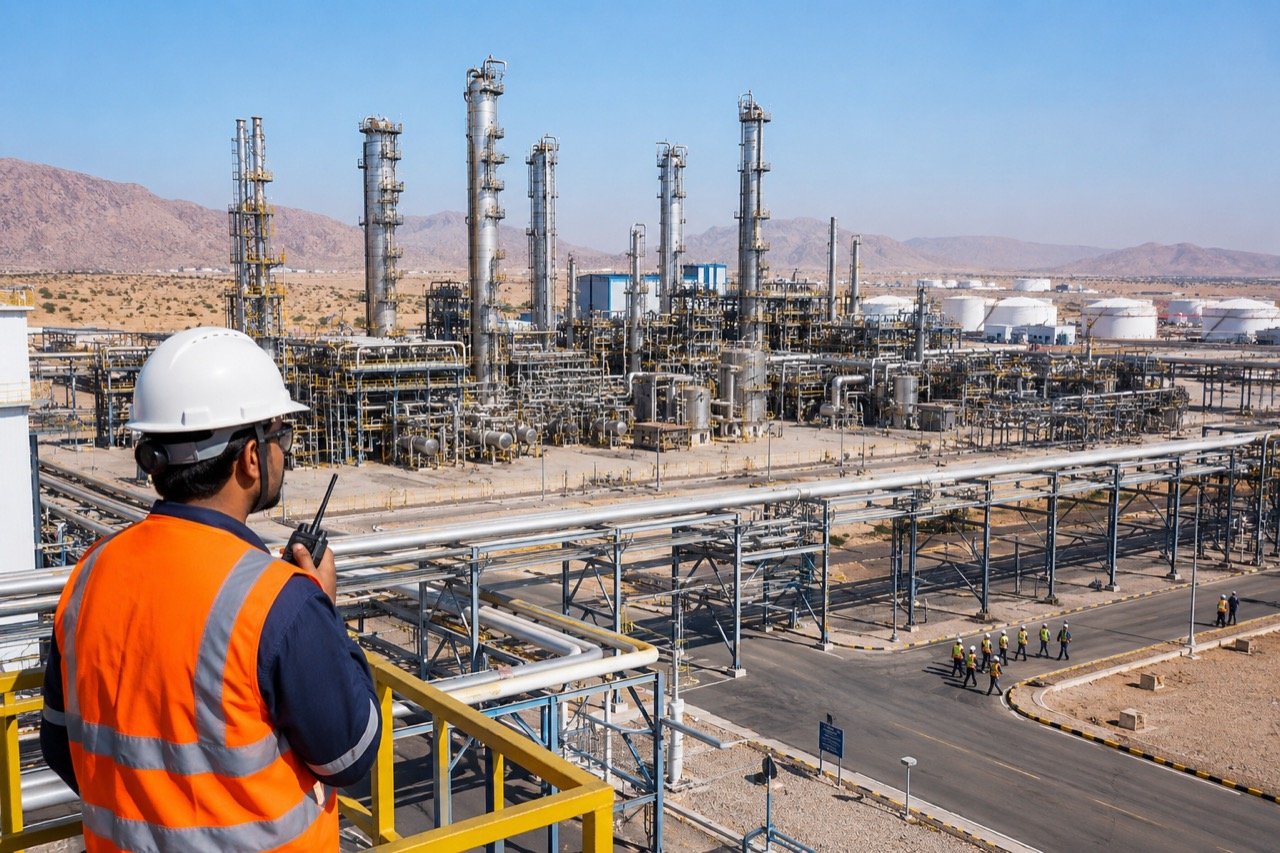
Modi Opens Pachpadra Refinery: Energy Security and Jobs at Stake
Prime Minister Narendra Modi has inaugurated the HPCL Rajasthan Refinery at Pachpadra, a mega project that puts India's energy security, industrial investment and regional employment squarely in the spotlight.
More from this section
More
K Kavitha Party Denied TRS Name by Election Commission
The Election Commission has refused to register K Kavitha's Telangana Rakshana Sena under the TRS acronym after objections, forcing a branding reset for the new party at a politically sensitive moment in Telangana.
Lalu Prasad Yadav Security Downgrade, Bungalow Order Stir Bihar
A government order downgrading Lalu Prasad Yadav's security cover and asking him to vacate an official bungalow has opened a fresh political flashpoint in Bihar, with the RJD chief's reaction fuelling the row.
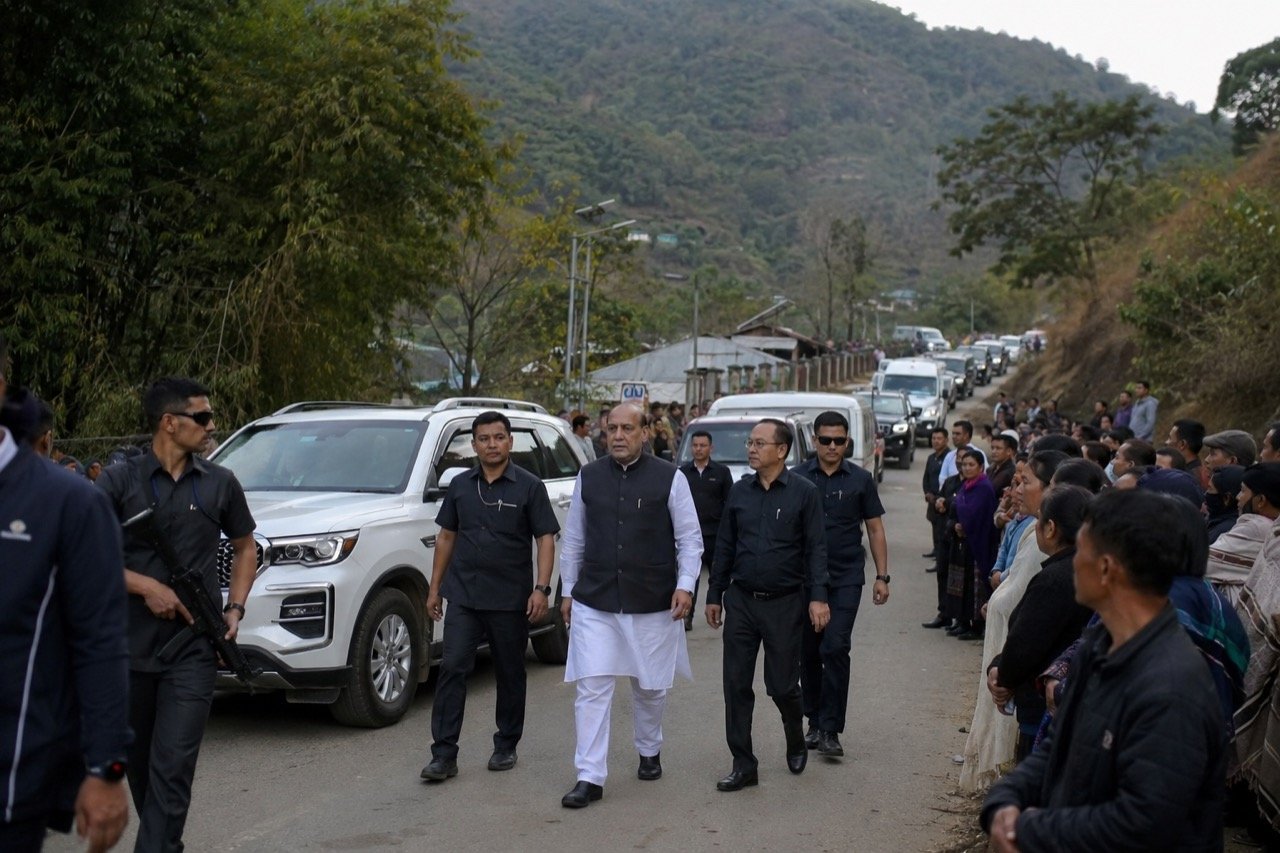
Manipur CM's Churachandpur Visit: First Since 2023 Unrest
The Manipur Chief Minister travelled to Churachandpur for a BJP MLA's funeral, his first visit to the district since the 2023 violence, lending the sombre occasion an unmistakable political significance.