Vikram-1 Countdown: India's First Private Orbital Rocket Nears Lift-Off
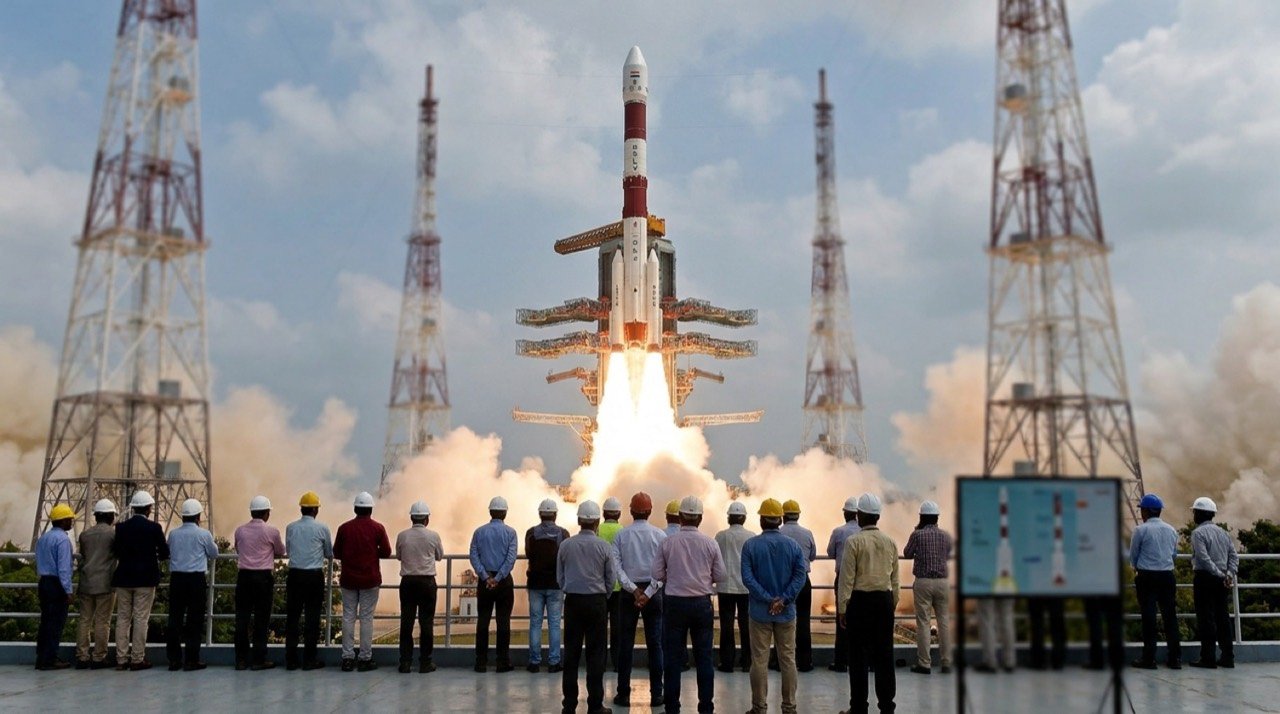
Skyroot Aerospace has stacked its Vikram-1 rocket at Sriharikota with a launch window from July 12 to August 4, putting India's private space ambitions on the pad for the first time.
Commentary & Analysis ·
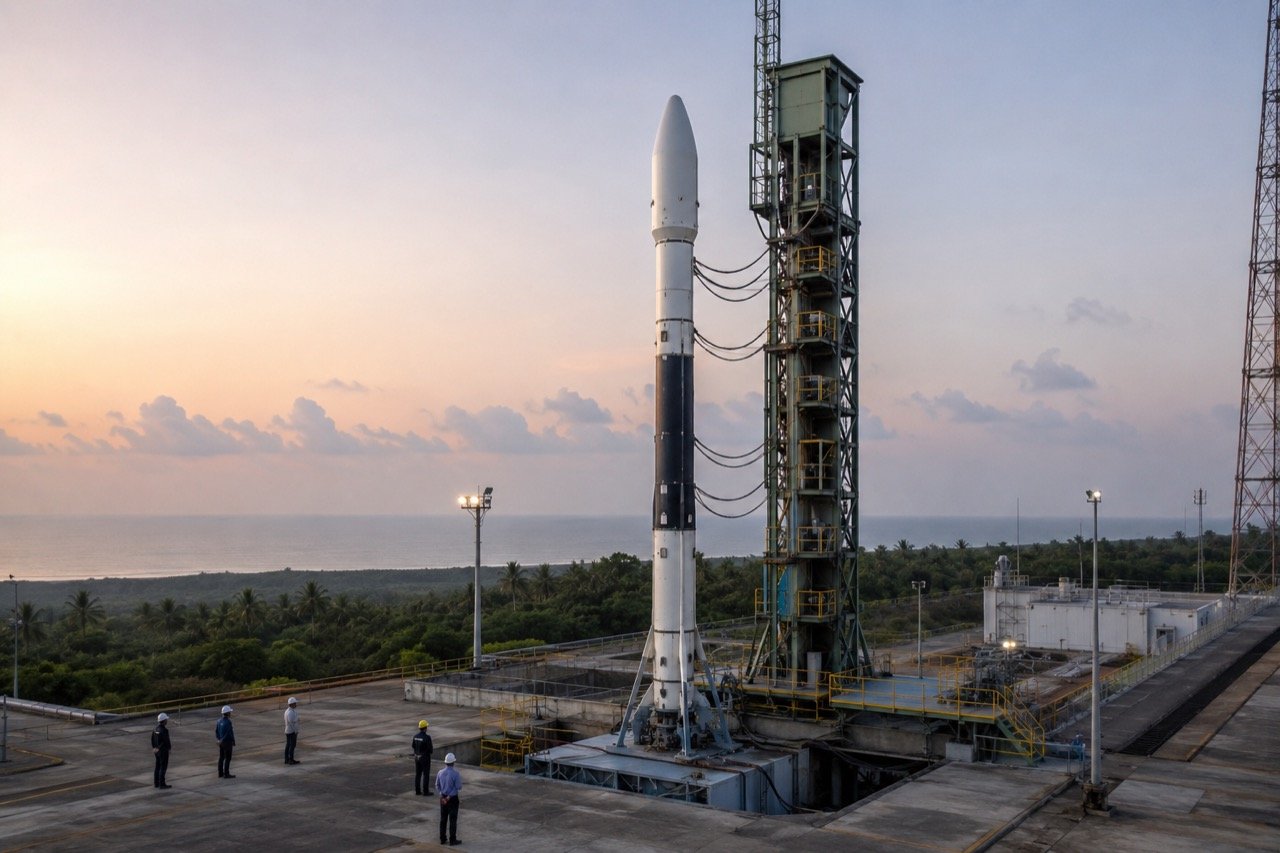
India's private space industry is standing at the edge of a defining moment. Skyroot Aerospace has unveiled its fully stacked Vikram-1 rocket at the Satish Dhawan Space Centre in Sriharikota, with a launch window opening on July 12 and running until August 4, subject to final tests, weather and regulatory clearances. For an industry that has spent years accumulating permissions, prototypes and pilot demonstrations, the sight of a complete, flight-ready vehicle on the pad at India's primary spaceport is the clearest signal yet that private Indian rocketry has moved from ambition to execution.
Why Vikram-1 matters
Vikram-1 is India's first privately developed orbital rocket to reach this stage of readiness. The small, all-carbon composite vehicle is designed to carry satellites of up to 350 kg into orbit, and its maiden mission — named Aagaman — is intended to prove that a private Indian company can deliver launch capability in a domain long dominated by ISRO. That framing matters because launch capability is not simply a matter of building a rocket that flies; it is a demonstration of an entire chain of competence, from propulsion and materials engineering to range safety, telemetry and mission assurance, all of which have historically resided within the state space agency.
The unveiling at Sriharikota is more than a photo opportunity. Getting a fully integrated vehicle onto the national spaceport's pad means Skyroot has cleared the hard engineering and procedural gates that separate promising startups from genuine launch providers. Many space startups around the world raise capital, build impressive prototypes and generate encouraging test data, yet never progress to an actual orbital attempt. Reaching the pad with a stacked, mission-ready rocket implies that Skyroot has already passed through design reviews, structural qualification, and the safety certifications that Indian regulators and ISRO's own range authorities require before granting a launch slot. That is a meaningfully higher bar than simply announcing a target date.
The commercial and strategic stakes
Small-satellite launches are one of the fastest-growing segments of the global space market, and New Delhi has been explicit that it wants domestic firms to capture a larger share of that value. The economics of the sector favour agile, lower-cost providers who can serve customers that do not need the lift capacity of a heavy-class rocket but do need reliable, timely access to orbit. A 350 kg payload class positions Vikram-1 squarely in this niche, which includes earth-observation constellations, communication cubesats, and technology-demonstration missions from both domestic and international customers who might otherwise have to book slots on foreign vehicles or wait in a queue for ISRO's own launch manifest.
A successful Aagaman mission would not displace ISRO; it would widen the ecosystem around it, giving Indian and foreign customers a home-grown commercial option. This distinction is worth dwelling on, because it reframes what success would actually mean. ISRO remains the backbone of India's strategic and scientific space programme, responsible for missions of national importance that a young private firm is in no position to take on. What Vikram-1 offers instead is complementary capacity — a second source of launch services that can absorb commercial demand, freeing ISRO's own infrastructure for larger and more complex undertakings, while also giving India a credible answer to the question of whether it can compete for the growing global small-satellite launch market rather than simply purchasing capacity from established players abroad.
Weighing the risks
Caution is still warranted. The launch remains contingent on technical readiness and regulatory sign-off, and maiden flights of new rockets carry inherent risk. History offers a sober reminder here: even the most technically accomplished space programmes, including ISRO's own early decades, experienced failures on debut flights before achieving reliable success. A first orbital attempt by any new vehicle, anywhere in the world, carries a non-trivial chance of anomaly, whether in propulsion, staging, guidance or a dozen other subsystems that can only be fully validated in actual flight conditions. Recognising this is not pessimism; it is simply an accurate description of how launch vehicle development has always worked, everywhere.
Even so, Vikram-1's presence on the pad is already a marker of how far India's space reforms have travelled since the sector was opened to private players. The mere fact that a private company has been permitted to build, test, integrate and now prepare to fly an orbital-class rocket from India's national spaceport reflects a substantial shift in regulatory posture, one that required new institutional mechanisms to authorise, oversee and support private launch activity alongside ISRO's own operations.
What this signals for the wider ecosystem
Beyond Skyroot itself, the Aagaman mission window is being watched closely by the broader constellation of Indian space startups, investors and policymakers who have bet on the sector's liberalisation. A successful flight would offer tangible proof of concept that could ease the path for other domestic launch vehicle developers seeking regulatory approval, spaceport access and investor confidence. Conversely, the manner in which any setback is handled — whether regulators and the company treat it as a data point to be learned from rather than a verdict on the entire model — will say as much about the maturity of India's private space framework as the outcome of the launch itself.
Global customers, too, will be watching. International interest in Indian launch services has grown as the small-satellite market seeks diversified, cost-competitive providers beyond the traditional handful of established launch nations. A demonstrated, repeatable Indian private launch capability could position the country as a more attractive node in that global supply chain, particularly for customers wary of over-reliance on any single provider.
The NE Times View
Whatever happens in the launch window, Vikram-1 has already shifted the story of Indian space from policy promise to launchpad execution. If the mission succeeds, it will validate the 2020 reforms that invited private capital into a state monopoly and could unlock a wave of investment in Indian launch startups. If it stumbles, the lesson should be patience, not retreat — every serious spacefaring nation has learned through early failures. Either way, India's space economy now has a second engine, and that is the real breakthrough.
Key takeaways
- Skyroot Aerospace's Vikram-1 is India's first privately developed orbital rocket to reach full stack readiness, with a launch window running from July 12 to August 4 at Sriharikota, subject to tests, weather and clearances.
- The all-carbon composite vehicle can carry payloads up to 350 kg, targeting the fast-growing small-satellite launch market rather than competing with ISRO's larger strategic missions.
- Reaching the pad with a fully integrated rocket demonstrates that Skyroot has cleared major engineering, safety and regulatory gates, distinguishing it from startups that never progress beyond prototypes.
- A successful Aagaman mission would validate India's 2020 space-sector reforms and could catalyse further investment in private Indian launch providers; a setback would be a normal, expected part of new rocket development.
- Either outcome confirms that India's space economy now has a genuine second engine alongside ISRO, broadening the country's commercial and strategic options in orbit.
You may also like to read
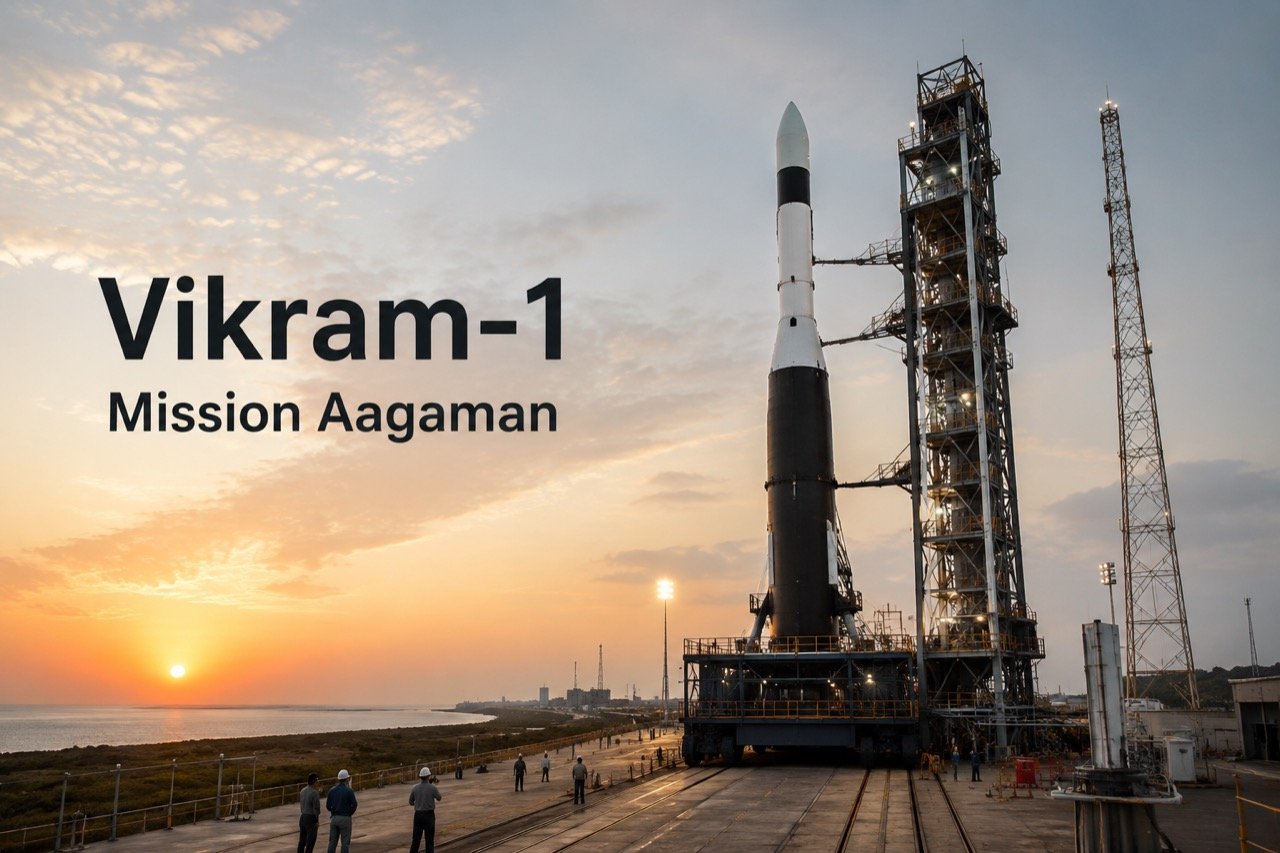
Skyroot Vikram-1: Mission Aagaman and India's Private Space Race
Fresh updates on Skyroot Aerospace's Vikram-1 rocket and Mission Aagaman have renewed attention on India's private space ecosystem and the wait for the country's first private orbital-class launch.
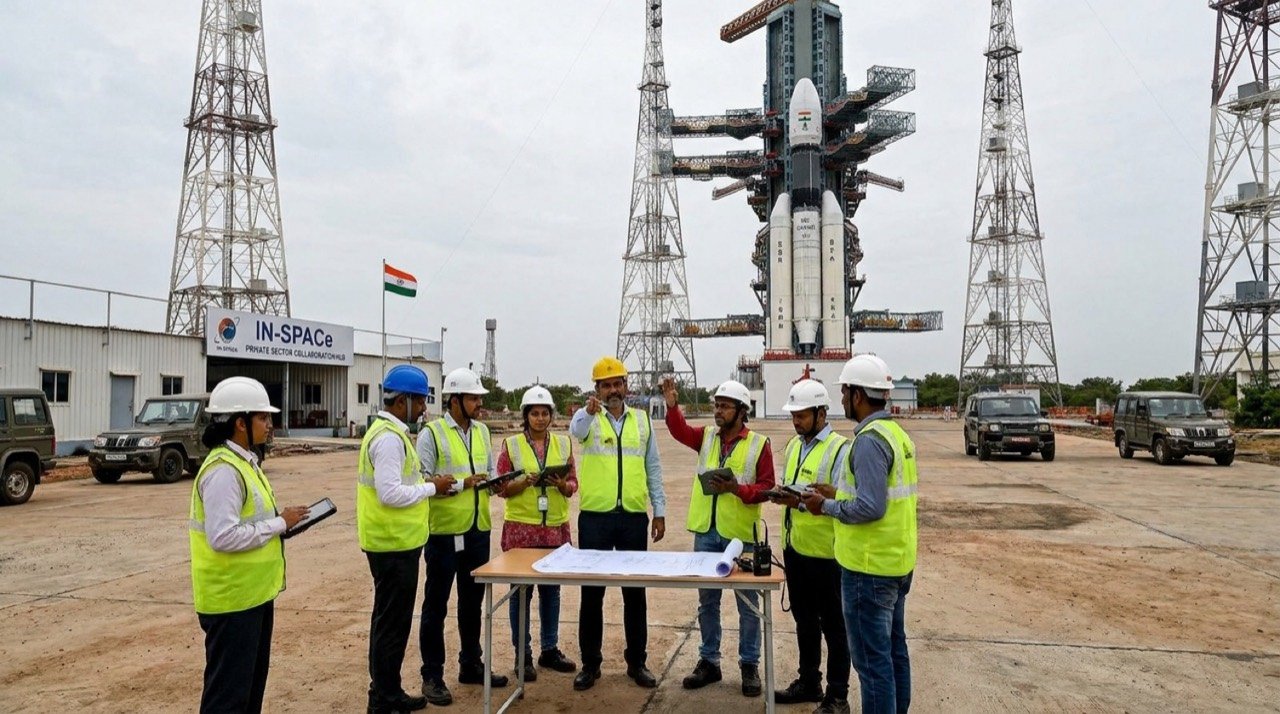
India Moves to Share Rocket Technology With Private Space Firms
The government is preparing to transfer proven rocket technology to local private space companies, a step that could deepen industry participation in launch vehicles, satellites and manufacturing while ISRO retains strategic oversight.
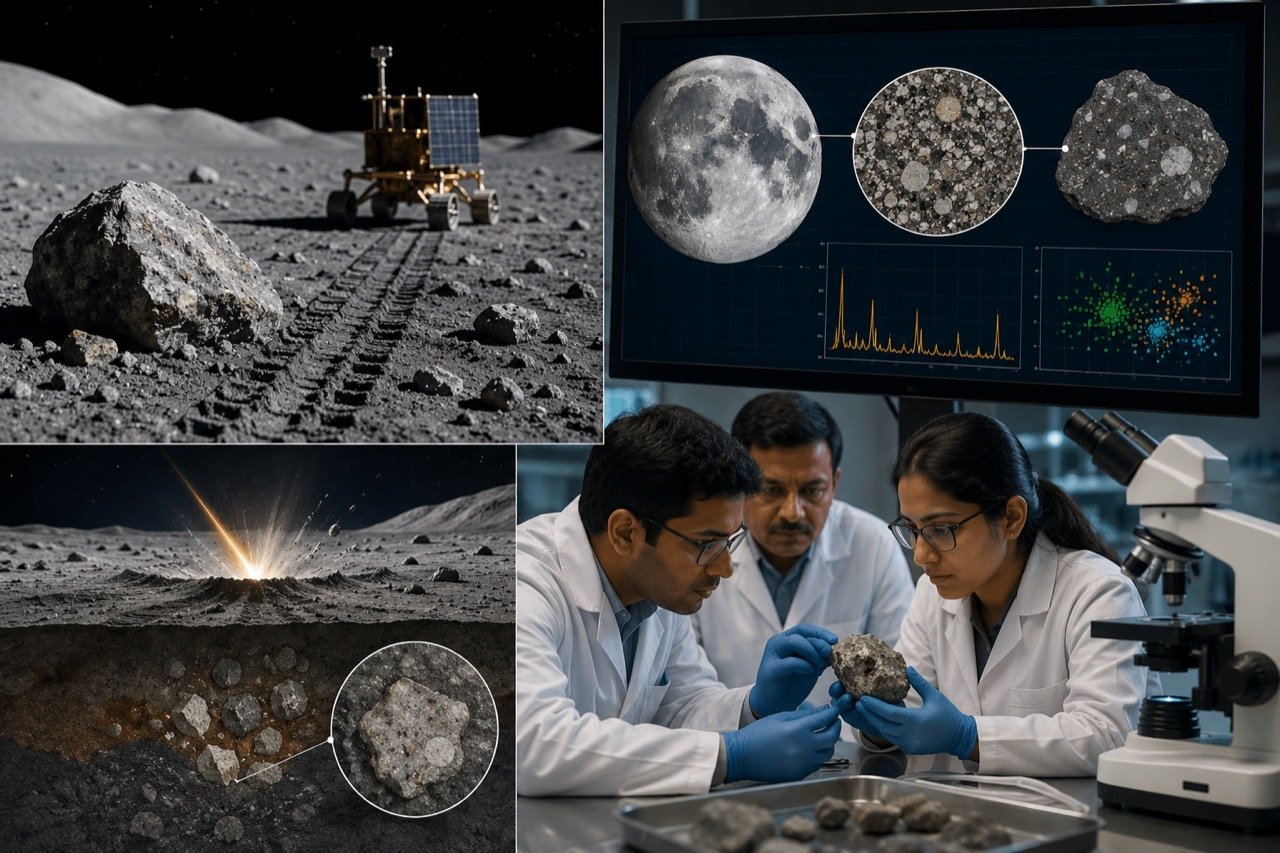
Chandrayaan-3 Data Tied to Earth's First Lunar Meteorite
New science coverage says findings from ISRO's Chandrayaan-3 mission reveal a link to Earth's first lunar meteorite, showing the landmark landing is still generating research long after touchdown.
PSLV Technology Transfer Opens a New Chapter for India's Private Space Firms
India's plan to hand proven PSLV rocket technology to private space companies could reshape the country's space economy, moving industry from parts supply to full launch capability.
More from this section
More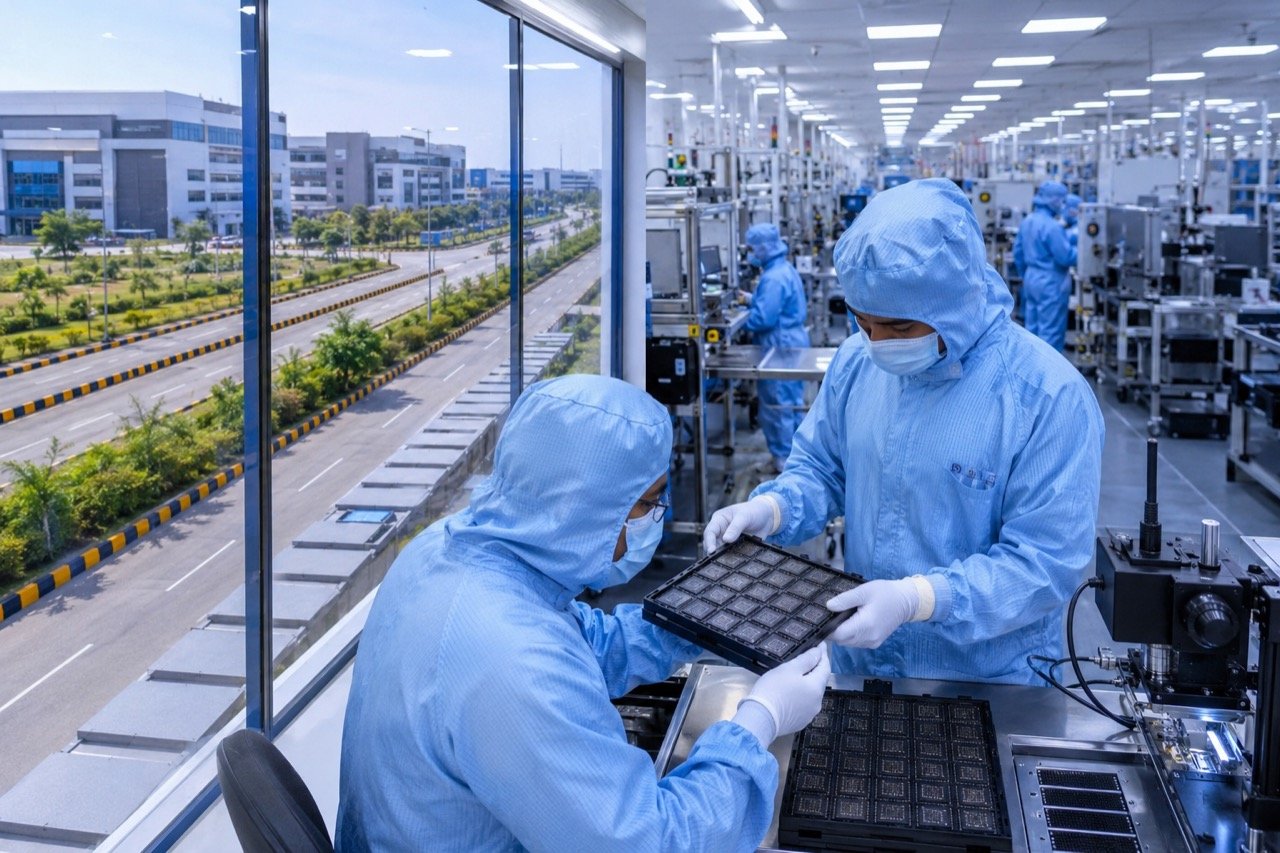
CG Semi Sanand Plant Opens, Boosting India's Semiconductor Drive
Prime Minister Narendra Modi inaugurated CG Semi's chip assembly and test facility in Sanand, Gujarat, giving India's semiconductor mission a working manufacturing milestone rather than another policy promise.

Chinese E-Rickshaw Apps Banned in India Over Remote Disable Risk
The Centre has ordered the removal of three Chinese apps — BAT-BMS, Lossigy and Epoch-i-ion — over fears they could remotely disable battery-run e-rickshaws, turning mobility software into a public safety concern.

Connected Car Rules: India Plans Vehicle Software Update Norms
With cars increasingly run by software, the government is reportedly preparing update and security norms aimed at preventing vehicle hijacking and governing how connected cars in India are patched and protected.