Chandrayaan-3 Data Tied to Earth's First Lunar Meteorite
New science coverage says findings from ISRO's Chandrayaan-3 mission reveal a link to Earth's first lunar meteorite, showing the landmark landing is still generating research long after touchdown.
Commentary & Analysis ·
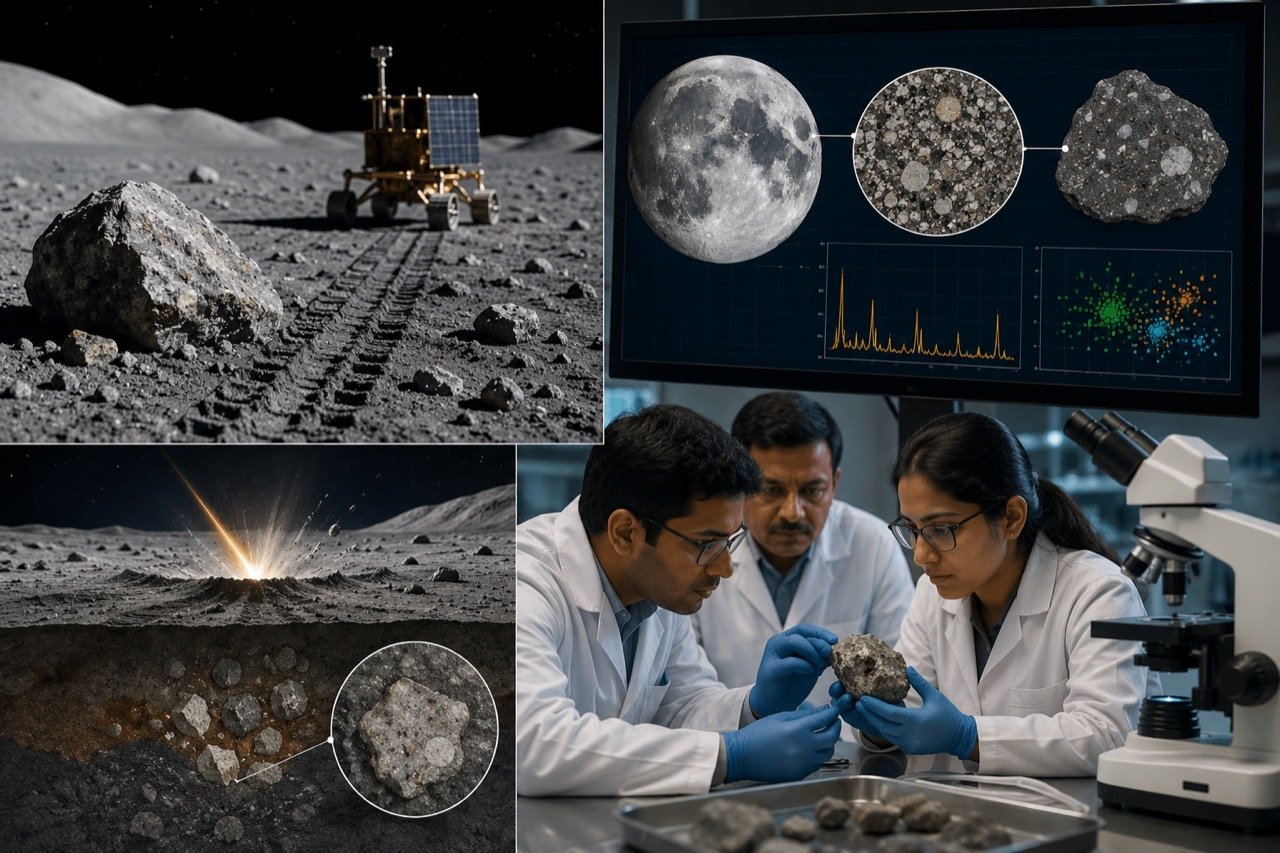
Chandrayaan-3 has returned to the science headlines, nearly three years after its celebrated landing near the Moon's south pole. Indian Express has reported findings from ISRO's mission that reveal a connection to Earth's first lunar meteorite, a discovery that shows the mission's data is still opening new windows into lunar history. For a mission whose most-watched moment was a soft touchdown broadcast to a nation glued to its screens, this is a reminder that the scientific payoff of planetary exploration rarely arrives with the same theatre as the landing itself.
Why a meteorite link matters
The Moon is anything but a static object in scientific terms. Its rocks, craters and surface chemistry preserve a record of events stretching back to the early solar system, long before Earth's own geology erased most traces of that era through weathering, plate tectonics and volcanic resurfacing. Because the Moon lacks an atmosphere and active geology, it functions as a kind of frozen archive, and scientists have long relied on three separate lines of evidence to read that archive: remote sensing from orbit, in-situ measurements taken directly on the surface, and physical samples that can be studied in laboratories on Earth.
Lunar meteorites occupy a special place in that third category. They are pieces of the Moon that were blasted off its surface by impacts and eventually fell to Earth naturally, without any mission ever having to travel there to retrieve them. Connecting Chandrayaan-3's measurements to a lunar meteorite — in this case, understood to be Earth's first identified lunar meteorite — lets scientists cross-check remote observations, in-situ readings and physical samples against one another. Each dataset alone carries uncertainties; triangulating between them sharpens confidence in all three and strengthens the broader scientific narrative about the composition and history of the lunar surface.
Missions keep working after the spectacle fades
The finding underlines a broader truth about planetary exploration: the most visible moment of a mission may last minutes, but its research life runs for years. A landing sequence is compressed, dramatic and photogenic — exactly the kind of moment that dominates news cycles and social media. Data analysis, by contrast, unfolds over months and decades, conducted largely out of public view by scientists poring over spectrometry readings, imaging data and telemetry logs. Each paper that emerges from that slower process refines the larger picture of the Moon's surface, composition and geological evolution, adding incremental but cumulative value to what is known.
This is precisely why a discovery surfacing nearly three years after Chandrayaan-3's landing should not be read as a delayed or lesser result. It is, in fact, the normal and expected rhythm of space science. Missions such as this one are designed to generate archives that researchers continue to mine long after the mission itself has concluded operations, and the value of that archive often becomes clearer only when it is placed alongside other evidence — such as a meteorite discovered independently — that allows for comparison and validation.
The national dimension
There is also a national dimension to this story that goes beyond pure science. Sustained scientific output from Chandrayaan-3 strengthens the case for continued investment in India's planetary programme. It demonstrates, in concrete terms, that a landing triumph can convert into lasting research credibility for ISRO and Indian institutions, rather than fading into a one-off achievement remembered mainly for its symbolism. For a space agency competing for both domestic budget allocations and international scientific partnerships, this kind of durable, citable output matters as much as the original landing headline, if not more.
Indian planetary science has historically had to make the case that its missions deliver value proportionate to their cost. A finding of this nature — one that links Indian mission data to a globally significant reference point like Earth's first lunar meteorite — gives ISRO tangible evidence to present to policymakers, international collaborators and the scientific community at large. It shifts the conversation from "did the landing succeed" to "what has the landing enabled," which is a more durable and more persuasive basis for continued funding.
What this means for India's scientific credibility abroad
International collaboration in planetary science depends heavily on trust in data quality and analytical rigour. When a national space agency's findings are referenced, cross-checked and built upon by researchers studying material from other sources entirely, it signals that the agency's instruments and methodology meet a standard worth engaging with. This is the kind of credibility that leads to joint missions, shared datasets and invitations to collaborate on future lunar or planetary science efforts, all of which extend far beyond what any single mission could achieve on its own.
It is also worth noting that this credibility compounds. A single well-regarded finding makes the next one more likely to be taken seriously, and citations in international journals build a track record that outlives any one mission cycle. For India, which has ambitions extending to further lunar missions and beyond, this steady accumulation of scientific reputation is arguably as important to the long-term trajectory of the programme as any single technical milestone.
The NE Times View
Chandrayaan-3's second act may prove more valuable than its first. The landing gave India a place in the record books, but discoveries like this meteorite link are what earn a space programme scientific standing — the kind that attracts international collaborations, journal citations and the next generation of researchers. Landings capture public imagination, but it is the years of quiet analysis that follow which determine whether a mission is remembered as a moment or as a lasting contribution to human knowledge of the solar system.
For India, the lesson is to fund the unglamorous half of space science: data archives, analysis teams and university partnerships that turn telemetry into knowledge. It is far easier to secure public enthusiasm and budget support for a dramatic landing broadcast live to the nation than it is to sustain funding for the archivists, data scientists and university researchers who spend years afterward extracting meaning from that mission's instruments. Yet it is precisely this less visible work that produced the meteorite connection now making headlines again, nearly three years on. If that pattern of investment continues, the mission that cost less than many Hollywood films will keep paying dividends for decades, in the form of scientific papers, trained researchers and a stronger claim to a serious seat at the table of international planetary science.
Key takeaways
- Chandrayaan-3 data has been linked to Earth's first lunar meteorite, according to a report by Indian Express, nearly three years after the mission's south pole landing.
- The link allows scientists to cross-check remote sensing, in-situ measurements and physical meteorite samples against one another, strengthening confidence in all three.
- Space missions generate research value long after the landing itself, with data analysis and publications continuing for years or decades.
- Sustained scientific findings build ISRO's international credibility and support the case for continued investment in India's planetary programme.
- The NE Times View: India's long-term payoff from Chandrayaan-3 depends on continued funding of data analysis, archives and university partnerships, not just future launches.
You may also like to read
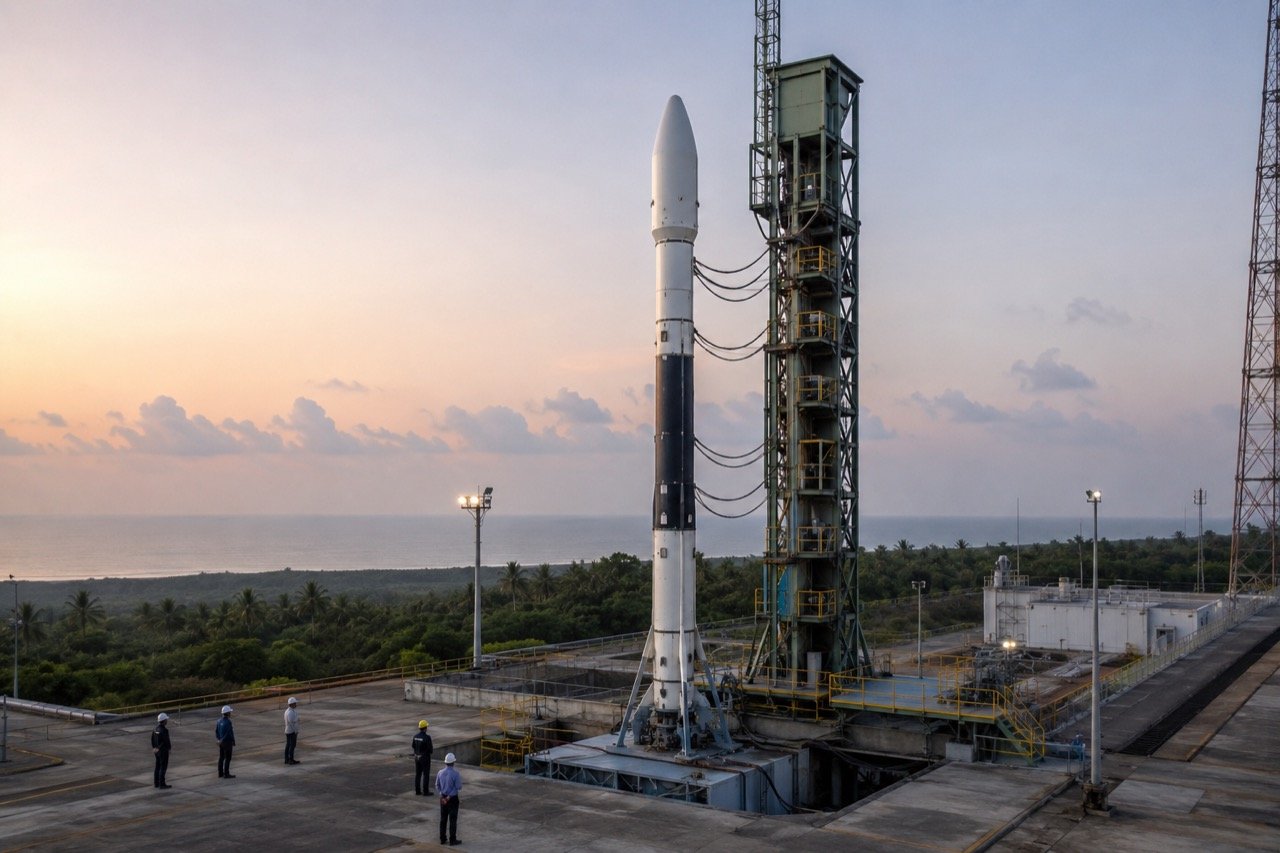
Vikram-1 Countdown: India's First Private Orbital Rocket Nears Lift-Off
Skyroot Aerospace has stacked its Vikram-1 rocket at Sriharikota with a launch window from July 12 to August 4, putting India's private space ambitions on the pad for the first time.
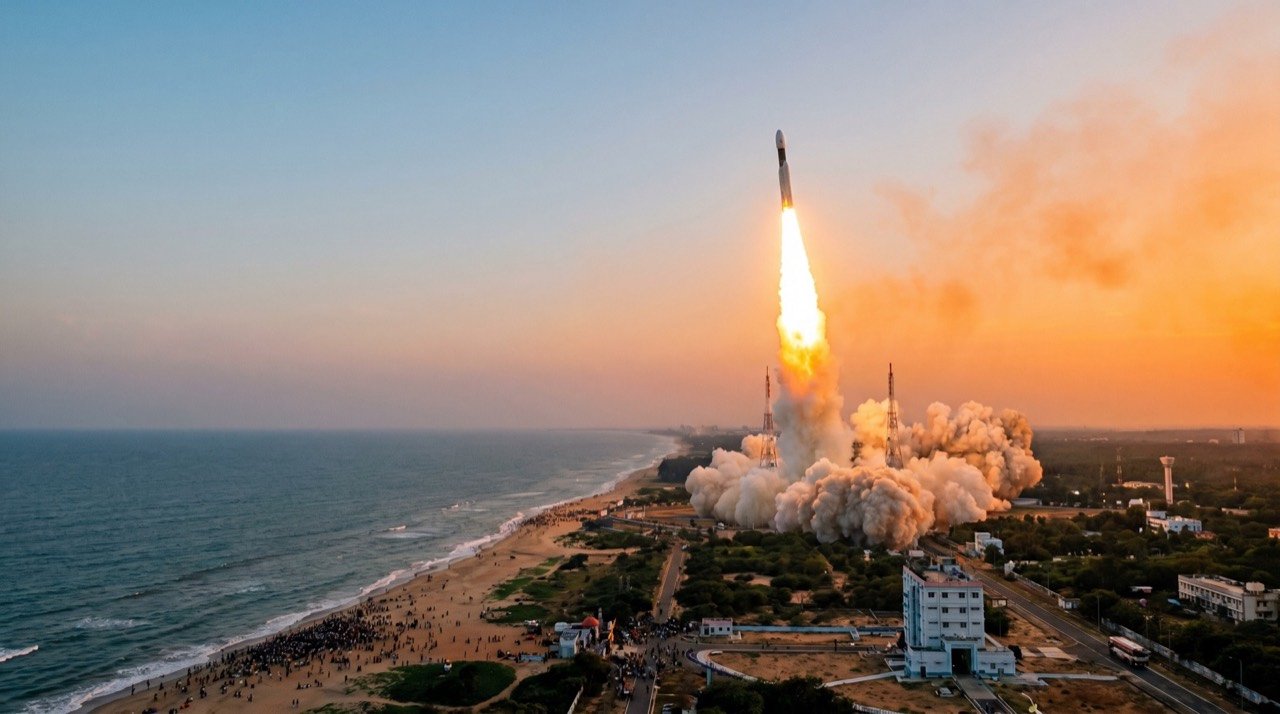
ISRO Pushes Toward First Uncrewed Gaganyaan Flight With Humanoid Vyommitra Aboard
ISRO has confirmed that flight integration for its first uncrewed Gaganyaan mission is underway, with the humanoid robot Vyommitra set to ride an LVM3 rocket ahead of a crewed launch in 2027.
India Backs Homegrown Space Tech With First Technology Adoption Fund Grants
Space regulator IN-SPACe has picked TakeMe2Space, SatSure and Astrobase for its maiden funding round, spotlighting an AI-powered star tracker built in Hyderabad.
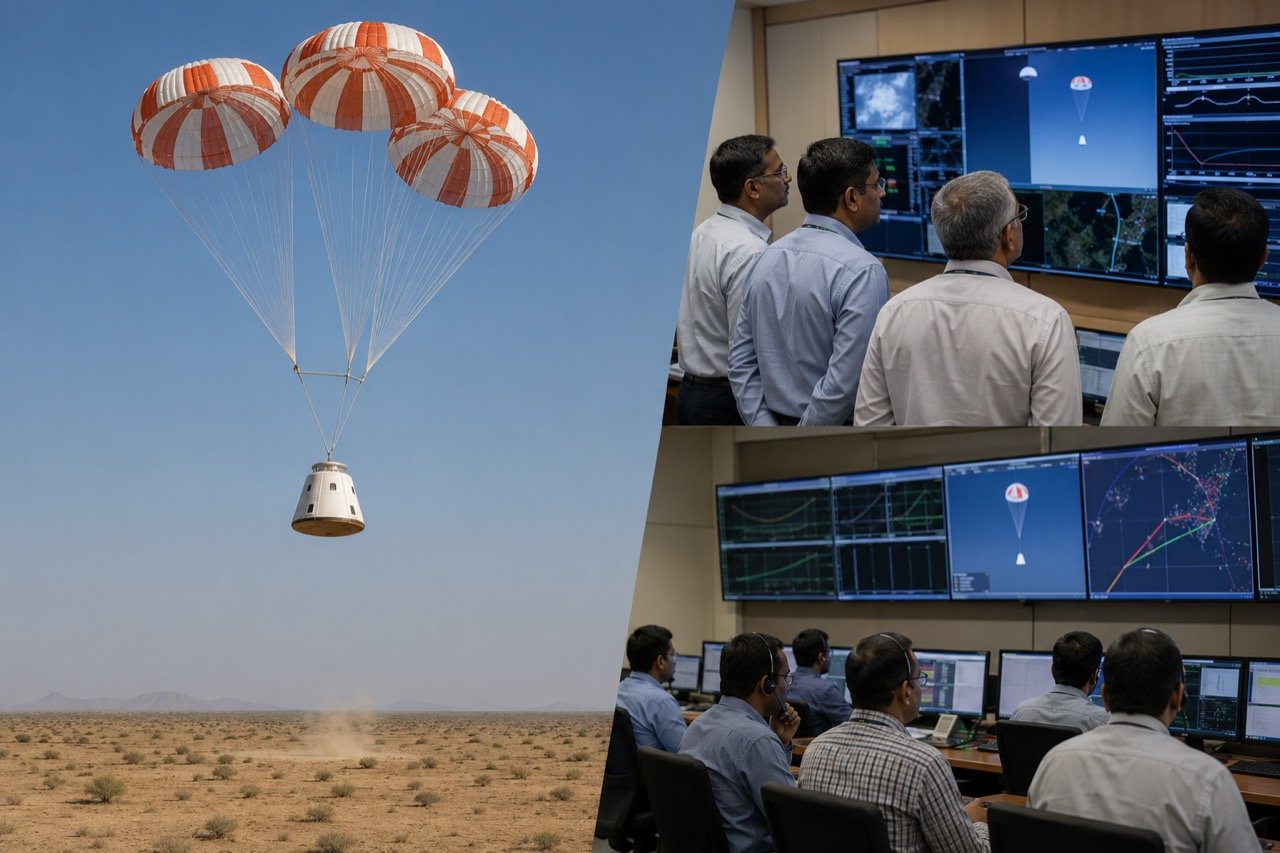
Gaganyaan Parachute Test Success Moves ISRO Closer to Crewed Flight
ISRO has completed successful integrated parachute tests for the Gaganyaan crew capsule, validating a critical part of the descent and recovery system as India's human spaceflight programme advances through key engineering milestones.
More from this section
More
CG Semi Sanand Plant Opens, Boosting India's Semiconductor Drive
Prime Minister Narendra Modi inaugurated CG Semi's chip assembly and test facility in Sanand, Gujarat, giving India's semiconductor mission a working manufacturing milestone rather than another policy promise.

Chinese E-Rickshaw Apps Banned in India Over Remote Disable Risk
The Centre has ordered the removal of three Chinese apps — BAT-BMS, Lossigy and Epoch-i-ion — over fears they could remotely disable battery-run e-rickshaws, turning mobility software into a public safety concern.

Connected Car Rules: India Plans Vehicle Software Update Norms
With cars increasingly run by software, the government is reportedly preparing update and security norms aimed at preventing vehicle hijacking and governing how connected cars in India are patched and protected.