Gaganyaan Parachute Test Success Moves ISRO Closer to Crewed Flight
ISRO has completed successful integrated parachute tests for the Gaganyaan crew capsule, validating a critical part of the descent and recovery system as India's human spaceflight programme advances through key engineering milestones.
Commentary & Analysis ·
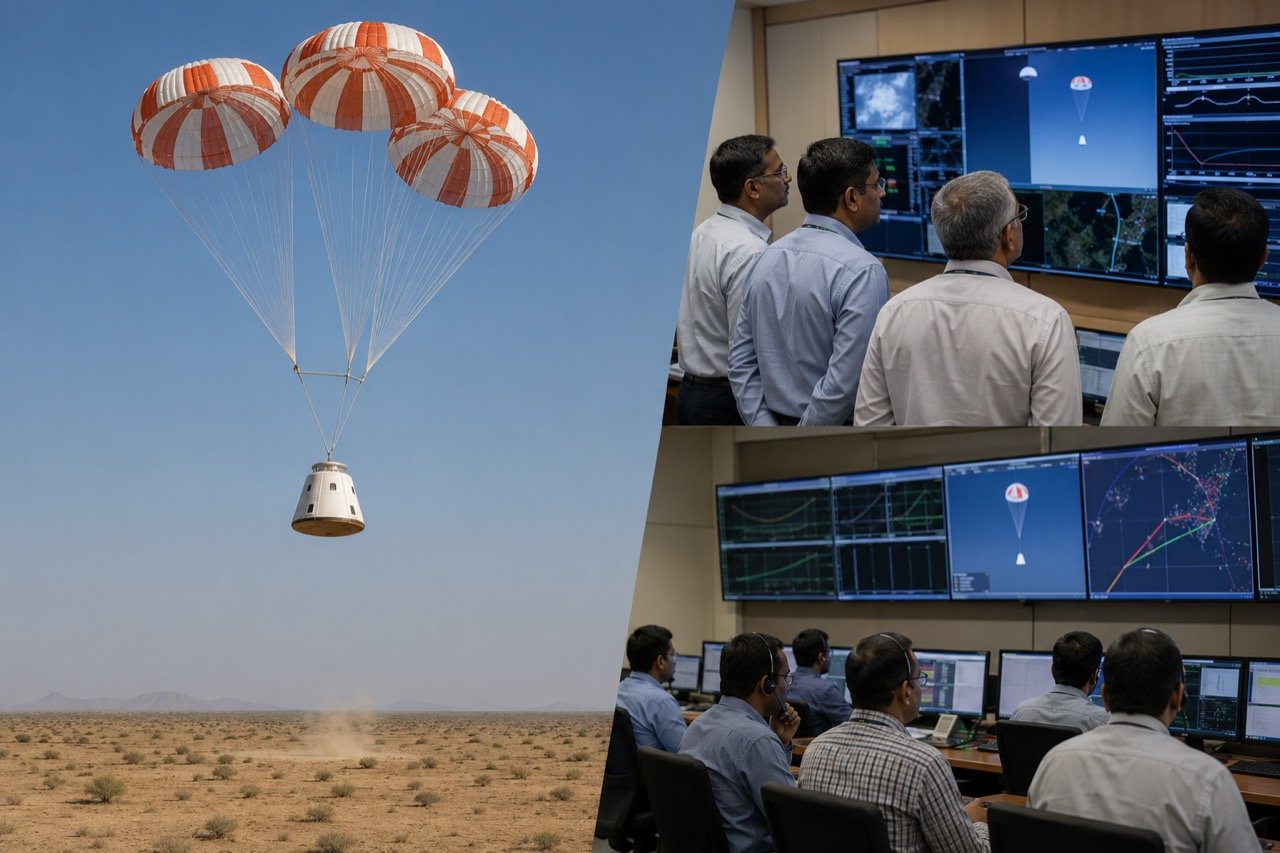
India's Gaganyaan human spaceflight programme has cleared another important validation point, with ISRO confirming the success of integrated parachute tests for the crew capsule. The Indian Express reported that alongside these test results, the agency is also progressing work on a solid-motor-based Sub-Orbital Launch Vehicle for Experiments. Neither development is, on its own, headline-grabbing in the way a launch or a lunar landing tends to be. Yet together they mark the kind of steady, procedural progress that any serious human spaceflight effort depends on, and they deserve to be read in that light rather than as isolated news items.
Why parachutes are mission-critical
Parachute testing may sound routine, but it sits at the heart of crew safety. A human-rated capsule returning from space must decelerate reliably through multiple deployment phases, moving from an initial high-speed descent through a sequence of drogue and main parachutes before touchdown. Each phase has to work not in isolation but in concert with the others, and it has to work under demanding, unforgiving conditions where there is no scope for a second attempt. This is precisely why integrated tests matter so much: rather than checking each parachute or deployment mechanism separately, an integrated test exercises the full sequence together, replicating as closely as possible the real conditions a crew capsule would face on its way back to Earth. It is this holistic proof, not the individual components, that gives engineers and mission planners confidence that the system behaves as designed when it matters most.
It is worth being clear-eyed about what a single successful test does and does not establish. It does not, by itself, complete the programme, and no credible spaceflight agency would claim otherwise. What it does is meaningfully reduce risk in one of the most visible and consequential parts of the return sequence: the final descent that brings astronauts home. In human spaceflight, risk reduction is cumulative. Programmes do not eliminate risk in a single stroke; they whittle it down test by test, milestone by milestone, until the residual uncertainty is judged acceptable enough to fly a crew. This latest parachute success is one such increment, and its value lies precisely in being incremental.
Milestones over spectacle
The broader significance here is the pattern, not the single event. Spaceflight programmes are built through repeated verification rather than one dramatic launch, and Gaganyaan is now visibly moving through those practical engineering gates. This is worth dwelling on because public expectations of space programmes are often shaped by the most cinematic moments — a rocket lifting off, a lander touching down on the Moon, a rover sending back its first images. ISRO has delivered plenty of those moments in recent years across its lunar, solar and commercial missions, and it commands public attention accordingly. But human spaceflight is a fundamentally different undertaking. It demands a different safety culture, one where systems are tested, retested and documented until crewed flight becomes credible rather than aspirational. There is no equivalent of a single triumphant image for a parachute drop test or a sub-orbital vehicle qualification run; there is only the steady accumulation of evidence that the hardware will perform as intended when lives are on the line.
The parallel progress on the Sub-Orbital Launch Vehicle for Experiments is a useful reminder that this accumulation is happening on several fronts simultaneously. A solid-motor-based sub-orbital vehicle serves as a test platform in its own right, allowing ISRO to validate systems and gather data without committing to a full orbital mission profile. Programmes of this scale rarely progress along a single track; they advance through a web of parallel workstreams, each contributing a piece of the overall readiness picture. Seen together, the parachute test and the sub-orbital vehicle work reflect a programme that is deliberately building up its evidence base across multiple dimensions rather than staking everything on one make-or-break demonstration.
What this means for crew readiness
For a programme like Gaganyaan, crew readiness is not a single threshold to cross but a composite of many subsystems reaching maturity together: launch vehicle performance, capsule environmental controls, abort systems, and recovery systems among them. The parachute system belongs squarely to that last category, and it is arguably one of the most psychologically significant to the public, because it represents the final, most visible link between the mission and the safe return of the crew. A launch can go extremely well, and a mission in orbit can proceed exactly to plan, but if the descent and recovery sequence fails, none of that matters. This is why agencies the world over, not just ISRO, treat parachute qualification with such rigour, and why an integrated test success is reported and welcomed even when it does not represent the finish line.
It is also worth noting what this test represents for the discipline of the programme itself. Publicising an intermediate, technical milestone — rather than saving all communication for a crewed launch — signals a certain institutional confidence. It suggests a programme comfortable enough with its own process to share the granular, unglamorous steps along the way, not just the eventual triumphant outcome. That transparency has value beyond public relations; it creates a paper trail of verification that stakeholders, oversight bodies and the public can follow over time.
The NE Times View
The most reassuring thing about this milestone is how unglamorous it is. A parachute drop test will never trend the way a Moon landing does, yet it is precisely this patient, incremental verification that separates a serious human spaceflight programme from a prestige project. ISRO's willingness to publicise intermediate tests also builds public literacy about how long and methodical the road to crewed flight really is. Space agencies are sometimes tempted to manage public narratives by emphasising only the dramatic wins, but doing so risks setting expectations that make ordinary, necessary engineering work look like a setback when it is, in fact, exactly on schedule. By contrast, treating a parachute test success as newsworthy in its own right helps the public understand that human spaceflight readiness is earned through hundreds of such increments, not declared by fiat.
For India, the payoff is bigger than one mission. A demonstrated safety culture is the foundation for a space station, commercial crew ambitions and the country's standing as a top-tier spacefaring nation. Every parachute test, every sub-orbital vehicle qualification, every documented and repeated validation adds to a body of institutional experience that will outlast Gaganyaan itself, informing whatever comes next in India's human spaceflight ambitions. It is this long view — rather than any single test result — that gives the programme its real significance.
Key takeaways
- ISRO has confirmed successful integrated parachute tests for the Gaganyaan crew capsule, validating the full recovery sequence rather than individual components.
- Work is also progressing on a solid-motor-based Sub-Orbital Launch Vehicle for Experiments, reflecting parallel progress across multiple Gaganyaan workstreams.
- A single test success does not complete the programme but meaningfully reduces risk in the crew capsule's final descent and recovery phase.
- Human spaceflight programmes advance through repeated, methodical verification rather than singular dramatic events, distinguishing them from other high-visibility missions.
- The steady, transparent reporting of intermediate milestones builds public understanding and reflects a safety culture that will underpin India's future space station and commercial crew ambitions.
You may also like to read
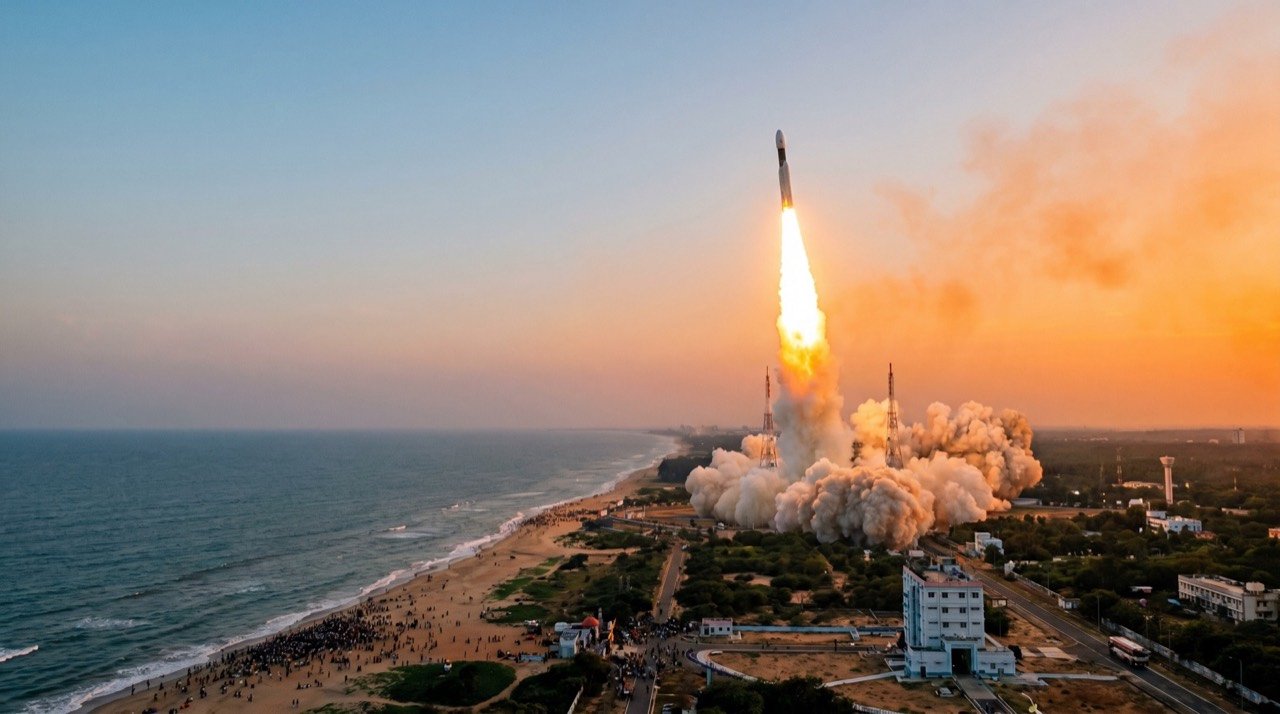
ISRO Pushes Toward First Uncrewed Gaganyaan Flight With Humanoid Vyommitra Aboard
ISRO has confirmed that flight integration for its first uncrewed Gaganyaan mission is underway, with the humanoid robot Vyommitra set to ride an LVM3 rocket ahead of a crewed launch in 2027.
ISRO Lines Up Uncrewed Gaganyaan Test Flights Ahead of 2027 Crewed Mission
The space agency has detailed a packed schedule of uncrewed missions for 2026, including the debut Gaganyaan flight carrying the humanoid robot Vyommitra, as it prepares for India's first human spaceflight.
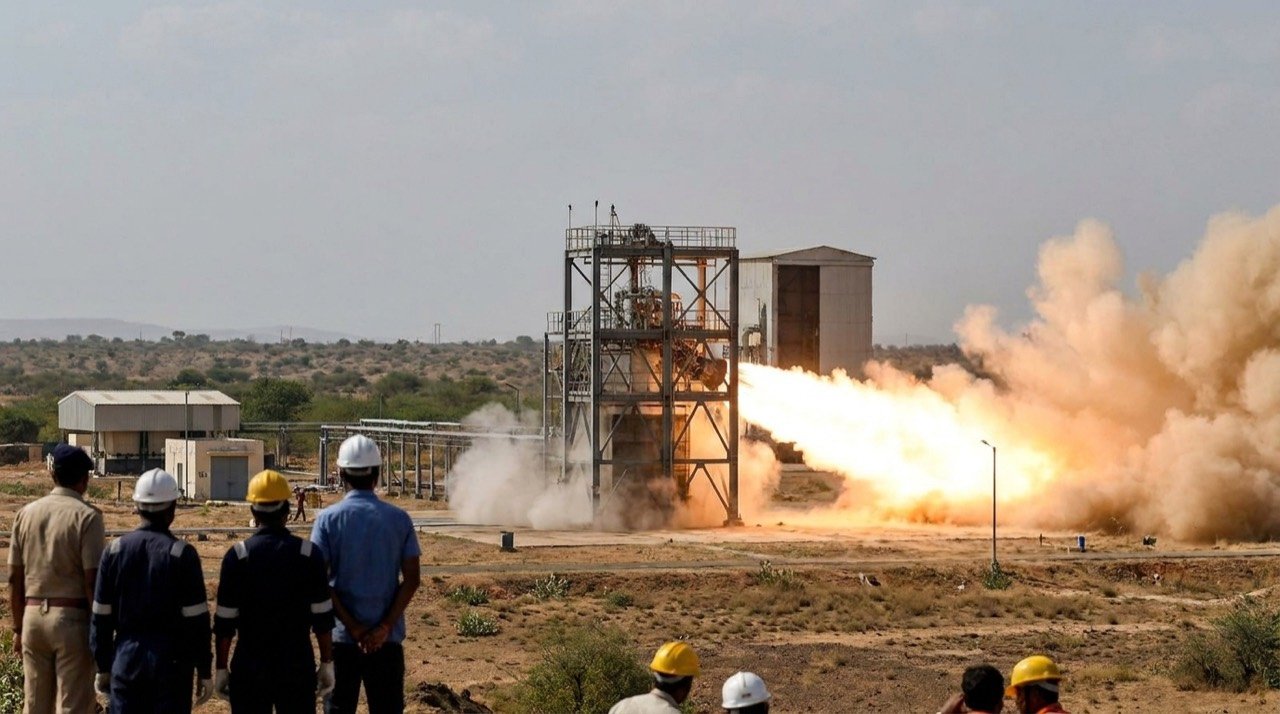
ISRO Fires Semi-Cryogenic Engine Power Head at 175 Tonnes in Landmark Hot Test
ISRO successfully ran its indigenous semi-cryogenic engine power head at 175 tonnes of thrust, clearing a key hurdle toward powering the LVM3 upgrade and the Next Generation Launch Vehicle.
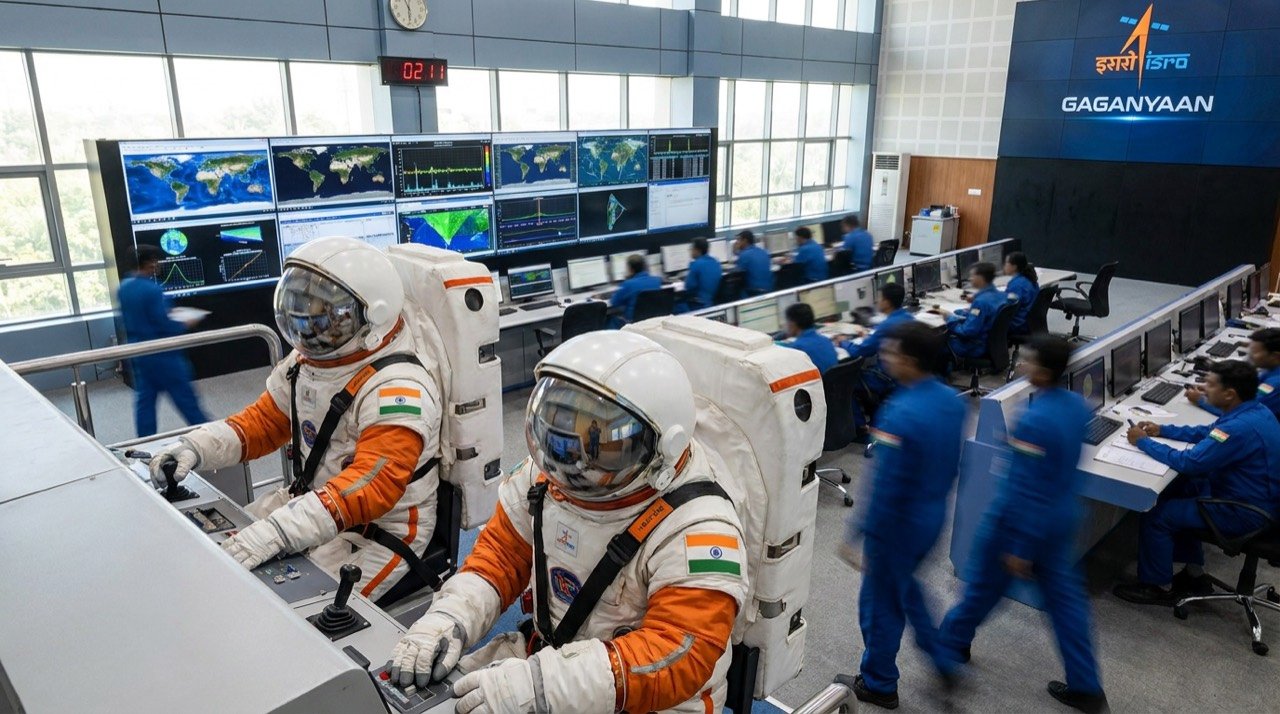
India and ESA Deepen Human Spaceflight Ties, Eye Joint Work on Space Station
ISRO and the European Space Agency are advancing cooperation on human spaceflight, astronaut training and lunar science, opening the door to European involvement in the planned Bharatiya Antariksh Station.
More from this section
More
CG Semi Sanand Plant Opens, Boosting India's Semiconductor Drive
Prime Minister Narendra Modi inaugurated CG Semi's chip assembly and test facility in Sanand, Gujarat, giving India's semiconductor mission a working manufacturing milestone rather than another policy promise.
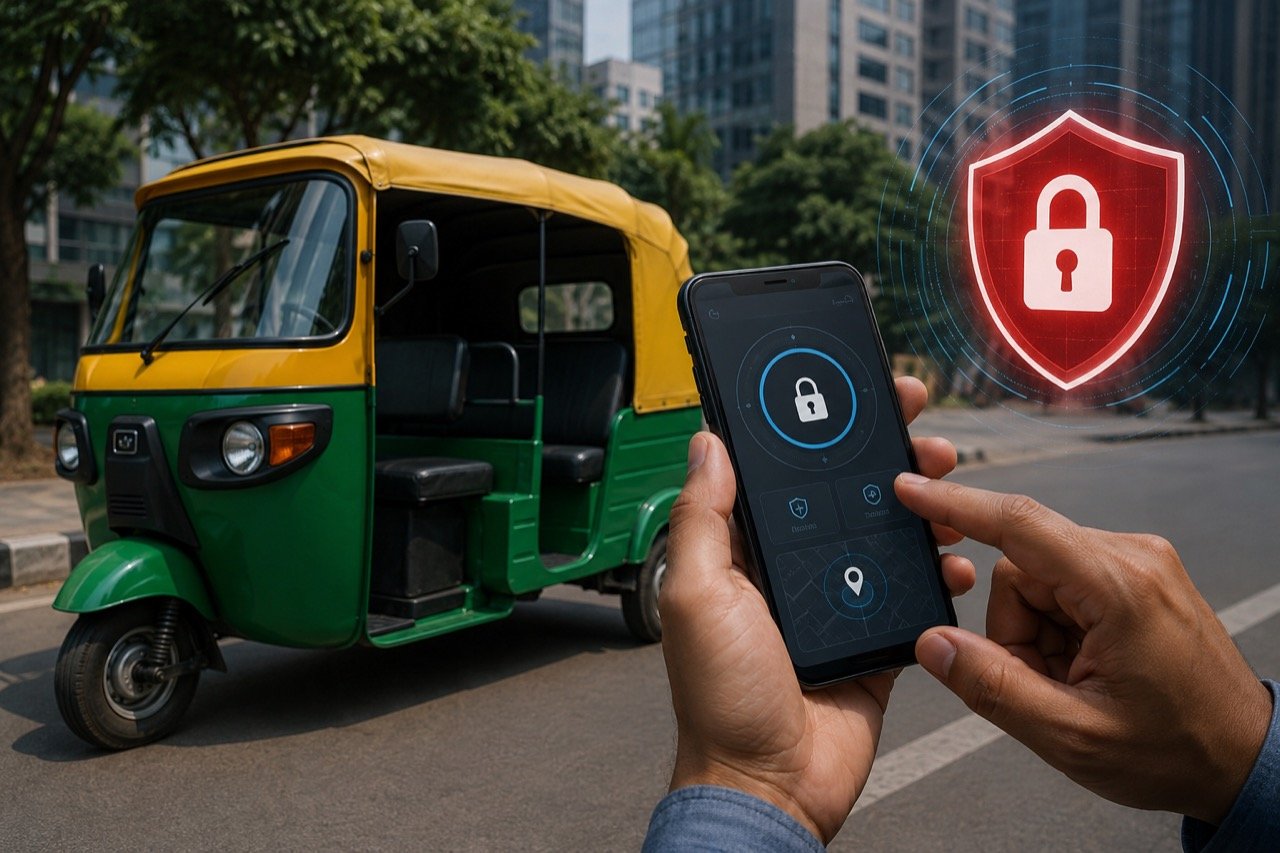
Chinese E-Rickshaw Apps Banned in India Over Remote Disable Risk
The Centre has ordered the removal of three Chinese apps — BAT-BMS, Lossigy and Epoch-i-ion — over fears they could remotely disable battery-run e-rickshaws, turning mobility software into a public safety concern.
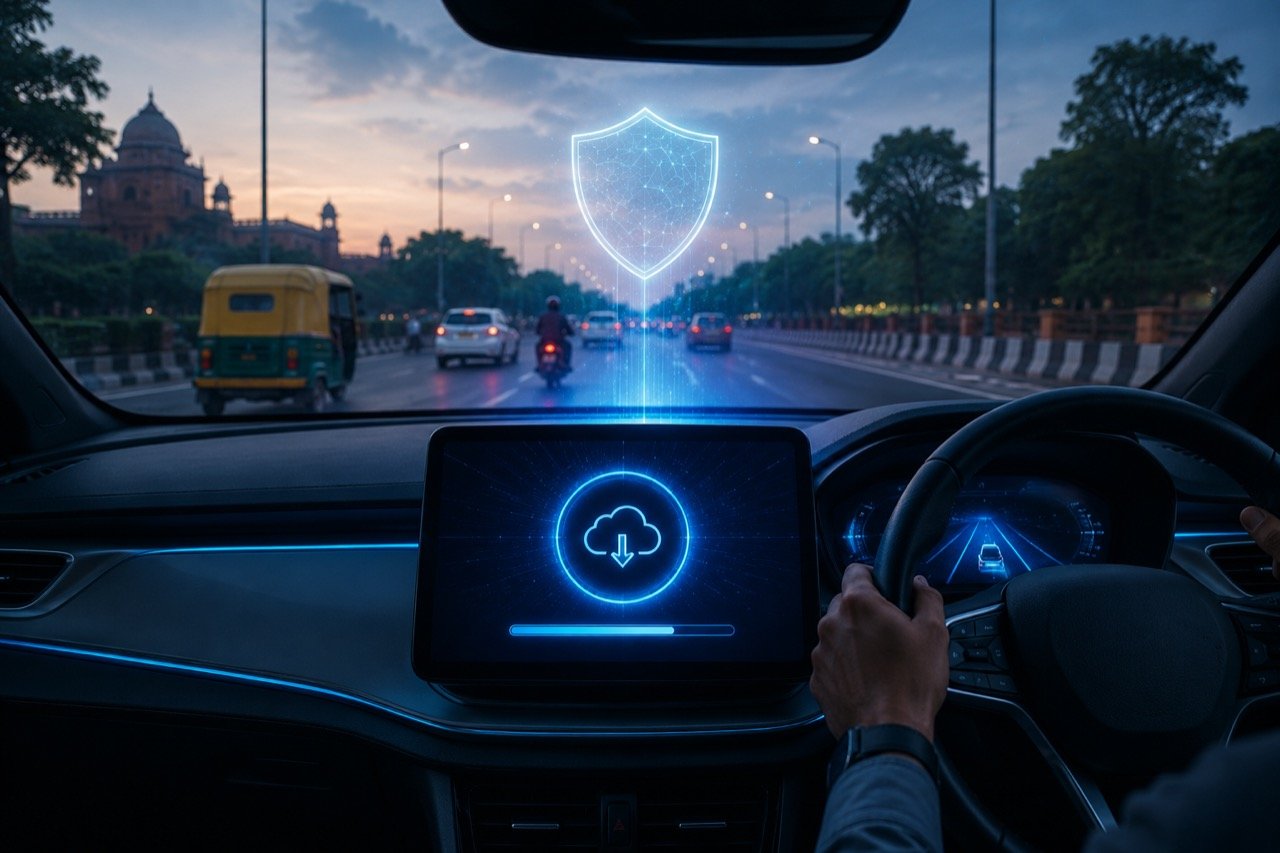
Connected Car Rules: India Plans Vehicle Software Update Norms
With cars increasingly run by software, the government is reportedly preparing update and security norms aimed at preventing vehicle hijacking and governing how connected cars in India are patched and protected.