India Moves to Share Rocket Technology With Private Space Firms
The government is preparing to transfer proven rocket technology to local private space companies, a step that could deepen industry participation in launch vehicles, satellites and manufacturing while ISRO retains strategic oversight.
Commentary & Analysis ·

India is preparing to share rocket technology with local private space companies, a move that could significantly deepen industry participation in launch vehicles, satellites and related manufacturing. Reports describe the plan as part of a broader push to open up the country's space economy beyond ISRO-led missions, while the state retains strategic oversight of sensitive capabilities.
From state monopoly to shared expertise
For decades, India's space programme has been built almost entirely around the Indian Space Research Organisation, which designed, tested and operated the nation's rockets. The proposed transfer marks a shift in posture: rather than keeping hard-won designs in-house, the government aims to hand proven technology to private players that can build on it commercially.
For startups, the value is concrete. Access to mature designs, accumulated testing experience and manufacturing know-how can compress development cycles that would otherwise take years and consume scarce capital. Instead of reinventing fundamentals, firms can focus on cost, scale and new applications.
What it means for the industry
The policy could catalyse a more competitive domestic launch market, with private companies offering services for small satellites, constellations and dedicated payloads. It also strengthens the manufacturing base, drawing in component suppliers, materials firms and engineering talent around a growing commercial ecosystem.
Crucially, the framework is expected to keep strategic oversight with the state, balancing commercial opening against national-security and export-control sensitivities that surround rocket technology everywhere in the world.
The opportunities and the guardrails
Analysts see the move as consistent with reforms that have steadily widened private involvement in Indian space activity, from satellite services to launch support. The transfer of core rocket know-how would be among the more consequential steps, signalling confidence that private firms can responsibly handle advanced capability.
- Private firms could gain access to proven, ISRO-developed rocket designs.
- Shared testing experience and manufacturing know-how can shorten development cycles.
- The plan targets launch vehicles, satellites and related manufacturing.
- Strategic oversight is expected to remain with the government.
- A stronger commercial ecosystem could draw in suppliers, talent and investment.
“Opening rocket technology to private firms is intended to widen the space economy beyond ISRO-led missions while keeping strategic control.”
— Reports on the government plan
Looking ahead, much will depend on the fine print: which technologies are shared, on what terms, and how intellectual property, safety certification and export controls are handled. If executed carefully, the policy could help India build a globally competitive private launch industry. The coming months, as detailed guidelines emerge, will show how far and how fast the government is willing to open the door.
The NE Times View
Handing proven launch technology to private firms is the logical next step after opening space to startups, and potentially a transformative one. It could compress years of duplicated R&D and let companies compete on cost rather than reinventing what ISRO already mastered. The catch lies in execution: clear pricing, fair access for smaller players, and guarding strategic know-how. Done well, this turns ISRO into an enabler of an industry, not just its sole operator.
This article is original commentary and analysis by The NE Times. Background facts were referenced from Business Standard and Reuters.
You may also like to read
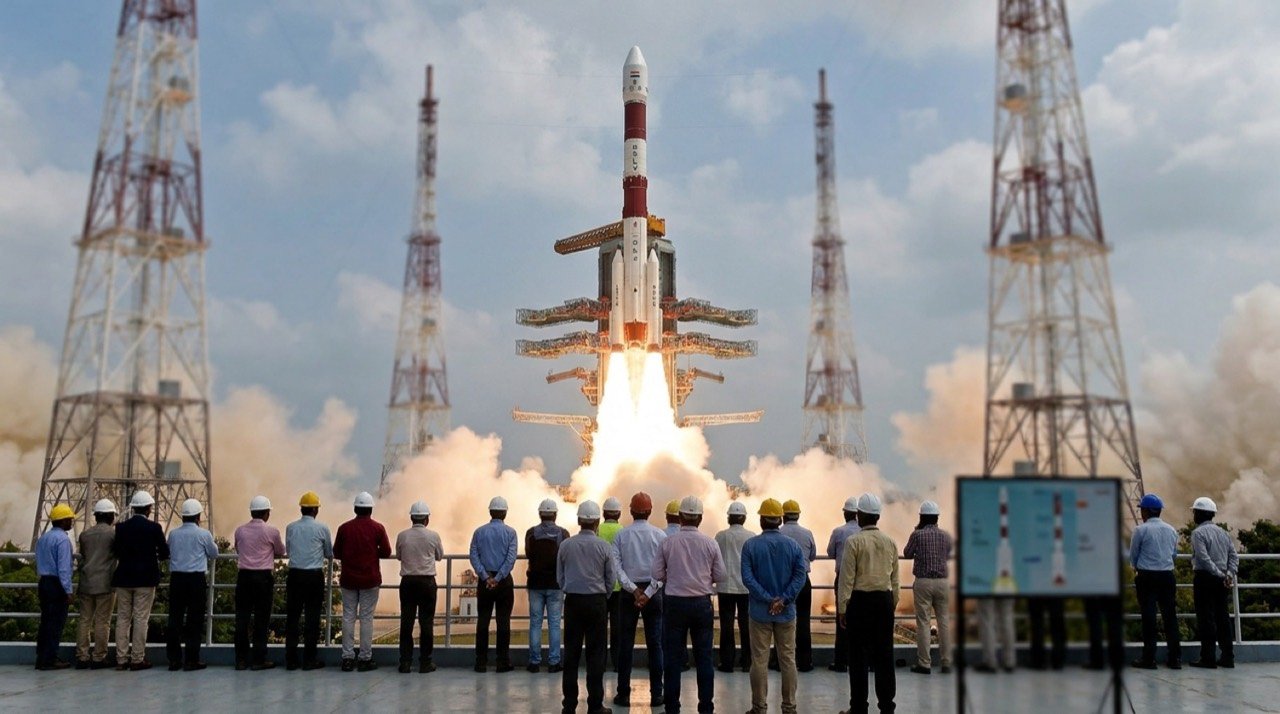
PSLV Technology Transfer Opens a New Chapter for India's Private Space Firms
India's plan to hand proven PSLV rocket technology to private space companies could reshape the country's space economy, moving industry from parts supply to full launch capability.

India Backs Homegrown Space Tech With First Technology Adoption Fund Grants
Space regulator IN-SPACe has picked TakeMe2Space, SatSure and Astrobase for its maiden funding round, spotlighting an AI-powered star tracker built in Hyderabad.

Skyroot Vikram-1: Mission Aagaman and India's Private Space Race
Fresh updates on Skyroot Aerospace's Vikram-1 rocket and Mission Aagaman have renewed attention on India's private space ecosystem and the wait for the country's first private orbital-class launch.
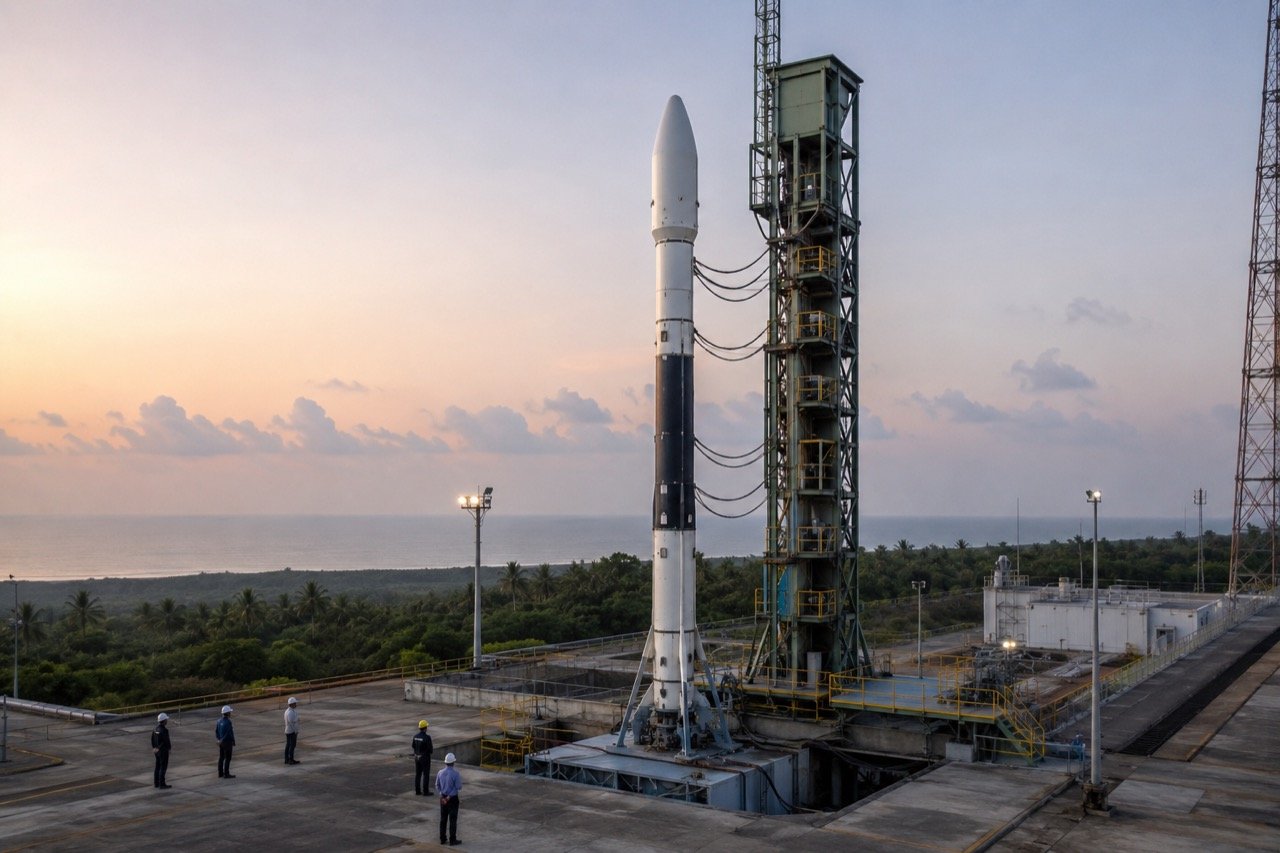
Vikram-1 Countdown: India's First Private Orbital Rocket Nears Lift-Off
Skyroot Aerospace has stacked its Vikram-1 rocket at Sriharikota with a launch window from July 12 to August 4, putting India's private space ambitions on the pad for the first time.
More from this section
More
CG Semi Sanand Plant Opens, Boosting India's Semiconductor Drive
Prime Minister Narendra Modi inaugurated CG Semi's chip assembly and test facility in Sanand, Gujarat, giving India's semiconductor mission a working manufacturing milestone rather than another policy promise.

Chinese E-Rickshaw Apps Banned in India Over Remote Disable Risk
The Centre has ordered the removal of three Chinese apps — BAT-BMS, Lossigy and Epoch-i-ion — over fears they could remotely disable battery-run e-rickshaws, turning mobility software into a public safety concern.

Connected Car Rules: India Plans Vehicle Software Update Norms
With cars increasingly run by software, the government is reportedly preparing update and security norms aimed at preventing vehicle hijacking and governing how connected cars in India are patched and protected.