Skyroot Vikram-1: Mission Aagaman and India's Private Space Race
Fresh updates on Skyroot Aerospace's Vikram-1 rocket and Mission Aagaman have renewed attention on India's private space ecosystem and the wait for the country's first private orbital-class launch.
Commentary & Analysis ·
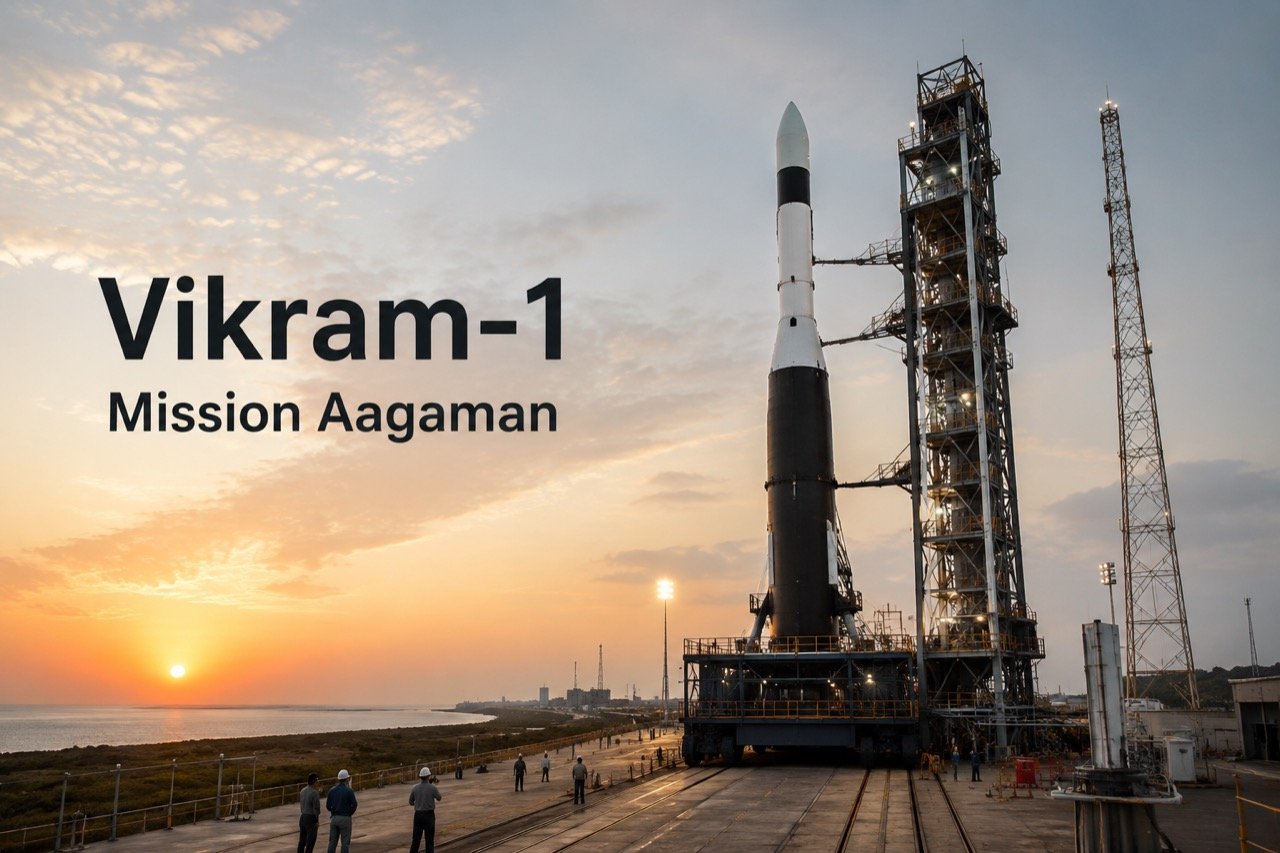
Skyroot Aerospace is back in the technology headlines, and the reason is simple: its Vikram-1 rocket and the associated Mission Aagaman represent the milestone India's space reforms have been building toward — a private Indian company placing payloads in orbit on its own launch vehicle. Interest around the Hyderabad-based startup has spiked as readers look for answers on when the launch might happen and why it matters. Skyroot already holds a place in Indian space history, having flown the country's first privately built rocket on a suborbital mission, and Vikram-1 is the far more demanding sequel. What was once a niche engineering story has become a genuine barometer of how far India's private space sector has travelled, and how far it still has to go.
From an ISRO-only story to a mixed ecosystem
The significance of Vikram-1 is structural rather than symbolic. For decades, Indian spaceflight lived entirely in the public imagination as an ISRO enterprise, with the national agency designing, building, testing and launching every mission that mattered. That single-track model delivered real achievements, but it also meant the pace and scope of India's space activity was bounded by one organisation's budget and priorities. Policy reforms and the creation of the regulator IN-SPACe have opened the field to startups building launch vehicles, satellites, payload services and downstream applications, effectively inviting private capital and private risk-taking into a domain that was previously closed to it.
A successful private orbital-class flight would be a credibility marker for the entire pipeline, not just for Skyroot itself. For investors weighing bets on Indian deep-tech, it would be tangible proof that a domestic launch company can execute against the hardest possible benchmark: reaching orbit. For engineers choosing careers, it would validate that building rockets in India need not mean working exclusively for a government agency. And for reformers who have staked political capital on liberalising the sector, it would be the clearest possible vindication that the policy is working as intended, rather than merely opening paperwork channels without producing results.
Why Vikram-1 matters more than a single launch
It is worth pausing on why an orbital flight is treated as so much more consequential than the suborbital hop Skyroot already achieved. A suborbital mission demonstrates that a company can design and fly a working rocket, but it does not require the vehicle to survive the full rigours of powered ascent to orbital velocity, precise trajectory control and payload deployment in space. Orbital flight is the threshold at which a rocket stops being a proof-of-concept and starts being a commercial product capable of carrying paying customers' satellites. That is precisely the step the Indian private space sector needs to take if it wants to compete for the global small-satellite launch market rather than remain a domestic curiosity.
This is also why Mission Aagaman has become a watchpoint well beyond the specialist space press. Readers who do not normally follow rocketry are asking about Skyroot because the outcome speaks to a bigger question: can India build world-class technology companies outside the framework of a public-sector giant. The answer will not be settled by one flight, but Vikram-1 is the first real test case with enough scale and ambition to carry that weight.
Why timelines keep moving
Rocket development is unforgiving, and schedules shift because testing, safety reviews and regulatory clearances are rigorous by design. Every subsystem, from propulsion to guidance to structural integrity, must clear a series of ground tests before it is trusted with a live payload, and any anomaly discovered along the way can push a launch date back by weeks or months without that delay reflecting badly on the underlying engineering. Each update on Vikram-1 should therefore be read as momentum rather than a guaranteed date. A slipped timeline is not evidence of failure; it is evidence that the checks built into the system are being followed, which is itself part of what should give confidence in the eventual flight.
What is not in doubt is attention. Skyroot remains one of the most closely watched private space companies in India, and Mission Aagaman sits at the centre of that watchlist. The company's earlier suborbital first has already earned it a degree of trust that newer entrants do not yet have, and that track record is precisely why expectations for Vikram-1 are running so high.
What success would unlock
If the mission advances successfully, it could unlock a larger market for commercial launch services from Indian soil and strengthen confidence in the country's other launch startups. A working orbital vehicle changes the calculus for satellite operators who currently have to look abroad for a launch slot, potentially giving Indian and international customers a domestic option for getting small payloads into orbit. It also has a demonstration effect on the rest of the ecosystem: other Indian launch and satellite startups, and the investors backing them, will be watching Vikram-1 as a signal of whether the entire model of private, IN-SPACe-regulated spaceflight is viable, not just whether one company's rocket works.
Until the mission actually flies, it stays a high-interest technology story with genuinely national stakes rather than a settled achievement. That distinction matters for how the story should be covered and read: enthusiasm is warranted, but so is patience, because the gap between "on the watchlist" and "successfully in orbit" is exactly the gap that rocket engineering is built to respect.
The NE Times View
India should resist the urge to judge its private space sector by a single countdown. The real test of the reforms is whether companies like Skyroot can iterate — fly, learn, fix and fly again — without being written off at the first slip, because that iterative freedom is exactly what made commercial space work elsewhere. Nations and companies that have succeeded in this field did not do so by getting every launch right the first time; they did so by being allowed to fail, diagnose and try again without the failure ending the programme. If Indian policy and public opinion extend that same tolerance to Skyroot and its peers, the sector has a genuine chance to mature. If instead a single delay or setback is treated as proof that private Indian rocketry cannot work, the reforms will have been judged unfairly against a standard no space programme, public or private, has ever met on its first attempt.
For readers, the takeaway is patience with purpose: a private orbital launch will not change daily life overnight, but it would signal that India can grow world-class deep-tech companies outside government walls. That is a prize worth a few delayed launch windows, and it is the frame through which every future update on Vikram-1 and Mission Aagaman should be read.
Key takeaways
- Skyroot's Vikram-1 and Mission Aagaman represent the next step beyond the company's earlier suborbital first, this time targeting an orbital-class private launch from India.
- The mission's importance is structural: it tests whether India's IN-SPACe-enabled policy reforms can produce a credible private alternative to an ISRO-only space sector.
- Delays in the timeline reflect the rigour of testing, safety reviews and regulatory clearance, not necessarily a failure of the programme.
- A successful orbital flight could open a larger commercial launch market from Indian soil and boost confidence across the country's other private space startups.
- The lasting measure of success is whether India's private space companies are allowed room to iterate over time, rather than being judged on any single launch attempt.
You may also like to read
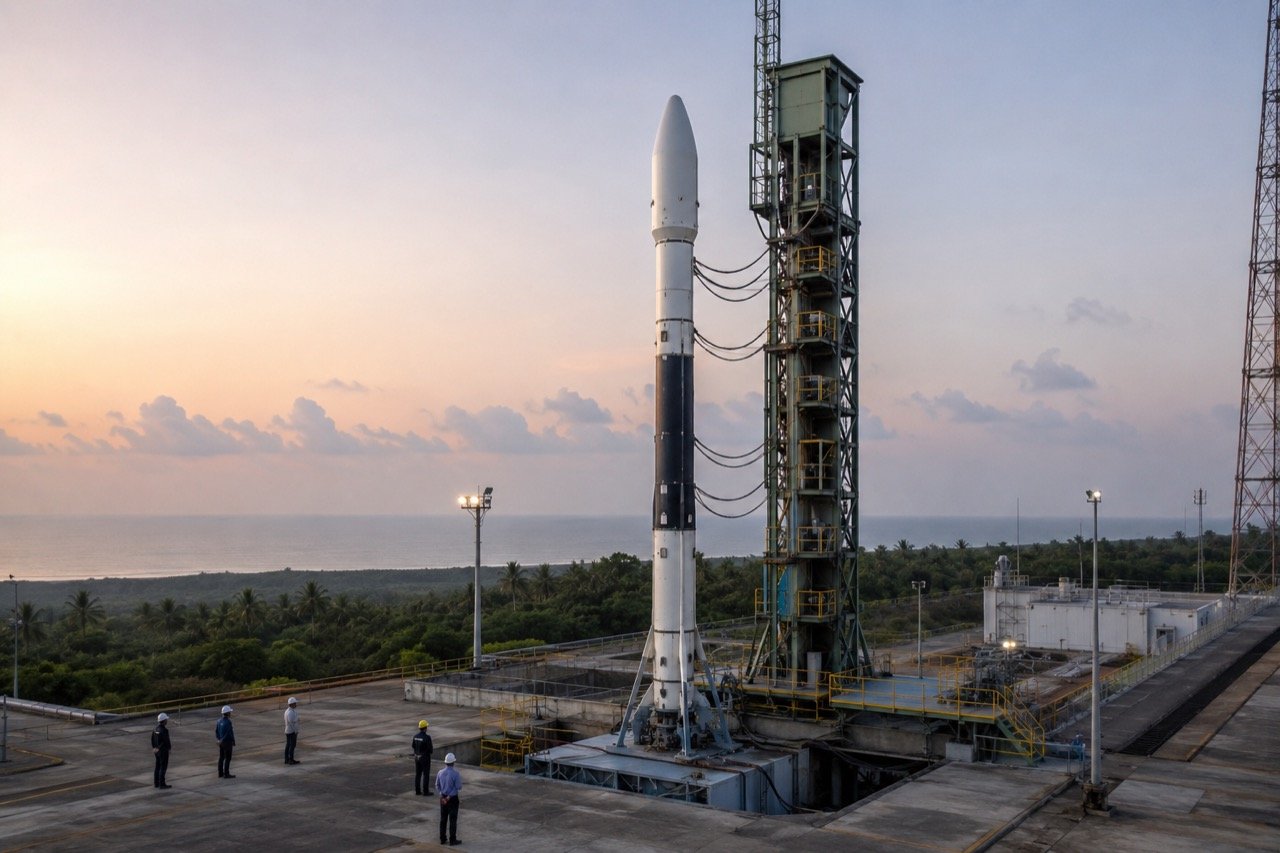
Vikram-1 Countdown: India's First Private Orbital Rocket Nears Lift-Off
Skyroot Aerospace has stacked its Vikram-1 rocket at Sriharikota with a launch window from July 12 to August 4, putting India's private space ambitions on the pad for the first time.

India Moves to Share Rocket Technology With Private Space Firms
The government is preparing to transfer proven rocket technology to local private space companies, a step that could deepen industry participation in launch vehicles, satellites and manufacturing while ISRO retains strategic oversight.
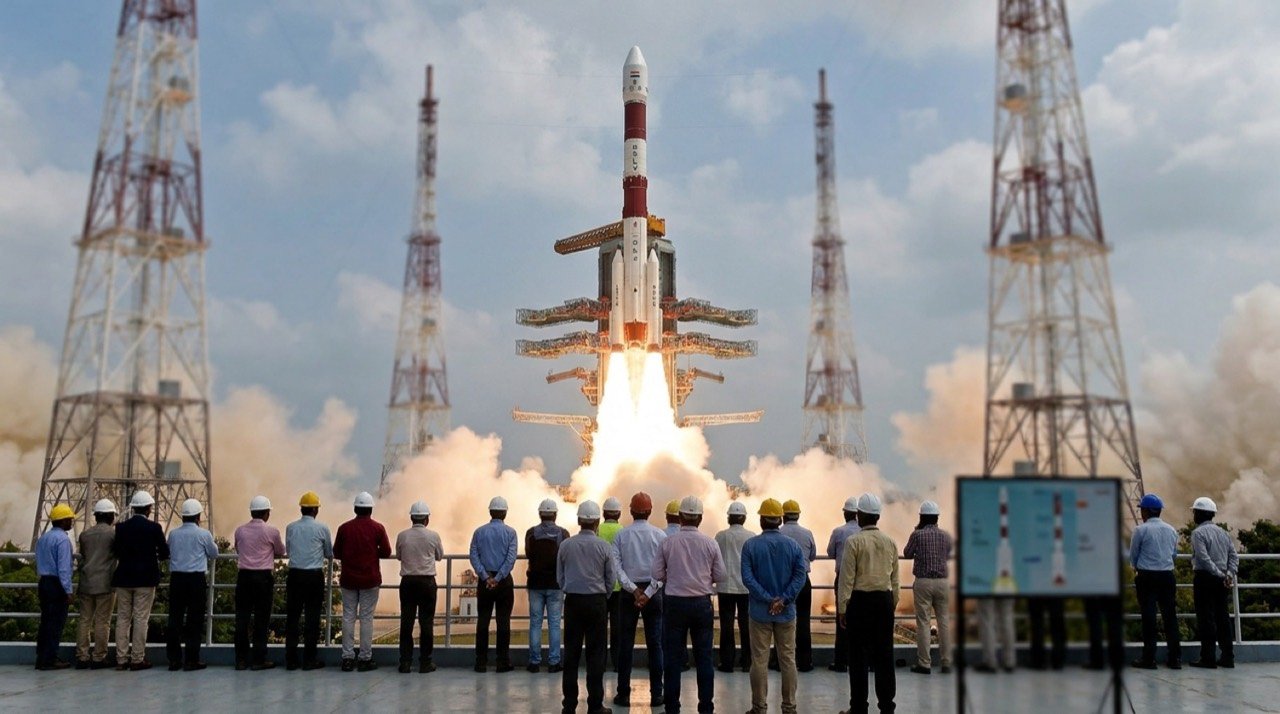
PSLV Technology Transfer Opens a New Chapter for India's Private Space Firms
India's plan to hand proven PSLV rocket technology to private space companies could reshape the country's space economy, moving industry from parts supply to full launch capability.
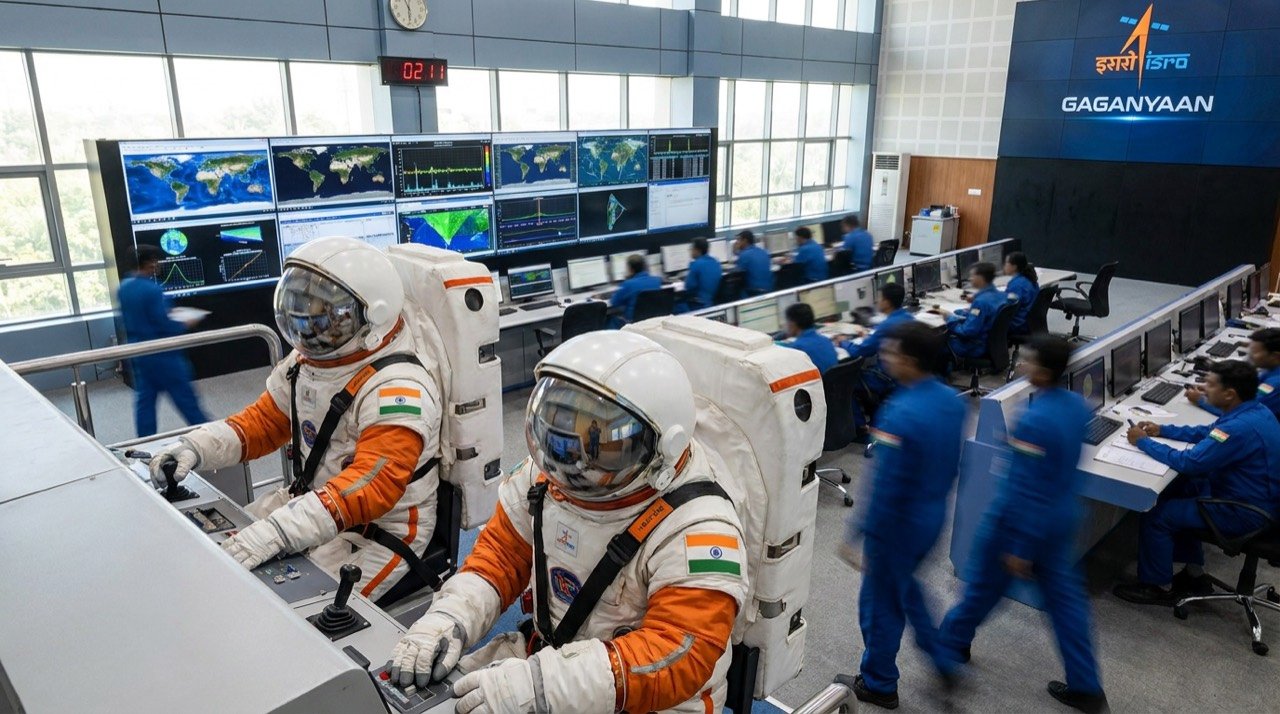
India and ESA Deepen Human Spaceflight Ties, Eye Joint Work on Space Station
ISRO and the European Space Agency are advancing cooperation on human spaceflight, astronaut training and lunar science, opening the door to European involvement in the planned Bharatiya Antariksh Station.
More from this section
More
CG Semi Sanand Plant Opens, Boosting India's Semiconductor Drive
Prime Minister Narendra Modi inaugurated CG Semi's chip assembly and test facility in Sanand, Gujarat, giving India's semiconductor mission a working manufacturing milestone rather than another policy promise.

Chinese E-Rickshaw Apps Banned in India Over Remote Disable Risk
The Centre has ordered the removal of three Chinese apps — BAT-BMS, Lossigy and Epoch-i-ion — over fears they could remotely disable battery-run e-rickshaws, turning mobility software into a public safety concern.

Connected Car Rules: India Plans Vehicle Software Update Norms
With cars increasingly run by software, the government is reportedly preparing update and security norms aimed at preventing vehicle hijacking and governing how connected cars in India are patched and protected.