UAPA Designations: What the Latest Security Notification Means
A fresh round of designations under the Unlawful Activities (Prevention) Act has put the spotlight on how India's national-security notifications are issued, what they trigger, and the checks that follow.
Commentary & Analysis ·
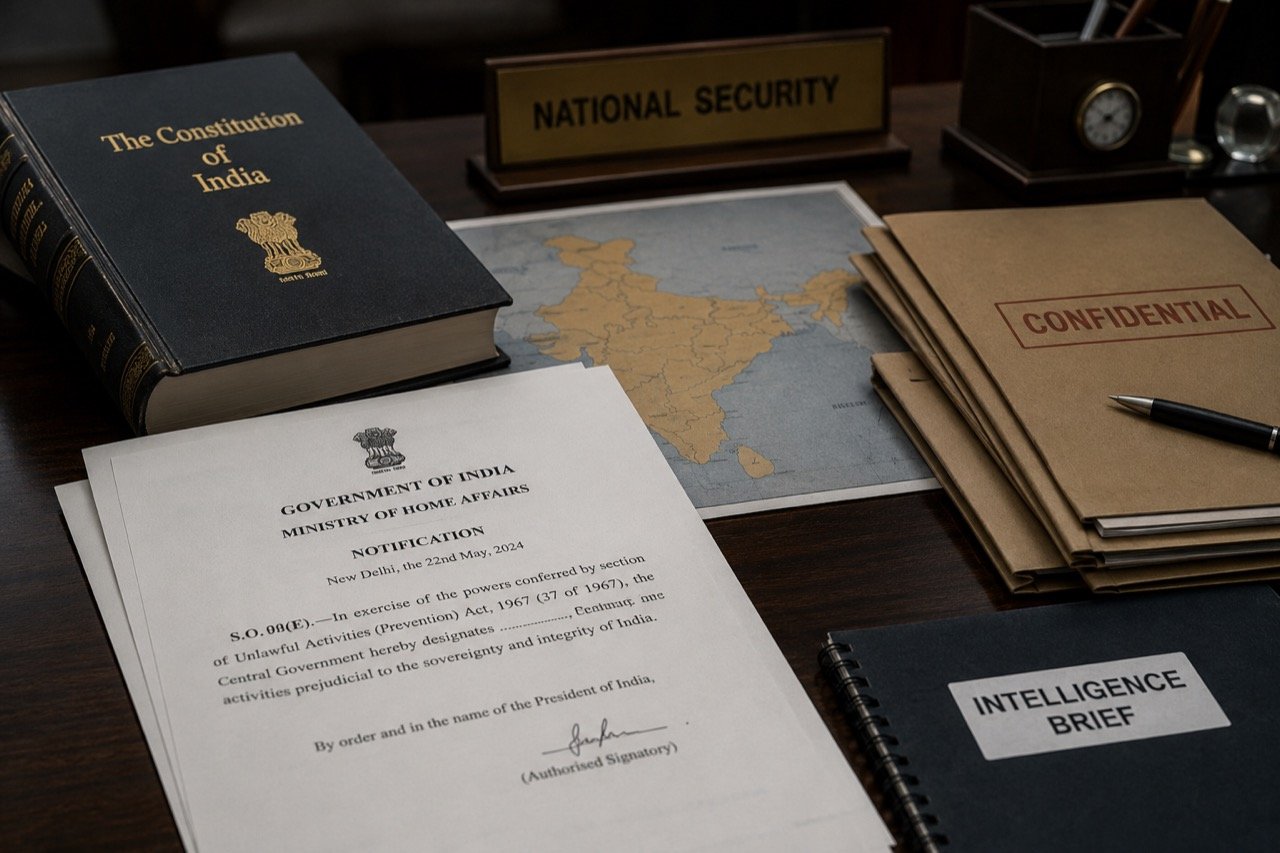
A new set of designations issued under the Unlawful Activities (Prevention) Act has renewed public attention on one of India's most consequential national-security instruments. Reports indicate the Centre has notified 23 entries in its latest list, a move that carries immediate legal and administrative weight. Such notifications rarely generate the same volume of coverage as a major arrest or a court verdict, yet in practical terms they can be far more consequential, since they set in motion a chain of legal and administrative consequences that unfold quietly across multiple government departments.
Why a notification matters
A UAPA designation is not a symbolic gesture. Once an individual or organisation is formally notified, the designation can affect assets, travel, the priority given to investigations and how security agencies coordinate with one another. In effect, the notification converts a security assessment into a legal fact with tangible consequences: bank accounts can come under greater scrutiny, cross-border movement can be restricted, and law enforcement agencies gain a clearer mandate to prioritise cases connected to the designated individual or entity. This is precisely why the notification itself — its legal basis, its wording and its place on the public record — is the core news event, rather than any speculation about motive or timing that might surround it.
That is also why precision matters in reporting such announcements. The verifiable facts are the official notification, the statutory framework under which it was issued, and the consequences that flow from designation. Speculation beyond the public record adds noise rather than clarity. In a media environment where unverified claims can spread quickly, sticking closely to what has actually been notified — rather than inferring intent or extrapolating consequences not yet confirmed — is the only responsible approach to a subject with such serious legal stakes for those named.
The scale and pattern of this round of designations
The notification of 23 entries in one round is a substantial figure, and it invites questions about how such lists are compiled, reviewed and finalised before they are made public. Each entry on such a list, whether an individual or an organisation, represents a distinct determination made by the relevant authorities under the statutory criteria set out in the Act. The cumulative effect of naming so many entries at once is that the practical burden of the law — on banks, on travel and immigration authorities, and on investigative agencies — is felt simultaneously across a wide range of cases, rather than being absorbed gradually as designations might be if issued individually over time.
Security law and its checks
UAPA designations invite scrutiny precisely because security law must operate within constitutional and judicial limits. The power to designate is significant, and with significant power comes the expectation of significant accountability. Past designations have been tested through official explanations, legal challenges and enforcement follow-up, and this round may be no different. Individuals and organisations named under the Act have, in earlier instances, sought recourse through the courts, prompting judicial examination of both the process followed and the substance of the grounds cited. Transparency about process is what keeps a powerful law accountable, and it is this transparency, more than the raw number of names on any given list, that ultimately determines whether the public can have confidence in how the designation regime is being exercised.
For the agencies involved, each designation also carries an operational dimension. Coordination between the Ministry of Home Affairs, investigative bodies and financial regulators is required to ensure that a designation is properly enforced rather than existing only on paper. Effective implementation depends on clear internal guidance being issued alongside the public notification, and on the various arms of the state acting in concert. Any gaps between the legal notification and its enforcement on the ground can weaken the practical force of the designation, even if the formal notification itself is unimpeachable.
What this means for those affected and for institutions
For the individuals and organisations named, the consequences are immediate and can be severe, ranging from restrictions on financial dealings to constraints on movement. For banks, travel authorities and other institutions that must give effect to the designation, the notification creates a compliance obligation that must be discharged carefully, since errors in implementation could themselves become a source of legal dispute. For the wider public, the notification is a reminder that the machinery of national-security law operates continuously, often without the same visibility as high-profile prosecutions, but with consequences that can be just as significant for those concerned.
The NE Times View
The strength of a security designation regime lies as much in its process as in its reach. When the state names individuals or groups under the UAPA, citizens are entitled to clear official reasoning, and those designated are entitled to the legal avenues the Constitution guarantees. This is not a matter of weakening the state's ability to act against genuine security threats; rather, it is a recognition that the durability and legitimacy of such powers depend on their being exercised with visible rigour. A designation regime that is seen to be careful, well-reasoned and open to challenge is, paradoxically, a stronger one than one that relies purely on the breadth of its reach.
India's security architecture is best served when notifications are precise, publicly explained and open to judicial review — because credibility, not just capability, is what makes national-security law effective. As this round of 23 designations moves from notification to implementation, the test will lie in whether the government's grounds are articulated with sufficient clarity, and whether the courts are able to perform their customary role of oversight without unnecessary delay. Watch for the government's detailed grounds and any court challenges in the weeks ahead, since these will indicate whether this round of designations follows the established pattern of scrutiny that has characterised previous rounds under the Act.
Key takeaways
- The Centre has notified 23 entries under the Unlawful Activities (Prevention) Act in its latest list, a move with immediate legal and administrative consequences.
- A UAPA designation affects assets, travel and the priority given to investigations, making the notification itself, not speculation around it, the central verifiable fact.
- Security law of this kind must operate within constitutional and judicial limits, and past designations have been tested through legal challenges and enforcement follow-up.
- Transparency in official reasoning and openness to judicial review are what preserve the credibility of the designation regime.
- The coming weeks should be watched for the government's detailed grounds for these designations and for any court challenges that may follow.
You may also like to read
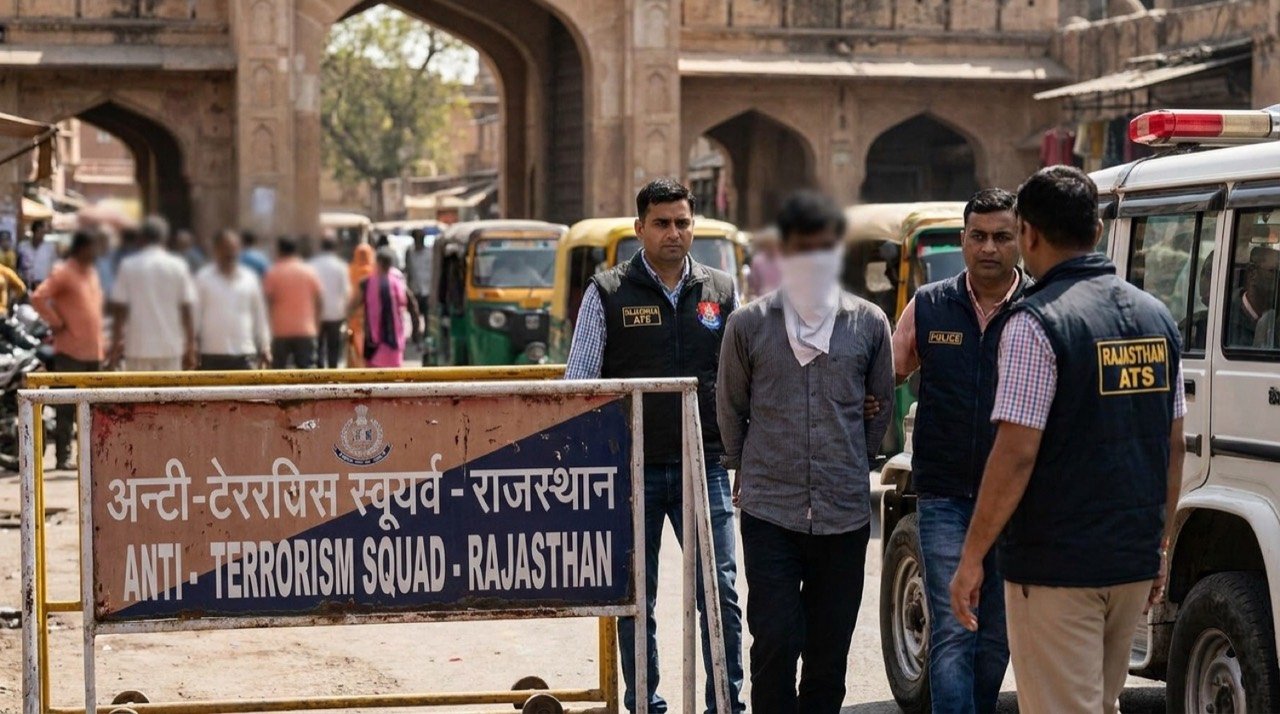
Jaipur Woman Arrested Under UAPA Over Alleged Jaish Links
Rajasthan's ATS has arrested a Jaipur woman under the UAPA over alleged online contact with Jaish-e-Mohammed-linked individuals, putting the spotlight on digital trails in national-security probes.

Centre Names 23 More Designated Terrorists, Taking List to 80
The Union government has designated 23 more individuals as terrorists, expanding India's official list to 80 names, with several reportedly linked to attacks and cases connected to Jammu and Kashmir.

Gen Seth Set to Take Charge as Indian Army Chief: What It Means
General Seth is poised to assume command of the Indian Army at a moment defined by modernisation drives, jointness reforms, active border sensitivities and a push for faster technology induction.
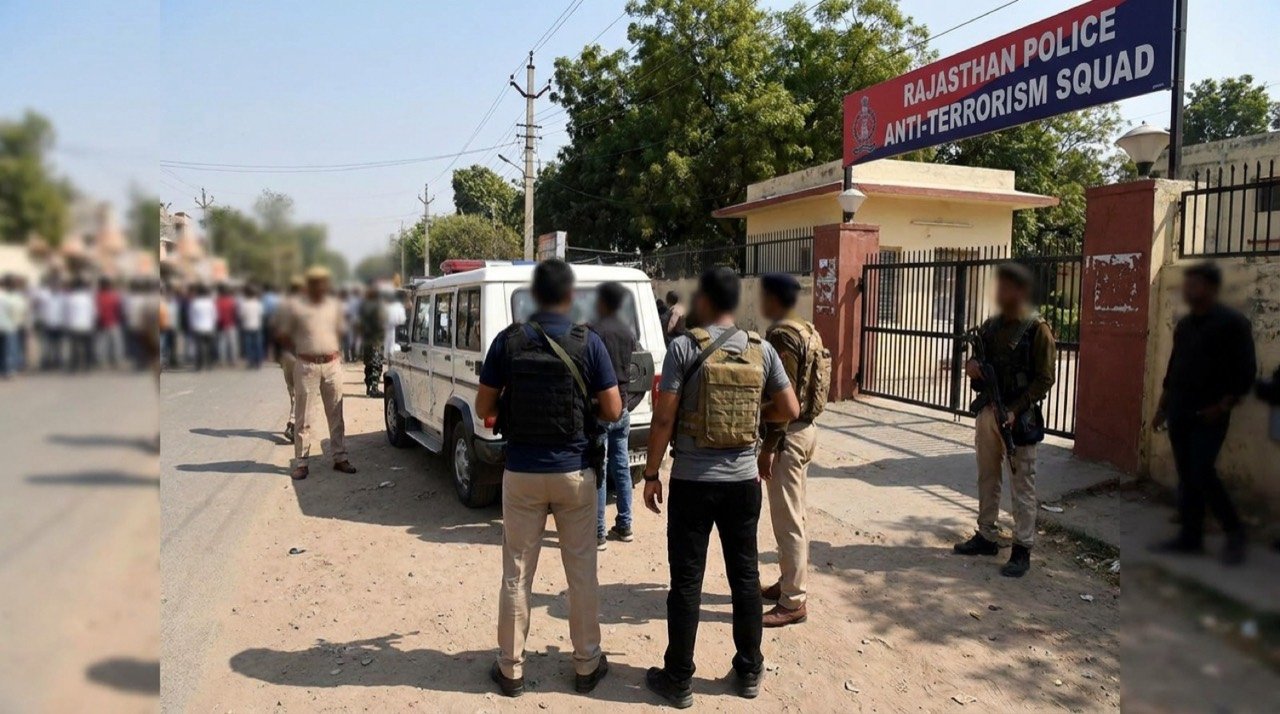
Jaipur Woman's UAPA Arrest Puts Online Radicalisation and Digital Evidence Under Scrutiny
Rajasthan's Anti-Terrorism Squad has arrested a Jaipur woman under the UAPA over alleged links to Pakistan-based Jaish-e-Mohammed, with investigators examining digital communications and deleted data.
More from this section
More
AICTE Industry Fellowship 2026: Rs 1.5 Lakh Scheme Closes July 5
The AICTE Industry Fellowship Programme 2026, which places technical-education faculty inside leading companies on a Rs 1.5 lakh monthly stipend, reached its application deadline on July 5.

Bay of Bengal Low Pressure System Revives Monsoon Over Western India
A low-pressure system over the Bay of Bengal has pushed the monsoon back into an active phase, bringing steady heavy rain to Kerala, coastal Karnataka and Maharashtra, and putting Mumbai and Pune on preparedness watch.
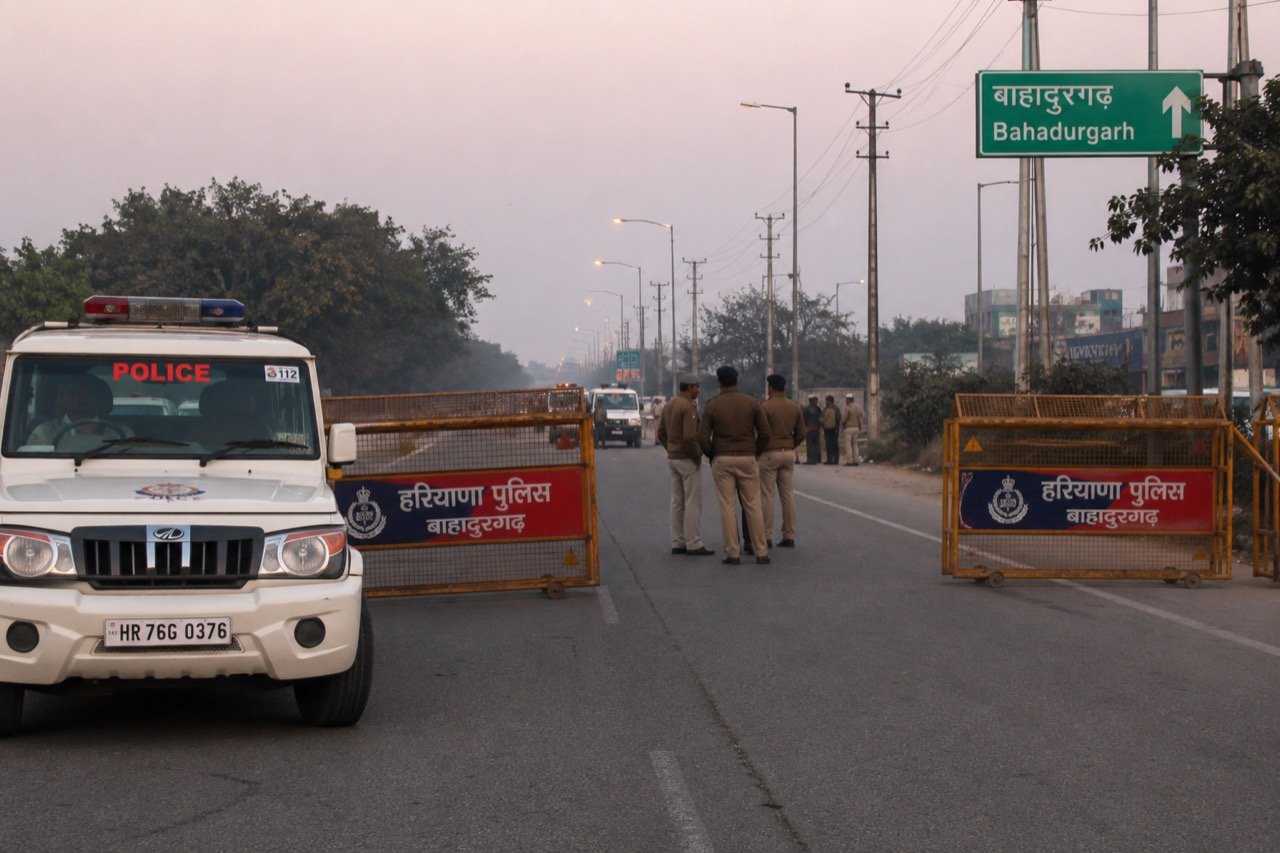
Bishnoi Gang Suspects Injured in Haryana Encounter as Police Tighten Net
A joint Haryana-Delhi Police operation in Bahadurgarh left two suspected Lawrence Bishnoi gang members injured, spotlighting the multi-state coordination now central to India's fight against organised crime networks.