Centre Names 23 More Designated Terrorists, Taking List to 80
The Union government has designated 23 more individuals as terrorists, expanding India's official list to 80 names, with several reportedly linked to attacks and cases connected to Jammu and Kashmir.
Commentary & Analysis ·
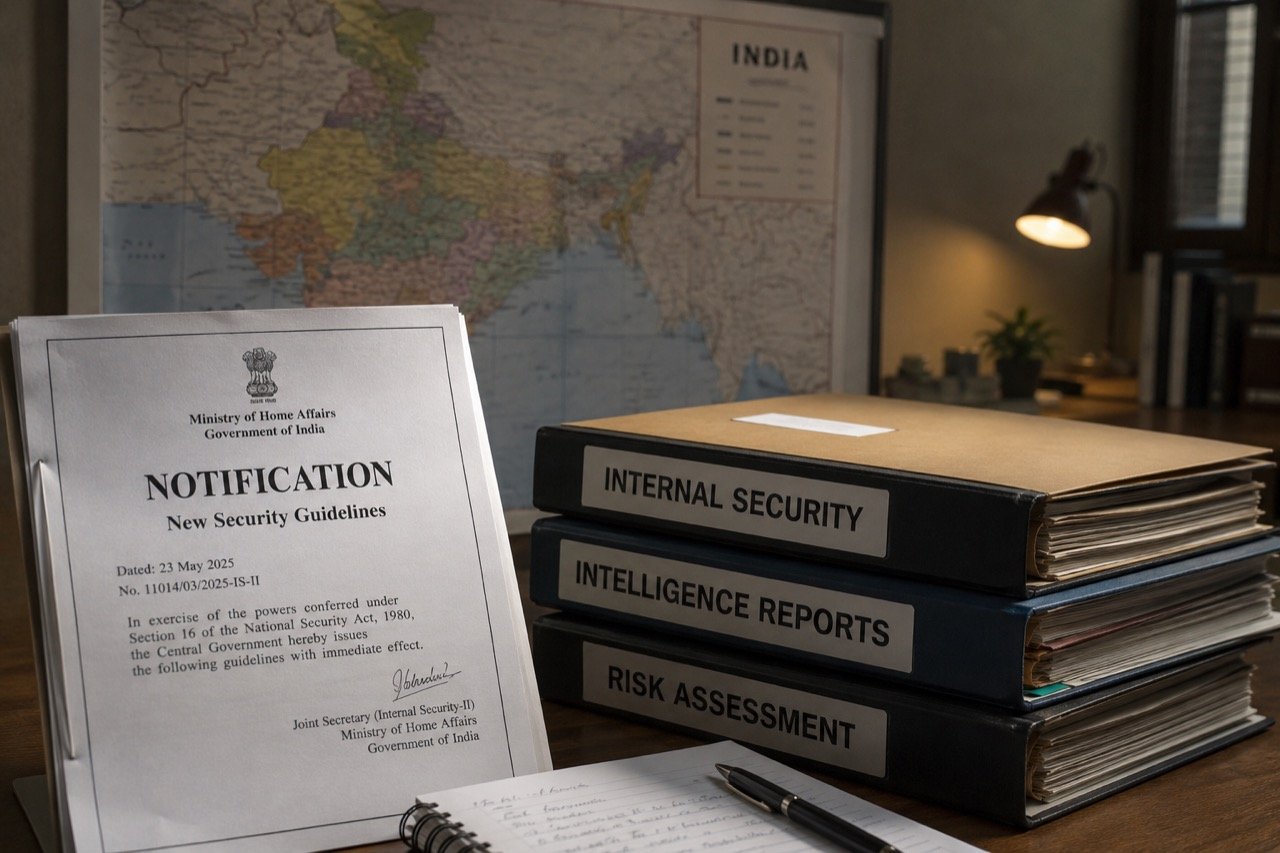
The Union government has designated 23 more individuals as terrorists, taking India's official list to 80 names, in one of the more significant national security moves of the week. According to the Indian Express, the expanded list includes a number of Indians who relocated to Pakistan, as well as several people linked to attacks in Jammu and Kashmir. Times of India reporting adds that the new entries include an operative accused of conducting reconnaissance of the Ram temple and a son-in-law of Hafiz Saeed, underlining the cross-border dimension the government attaches to the designations.
The scale of the addition is itself notable. Moving from 57 to 80 named individuals in one tranche is not a routine housekeeping update; it represents a substantial widening of the government's formal counter-terror architecture in a single announcement. Such jumps tend to reflect either a backlog of cases that intelligence and investigative agencies have been building over time, or a deliberate decision to consolidate and make public a body of work that had previously been handled through quieter channels. Either way, the size of the expansion signals that the Centre wants the list itself, and not merely individual prosecutions, to be read as a statement of national security posture.
What designation actually does
Being named a designated terrorist is a legal and administrative action under India's counter-terror framework, most notably the Unlawful Activities (Prevention) Act, or UAPA. It is distinct from a court conviction: the designation restricts an individual's movement, finances, networks and public legitimacy, and signals the government's threat assessment, but the underlying cases still travel through the legal system. This distinction matters enormously for how the public and commentators should read such announcements. A designation is an executive determination, made on the basis of intelligence and investigative material that the government considers sufficiently credible, but it does not substitute for the due process that a criminal trial provides. The two tracks run in parallel: the administrative list shapes what an individual can do in the here and now, while the courts remain the venue where guilt or innocence is ultimately adjudicated.
For readers trying to make sense of any single name added to such a list, the practical questions are consistent: who has been named, which cases and charges are cited against them, and what enforcement follows from the designation. Without answers to these questions, a list can become a symbolic gesture rather than an operational tool. With them, it becomes a genuine instrument of policy — one that can freeze assets, curtail travel, and choke off the financial and logistical networks that sustain terrorist activity.
The cross-border dimension
The composition of this particular tranche is instructive. The inclusion of Indians who relocated to Pakistan, individuals linked to attacks in Jammu and Kashmir, an operative accused of conducting reconnaissance of the Ram temple, and a son-in-law of Hafiz Saeed all point toward the same underlying narrative that has dominated India's counter-terror discourse for decades: the perceived nexus between individuals operating from, or with support from, across the border. Naming a relative of Hafiz Saeed, a figure long associated by Indian authorities with the Mumbai attacks and subsequently sanctioned internationally, reinforces the government's argument that terrorist networks are frequently intertwined through family and organisational ties that persist across generations and borders.
Designation lists also carry diplomatic weight, particularly where cross-border terrorism is alleged, since they put named individuals and their host states on notice internationally. When New Delhi formally designates someone residing in another country, it is not merely a domestic legal exercise. It is also a signal to that country's government, and to the international community more broadly, that India regards the individual as a continuing security threat and expects some measure of cooperation, whether that be monitoring, restriction, or eventual extradition. Such signals rarely produce immediate results, especially where diplomatic relations are strained, but they build a documented record that can be invoked in future bilateral or multilateral engagement.
Why the timing and framing matter
Announcements of this kind rarely occur in a vacuum. A list that grows by nearly 30 names in one move draws attention not only to the individuals concerned but to the government's broader messaging around internal security and its relationship with Pakistan. The specific mention of reconnaissance activity connected to the Ram temple is likely to resonate strongly given the site's political and religious significance, and will almost certainly be read by many as evidence of continued attempts to target symbolically important locations. Whether or not that particular case eventually yields a conviction, its inclusion in the public list ensures it becomes part of the national conversation around threats to religious and cultural sites.
At the same time, expanding a public list is a low-cost, high-visibility action compared with the slower, less visible work of prosecution, extradition requests, and international asset-freezing cooperation. That does not make the designations illegitimate, but it does mean observers should watch for the harder follow-through that determines whether the list functions as more than a statement of intent.
What comes next
The likely next developments include enforcement action against the newly listed individuals, possible diplomatic exchanges with Pakistan, and legal challenges from those designated. Enforcement could take the form of asset freezes, travel restrictions, or coordinated action with financial intelligence units both in India and abroad. Diplomatic exchanges, if they occur, are likely to be indirect and slow-moving, given the current state of relations between the two countries, but the designations still create a formal record that can be raised in bilateral or international forums. Legal challenges are also plausible: individuals named on such lists, or their representatives, may contest the designation through India's courts, arguing procedural or evidentiary shortcomings, and such challenges will test how robust the underlying case files actually are.
The immediate takeaway is that India's security list has grown materially, and the Centre is leaning on designation as a central instrument of its counter-terror strategy. This reflects a broader pattern in which formal, publicly announced measures are used alongside — and sometimes ahead of — traditional prosecutorial processes, particularly in cases with a cross-border element where conventional extradition and trial routes are slow or blocked.
The NE Times View
Designation is a legitimate and increasingly used tool, but its credibility rests on precision. Each name added to the list must be backed by documented cases that can withstand legal and international scrutiny, or the instrument risks being dismissed as symbolic. The expansion to 80 names shows intent; what matters now is follow-through — asset freezes, extradition pressure and prosecutions that convert a list into consequences. A list that grows without visible enforcement invites the criticism that it is more about optics than outcomes, and that criticism, fair or not, will shape how seriously both domestic and international audiences take future additions.
Readers should also keep the distinction clear: a designation reflects the government's assessment, and the courts remain the final word on guilt. Maintaining that distinction is not a technicality; it is what separates a credible counter-terror instrument from an arbitrary one. As this list continues to grow, the test for the Centre will be whether each new name is matched by concrete, verifiable action rather than remaining a line in an expanding register.
Key takeaways
- The Centre has added 23 individuals to India's designated terrorist list, bringing the total to 80, one of the larger single expansions of the list to date.
- New entries include Indians relocated to Pakistan, individuals linked to Jammu and Kashmir attacks, an alleged Ram temple reconnaissance operative, and a son-in-law of Hafiz Saeed.
- Designation under the UAPA is an administrative and legal tool distinct from conviction; it restricts movement, finance and legitimacy while cases proceed separately through the courts.
- The list carries diplomatic weight, particularly regarding Pakistan, by placing named individuals and their host states on international notice.
- The credibility of the expanded list will depend on follow-through — enforcement, asset freezes, diplomatic pressure and prosecutions — rather than the size of the list alone.
You may also like to read
UAPA Designations: What the Latest Security Notification Means
A fresh round of designations under the Unlawful Activities (Prevention) Act has put the spotlight on how India's national-security notifications are issued, what they trigger, and the checks that follow.
Jaipur Woman Arrested Under UAPA Over Alleged Jaish Links
Rajasthan's ATS has arrested a Jaipur woman under the UAPA over alleged online contact with Jaish-e-Mohammed-linked individuals, putting the spotlight on digital trails in national-security probes.

Gen Seth Set to Take Charge as Indian Army Chief: What It Means
General Seth is poised to assume command of the Indian Army at a moment defined by modernisation drives, jointness reforms, active border sensitivities and a push for faster technology induction.
Jaipur Woman's UAPA Arrest Puts Online Radicalisation and Digital Evidence Under Scrutiny
Rajasthan's Anti-Terrorism Squad has arrested a Jaipur woman under the UAPA over alleged links to Pakistan-based Jaish-e-Mohammed, with investigators examining digital communications and deleted data.
More from this section
More
AICTE Industry Fellowship 2026: Rs 1.5 Lakh Scheme Closes July 5
The AICTE Industry Fellowship Programme 2026, which places technical-education faculty inside leading companies on a Rs 1.5 lakh monthly stipend, reached its application deadline on July 5.
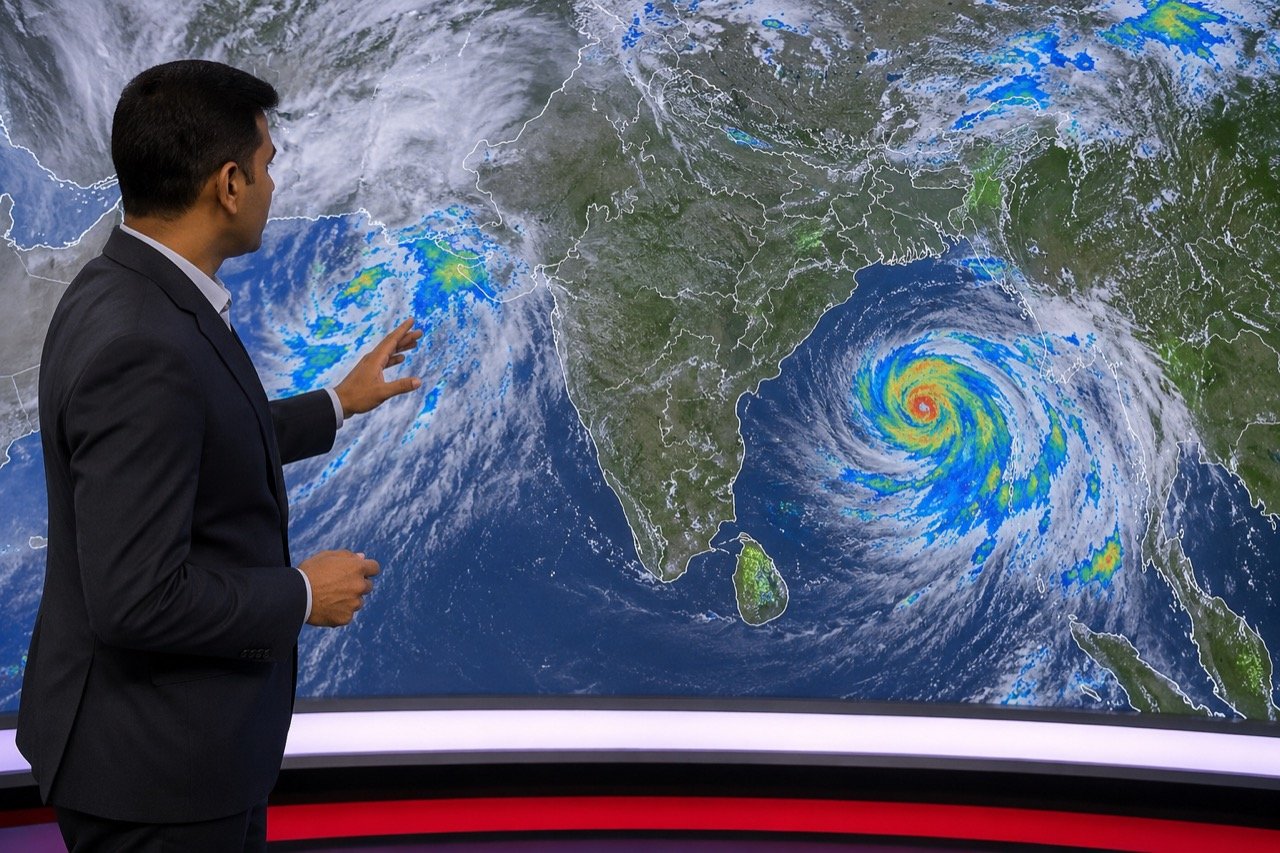
Bay of Bengal Low Pressure System Revives Monsoon Over Western India
A low-pressure system over the Bay of Bengal has pushed the monsoon back into an active phase, bringing steady heavy rain to Kerala, coastal Karnataka and Maharashtra, and putting Mumbai and Pune on preparedness watch.
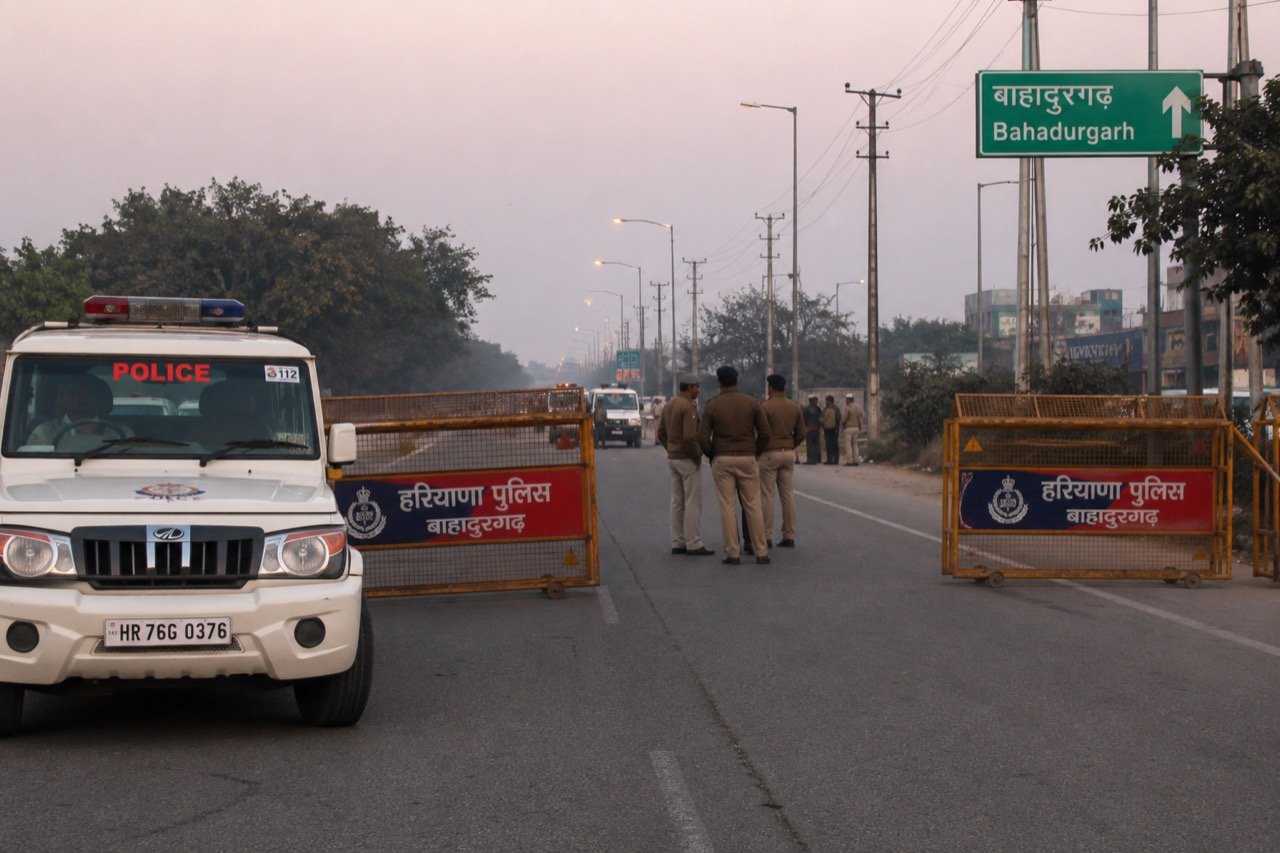
Bishnoi Gang Suspects Injured in Haryana Encounter as Police Tighten Net
A joint Haryana-Delhi Police operation in Bahadurgarh left two suspected Lawrence Bishnoi gang members injured, spotlighting the multi-state coordination now central to India's fight against organised crime networks.