Telegram Restored in India After Temporary NEET-Linked Block
Telegram is available again for many Indian Android users after a temporary nationwide restriction tied to NEET-UG re-exam integrity, reopening debate on exam security and digital limits.
Commentary & Analysis ·
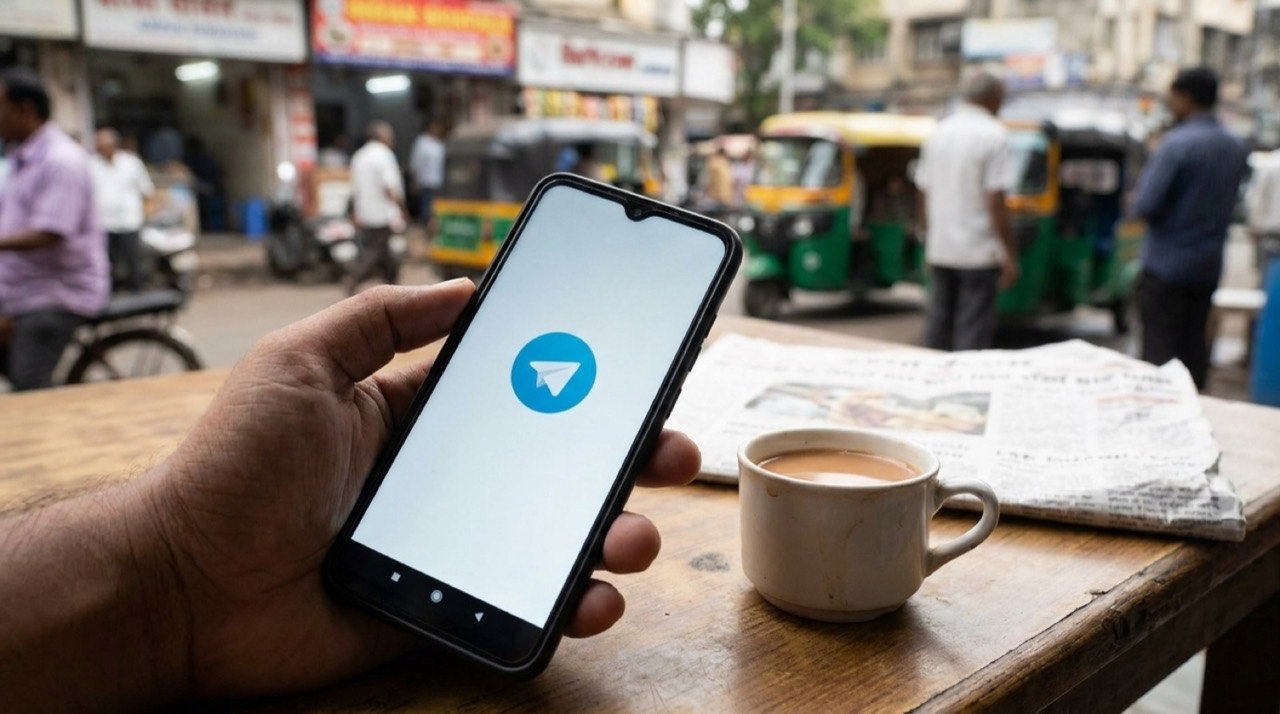
Telegram has become available again for many Indian Android users after a temporary nationwide restriction linked to concerns over the integrity of the NEET-UG re-examination. The brief block, and its swift reversal, has reopened a familiar debate about how India balances exam security against the reach of digital platforms. On the surface, the episode lasted only a matter of hours or days for most users. Beneath that surface, however, it touches on questions that recur every time India's examination calendar collides with its digital infrastructure: who decides when a platform goes dark, on what evidence, and with what accountability to the millions of ordinary people caught in the crossfire.
Why the app was restricted
Reports indicated that the restriction was tied to fears that messaging channels could be misused around the high-stakes medical entrance test, whether to circulate leak claims, coordinate cheating networks or spread unverified material during a sensitive window. With the NEET-UG re-exam under intense public and official scrutiny, authorities appeared to favour caution. This is not a new anxiety. NEET, as the gateway examination for medical college admissions across the country, carries enormous stakes for lakhs of students and their families, and any hint of compromised integrity threatens not just individual careers but public confidence in the fairness of the selection process itself. When a re-examination is already underway, the margin for error, real or perceived, narrows further, and the temptation for regulators to act pre-emptively rather than reactively grows correspondingly stronger.
Telegram's channel-based architecture, which allows large groups to receive broadcasts quickly, has long made it a focus of concern in contexts where rapid, hard-to-trace sharing could undermine an examination's credibility. Unlike smaller peer-to-peer messaging threads, Telegram channels can push content to tens of thousands of subscribers almost instantaneously, and the platform's history in India includes prior scrutiny over unmoderated content spreading unchecked. For authorities focused on containing leak rumours or cheating coordination, that scale and speed is precisely what makes the platform both useful to bad actors and difficult to police through conventional, targeted enforcement.
The restoration and what changed
The app's return to availability on Android suggests the immediate trigger had passed or that the concerns were addressed to the satisfaction of the relevant authorities. Exactly what technical, legal or administrative steps produced that outcome remains unclear from public reporting, which is itself part of the problem this episode illustrates. For ordinary users, the disruption was short-lived, but for examinees, parents and coaching networks, even a brief outage of a widely used communication tool can cause anxiety during a critical period. Coaching centres often rely on messaging platforms to relay last-minute instructions, admit card updates or exam-day logistics, and a sudden blackout, however temporary, injects uncertainty into an already stressful process.
The episode underlines how quickly access can be switched off and on, and how little visibility users typically have into the reasoning behind such decisions. There was no extended public consultation, no detailed explanation of the specific threat being neutralised, and no clear timeline communicated to the public in advance. Users simply experienced the platform disappearing and then, subsequently, reappearing. That opacity is arguably the more consequential story here: it is not simply that a block happened, but that the public was left to reconstruct the rationale after the fact from scattered reports rather than an authoritative account.
The wider policy debate
The restoration has revived questions that extend well beyond a single app. How should examination security be protected without resorting to blunt, blanket restrictions? Where does platform accountability begin and end? And what are the appropriate limits, and oversight, for temporary digital blocks that affect millions of unrelated users? These are not abstract questions. India runs some of the largest standardised examinations in the world, and NEET-UG alone involves a vast pool of candidates each year. Any measure that treats an entire national user base of a communication platform as a single undifferentiated risk, rather than targeting the specific channels or accounts implicated in wrongdoing, inevitably imposes costs on the overwhelming majority who had no connection whatsoever to any leak or cheating scheme.
For platforms like Telegram, the episode raises the perennial tension between decentralised, encrypted-adjacent communication and the demands of national regulators who want faster cooperation on content moderation. For students and parents, it raises the question of reliability: can a messaging app be trusted as an examination-week utility if it might vanish without warning? For policymakers, it raises the harder question of proportionality: is a blanket restriction ever the right tool, or does it simply substitute the appearance of decisive action for the harder work of identifying and shutting down specific bad actors?
Stakeholders caught in the middle
Examinees preparing for or sitting the NEET-UG re-exam had the least agency in this entire sequence, yet arguably bore the most direct pressure. For a student already contending with exam-day nerves, losing access to a platform used for peer coordination, doubt-clearing groups or family communication adds an avoidable layer of stress at precisely the wrong moment. Parents, many of whom rely on messaging apps to stay in contact with children travelling to exam centres or to track updates from coaching institutes, faced similar disruption. Coaching networks, which have built substantial operational reliance on platforms like Telegram for broadcasting updates to large student cohorts, had to absorb the outage with little notice and presumably scrambled to find alternative channels.
Meanwhile, the authorities responsible for the restriction were, in effect, making a trade-off on behalf of all these groups without directly consulting them: prioritising a perceived exam-security risk over the continuity of a communication tool millions depend on for entirely unrelated purposes. That is a legitimate call for a regulator to have to make under pressure, but it is also one that demands a correspondingly high level of public explanation once the immediate crisis has passed, an explanation that, based on available reporting, does not yet appear to have been fully delivered.
What to watch next
As India conducts more large-scale examinations on a digital backbone, friction between integrity safeguards and open communication is likely to recur. The Telegram episode is a reminder that temporary restrictions, however well-intentioned, carry trade-offs in transparency and public trust that policymakers will need to weigh carefully in future. Whether future exam cycles see a repeat of blanket blocking, or instead a shift toward more surgical interventions such as targeted takedowns of specific channels or accounts, will say a great deal about whether this episode prompted any institutional learning. Equally worth watching is whether Telegram or other platforms face any formal accountability measures, or whether the matter simply fades once the news cycle moves on, only to resurface at the next high-stakes examination.
The NE Times View
Pulling the plug on a platform used by millions to police one exam is a blunt instrument that punishes everyone for the sins of a few. The NEET leak problem is real and corrosive, but the answer lies in fixing exam security, not in normalising nationwide blackouts. The NE Times sees a worrying reflex here: reach for the kill switch first, ask hard questions about accountability later. A more mature approach would treat platform restrictions as a last resort, reserved for cases where targeted enforcement has demonstrably failed, and would pair any such measure with a clear, timely public explanation. Absent that discipline, each new exam cycle risks becoming another occasion for blunt, opaque intervention rather than a genuine strengthening of examination integrity.
Key takeaways
- Telegram was temporarily restricted for many Indian Android users over concerns linked to NEET-UG re-exam integrity, before being restored.
- The block appeared aimed at curbing misuse of messaging channels for leak claims or cheating coordination, reflecting Telegram's capacity for rapid, large-scale broadcast.
- The lack of public detail on the reasoning behind the block, or its reversal, highlights a recurring transparency gap in how such digital restrictions are communicated.
- Examinees, parents and coaching networks bore the brunt of the disruption despite having no connection to any wrongdoing, underscoring the cost of blanket rather than targeted measures.
- The episode is likely to recur as India runs more large-scale examinations on digital infrastructure, making the case for proportionate, transparent, and accountable enforcement tools rather than default blackouts.
You may also like to read
Telegram Faces Fresh India Scrutiny Over Illegal Content and Exam-Security Risks
Indian officials are again examining Telegram over exam-leak misinformation, channels sharing child sexual abuse material and piracy, reopening the debate on encryption, platform accountability and user safety.
Telegram Returns to India's Play Store After NEET-UG Re-Exam Block
Google has restored Telegram on India's Play Store after a short government-ordered block during the NEET-UG re-exam, reviving a charged debate over exam security versus digital rights.
Centre Warns Telegram on Piracy in Platform Accountability Drive
The government has issued a stern warning to Telegram over pirated films, books and exam material circulating on the app, sharpening India's push to hold digital platforms accountable for unlawful content.
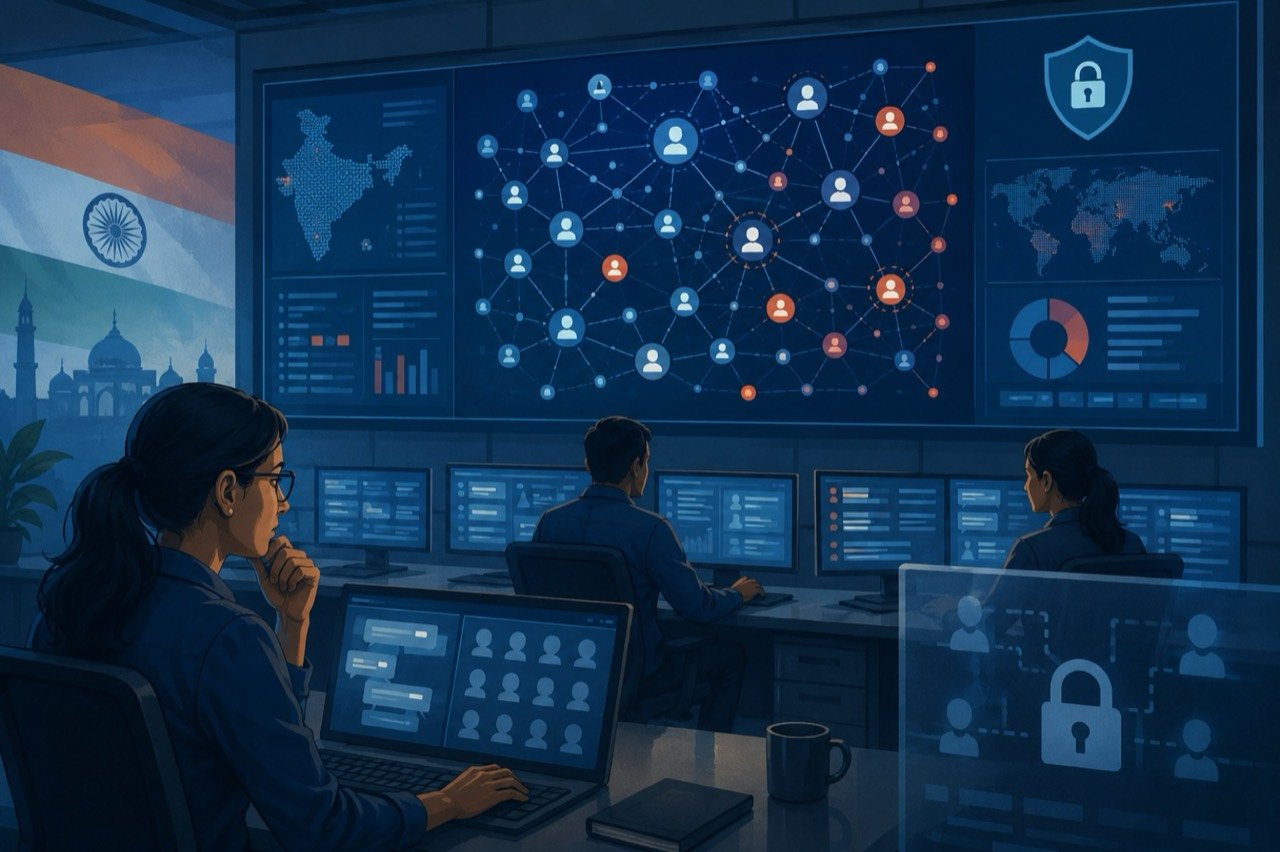
India Monitoring Telegram After Report Flags Illegal Content Risks
A government report cited by Reuters says authorities are proactively tracking Telegram groups over concerns about child abuse material and financial scams.
More from this section
More
CG Semi Sanand Plant Opens, Boosting India's Semiconductor Drive
Prime Minister Narendra Modi inaugurated CG Semi's chip assembly and test facility in Sanand, Gujarat, giving India's semiconductor mission a working manufacturing milestone rather than another policy promise.

Chinese E-Rickshaw Apps Banned in India Over Remote Disable Risk
The Centre has ordered the removal of three Chinese apps — BAT-BMS, Lossigy and Epoch-i-ion — over fears they could remotely disable battery-run e-rickshaws, turning mobility software into a public safety concern.

Connected Car Rules: India Plans Vehicle Software Update Norms
With cars increasingly run by software, the government is reportedly preparing update and security norms aimed at preventing vehicle hijacking and governing how connected cars in India are patched and protected.