India Monitoring Telegram After Report Flags Illegal Content Risks
A government report cited by Reuters says authorities are proactively tracking Telegram groups over concerns about child abuse material and financial scams.
Commentary & Analysis ·
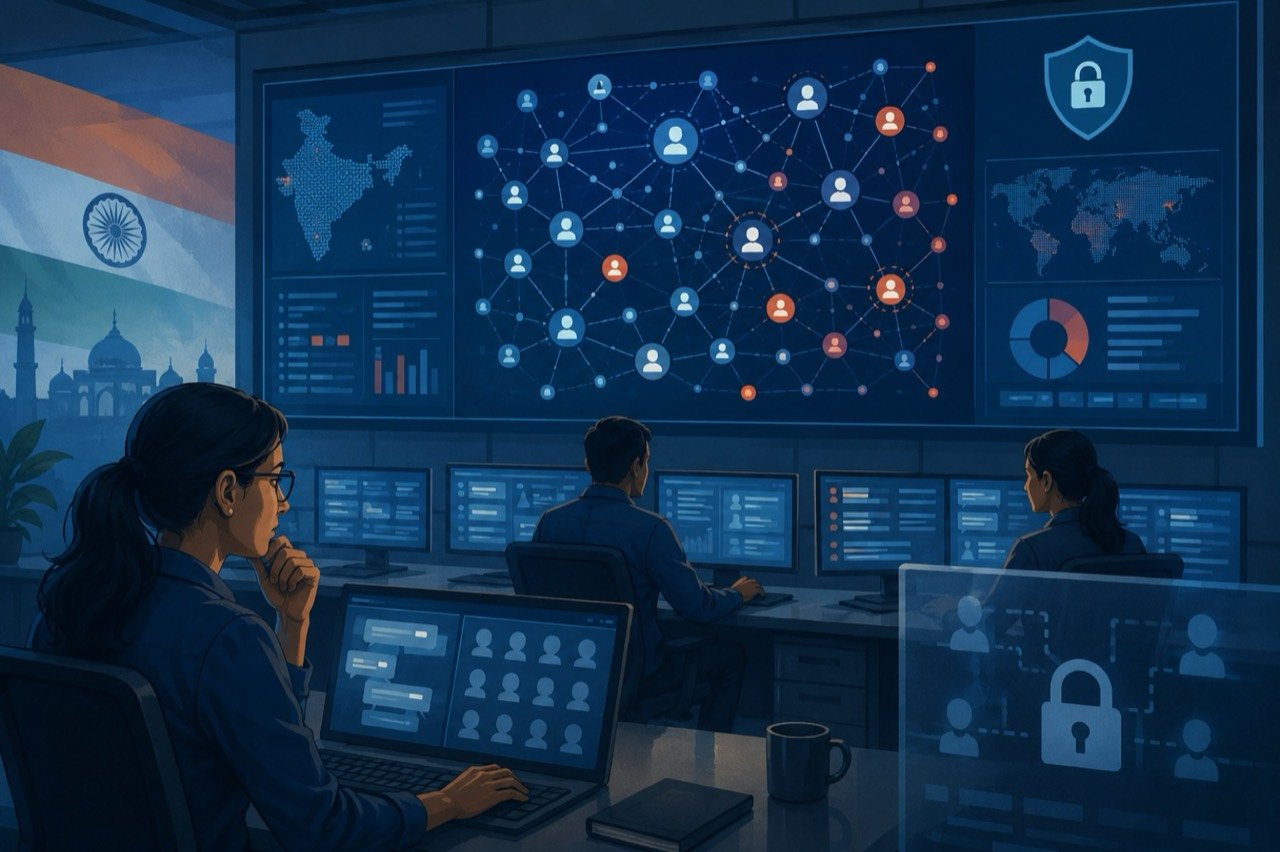
A government report cited by Reuters says Indian authorities are proactively monitoring Telegram groups over concerns about child sexual abuse material and financial scams circulating on the platform. The disclosure is not, on its face, dramatic. Governments monitor illegal content on digital platforms as a matter of course. What makes this particular revelation significant is the word "proactively," and the timing, arriving amid a wider and increasingly fraught debate in India over exam fraud, illegal online content, and the proper limits of encrypted communication.
What the report actually flags
At the core of the report are two distinct harms, and it is worth keeping them separate rather than treating them as a single undifferentiated category of "bad content." The first is the circulation of child sexual abuse material, a harm on which there is essentially universal consensus: no serious stakeholder, whether in government, civil society or the technology industry, argues that such material deserves protection. The second is financial scams, which exploit the reach and anonymity that large group chats afford. These two harms sit differently within the debate over platform governance. Child abuse material is unambiguously criminal and its removal is rarely contested on principle. Financial scams, by contrast, sit closer to a grey zone of fraud enforcement, where the line between monitoring criminal networks and monitoring speech more broadly can blur far more easily.
By describing the monitoring as proactive rather than reactive, the report signals a shift in posture. Authorities are not simply waiting for complaints to arrive before acting; they are seeking to identify and disrupt harmful networks before the damage is done. That is, in principle, a reasonable law-enforcement objective. But it also raises the stakes of the debate, because proactive monitoring of a platform architecture like Telegram's necessarily means engaging with the structure of groups and channels themselves, not merely responding to specific, already-substantiated complaints.
Why messaging platforms have become a focal point
Telegram's design is central to why it keeps attracting this kind of scrutiny. The platform supports very large groups and channels, a feature that makes it powerful for legitimate communities, from hobbyist forums to news aggregation to activist coordination, but also attractive to those seeking to distribute illicit content or coordinate fraud at scale. Recent controversies in India over exam-related leaks and other illegal material have sharpened official attention on precisely how such platforms are being used domestically. Exam leaks in particular touch a nerve in India, where competitive examinations carry enormous stakes for young people's futures, and any perception that the integrity of these examinations is being undermined by material circulating on messaging apps tends to generate swift political and administrative pressure.
None of this is unique to India. The scrutiny reflects a broader global reckoning over the responsibilities of messaging services and the degree to which they can, or should, police what passes through them. Regulators in Europe and elsewhere have wrestled with similar questions, and Telegram itself has faced legal pressure in other jurisdictions over content moderation practices. What is distinct about the Indian case is the scale of the user base involved and the political salience of issues like exam fraud, which gives this particular strand of scrutiny a domestic urgency that other markets may not share to the same degree.
Safety versus digital rights
The issue sits squarely at the intersection of online safety and digital rights, and it is here that the debate becomes genuinely difficult. Few dispute the need to dismantle networks trading in child abuse material or defrauding users; the harder questions concern method. How is the monitoring conducted? What safeguards protect ordinary users who have done nothing wrong but happen to be members of large groups that also contain bad actors? How are privacy and due process preserved when the state is examining communications that, for hundreds of millions of Indians, form part of everyday private life?
These are not abstract concerns. Encrypted and semi-encrypted messaging platforms have become the default means of communication for an enormous swathe of the Indian population, used for everything from family conversations to small business transactions to political organising. Any expansion of state monitoring capability over such platforms, even when justified by genuinely serious harms, carries the risk of scope creep, where tools built to catch child abuse material or scam networks are later repurposed, deliberately or through bureaucratic drift, for broader content policing. Authorities are expected to pursue genuinely harmful networks, while platforms, civil-society groups and ordinary users will be watching closely how enforcement balances accountability against the protections that underpin encrypted communication.
As one digital rights researcher put it, the challenge is dismantling harmful networks without eroding privacy and due process. That single line captures the entire tension at the heart of this story. It is not a call to abandon enforcement, nor is it a blank endorsement of surveillance; it is a demand that the two be held in balance, deliberately and transparently, rather than allowed to drift.
What comes next
How the monitoring translates into concrete action, and how transparently it is carried out, will shape the debate over platform accountability in India for months to come. Will there be public disclosure of how many groups have been examined, how many networks disrupted, and under what legal authority the monitoring proceeds? Will Telegram itself be drawn into a more formal cooperative arrangement with Indian authorities, as other platforms have been in different jurisdictions, or will this remain an opaque, unilateral surveillance effort? The answers will matter not only for this specific episode but for the broader template it sets.
This episode is also likely to feed into the larger, ongoing conversation about regulating encrypted services without undermining the safeguards that protect lawful users. India has previously grappled with similar tensions in disputes over traceability requirements for messaging platforms, and this latest development is best read as another chapter in that continuing negotiation between the state's legitimate security interests and citizens' reasonable expectations of privacy.
The NE Times View
Tracking platforms that host child abuse material and organised scams is legitimate and overdue. No credible defence of digital rights extends to protecting networks that traffic in the exploitation of children or the systematic defrauding of ordinary users. The worry here is method, not motive. Proactive monitoring of encrypted or semi-encrypted groups can slide, gradually and often without clear public accounting, from targeted enforcement into open-ended surveillance without judicial oversight. That is the pattern history warns against, and it is precisely the pattern that transparent safeguards are meant to prevent.
India needs Telegram, and platforms like it, to cooperate on genuine criminality. But it also needs transparent thresholds, independent oversight and clear accountability mechanisms, so that a child-safety and anti-fraud mandate does not quietly become a tool for broader content policing. The distinction between the two is not merely semantic; it is the difference between a state that protects its citizens and one that surveils them under the cover of protection. As this story develops, the measure of success will not be the volume of monitoring activity reported, but the clarity and openness with which its boundaries are defined and defended.
Key takeaways
- A government report cited by Reuters confirms India is proactively monitoring Telegram groups over child sexual abuse material and financial scams.
- The shift to proactive monitoring, rather than complaint-driven enforcement, raises the stakes for how such surveillance is scoped and governed.
- Telegram's large-group architecture, combined with recent exam fraud controversies, has intensified official attention on the platform in India.
- The central tension is not whether to act against genuine criminality, but how to do so without eroding privacy, due process and judicial oversight.
- Transparency around thresholds, scope and accountability will determine whether this effort strengthens trust or deepens concerns about surveillance creep.
You may also like to read
Telegram Faces Fresh India Scrutiny Over Illegal Content and Exam-Security Risks
Indian officials are again examining Telegram over exam-leak misinformation, channels sharing child sexual abuse material and piracy, reopening the debate on encryption, platform accountability and user safety.
Telegram Returns to India's Play Store After NEET-UG Re-Exam Block
Google has restored Telegram on India's Play Store after a short government-ordered block during the NEET-UG re-exam, reviving a charged debate over exam security versus digital rights.

Telegram Faces Growing India Scrutiny After Home Ministry Cybercrime Report
Telegram is under sharper scrutiny in India after a Home Ministry cybercrime report flagged the platform's alleged use for child sexual abuse material and financial fraud across its largest market of 150 million-plus users.
India Steps Up Telegram Monitoring Over Cybercrime And Fraud Concerns
India's cybercrime agencies are proactively monitoring Telegram groups and channels linked to fraud and illegal content, as the government balances citizen safety against lawful digital communication.
More from this section
More
CG Semi Sanand Plant Opens, Boosting India's Semiconductor Drive
Prime Minister Narendra Modi inaugurated CG Semi's chip assembly and test facility in Sanand, Gujarat, giving India's semiconductor mission a working manufacturing milestone rather than another policy promise.

Chinese E-Rickshaw Apps Banned in India Over Remote Disable Risk
The Centre has ordered the removal of three Chinese apps — BAT-BMS, Lossigy and Epoch-i-ion — over fears they could remotely disable battery-run e-rickshaws, turning mobility software into a public safety concern.

Connected Car Rules: India Plans Vehicle Software Update Norms
With cars increasingly run by software, the government is reportedly preparing update and security norms aimed at preventing vehicle hijacking and governing how connected cars in India are patched and protected.