Telegram Faces Growing India Scrutiny After Home Ministry Cybercrime Report
Telegram is under sharper scrutiny in India after a Home Ministry cybercrime report flagged the platform's alleged use for child sexual abuse material and financial fraud across its largest market of 150 million-plus users.
Commentary & Analysis ·
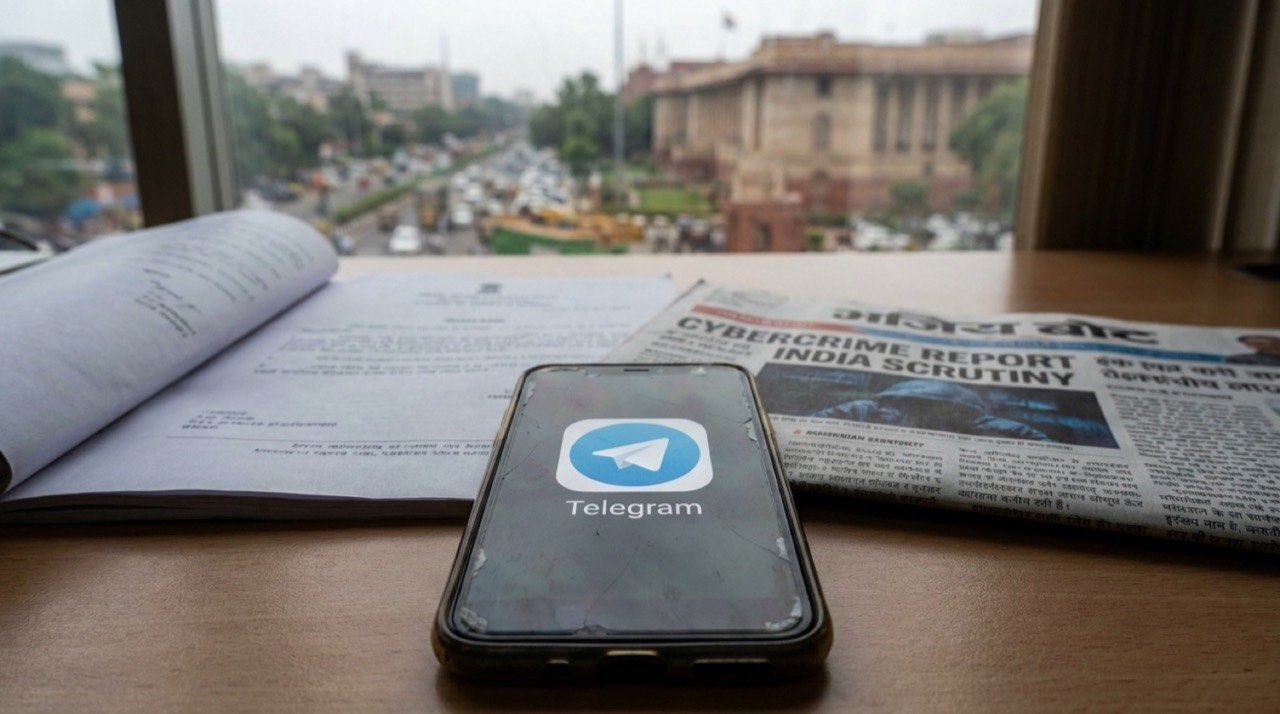
Telegram is facing intensifying scrutiny in India after public reporting cited a Union Home Ministry cybercrime report alleging that the messaging platform was being used to circulate child sexual abuse material and to perpetrate financial fraud. With India described as Telegram's largest market, home to more than 150 million users, the findings have sharpened a long-running debate over how the country should police powerful, lightly moderated communication platforms. The episode is not simply another regulatory skirmish between a foreign technology company and Indian authorities; it goes to the heart of how large, encrypted, group-based messaging services are meant to be governed in a country where such platforms have become indispensable to everyday communication, commerce and, evidently, criminal exploitation as well.
What the report alleges
According to the reporting, the Home Ministry's cybercrime assessment raised serious concerns about the misuse of Telegram's channels and groups for grave offences, including the distribution of child sexual abuse material and a range of financial frauds. The report reportedly formed part of the government's justification for a temporary restriction on the platform. Authorities said they were proactively monitoring groups and channels for illegal activity, signalling a more hands-on enforcement posture toward a service whose scale and features can make moderation difficult.
That the government felt compelled to cite a formal cybercrime report as part of its justification for restricting access, even temporarily, is itself significant. It suggests officials view the platform's architecture, large broadcast-style channels, closed groups, and comparatively limited moderation touchpoints, as structurally conducive to the kind of anonymous, high-volume abuse the report describes. Child sexual abuse material and financial fraud are, in regulatory terms, about as serious as online harms get, and pairing the two in one assessment underscores that this is not a dispute over minor content violations but over the platform's basic safety architecture for its Indian user base.
Why India matters to Telegram
India's status as Telegram's biggest user base gives the dispute outsized significance for the company. A regulatory clash here carries commercial weight and sets a precedent for how the platform engages with governments globally. For a company that has built its identity partly around resisting government pressure in other jurisdictions, India represents a market too large to treat as a peripheral concern. More than 150 million users is not a rounding error in any platform's global user metrics; it is a substantial share of Telegram's total reach, and any material disruption to that user base, whether through restrictions, bans, or a loss of user trust, would be felt at the company's core.
For Indian users, the stakes touch both safety and the continuity of a widely used communication tool. Telegram has become a default channel for everything from casual group chats and community discussion to file sharing and, for some users, informal commerce. A large population depends on it for entirely legitimate purposes, which is precisely what makes any government response delicate. The platform's popularity is simultaneously the reason regulators cannot ignore misuse at this scale and the reason a blunt crackdown would be so disruptive.
The policy dilemma
The episode revives a familiar tension between protecting users from serious crime and preserving lawful communication and platform rights. Heavy-handed action risks curbing legitimate speech and disrupting millions of ordinary users, while inaction can allow real harms to spread. Striking that balance is the central challenge for regulators and the company alike. This is not a new dilemma in India's digital policy landscape; it echoes previous confrontations with other platforms over encryption, traceability requirements and content takedown obligations. What distinguishes this case is the explicit citation of child sexual abuse material in a government cybercrime report, a category of harm that tends to compress the space for measured debate and increase pressure for swift, visible action.
Regulators must also contend with the practical limits of enforcement against a platform built around closed groups and channels that are not always easily monitored from outside. Proactive monitoring, as authorities describe undertaking, is a meaningful step, but it raises its own questions about scale, resourcing and the extent to which Indian agencies can realistically track illegal content across a platform with such a vast and active domestic user base. The government's temporary restriction, whatever its precise scope, functions as much as a signal of seriousness as it does an enforcement mechanism in itself.
Stakeholder perspectives and what comes next
A digital-rights policy analyst quoted in the reporting captured the underlying tension succinctly: the hard task is shielding users from grave crime without dismantling lawful communication for millions of ordinary people. That framing is useful because it resists the temptation to see this as a simple choice between safety and freedom. In practice, most stakeholders, government officials, child-safety advocates, ordinary users and even the company itself, would likely agree on the goal of eliminating child sexual abuse material and fraud from the platform. Where they are likely to diverge is on method: how much monitoring is proportionate, how quickly takedowns should happen, and what level of cooperation with Indian law enforcement Telegram is willing to commit to on an ongoing basis.
The outlook will hinge on how Telegram responds to the government's concerns, whether it strengthens cooperation on illegal content, and how Indian authorities calibrate enforcement against free-communication considerations. If Telegram moves toward more responsive takedown mechanisms, clearer channels for law enforcement requests, and demonstrable investment in trust-and-safety resourcing for its Indian operations, the immediate crisis could ease without further disruption to ordinary users. If the company instead treats this as another jurisdiction to weather rather than engage with substantively, the risk of escalating restrictions, or a more permanent ban, becomes correspondingly greater. The case is likely to become a reference point in India's evolving approach to platform accountability and online safety, shaping how future disputes with other messaging and social platforms are handled.
The NE Times View
With 150 million-plus Indian users, Telegram cannot keep treating moderation as someone else's problem; a platform that profits from scale owes its largest market real accountability on child-abuse material and fraud. The state's scrutiny is justified, but the remedy must be lawful cooperation and faster takedowns, not blunt threats that endanger legitimate private communication. A temporary restriction may focus minds, but it is not, on its own, a sustainable substitute for structural fixes, better reporting mechanisms, faster response times to law enforcement requests, and meaningful investment in detecting abuse at scale. Watch whether this produces concrete compliance or merely a familiar standoff, one in which a platform makes conciliatory noises, enforcement pressure eases, and the underlying problems persist largely unaddressed until the next report surfaces.
Key takeaways
- A Union Home Ministry cybercrime report has alleged that Telegram is being misused in India for circulating child sexual abuse material and facilitating financial fraud.
- India is described as Telegram's largest market, with more than 150 million users, giving the dispute significant commercial and precedent-setting weight for the company globally.
- The report reportedly featured in the government's justification for a temporary restriction on the platform, alongside claims that authorities are proactively monitoring groups and channels.
- The core policy challenge is balancing protection against grave crimes with preserving lawful communication for millions of ordinary users.
- The resolution will depend on whether Telegram strengthens cooperation with Indian authorities on illegal content or whether the dispute hardens into a prolonged standoff.
You may also like to read
India Steps Up Telegram Monitoring Over Cybercrime And Fraud Concerns
India's cybercrime agencies are proactively monitoring Telegram groups and channels linked to fraud and illegal content, as the government balances citizen safety against lawful digital communication.
Telegram Faces Fresh India Scrutiny Over Illegal Content and Exam-Security Risks
Indian officials are again examining Telegram over exam-leak misinformation, channels sharing child sexual abuse material and piracy, reopening the debate on encryption, platform accountability and user safety.
India Monitoring Telegram After Report Flags Illegal Content Risks
A government report cited by Reuters says authorities are proactively tracking Telegram groups over concerns about child abuse material and financial scams.
Centre Warns Telegram on Piracy in Platform Accountability Drive
The government has issued a stern warning to Telegram over pirated films, books and exam material circulating on the app, sharpening India's push to hold digital platforms accountable for unlawful content.
More from this section
More
CG Semi Sanand Plant Opens, Boosting India's Semiconductor Drive
Prime Minister Narendra Modi inaugurated CG Semi's chip assembly and test facility in Sanand, Gujarat, giving India's semiconductor mission a working manufacturing milestone rather than another policy promise.

Chinese E-Rickshaw Apps Banned in India Over Remote Disable Risk
The Centre has ordered the removal of three Chinese apps — BAT-BMS, Lossigy and Epoch-i-ion — over fears they could remotely disable battery-run e-rickshaws, turning mobility software into a public safety concern.

Connected Car Rules: India Plans Vehicle Software Update Norms
With cars increasingly run by software, the government is reportedly preparing update and security norms aimed at preventing vehicle hijacking and governing how connected cars in India are patched and protected.