Telegram Faces Fresh India Scrutiny Over Illegal Content and Exam-Security Risks
Indian officials are again examining Telegram over exam-leak misinformation, channels sharing child sexual abuse material and piracy, reopening the debate on encryption, platform accountability and user safety.
Commentary & Analysis ·
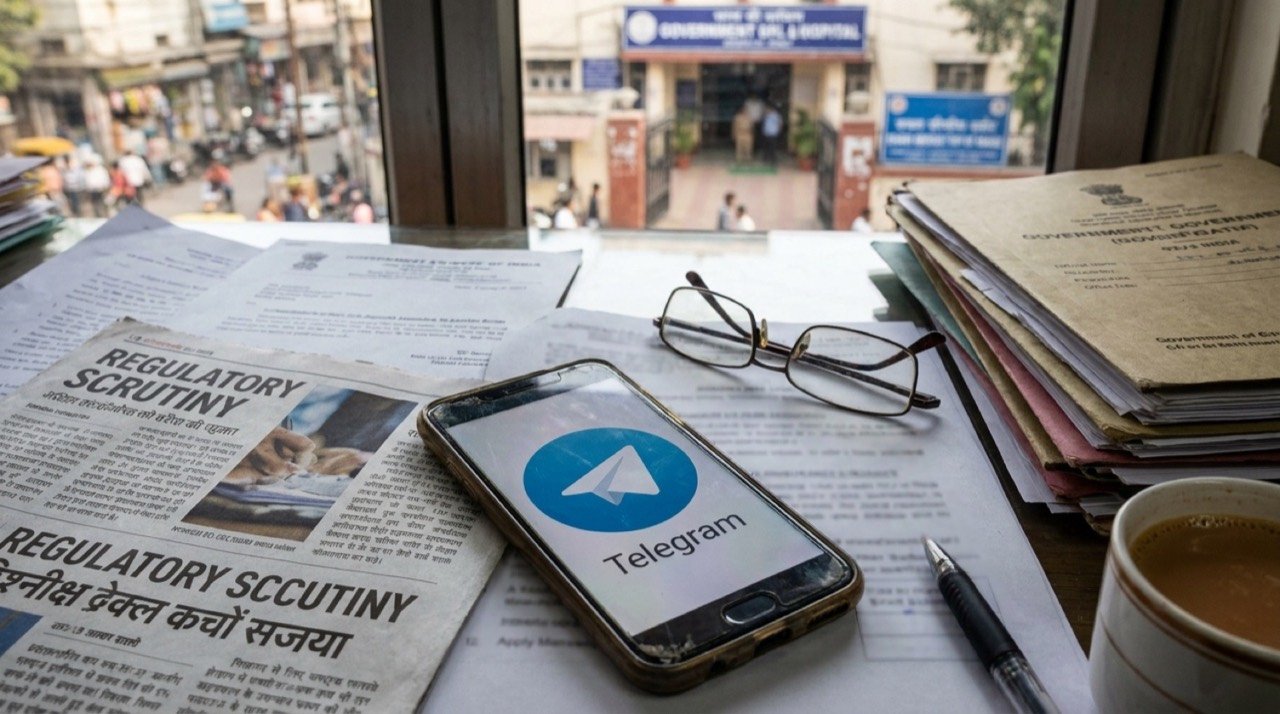
Telegram is once again under Indian scrutiny, as officials and investigators link the messaging platform to a cluster of concerns ranging from exam-security misinformation to channels carrying illegal material. The renewed attention reopens a familiar and difficult question: how India should police harmful content without disrupting the lawful use that millions depend on. That this question keeps resurfacing, rather than being settled once and for all, says something about the peculiar difficulty of regulating a platform that is simultaneously a haven for organised crime and a genuinely useful tool for ordinary citizens.
The concerns under examination
Reports said the government has been examining whether stronger action is needed against the platform, citing exam-security misinformation, channels sharing illegal child sexual abuse material and piracy-related content. These issues have surfaced repeatedly in connection with Telegram's large, loosely moderated public channels. Unlike platforms that rely heavily on algorithmic content moderation and proactive takedown systems, Telegram's channel architecture allows administrators considerable latitude, and its scale means that harmful material can propagate within closed or semi-closed groups long before it draws regulatory attention.
The exam dimension has proved especially sensitive in India, where leaked or fabricated material circulating ahead of high-stakes tests can undermine the integrity of national examinations and rattle lakhs of candidates. For a country where a single competitive examination can determine access to higher education, government employment or professional licensure, even the perception that a test has been compromised can trigger public anger, litigation and re-examinations that cost time and money for millions of aspirants. It is this combination of scale and stakes that elevates what might elsewhere be dismissed as a niche platform issue into a matter of national policy concern.
A platform with legitimate uses
At the same time, officials have acknowledged the platform's legitimate use by students, creators, businesses and communities. Telegram serves as a hub for study groups, small-business outreach, hobbyist communities and public information, which complicates any blunt response. This is not a marginal use case that can be waved away in the pursuit of tougher enforcement. Small businesses that cannot afford dedicated apps or websites often rely on Telegram channels to reach customers; students preparing for competitive examinations use study groups to share notes and doubt-clearing sessions; and community organisers use it as a low-cost broadcast tool. Any aggressive action would affect millions of ordinary users, making the policy calculus far more delicate than a simple crackdown.
This is the crux of the dilemma facing regulators everywhere, not just in India: a platform's technical architecture does not distinguish between a mathematics tutor sharing practice papers and a channel distributing exam leaks. Both operate within the same broad infrastructure, protected by the same encryption and the same absence of centralised content review. Any policy response that fails to account for this overlap risks doing collateral damage to the legitimate ecosystem while barely denting the illegal one.
The wider balancing act
The debate is not only about one app. It is about how India balances encryption, platform accountability, user safety and lawful investigation, a tension that runs through much of the country's evolving technology policy. The central question is whether targeted enforcement can curb genuinely illegal channels without sweeping up everyday communication and commerce. This tension is not new to Indian policymaking; it echoes debates that have played out over traceability requirements for messaging apps, intermediary liability rules, and the broader question of how much visibility the state should have into private digital communication in the name of public safety.
Authorities are examining exam-security misinformation tied to the platform. Channels allegedly sharing child sexual abuse material are a key concern, and rightly so, given the severity and irreversibility of the harm involved when such material circulates unchecked. Piracy-related content has also drawn regulatory attention, reflecting the interests of an entertainment and media industry that has long complained about revenue leakage through unauthorised distribution. Students, creators, businesses and communities remain legitimate users whose interests sit uneasily alongside these enforcement priorities. The core dilemma, then, is targeting illegal channels without disrupting lawful use, a task that requires precision rather than blunt instruments.
As The NE Times has observed, the debate is not only about one app; it is about how India balances encryption, platform accountability, user safety and lawful investigation. Each of these four elements pulls policy in a different direction, and no single measure, whether an outright ban, a demand to break encryption, or a purely voluntary self-regulation regime, can satisfy all four simultaneously.
What a workable response might look like
How the government proceeds could set a template for dealing with other large messaging platforms, several of which face comparable questions about moderation capacity, encryption and cross-border accountability. A measured, evidence-led approach that isolates illegal channels would address public-safety fears while preserving the open communication that has made Telegram popular. This would likely involve close cooperation between investigative agencies and the platform on specific, identified channels, rather than platform-wide restrictions that punish lawful users for the misconduct of a minority.
The outcome will be watched closely by users, regulators and platform operators alike. Students and small businesses will be watching to see whether their access to a tool they rely on is preserved. Child-safety advocates and examination authorities will be watching to see whether enforcement is serious enough to actually curb the circulation of abuse material and leaked papers. And other platform operators, aware that India's approach here could shape expectations for how they too are regulated, have reason to pay close attention to precedent being set.
The NE Times View
Telegram's encryption is a feature for privacy and a shield for predators and exam mafias alike, and India is right to demand accountability for channels trafficking abuse material and leaks. The dual nature of this technology is precisely what makes the policy challenge so intractable: the same properties that protect a dissident, a journalist or an ordinary citizen from surveillance also protect those who traffic in child sexual abuse material or exam fraud from detection.
The NE Times View is that the answer is targeted enforcement and clear takedown obligations, not blunt threats to break encryption that would weaken security for every law-abiding user. Undermining encryption as a blanket response would be a disproportionate remedy that trades away the security of millions of ordinary users for a measure whose actual effectiveness against determined bad actors is far from guaranteed, since criminal operators can migrate to other tools regardless. Platform liability and user safety can coexist; lazy bans serve neither. What is required instead is patient, evidence-based identification of offending channels, sustained pressure on the platform to act on verified reports, and a legal framework that holds Telegram accountable for demonstrable inaction without criminalising the platform's legitimate function as a communication tool.
Key takeaways
- Indian authorities are scrutinising Telegram over exam-security misinformation, child sexual abuse material and piracy-related content circulating on the platform.
- Telegram also serves millions of legitimate users, including students, small businesses, creators and community groups, complicating any broad-based crackdown.
- The core policy tension involves balancing encryption, platform accountability, user safety and lawful investigation.
- The NE Times View favours targeted enforcement and clear takedown obligations over measures that would weaken encryption for all users.
- How India handles this case could set a precedent for regulating other large messaging platforms in future.
You may also like to read
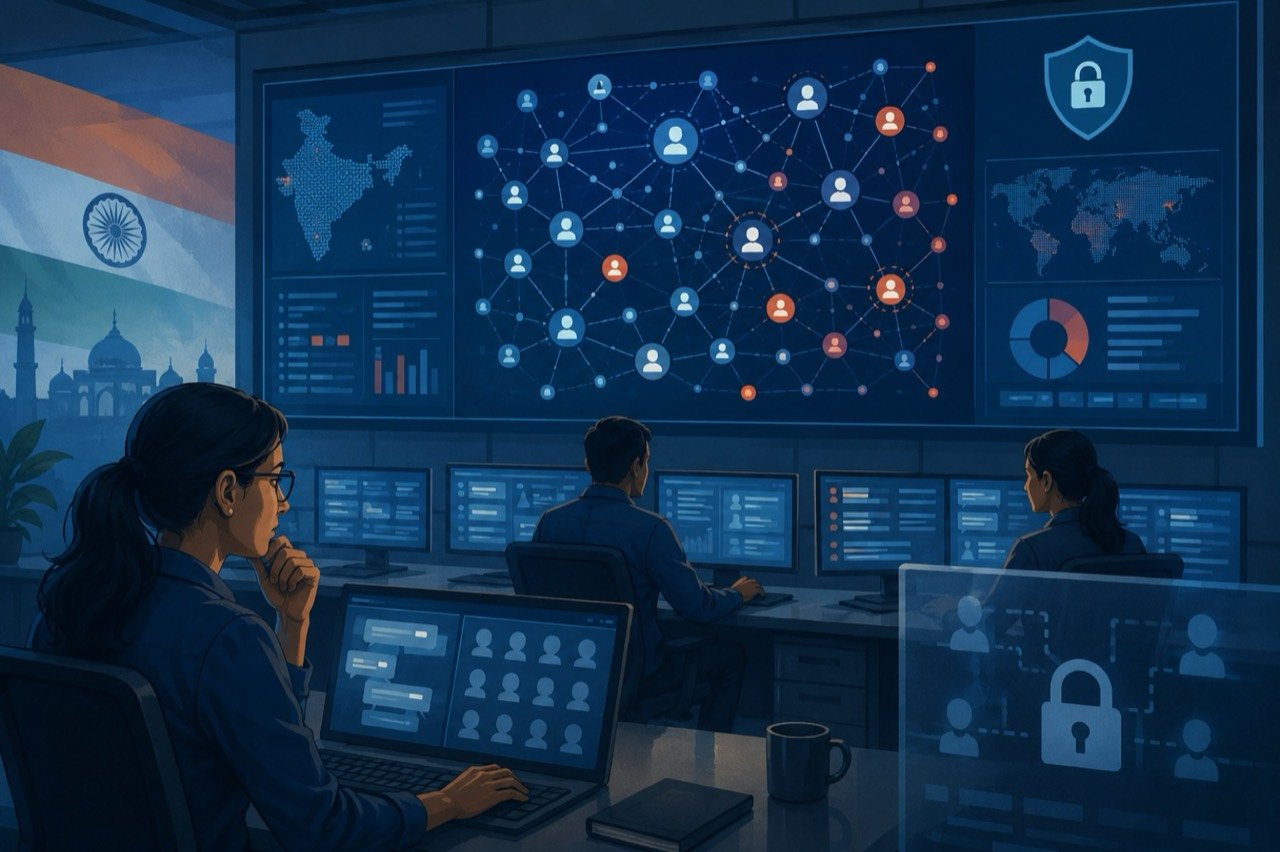
India Monitoring Telegram After Report Flags Illegal Content Risks
A government report cited by Reuters says authorities are proactively tracking Telegram groups over concerns about child abuse material and financial scams.
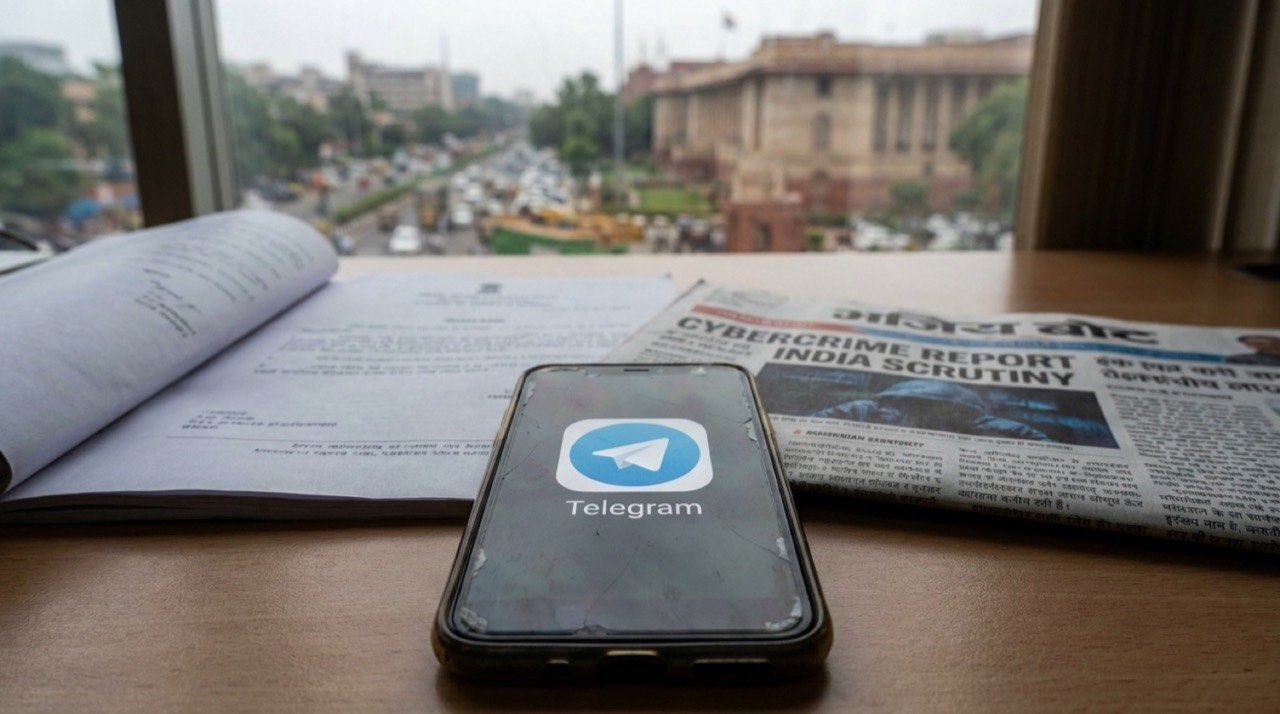
Telegram Faces Growing India Scrutiny After Home Ministry Cybercrime Report
Telegram is under sharper scrutiny in India after a Home Ministry cybercrime report flagged the platform's alleged use for child sexual abuse material and financial fraud across its largest market of 150 million-plus users.
Telegram Restored in India After Temporary NEET-Linked Block
Telegram is available again for many Indian Android users after a temporary nationwide restriction tied to NEET-UG re-exam integrity, reopening debate on exam security and digital limits.
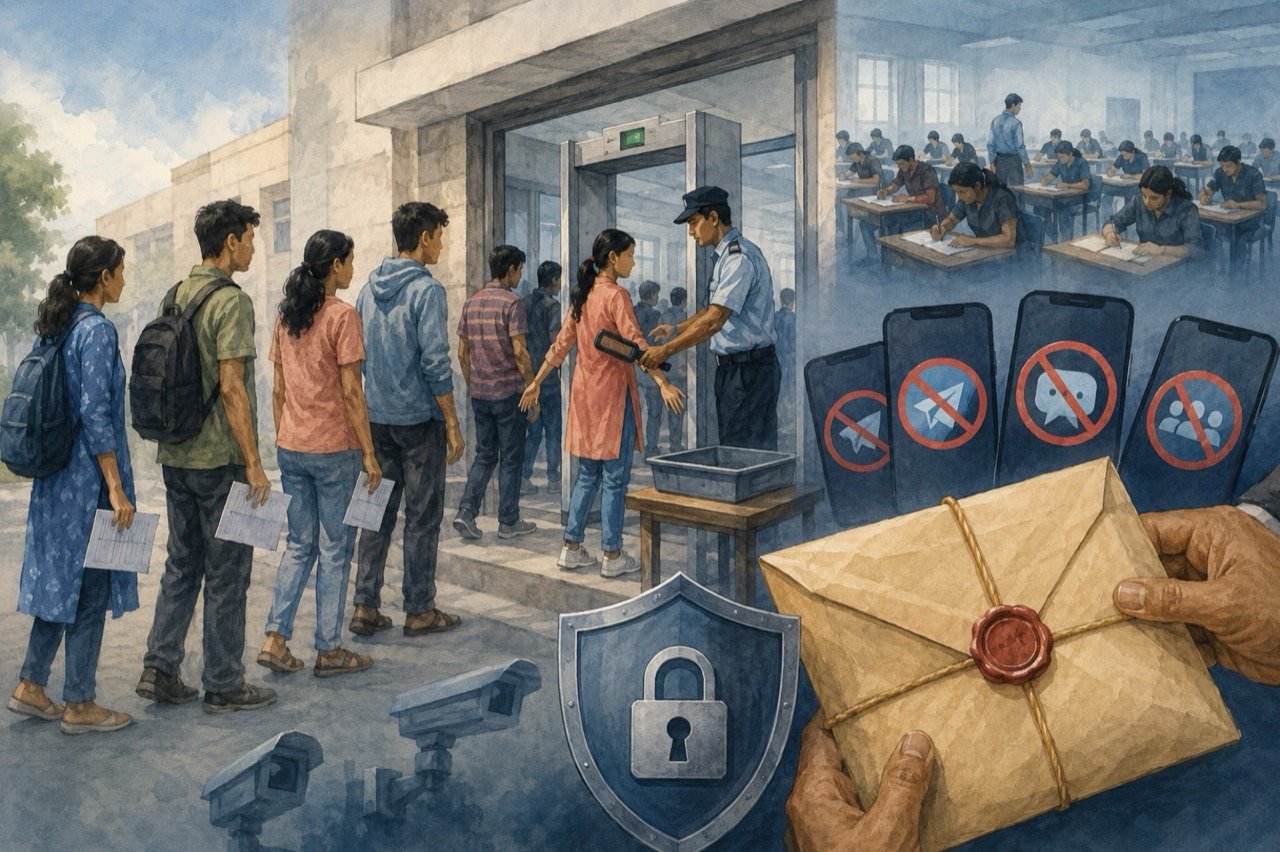
NEET UG Retest Puts Exam Security, Telegram Ban and Misinformation Under Scrutiny
More than two million students resat NEET UG 2026 under tight security after the May paper was scrapped, as the NTA probed a fake video and a temporary Telegram block drew debate.
More from this section
More
CG Semi Sanand Plant Opens, Boosting India's Semiconductor Drive
Prime Minister Narendra Modi inaugurated CG Semi's chip assembly and test facility in Sanand, Gujarat, giving India's semiconductor mission a working manufacturing milestone rather than another policy promise.

Chinese E-Rickshaw Apps Banned in India Over Remote Disable Risk
The Centre has ordered the removal of three Chinese apps — BAT-BMS, Lossigy and Epoch-i-ion — over fears they could remotely disable battery-run e-rickshaws, turning mobility software into a public safety concern.

Connected Car Rules: India Plans Vehicle Software Update Norms
With cars increasingly run by software, the government is reportedly preparing update and security norms aimed at preventing vehicle hijacking and governing how connected cars in India are patched and protected.