Centre Warns Telegram on Piracy in Platform Accountability Drive
The government has issued a stern warning to Telegram over pirated films, books and exam material circulating on the app, sharpening India's push to hold digital platforms accountable for unlawful content.
Commentary & Analysis ·
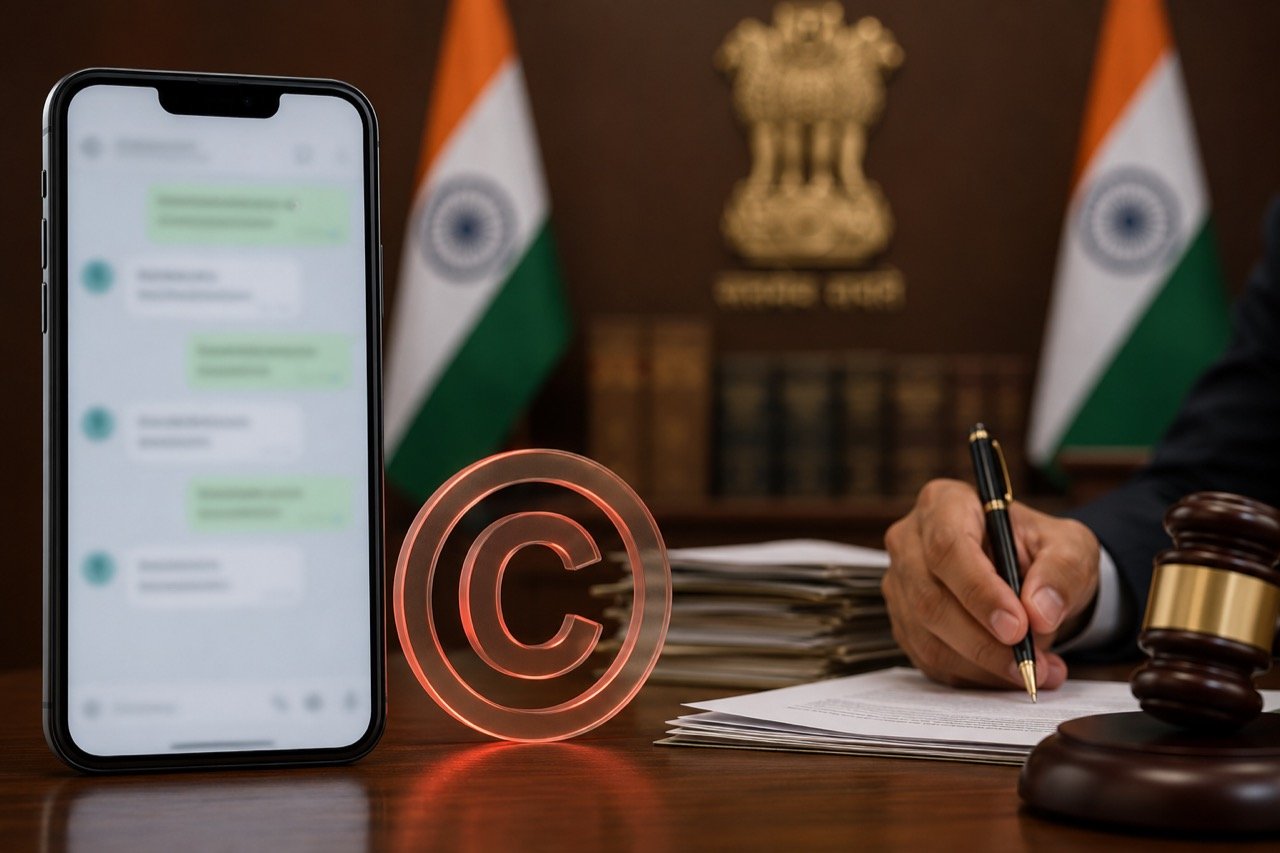
The Centre has reportedly issued a stern warning to Telegram over pirated content circulating on the platform, signalling that the government will not stand by while unauthorised copies of films, shows, books, exam material and paid digital products spread through online groups and channels. The move is being read as part of a broader accountability push aimed at platforms that have, for years, operated at arm's length from the consequences of what their users post, share and distribute. For an app that markets itself on speed, scale and minimal friction, the warning is a pointed reminder that those very features are precisely what make it attractive to pirates in the first place.
Messaging apps as piracy pipelines
Messaging platforms have quietly become major distribution channels for pirated material, with user-created channels able to reach large audiences at speed. This is a distinct problem from the piracy websites of a decade ago. A torrent site or a shady streaming portal could, at least in theory, be identified, tracked and blocked at the domain level. A Telegram channel is different: it can be created in minutes, renamed at will, cloned across multiple accounts, and shared privately through invite links that never touch a public search engine. By the time a rights holder or an enforcement agency identifies one infringing channel, several replacements may already be circulating among the same user base. This structural resilience is what has made messaging-app piracy so difficult to contain through conventional takedown mechanisms designed for the open web.
The warning places Telegram at the intersection of copyright law, intermediary responsibility, enforcement capacity and user privacy — a policy space where rights holders complain takedowns are too slow, while platforms argue they must balance enforcement against scale, encryption, user rights and due legal process. Each of these constituencies has a legitimate point, and that is precisely what makes the issue hard to resolve through a single warning letter or press statement. Rights holders see revenue disappearing in real time, with no meaningful recourse once a film or show leaks into a piracy channel with lakhs of subscribers. Platforms, meanwhile, point out that scanning every private channel and group for infringing content at scale is neither technically simple nor free of civil-liberties implications, particularly where encrypted or semi-private communication is involved.
Who has skin in the game
The Indian entertainment industry has a direct financial stake, since pirated copies erode theatrical, streaming and subscription revenues. A film that has just opened in cinemas, or a web series that has just dropped on a paid streaming service, can find its way into piracy channels within hours, undermining the release-window economics that the entire industry is built around. Publishers, education providers and software companies face parallel losses, whether it is textbooks and question papers circulating ahead of examinations, or licensed software and paid courses being redistributed for free. These are not abstract harms; they translate into lost subscriptions, lost sales and, in the case of leaked exam material, potential damage to the integrity of testing systems themselves.
The government's message suggests it expects faster compliance and stronger monitoring of reported piracy from the platform. This is consistent with a wider trend in Indian digital policy over recent years, where the state has steadily pushed intermediaries — social media companies, e-commerce marketplaces, streaming aggregators — to take on more active responsibility for content moderation rather than treating themselves purely as neutral conduits. Telegram, which has historically positioned itself as a champion of minimal moderation and user privacy, sits somewhat awkwardly within this trend, and the current warning tests how far that positioning can hold up against sustained regulatory pressure from a market as large as India's.
The precision problem
The harder question is precision. Enforcement that leans on broad blocking risks sweeping up lawful speech and private communication along with infringing channels, which is why the mechanics of any compliance regime matter as much as the warning itself. A blunt approach — for instance, blocking entire categories of channels or applying automated filters without meaningful review — could end up penalising legitimate discussion groups, educational communities and ordinary private chats that have nothing to do with piracy. Conversely, an approach that relies solely on reactive, complaint-by-complaint takedowns is likely to remain a step behind the pirates, who can simply recreate a banned channel under a new name within hours.
This tension is not unique to India, but it is especially consequential here given the scale of Telegram's user base in the country and the sheer volume of content — legitimate and infringing alike — that flows through it daily. Any workable solution will need to distinguish clearly between targeted action against verified piracy operations and measures that risk chilling ordinary use of the platform. That distinction is easy to state in principle and considerably harder to operationalise, particularly when enforcement is being pursued through informal warnings rather than codified rules with built-in safeguards.
What compliance could actually look like
If this accountability push is to produce more than a headline, it will need to translate into concrete mechanisms: faster response times to verified takedown requests, clearer channels for rights holders to flag infringing content, and some form of accountability when a platform fails to act on credible, repeated complaints. Equally, any such regime needs guardrails for users — clarity on what triggers a takedown, an avenue to contest wrongful removals, and limits on how broadly enforcement can be applied. Without these elements, the risk is a system that either fails to curb piracy in any meaningful way, or overcorrects into heavy-handed blocking that erodes trust in the platform for entirely lawful users.
The outcome also matters beyond this one platform. Telegram is unlikely to be the last messaging or content-sharing service the government leans on in this manner, and whatever precedent is set here — whether through negotiated compliance, formal regulatory action, or continued informal pressure — will likely inform how similar disputes with other platforms unfold in future. Industry observers, civil liberties advocates and rights holders alike will be watching not just whether Telegram responds, but how it responds, and whether that response is codified into something durable rather than a one-off concession extracted under pressure.
The NE Times View
India is right to demand more from platforms that profit from scale while disclaiming responsibility for what flows through them, and Telegram's piracy problem is real and well documented. But warnings are the easy part. What India actually needs is a transparent, time-bound takedown process with independent oversight, so rights holders get speed and users get due process. If enforcement instead drifts toward opaque blocking orders, the cure could normalise surveillance and arbitrary censorship — a worse outcome than the disease. The test of this accountability push will be whether it produces rules, not just rebukes.
Key takeaways
- The Centre has warned Telegram over pirated films, shows, books, exam material and paid digital products circulating through user-created channels and groups.
- Messaging-app piracy is structurally resilient, as channels can be quickly recreated after takedowns, making conventional enforcement mechanisms less effective than on the open web.
- The entertainment industry, publishers, education providers and software companies all bear direct financial losses from unchecked piracy on the platform.
- Broad or opaque blocking measures risk sweeping up lawful speech and private communication, making the precision of any compliance regime as important as the warning itself.
- The real test of this accountability push is whether it results in transparent, time-bound rules with independent oversight, rather than remaining a one-off rebuke.
You may also like to read
Telegram Returns to India's Play Store After NEET-UG Re-Exam Block
Google has restored Telegram on India's Play Store after a short government-ordered block during the NEET-UG re-exam, reviving a charged debate over exam security versus digital rights.
India Monitoring Telegram After Report Flags Illegal Content Risks
A government report cited by Reuters says authorities are proactively tracking Telegram groups over concerns about child abuse material and financial scams.
Telegram Faces Growing India Scrutiny After Home Ministry Cybercrime Report
Telegram is under sharper scrutiny in India after a Home Ministry cybercrime report flagged the platform's alleged use for child sexual abuse material and financial fraud across its largest market of 150 million-plus users.
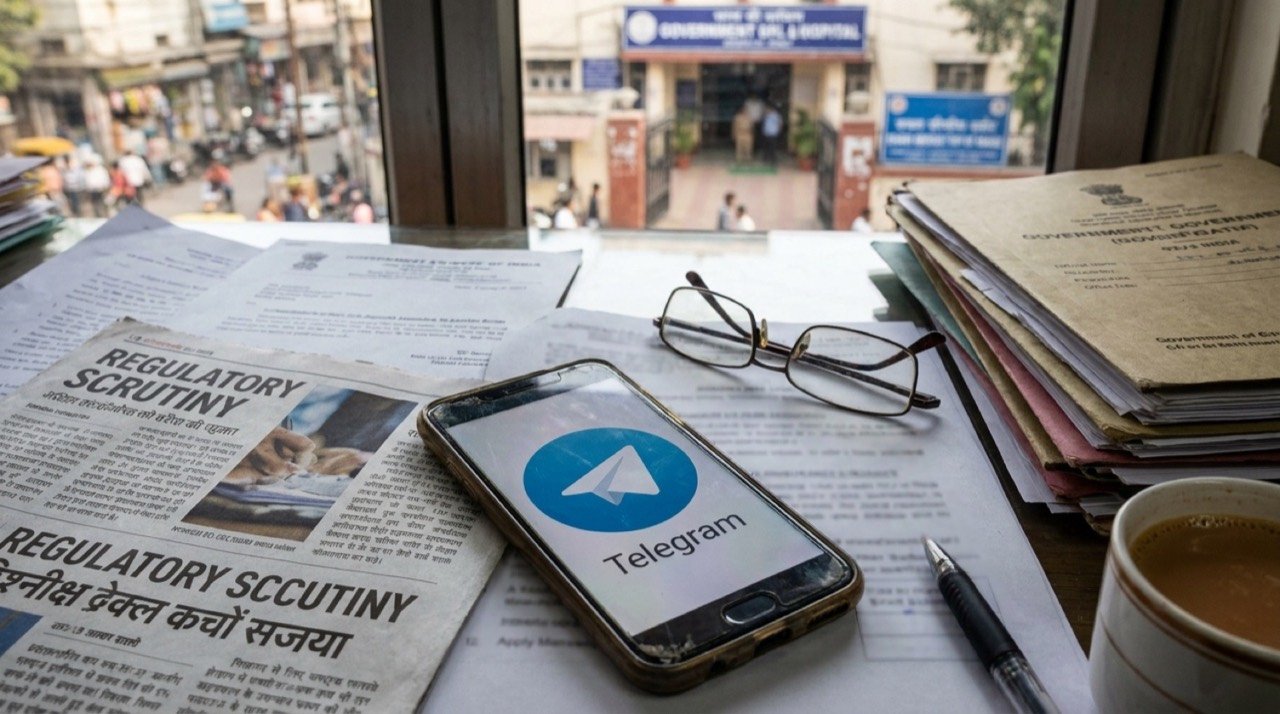
Telegram Faces Fresh India Scrutiny Over Illegal Content and Exam-Security Risks
Indian officials are again examining Telegram over exam-leak misinformation, channels sharing child sexual abuse material and piracy, reopening the debate on encryption, platform accountability and user safety.
More from this section
More
CG Semi Sanand Plant Opens, Boosting India's Semiconductor Drive
Prime Minister Narendra Modi inaugurated CG Semi's chip assembly and test facility in Sanand, Gujarat, giving India's semiconductor mission a working manufacturing milestone rather than another policy promise.

Chinese E-Rickshaw Apps Banned in India Over Remote Disable Risk
The Centre has ordered the removal of three Chinese apps — BAT-BMS, Lossigy and Epoch-i-ion — over fears they could remotely disable battery-run e-rickshaws, turning mobility software into a public safety concern.

Connected Car Rules: India Plans Vehicle Software Update Norms
With cars increasingly run by software, the government is reportedly preparing update and security norms aimed at preventing vehicle hijacking and governing how connected cars in India are patched and protected.