Radico Khaitan Bets on Premium Spirits as India Trades Up
Radico Khaitan's plan to earn a larger share of revenue from premium products spotlights a wider premiumisation wave reshaping India's spirits market, where higher-margin brands are chasing rising disposable incomes.
Commentary & Analysis ·
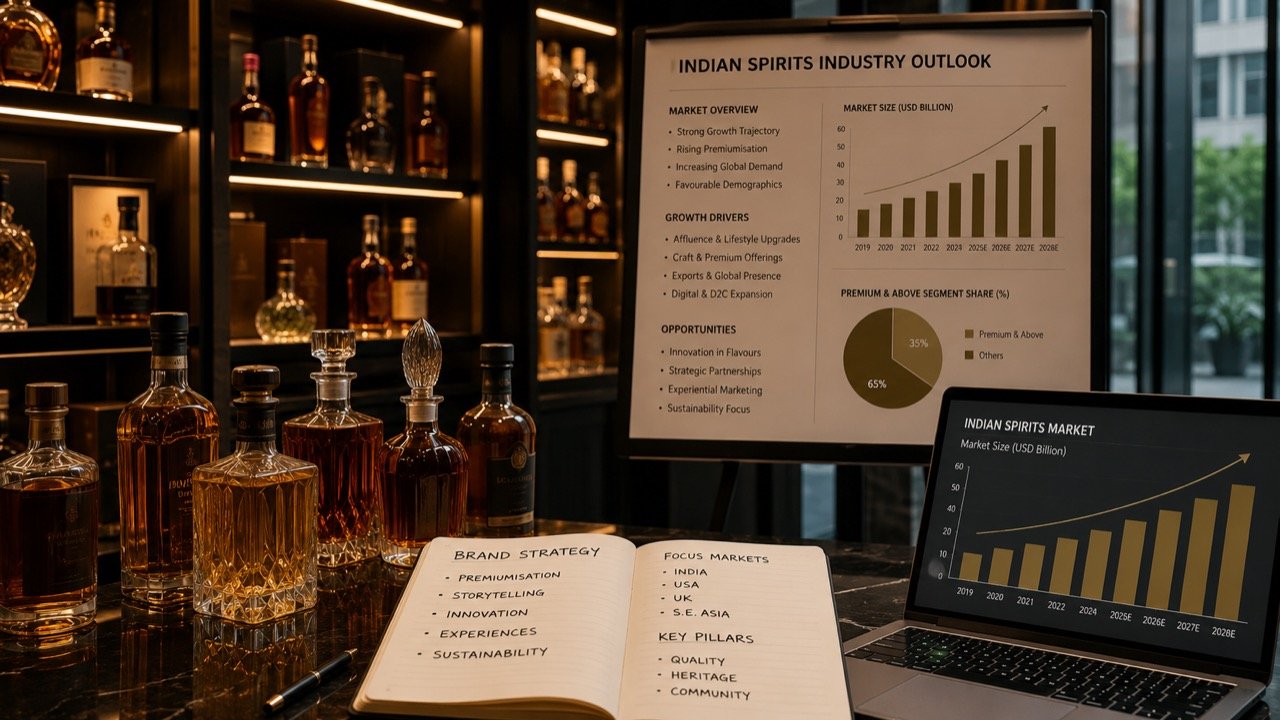
Radico Khaitan plans to derive a larger share of its revenue from premium products, a target reported by Business Standard that places the distiller squarely inside the biggest structural shift in India's spirits market. The company's premiumisation push reflects a broader industry move toward higher-margin categories, away from volume-driven mass brands. It is a modest-sounding corporate target on its face, but it says a great deal about how Indian companies are reading their own consumers, and about where they believe the next decade of growth will come from.
Why premiumisation is the industry's favourite word
Indian consumer markets are increasingly segmented, and alcohol is no exception. Growth in premium spirits can signal rising disposable incomes among a slice of consumers, stronger brand-building by domestic players and changing retail preferences as buyers trade up. This is not a phenomenon unique to spirits: it echoes similar premiumisation trends already visible in categories from smartphones to two-wheelers, where a growing but still narrow band of Indian consumers is willing to pay more for perceived quality, status or experience. Alcohol is simply the latest arena in which this dynamic is playing out in a highly visible way, because bottles and brands carry social signalling in a manner few other consumer goods do.
For manufacturers, the arithmetic is attractive: premium bottles carry fatter margins, so a modest volume of upmarket sales can move profitability more than large volumes of economy liquor. This is an important distinction for anyone trying to read Radico Khaitan's strategy correctly. A premiumisation target is not necessarily a bet on selling more bottles overall; it can be, and often is, a bet on selling a different mix of bottles, where a smaller number of higher-value transactions do more for the bottom line than a much larger number of low-margin ones. That shift in mix, if it works, shows up not in headline volume figures but in margin expansion, a much quieter and slower-moving metric that takes several reporting cycles to become visible.
The regulatory maze that defines execution
Execution, however, runs through one of India's most complicated regulatory landscapes. Alcohol is governed state by state, with each government setting its own excise rules, pricing structures and distribution channels. This is arguably the single most under-appreciated feature of the Indian spirits business, and one that distinguishes it sharply from most other consumer categories. A premium strategy that works in one state can be blunted in the next, which is why distribution muscle and regulatory navigation matter as much as the liquid in the bottle.
In practice, this means Radico Khaitan's premiumisation ambitions cannot be pursued as a single, uniform national campaign. The company must effectively run dozens of parallel micro-strategies, each calibrated to a different state's excise structure, licensing regime and retail architecture. A state that taxes premium spirits lightly and allows flexible retail pricing offers fertile ground for a trade-up strategy; a state with rigid government-controlled distribution or punitive excise on premium categories can neutralise even the best brand-building effort. This fragmentation raises the cost of doing business for every player in the sector, but it also raises the value of a company that has already built the on-ground relationships and logistical capability to operate across this patchwork. For a domestic incumbent such as Radico Khaitan, decades of experience navigating this maze may be as much a competitive moat as any single brand.
Who is actually trading up
The premiumisation narrative, compelling as it is, rests on a specific and fairly narrow consumer base. It is overwhelmingly an urban, upper-income phenomenon, concentrated among consumers whose incomes have risen enough to make the leap from mass-market to premium categories feel affordable and aspirational. This matters because it shapes both the size of the opportunity and the risk profile of chasing it. The addressable premium consumer base is real and growing, but it is not remotely comparable in scale to the mass-market base that has historically driven volumes for companies like Radico Khaitan.
This has direct implications for how the strategy should be judged. A revenue-mix target that leans further into premium products is, implicitly, a bet that this urban aspirational cohort will keep expanding and keep spending, even as the much larger mass-market segment continues to be driven primarily by price. Should broader economic conditions squeeze urban discretionary spending, premiumisation targets could prove harder to hit than they look on a slide in an investor presentation.
Strategy is not outcome
The sober frame is that premiumisation is a plan, not a guaranteed result. Demand can soften, competition in the premium shelf is intensifying as global and domestic players chase the same aspirational consumer, and brand execution ultimately decides who converts intent into repeat purchase. Radico Khaitan's target is a bet on where the Indian consumer is heading, and the results will show up in margins over several quarters, not in a single announcement.
It is worth stressing how competitive the premium shelf has become. International spirits majors have long targeted the same aspirational Indian consumer, and domestic companies are now investing heavily in brand-building to hold their ground rather than cede the category by default. This means Radico Khaitan is not simply executing a strategy in isolation; it is competing for share of a consumer's attention and wallet against rivals who are pursuing near-identical playbooks. Differentiation, in this environment, becomes less about the announcement of a premiumisation target and more about the unglamorous, slow work of building brand equity, securing shelf space and managing distributor relationships state by state.
The NE Times View
The premiumisation story is real, but it is also a story about inequality of consumption: a relatively small urban cohort is doing the trading up while mass-market demand stays price-sensitive. For investors, that makes premium targets a useful signal of ambition rather than a promise of earnings. A target to derive more revenue from premium products tells you what a company hopes will happen and where it is choosing to invest its brand-building and distribution resources; it does not by itself tell you that the underlying consumer demand will cooperate on the timeline management expects.
For policymakers, the sector remains a reminder that fragmented state-level regulation raises costs without obviously serving consumers. A national market artificially divided into dozens of regulatory silos imposes real costs on companies trying to build consistent premium brands, and those costs are ultimately borne, in one form or another, by consumers and by the broader efficiency of the industry. Whether that fragmentation serves any coherent public policy goal, beyond preserving individual states' excise revenue autonomy, is a fair question that gets asked too rarely.
We will judge this strategy by delivered margins, not by the elegance of the pitch. The coming quarters will offer the real test: whether Radico Khaitan's revenue mix genuinely shifts toward premium products, whether that shift translates into the margin expansion the arithmetic promises, and whether the urban consumer this strategy depends on keeps trading up even as broader economic conditions evolve. Until then, this remains, appropriately, a target and an ambition rather than a settled outcome.
Key takeaways
- Radico Khaitan aims to grow the share of revenue coming from premium spirits, aligning itself with a broader industry-wide shift toward higher-margin categories.
- Premium products carry fatter margins, meaning a smaller volume of upmarket sales can lift profitability more than much larger volumes of mass-market liquor.
- India's state-by-state alcohol regulation, covering excise, pricing and distribution, means a premiumisation strategy must be executed differently in every state, raising complexity and cost.
- The premium consumer base remains a relatively narrow, urban, upper-income segment, while mass-market demand stays price-sensitive, underscoring a consumption divide.
- The strategy's success will only be visible in margins over several quarters, not in the announcement itself, and competition for the same aspirational consumer is intensifying industry-wide.
You may also like to read

FMCG Demand Outlook Brightens on Rural Recovery and Stable Prices
Consumer goods companies are turning more upbeat as rural demand recovers, input costs hold steady and everyday purchases pick up, offering a telling read on the health of Indian household spending.

Tech Roars, Staples Stumble: A Sharp Sectoral Rotation Grips Dalal Street
A pronounced rotation defined early-June trade on Indian bourses, with Nifty IT surging more than 4% in a single session even as FMCG and healthcare indices buckled under selling pressure.
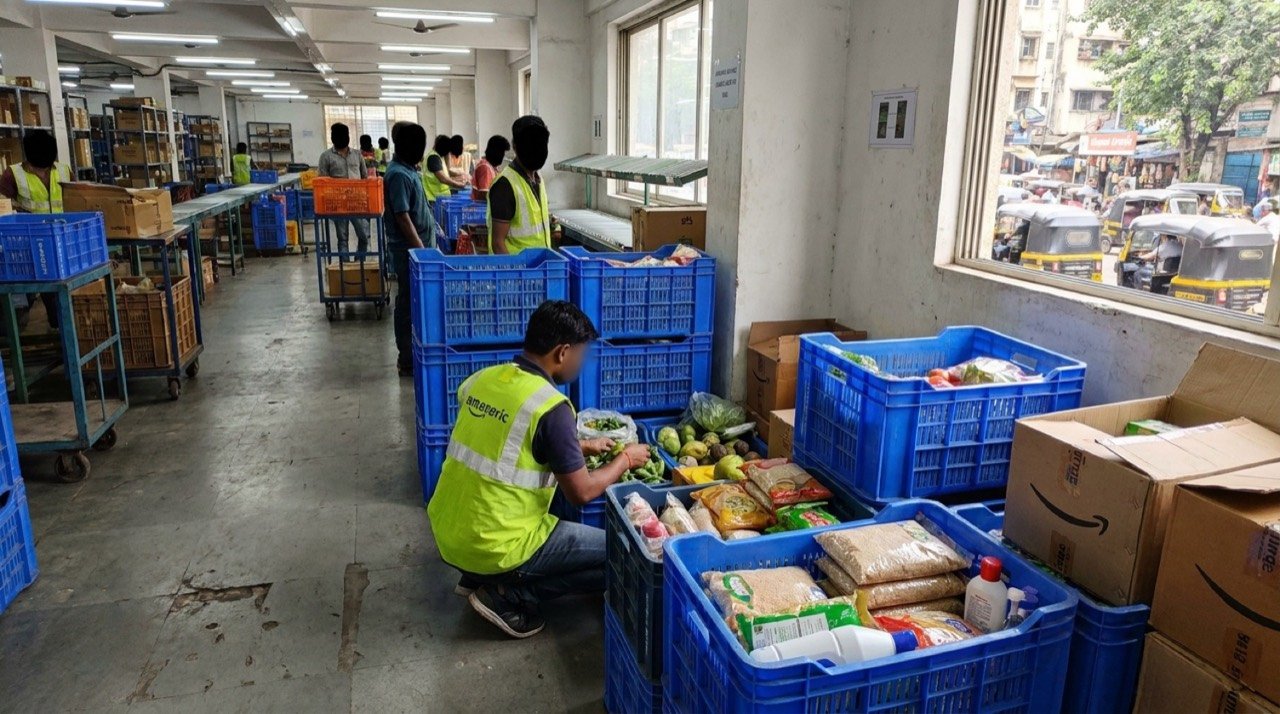
Amazon India Bets Big on Quick Commerce With Everyday Essentials Push
Amazon India is scaling its everyday-essentials strategy with more than 100 urban fulfilment centres and minutes-to-next-day delivery, sharpening its fight against Blinkit, Zepto and Swiggy Instamart in the fast-growing quick-commerce market.

TCS Cut 23,460 Jobs in FY26 as Indian IT Bets on an AI-First Model
India's largest software exporter led sector-wide reductions as firms slimmed benches and slowed fresher intake, even as global capability centres kept hiring.
More from this section
More
Adani Case: US DOJ Pushes for Permanent Dismissal of Charges
The US Department of Justice has urged a judge to permanently dismiss charges against Gautam Adani, calling the case legally flawed — a reversal with consequences for markets, diplomacy and cross-border enforcement.

Akasa Air Inducts 40th Aircraft in Indian Aviation Scale-Up
Akasa Air's 40th aircraft, ferried to Bengaluru via Seattle, Reykjavik and Cairo, marks a fleet milestone for the young carrier and a fresh signal that India's aviation market remains firmly in expansion mode.

BARC Ratings Suspension Leaves Indian TV Industry Flying Blind
BARC's pause on television ratings has put India's broadcast measurement system under fresh scrutiny, leaving broadcasters, advertisers and media planners without the weekly audience data that anchors the TV economy.