Tech Roars, Staples Stumble: A Sharp Sectoral Rotation Grips Dalal Street
A pronounced rotation defined early-June trade on Indian bourses, with Nifty IT surging more than 4% in a single session even as FMCG and healthcare indices buckled under selling pressure.
Commentary & Analysis ·
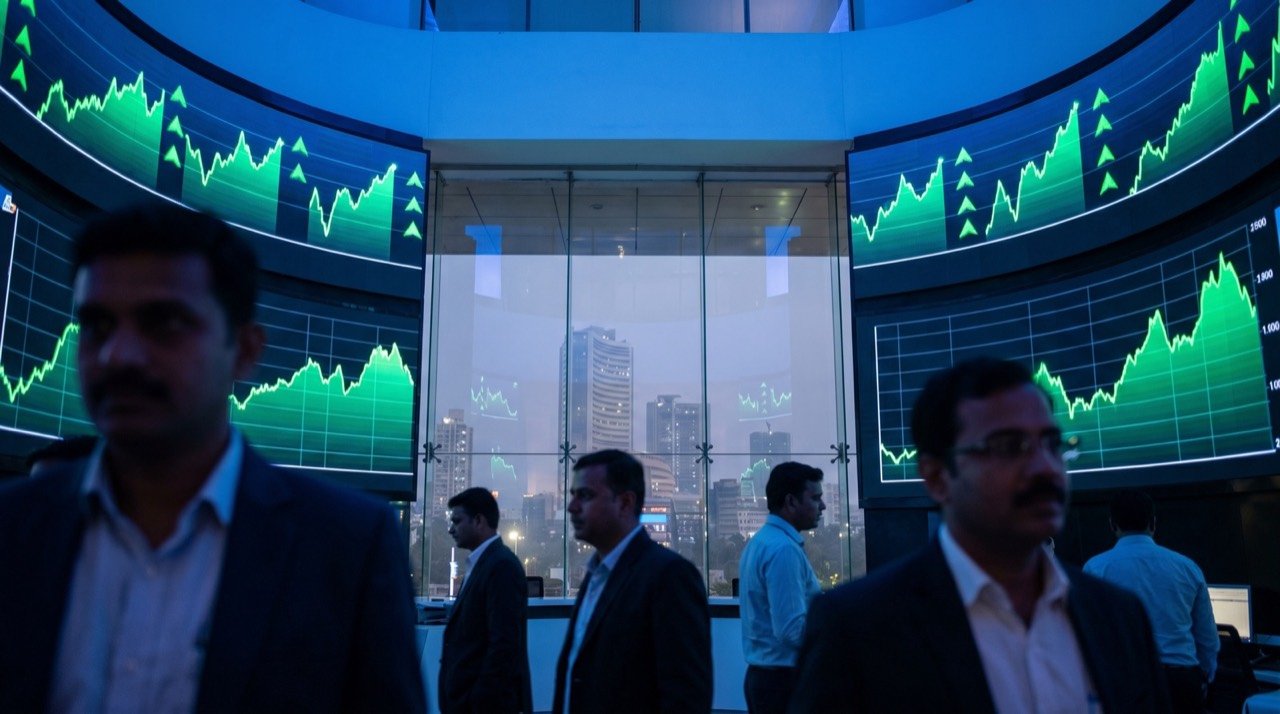
Beneath the headline index moves, the real story on Dalal Street this fortnight has been one of rotation: money rushing out of defensive consumer names and into technology counters, as investors recalibrated for a world of easing global rates and a recovering rupee. This is not the kind of move that shows up cleanly in the Sensex or Nifty50 close, both of which can look placid even as the underlying composition of gains and losses shifts sharply beneath the surface. The shift has scrambled the usual playbook and rewarded stock-pickers willing to back the swing, while leaving those anchored to last year's winners nursing paper losses.
IT takes the lead
Nifty IT was the standout performer of the period, gaining 2.66% on June 1 with a jump of more than 770 points, and then climbing over 4% in a subsequent session as the rupee's slide earlier in the quarter and hopes of stronger discretionary tech spending lifted export-oriented majors. For a sector that had spent much of the year under a cloud of caution, this was a striking reversal. IT services firms earn the bulk of their revenue in dollars, euros and pounds, so a softer rupee mechanically boosts the rupee value of overseas billings even before any change in client demand. Layer on top of that a tentative revival in discretionary technology budgets among Western corporates, and the combination becomes a powerful narrative for traders looking for a fresh theme to back.
What makes the move notable is its speed. A single-session gain exceeding 4%, on top of an already sharp 2.66% advance days earlier, is the kind of move typically associated with a re-rating of expectations rather than a gradual re-pricing of fundamentals. It suggests that positioning had become unusually light going into June, so that even modestly encouraging currency and demand signals were enough to trigger a scramble to rebuild exposure.
Banking holds steady while staples and healthcare slip
Banking shares were comparatively muted through the same window, with the Nifty Bank index inching up just 0.14% to 53,715.75 on June 2, as financials digested mixed cues on credit growth and the central bank's decision to hold rates. That near-flat move stands in contrast to the volatility elsewhere, and it is worth noting on its own terms: banks form the single largest weight in most broad indices, so their steadiness effectively anchored the headline benchmarks even as money churned violently underneath.
At the other end of the ledger, Nifty FMCG was the weakest major sector on June 1, sliding 2.30% as investors rotated out of expensive defensives. Healthcare and financial-services indices also lagged in early June. Taken together, this pattern reflects risk appetite returning to the market rather than any flight to safety. Investors do not sell staples and healthcare because they suddenly doubt toothpaste or medicine will keep selling; they sell them because those sectors had become the crowded, expensive place to hide, and the crowd found a more exciting trade elsewhere.
Reading the rotation
Strategists say the move reflects a market repositioning for a softer dollar and improving global tech demand, with the weaker rupee through much of the quarter acting as a tailwind for exporters. The selling in staples, they add, is as much about stretched valuations as any deterioration in fundamentals. As one portfolio manager at a domestic fund put it: "When the rupee weakens and global growth steadies, IT becomes the obvious trade and defensives get funded into it. That is exactly what we are seeing."
That framing matters because it separates two very different kinds of market story. A rotation driven by valuation and currency mechanics is, in principle, reversible and largely unrelated to the underlying health of the companies involved. A rotation driven by a genuine change in earnings outlook would be a different matter altogether, implying a more durable shift in where profits are likely to be made over the coming years. The evidence here points more towards the former: a tactical reshuffling of capital in response to currency and rate signals, rather than a wholesale reassessment of which businesses deserve to be owned for the long run.
What could unwind it
Whether the rotation has legs will depend heavily on the trajectory of the rupee and the global rate cycle. A sharp currency rebound could trim the IT tailwind just as quickly as the weak rupee created it, since exporters' rupee-denominated revenues would shrink in step with any appreciation. Equally, any renewed risk-off episode in global markets would likely send money scurrying back to the very staples and healthcare names being shunned today, on the well-worn logic that defensives earn their keep precisely when growth-sensitive sectors come under pressure. This is the essential fragility of rotation trades: they tend to run hardest exactly when the conditions that justify them are least certain to persist.
For banks, the picture is somewhat different again. Their near-flat performance through this period reflects a genuine tension between decent credit growth on one hand and a central bank unwilling to move on rates on the other. That tension is unlikely to resolve itself through sentiment alone; it will take actual data on lending, deposit costs and asset quality to shift the sector meaningfully in either direction.
The NE Times View
A 4% single-session jump in IT alongside sliding staples is less a verdict on fundamentals than a hunt for the next theme amid uncertainty. Sharp rotations reward the nimble and punish the late, and retail investors chasing yesterday's winner usually arrive last, buying into a move that has already done much of its running. It is also worth remembering that rotations of this kind are as much a function of index construction and fund flows as they are of any company-specific story; a stock can swing several percentage points on a single day for reasons that have little to do with its own quarterly results.
The lesson for ordinary savers is unchanged: rotation is noise around a long-term plan, not a reason to abandon one. Chasing the sector that moved hardest last week is a recipe for buying high and, when the mood swings back, selling low. Investors with a genuine multi-year horizon are better served by staying diversified across the very sectors now trading places in the headlines, rather than treating a fortnight's rotation as a signal to overhaul a portfolio built for years, not weeks.
Key takeaways
- Nifty IT surged 2.66% on June 1 and more than 4% in a later session, driven by a weaker rupee and hopes of stronger discretionary tech spending abroad.
- Nifty FMCG fell 2.30% on June 1, the weakest major sector, as investors rotated out of expensive defensives; healthcare and financial services also lagged in early June.
- Nifty Bank was nearly flat, rising just 0.14% to 53,715.75 on June 2, as financials weighed mixed credit-growth signals against the central bank's rate hold.
- The rotation appears tied to currency and valuation dynamics rather than a fundamental shift in earnings outlooks, meaning it could reverse if the rupee strengthens or global risk appetite fades.
- For long-term investors, sharp sector rotations are best treated as background noise rather than a trigger to chase the latest winner.
You may also like to read
Sensex Holds Above 77,000 As Crude Pullback And RBI Liquidity Push Lift Indian Markets
Indian benchmarks extended gains around 24 June 2026 as easing crude prices, calmer West Asia tensions and fresh RBI liquidity support kept financial and auto stocks firmly in demand.
Sensex and Nifty Slide as Global Tech Selloff Hits Indian Market Sentiment
Indian equities fell on Tuesday as weak global cues, including a sharp slide in South Korean technology shares, dragged the Sensex down nearly 900 points and pulled the Nifty lower.

TCS Earnings, Crude Oil and Global Cues Set to Steer Dalal Street
Indian equities head into a cue-heavy week as the June-quarter earnings season opens with TCS, while crude oil prices and global risk signals shape how investors position across sectors.
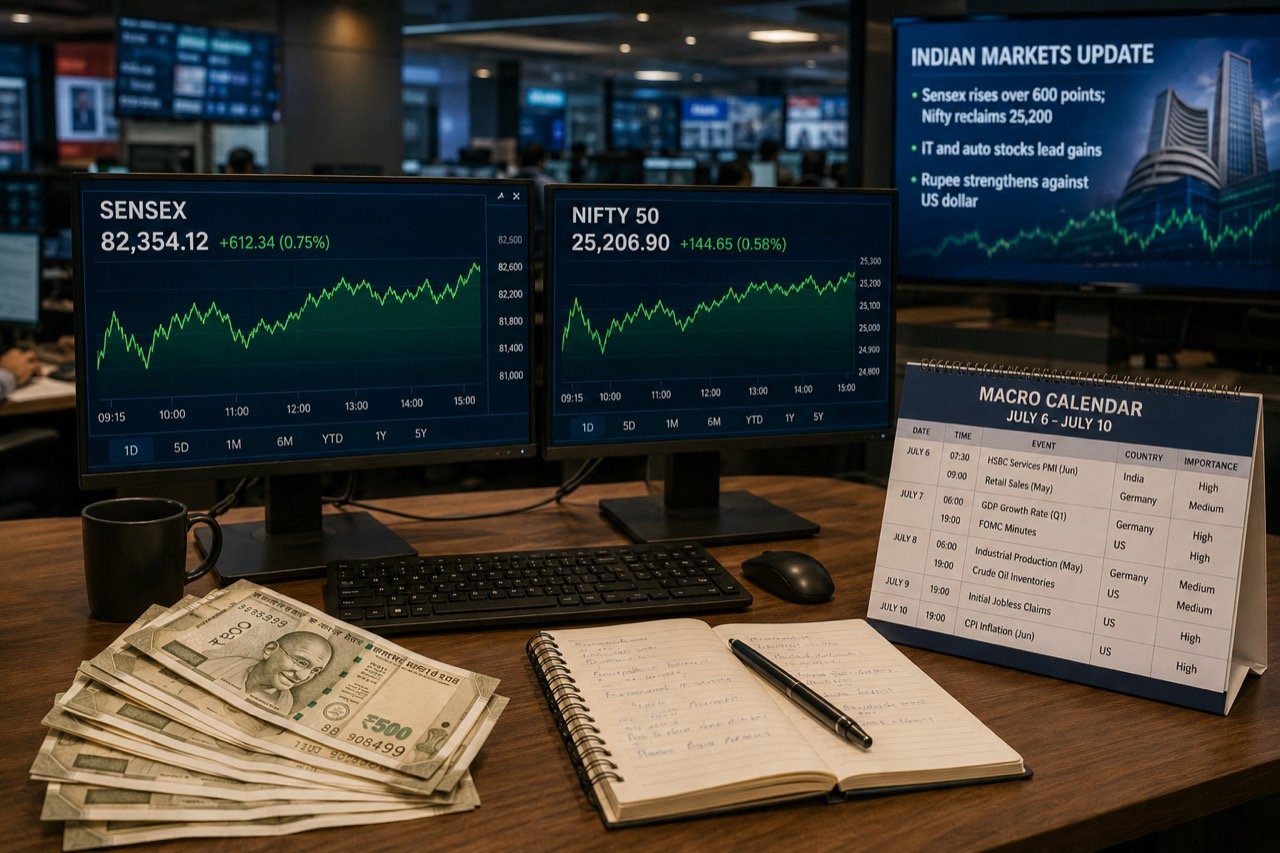
Sensex, Nifty Week Ahead: Trade Deal Hopes and Q1 Earnings in Focus
Indian equities enter a news-heavy week with trade-deal expectations, quarterly earnings, foreign flows and global cues all converging to set the direction for the Sensex and Nifty.
More from this section
More
Adani Case: US DOJ Pushes for Permanent Dismissal of Charges
The US Department of Justice has urged a judge to permanently dismiss charges against Gautam Adani, calling the case legally flawed — a reversal with consequences for markets, diplomacy and cross-border enforcement.

Akasa Air Inducts 40th Aircraft in Indian Aviation Scale-Up
Akasa Air's 40th aircraft, ferried to Bengaluru via Seattle, Reykjavik and Cairo, marks a fleet milestone for the young carrier and a fresh signal that India's aviation market remains firmly in expansion mode.
BARC Ratings Suspension Leaves Indian TV Industry Flying Blind
BARC's pause on television ratings has put India's broadcast measurement system under fresh scrutiny, leaving broadcasters, advertisers and media planners without the weekly audience data that anchors the TV economy.