OPEC+ Agrees Bigger August Output Hike: What It Means for Oil Prices
OPEC Plus members have signed off on a larger production increase for August, a supply-side shift that puts crude benchmarks, India's import bill and fuel-linked costs firmly back in the market spotlight.
Commentary & Analysis ·
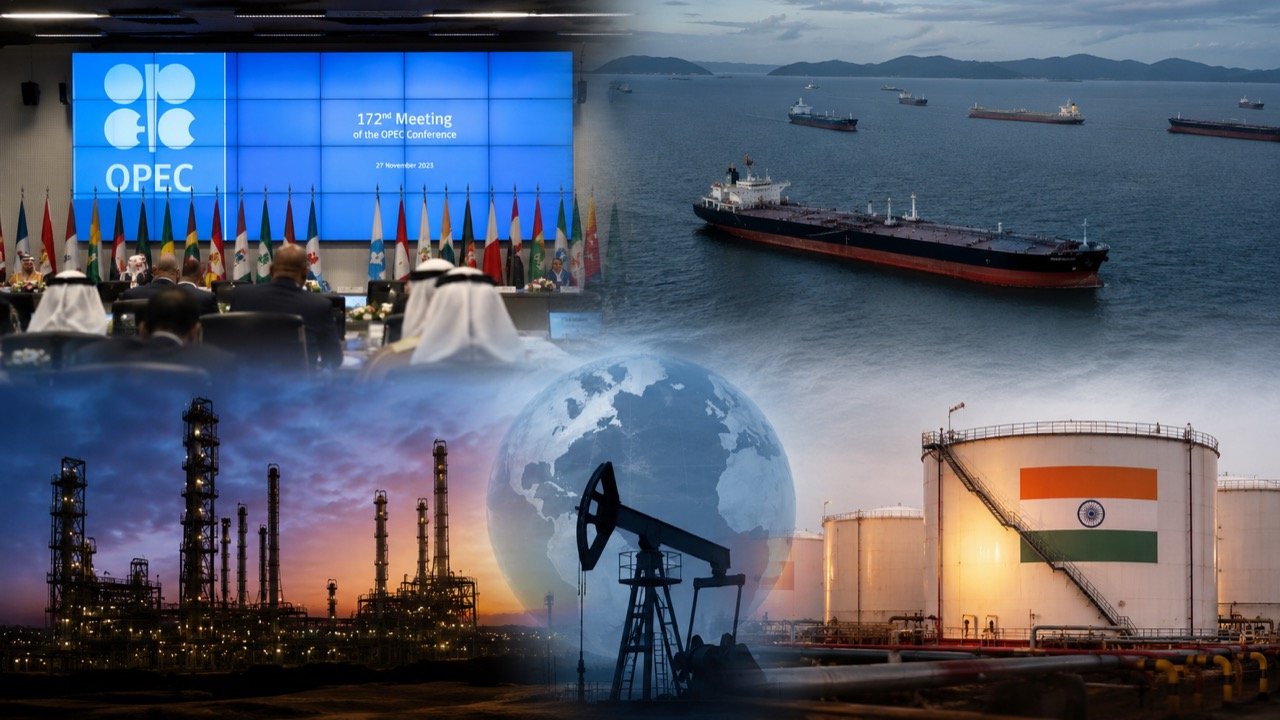
OPEC Plus has agreed to raise output by a larger margin in August, handing global energy markets a fresh supply-side signal at a delicate moment. The decision, reported by Business Standard alongside improving shipping conditions, is being read closely by crude importers around the world — and few countries watch these meetings more anxiously than India. On the surface, this is a routine calendar item in the long-running rhythm of OPEC Plus production decisions. Beneath it, though, sits a set of calculations that matter deeply to how Indian households, industries and policymakers experience the cost of energy over the coming months.
Why India watches every barrel
India imports the overwhelming bulk of the crude oil it consumes, so the direction of oil prices feeds almost directly into the country's import bill, inflation expectations and the cost base of fuel-dependent industries. This is not a marginal dependency that can be absorbed through domestic substitution in the short term; it is structural. Refiners plan crude procurement schedules around expected price bands, airlines price tickets with fuel surcharges tied to benchmark movements, and transport and logistics operators — the backbone of an economy that still moves most goods by road — see their margins compressed or expanded by even modest shifts in per-barrel costs.
Softer or more stable crude eases pressure on refiners, airlines, transport operators and household budgets alike. A volatile market, by contrast, complicates planning for all of them, forcing hedging decisions, price revisions and, at the sovereign level, difficult trade-offs on fuel taxation. It is this transmission chain — from a cartel's production decision in a distant meeting room to the fuel gauge of an auto-rickshaw in an Indian town — that makes OPEC Plus announcements a matter of genuine domestic consequence rather than a distant financial-page curiosity.
What the August increase signals
The August increase adds supply at a time when shipping conditions are also improving, which in theory supports smoother flows and steadier landed costs for Indian buyers. Shipping conditions matter as much as production volumes: a barrel produced but delayed or rerouted by congestion, insurance costs or freight bottlenecks does not translate cleanly into the price relief that headline output figures might suggest. When both supply and logistics move in a favourable direction simultaneously, the conditions are, at least on paper, more conducive to calmer benchmark pricing than when only one of the two is moving.
For a government managing fuel taxation and subsidy trade-offs, calmer benchmarks would be a welcome backdrop. Indian fiscal policy on fuel has long involved a balancing act between protecting consumers from price shocks, preserving excise revenue that funds other spending priorities, and avoiding distortions that discourage the shift toward cleaner energy sources. A steadier international price environment gives finance ministry planners more room to manoeuvre on all three fronts without having to make abrupt, politically costly adjustments.
More supply does not guarantee cheaper oil
The sober reading is that an output hike is a signal, not a settlement. Demand trends, geopolitics, shipping routes and inventory levels will continue to shape where benchmarks actually settle, regardless of what any single OPEC Plus meeting decides. Markets have seen production increases absorbed quickly before, leaving prices little changed — the announcement matters, but so does everything that follows it. This is an important caution against reading too much into any single data point. Oil markets are forward-looking and multi-causal; a production increase can be offset within weeks by a demand surge elsewhere, a supply disruption in another producing region, or simply by traders repositioning on revised expectations.
For Indian observers, this means the August decision should be treated as one input among many rather than a definitive forecast. The gap between an OPEC Plus communiqué and an actual, sustained change in the price Indian refiners pay for crude can be wide, and it can close in either direction. Overreacting to the announcement — either with premature optimism about falling costs or undue alarm about volatility — risks poor planning decisions at both the corporate and policy level.
Stakeholder perspectives across the economy
Different parts of the Indian economy will read this news through different lenses. Oil marketing companies and refiners will be watching landed cost trends closely, since their margins depend on the spread between crude input costs and regulated or market-determined retail prices. Airlines, already operating on thin margins in a highly competitive domestic market, will treat any softening in benchmarks as a potential reprieve on fuel surcharges, though they are unlikely to bank on it until sustained over several months. Transport and logistics firms, which form a vast and largely unorganised sector, tend to feel price changes with a lag but also with less capacity to hedge, making them particularly sensitive to sudden reversals.
At the macro level, the Reserve Bank of India and the finance ministry will be assessing how the news feeds into the broader inflation and current account picture. Even a modest, sustained reduction in crude costs has an outsized effect on India's trade balance given the sheer volume of oil imports, and any resulting easing of imported inflation gives monetary policymakers additional flexibility. Conversely, a swift reversal of the August hike's price effects would keep those same policymakers cautious about assuming the tailwind is durable.
The NE Times View
For India, the OPEC Plus decision is quietly consequential even if pump prices never move a rupee. Every dollar shaved off a barrel of crude strengthens the current account, gives the RBI breathing room on inflation and lowers costs across transport-heavy supply chains. These effects are real even when they are invisible to the average consumer, working their way through sovereign balance sheets and corporate cost structures well before — if ever — they reach the retail pump.
But policymakers should treat this as a window, not a windfall. Supply decisions can reverse as quickly as they arrive, and India's real insurance remains diversified sourcing, strategic reserves and a steady push on domestic and renewable energy. A single favourable OPEC Plus meeting does not substitute for the structural work of reducing exposure to any one producer bloc or any one commodity's price cycle. Consumers, meanwhile, should not expect immediate relief — the transmission from cartel communiqué to fuel pump is long and rarely generous, mediated as it is by taxation choices, refining margins and currency movements that can each absorb some or all of any international price gain before it ever reaches the consumer.
Key takeaways
- OPEC Plus has agreed a larger-than-usual output increase for August, adding supply at a moment when shipping conditions are also improving.
- India's heavy reliance on crude imports means the decision has direct implications for the import bill, inflation and the cost base of fuel-dependent industries such as aviation and transport.
- Production increases do not automatically translate into lower prices, since demand trends, geopolitics, shipping routes and inventories continue to shape where benchmarks actually settle.
- Even without a change in pump prices, softer crude costs can strengthen India's current account and give the RBI more room on inflation management.
- Policymakers should treat any relief as temporary and continue prioritising diversified sourcing, strategic reserves and renewable energy as durable safeguards.
You may also like to read

FMCG Demand Outlook Brightens on Rural Recovery and Stable Prices
Consumer goods companies are turning more upbeat as rural demand recovers, input costs hold steady and everyday purchases pick up, offering a telling read on the health of Indian household spending.

Gold Prices Ease Across Indian Cities: What the July 4 Dip Means
Gold rates for 24-karat and 22-karat metal edged lower across Delhi, Mumbai, Bengaluru, Chennai and Hyderabad on July 4, offering a window for buyers weighing jewellery and investment purchases.
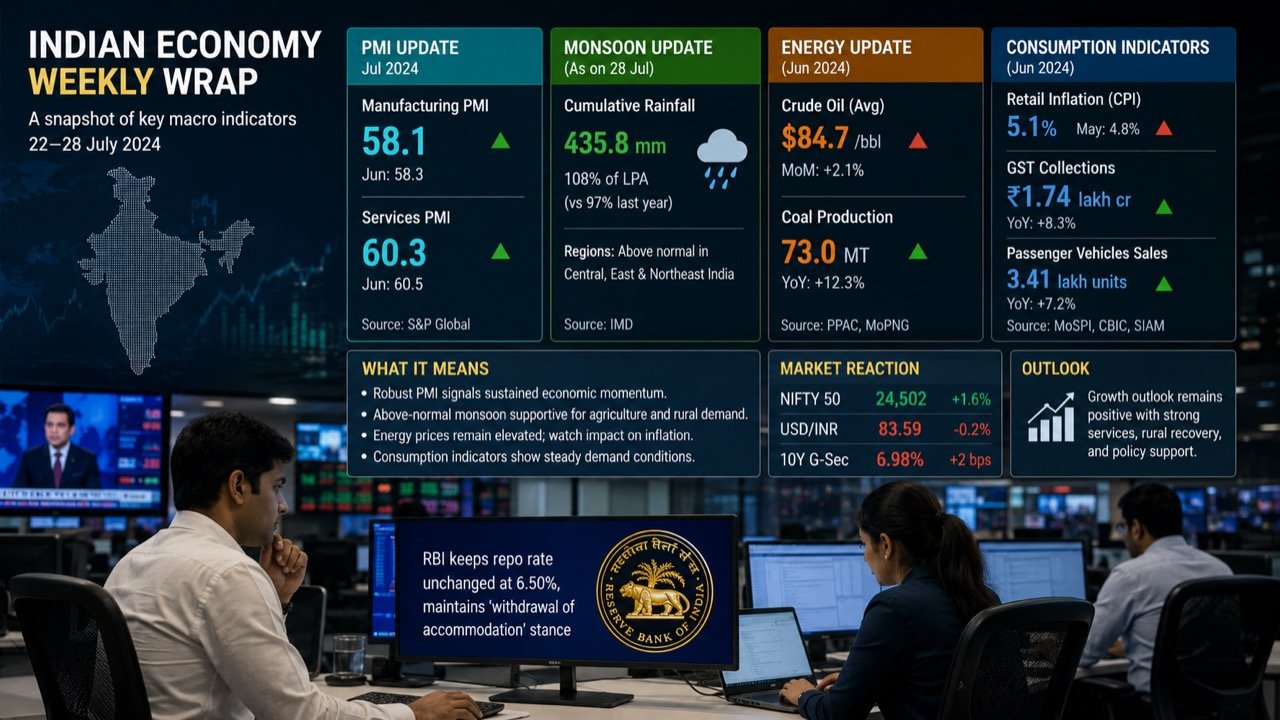
India Economy This Week: Energy Relief, PMI and Monsoon Demand
India's near-term growth picture is being read through a dashboard of indicators this week, with energy costs, PMI activity readings and monsoon-linked rural demand each pulling the conversation in different directions.

Moody's Flags India's Fragmented Water Management as a Growing Fiscal and Credit Risk
Moody's warns that India's dispersed water governance, subsidised pricing and unclear investment pathways could turn rising water stress into a fiscal and credit liability as demand surges.
More from this section
More
Adani Case: US DOJ Pushes for Permanent Dismissal of Charges
The US Department of Justice has urged a judge to permanently dismiss charges against Gautam Adani, calling the case legally flawed — a reversal with consequences for markets, diplomacy and cross-border enforcement.

Akasa Air Inducts 40th Aircraft in Indian Aviation Scale-Up
Akasa Air's 40th aircraft, ferried to Bengaluru via Seattle, Reykjavik and Cairo, marks a fleet milestone for the young carrier and a fresh signal that India's aviation market remains firmly in expansion mode.

BARC Ratings Suspension Leaves Indian TV Industry Flying Blind
BARC's pause on television ratings has put India's broadcast measurement system under fresh scrutiny, leaving broadcasters, advertisers and media planners without the weekly audience data that anchors the TV economy.