Bullet Train Push: NHSRCL Invites Design Bids for Two New Corridors
NHSRCL has invited design consultancy bids for the proposed Bengaluru-Chennai and Delhi-Varanasi high-speed rail corridors, signalling that India's next bullet train routes are moving from announcement to technical planning.
Commentary & Analysis ·
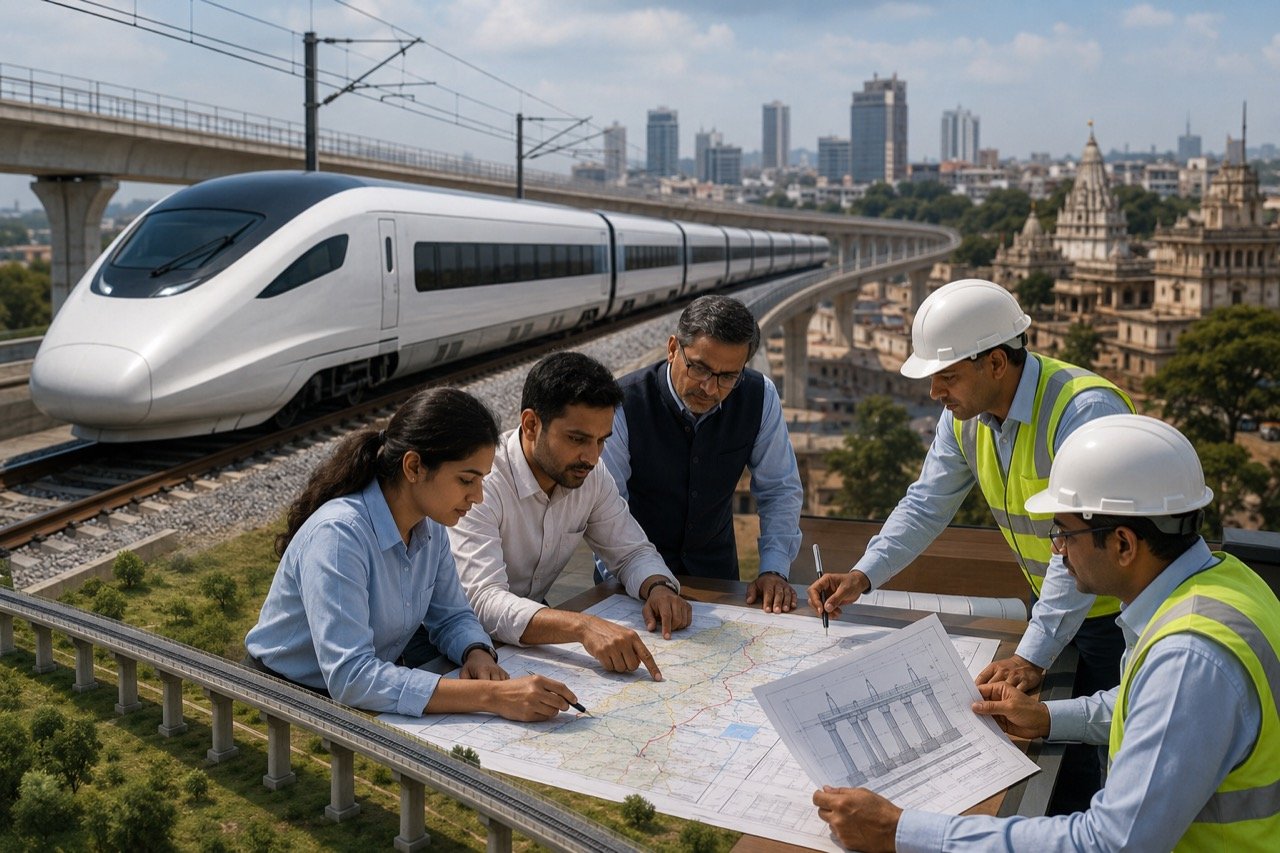
India's high-speed rail ambitions have taken a concrete step beyond announcements. The National High Speed Rail Corporation Limited (NHSRCL) has invited bids for civil structure design consultancy on two proposed corridors — Bengaluru-Chennai and Delhi-Varanasi — a procurement move that suggests these routes are likely to be prioritised after the Mumbai-Ahmedabad project. The bids cover early-stage engineering work rather than construction, but in a sector where announcements often outpace delivery, the shift from rhetoric to procurement documents is itself worth noting.
Design consultancy of this kind typically spans civil structures, viaducts, tunnels and station planning — the technical groundwork that must be completed long before any track is laid. Reports indicate the Chennai-Bengaluru side already involves underground station and tunnel planning elements, a sign that dense urban integration is baked into the design challenge from the start. This is a meaningfully different engineering proposition from the largely elevated, semi-urban alignment of the Mumbai-Ahmedabad corridor, and it hints at the complexity NHSRCL is preparing to manage as high-speed rail moves from India's western coast into more congested southern and northern urban geographies.
Why these two corridors matter
The Bengaluru-Chennai route would link two of southern India's biggest economic engines, with potential long-term effects on business travel, technology-sector mobility and regional urban growth. Both cities anchor significant industrial, IT and services clusters, and a high-speed link between them would, in time, reshape how executives, engineers and skilled workers move between two labour markets that are already deeply interconnected through supply chains and services contracts. The corridor's underground and tunnelling requirements also suggest planners are trying to avoid the kind of surface-level land disputes that have historically slowed infrastructure projects in dense southern Indian cities.
The Delhi-Varanasi corridor follows a different logic: connecting the national capital region to a major Uttar Pradesh city across one of the country's most populous belts, where land, feeder connectivity and state-level coordination will all shape the final alignment. Unlike the Bengaluru-Chennai route, this corridor runs through terrain with a very different political and demographic texture — dense agrarian landholding patterns, multiple district administrations, and a state government whose cooperation on land acquisition and rehabilitation will be as consequential as the engineering itself. Varanasi's symbolic and political weight as a parliamentary constituency adds another layer of visibility to the project that Bengaluru-Chennai, as a purely economic corridor, does not carry in quite the same way.
Reading the procurement signal
The Union Budget 2026-27 had placed several future high-speed corridors on the table, but budget documents alone rarely indicate sequencing. Because India cannot build every route at once, procurement signals like this one are watched closely by infrastructure firms, state governments and investors trying to read which corridors will move first. Design consultancy tenders are, in effect, the clearest available proxy for internal government prioritisation — well ahead of land acquisition notices or construction contracts, which tend to follow years later and only once the engineering groundwork is settled.
For engineering and construction firms, both domestic and international, this bid stage represents the first meaningful commercial opportunity tied to these corridors. Consultancy contracts of this scale often shape the technical assumptions — alignment choices, station locations, tunnelling methods — that later construction tenders must work within. Firms that secure design work today are well placed to understand, and potentially bid competitively for, the larger civil contracts that will follow. State governments, too, will be watching closely, since design-stage decisions often make implicit assumptions about land availability and local cooperation that policymakers in Karnataka, Tamil Nadu, Uttar Pradesh and Delhi will need to engage with sooner rather than later.
A milestone, not a launch date
Important caveats remain. Design bids do not resolve land acquisition, environmental clearances, financing, rolling stock choices or completion timelines — and the Mumbai-Ahmedabad experience has shown that high-speed rail demands sustained coordination over many years. That project, India's first bullet train corridor, has itself faced repeated timeline revisions since land acquisition and local disputes proved more time-consuming than initial engineering work suggested. There is little reason to expect Bengaluru-Chennai or Delhi-Varanasi to be immune from similar pressures, particularly given the underground and tunnelling elements already flagged for the southern corridor and the multi-state land complexities of the northern one.
No new bullet train is about to run tomorrow; what is moving is the planning machinery behind the next generation of corridors. It is worth being precise about what this procurement step actually represents: NHSRCL is commissioning the technical blueprints that will eventually inform cost estimates, contractor selection and construction sequencing. Each of those subsequent stages carries its own risk of delay, and each will require its own round of public announcements, budget allocations and inter-governmental coordination before track-laying becomes a realistic prospect.
What to watch next
Several markers will indicate whether this design-bid stage translates into real momentum. The pace at which NHSRCL awards the consultancy contracts, and the timelines those consultancies are given to complete their work, will offer an early read on how quickly the government wants to move. Equally important will be the responses from the Karnataka, Tamil Nadu and Uttar Pradesh state governments — cooperation on land identification and local clearances at this early stage tends to predict how smoothly acquisition proceeds later. Investors and infrastructure firms will also be watching whether NHSRCL issues similar design tenders for other corridors floated in the Union Budget 2026-27, since a pattern of sequential tendering would offer a clearer roadmap of national priorities than any single announcement.
The NE Times View
The real story here is discipline, not speed. By opening design bids for two high-visibility corridors, NHSRCL is quietly telling the market which routes come next — and that kind of sequencing clarity is exactly what India's infrastructure pipeline has often lacked. For Bengaluru, Chennai and the Delhi-Varanasi belt, the payoff is years away, but early engineering rigour is what separates projects that get built from those that stay on budget documents. The choice of these two corridors also tells a subtler story about how India is trying to diversify its high-speed rail geography beyond the western corridor, extending the technology into the south's economic core and the north's most populous, politically weighty state. Readers should treat this as genuine momentum while resisting headlines that promise imminent bullet trains. The distance between a design consultancy tender and an operational high-speed line remains, as Mumbai-Ahmedabad continues to demonstrate, considerable.
Key takeaways
- NHSRCL has invited design consultancy bids for two new high-speed corridors — Bengaluru-Chennai and Delhi-Varanasi — signalling likely prioritisation after Mumbai-Ahmedabad.
- The bids cover early-stage civil, tunnel and station design work, not construction, with the Bengaluru-Chennai route reportedly involving underground station and tunnel planning.
- The two corridors carry different challenges: dense urban integration in the south versus land acquisition and multi-state coordination across the populous Delhi-Varanasi belt.
- The Union Budget 2026-27 flagged multiple future corridors, and this tender is one of the clearest early signals of which routes are being sequenced first.
- Design bids mark planning progress only; land acquisition, clearances, financing and timelines remain unresolved, and the Mumbai-Ahmedabad project shows how long such coordination can take.
You may also like to read
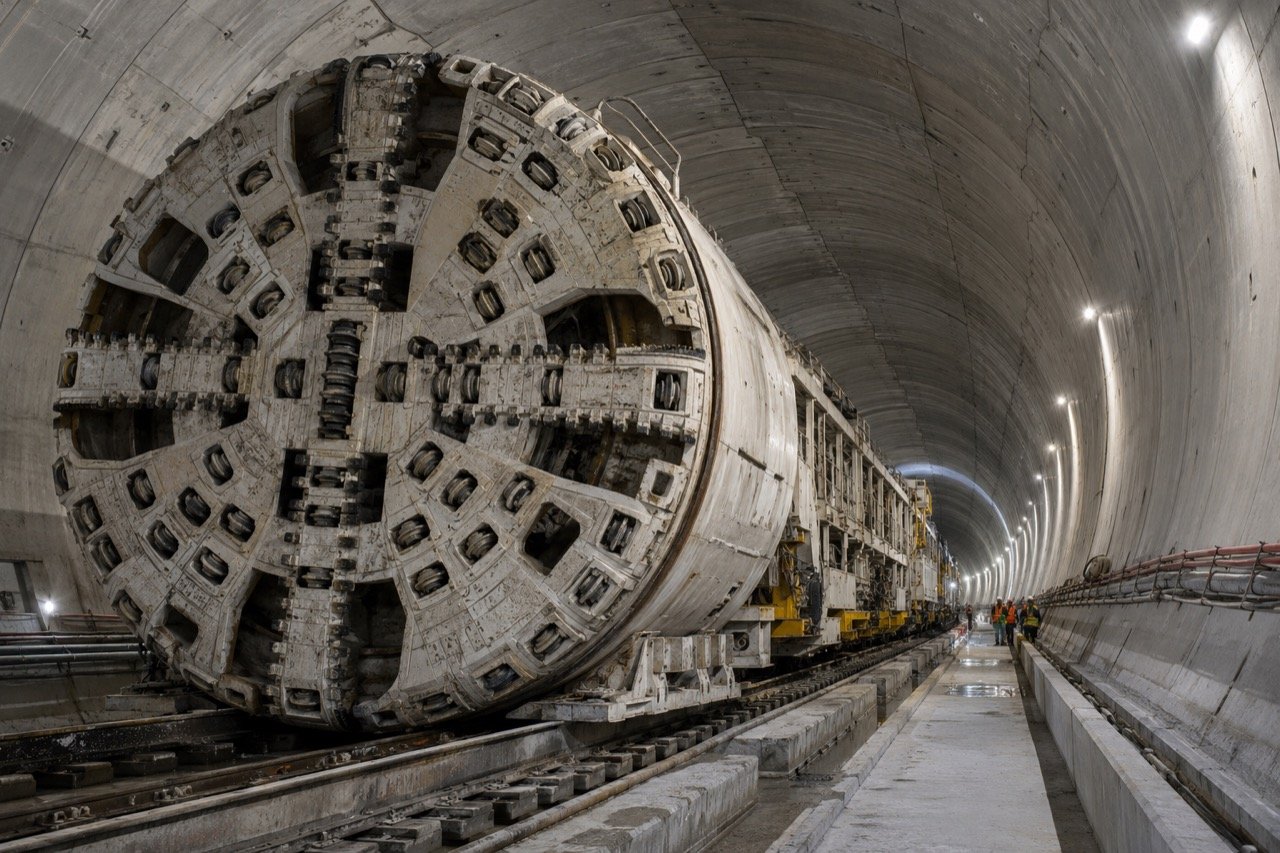
Mumbai-Ahmedabad Bullet Train: India's Largest TBM Starts Digging
India's largest rail tunnel boring machine has begun excavation on the Mumbai-Ahmedabad bullet train corridor, moving the country's flagship high-speed rail project into a visible and technically demanding underground phase.
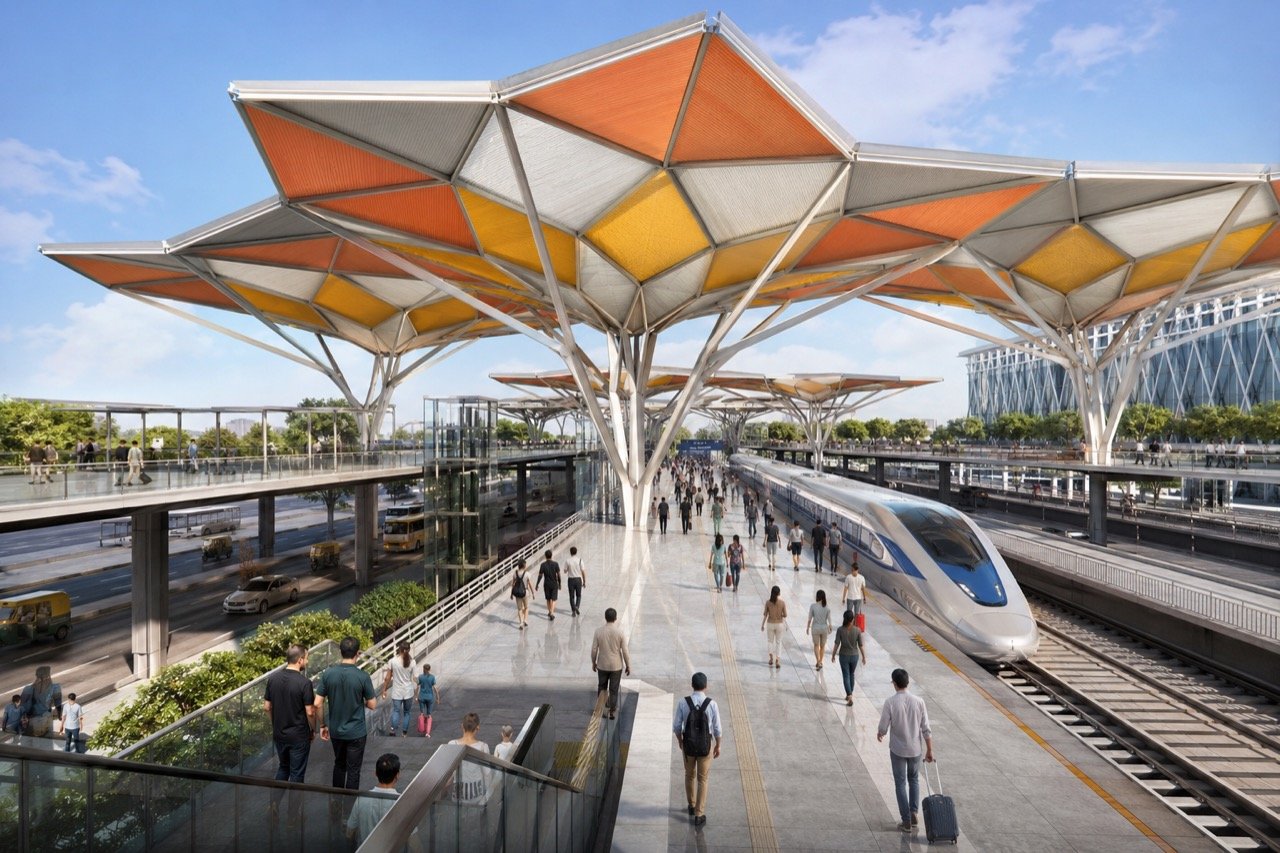
Ahmedabad Bullet Train Station Gets Kite-Inspired Multimodal Hub Plan
Ahmedabad's bullet train station is set to be developed as a multimodal transport hub with a kite-inspired design, giving India's high-speed rail project a distinctive urban landmark rooted in local identity.
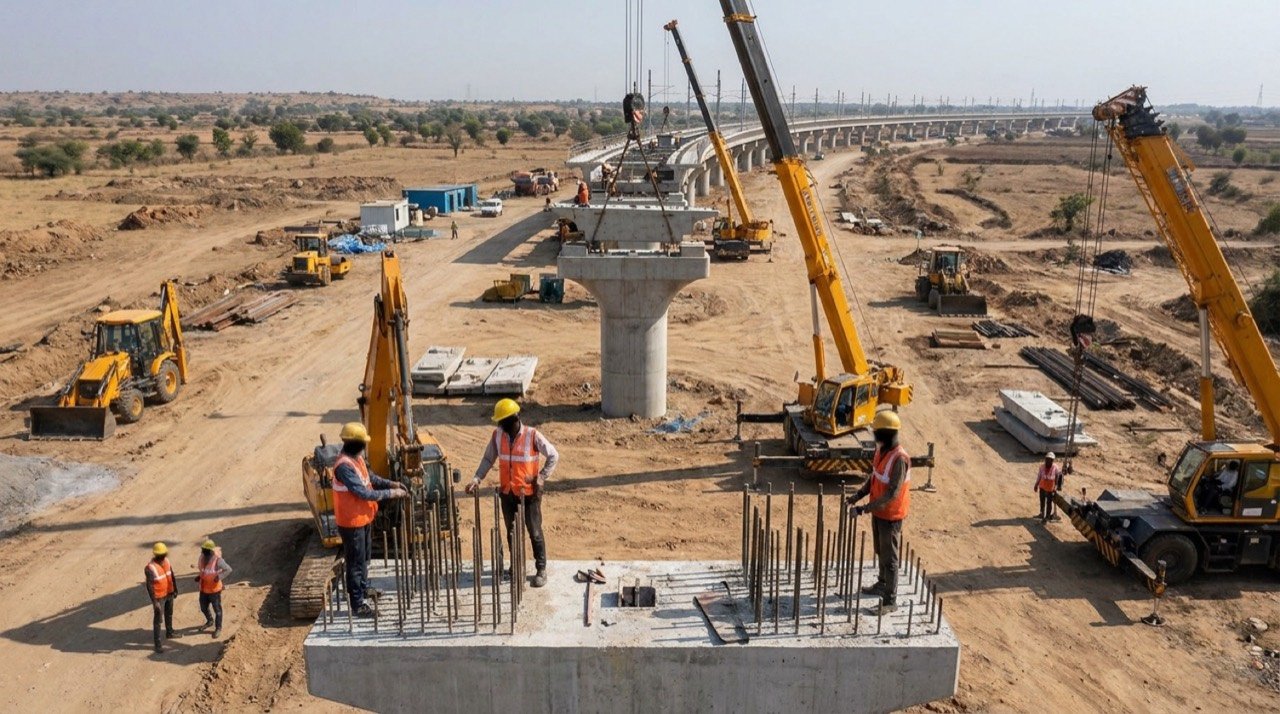
Mumbai-Ahmedabad Bullet Train Project Opens Over 200 Jobs
The Mumbai-Ahmedabad bullet train project has opened applications for more than 200 posts, offering engineers, technicians and operations specialists a new hiring window in India's flagship high-speed rail programme.
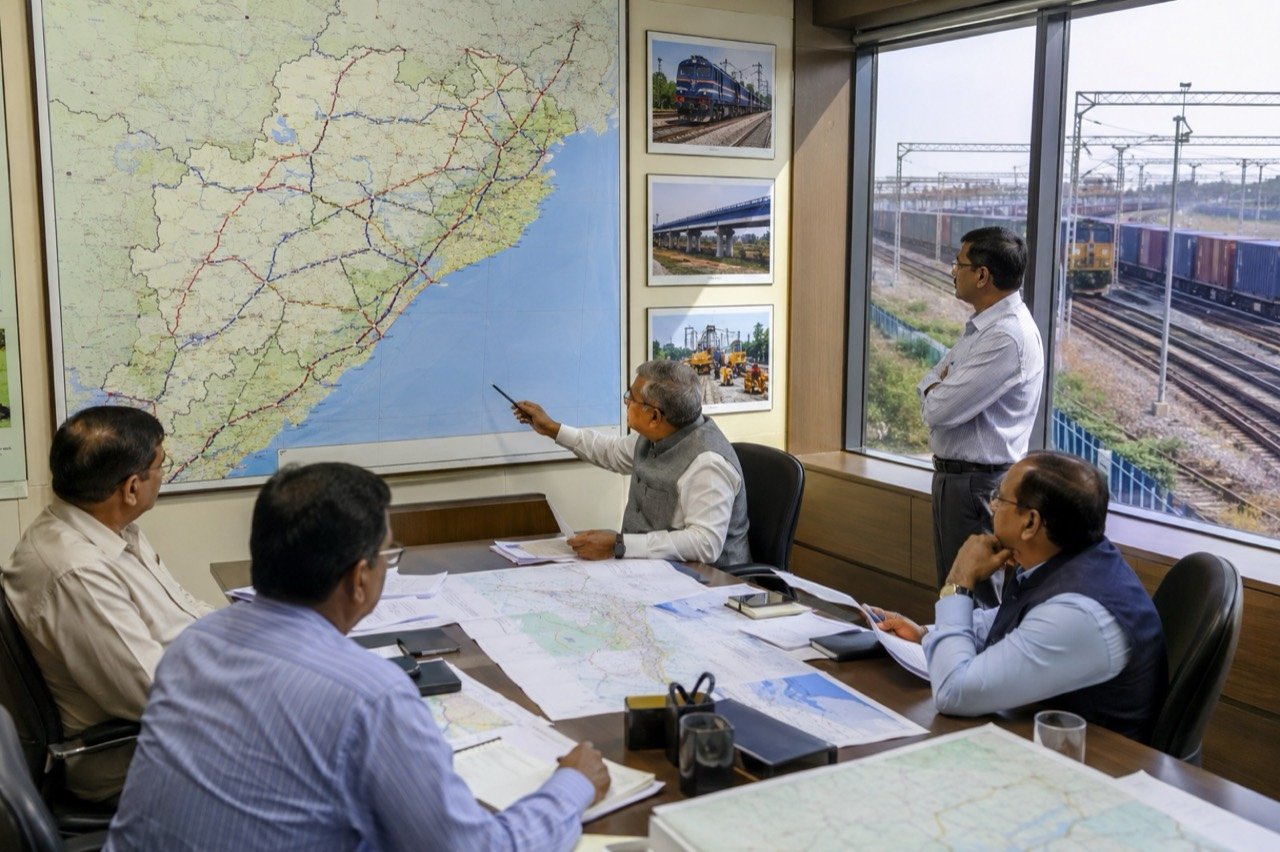
Odisha Railway Reorganisation Demand Grows as East Coast Railway Shrinks
With the new South Coast Railway carving territory away from East Coast Railway, Odisha is reviving long-standing calls to merge its South Eastern Railway sections into ECoR for unified planning.
More from this section
More
AICTE Industry Fellowship 2026: Rs 1.5 Lakh Scheme Closes July 5
The AICTE Industry Fellowship Programme 2026, which places technical-education faculty inside leading companies on a Rs 1.5 lakh monthly stipend, reached its application deadline on July 5.
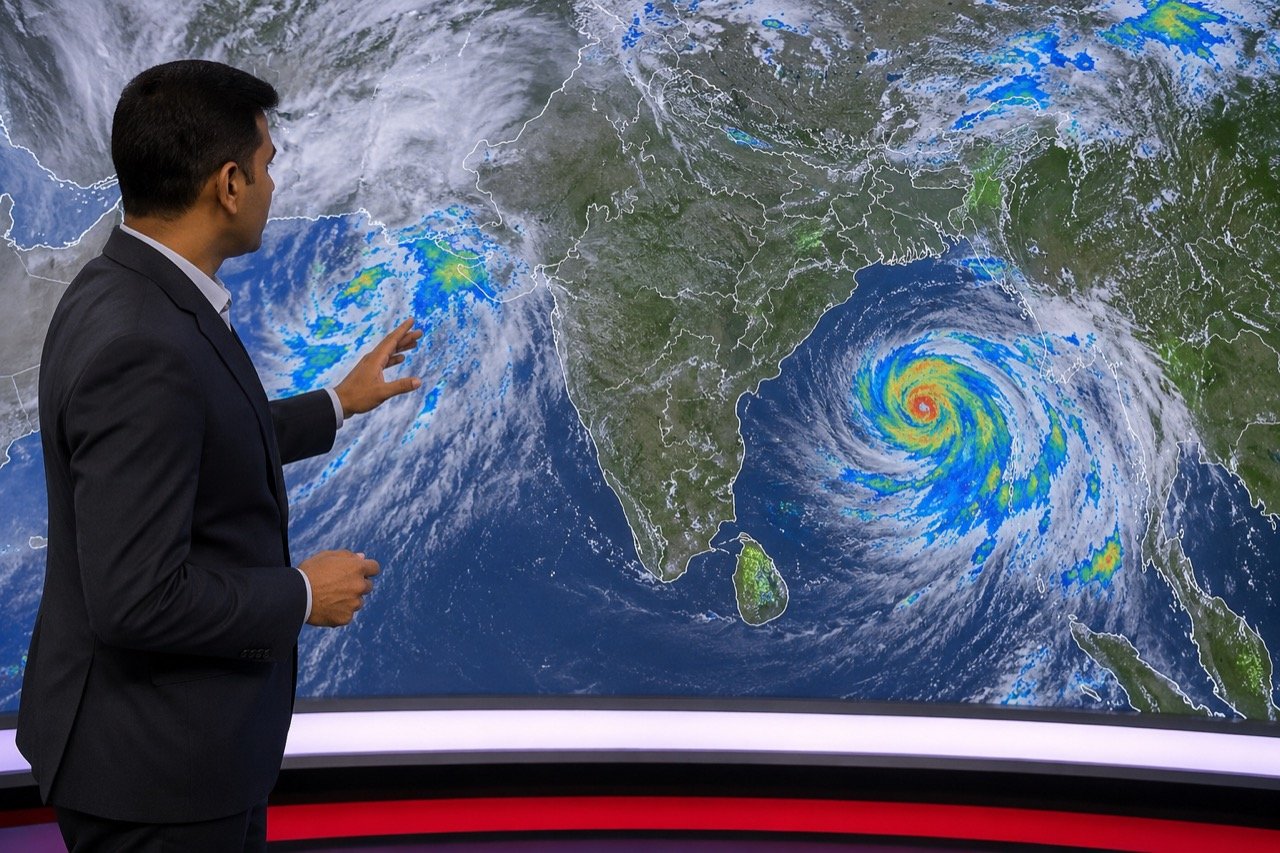
Bay of Bengal Low Pressure System Revives Monsoon Over Western India
A low-pressure system over the Bay of Bengal has pushed the monsoon back into an active phase, bringing steady heavy rain to Kerala, coastal Karnataka and Maharashtra, and putting Mumbai and Pune on preparedness watch.
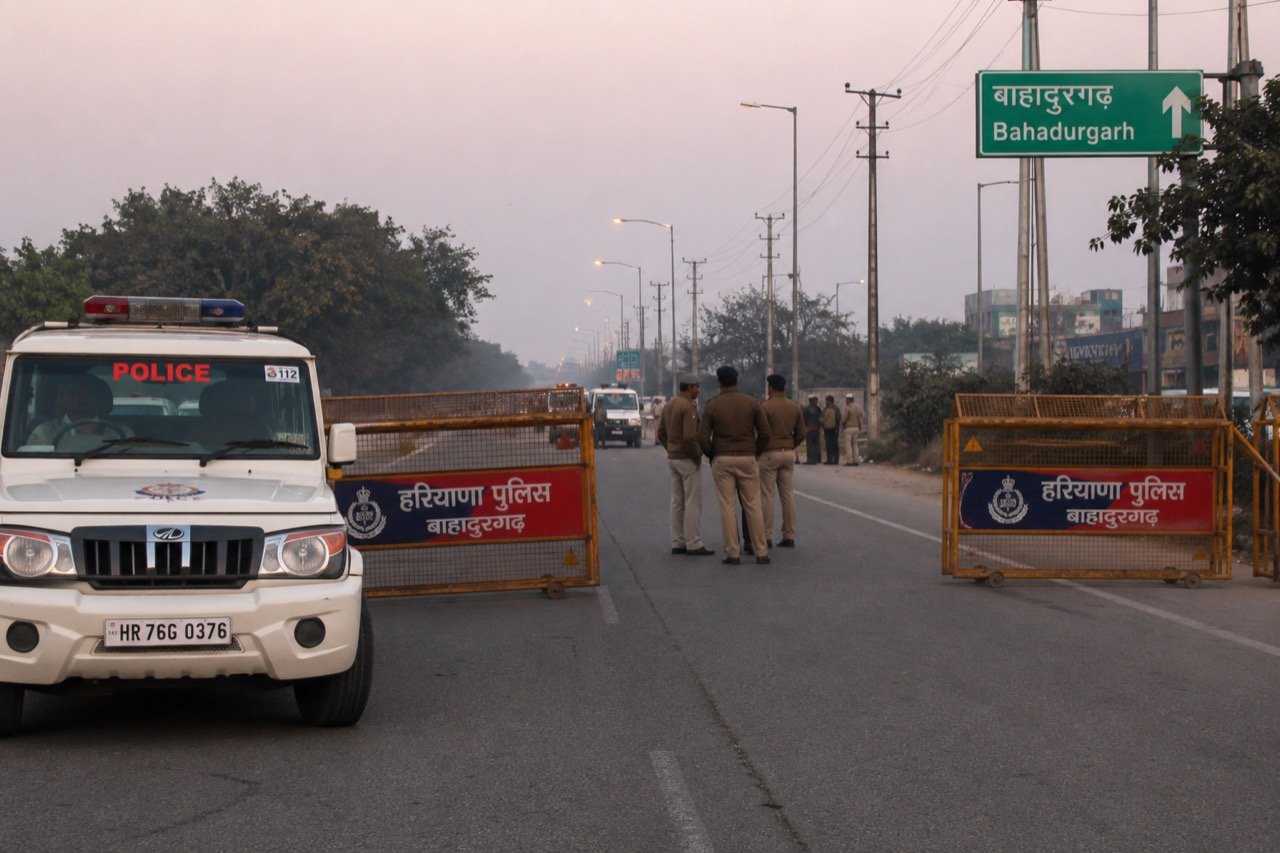
Bishnoi Gang Suspects Injured in Haryana Encounter as Police Tighten Net
A joint Haryana-Delhi Police operation in Bahadurgarh left two suspected Lawrence Bishnoi gang members injured, spotlighting the multi-state coordination now central to India's fight against organised crime networks.