Mumbai-Ahmedabad Bullet Train Project Opens Over 200 Jobs
The Mumbai-Ahmedabad bullet train project has opened applications for more than 200 posts, offering engineers, technicians and operations specialists a new hiring window in India's flagship high-speed rail programme.
Commentary & Analysis ·
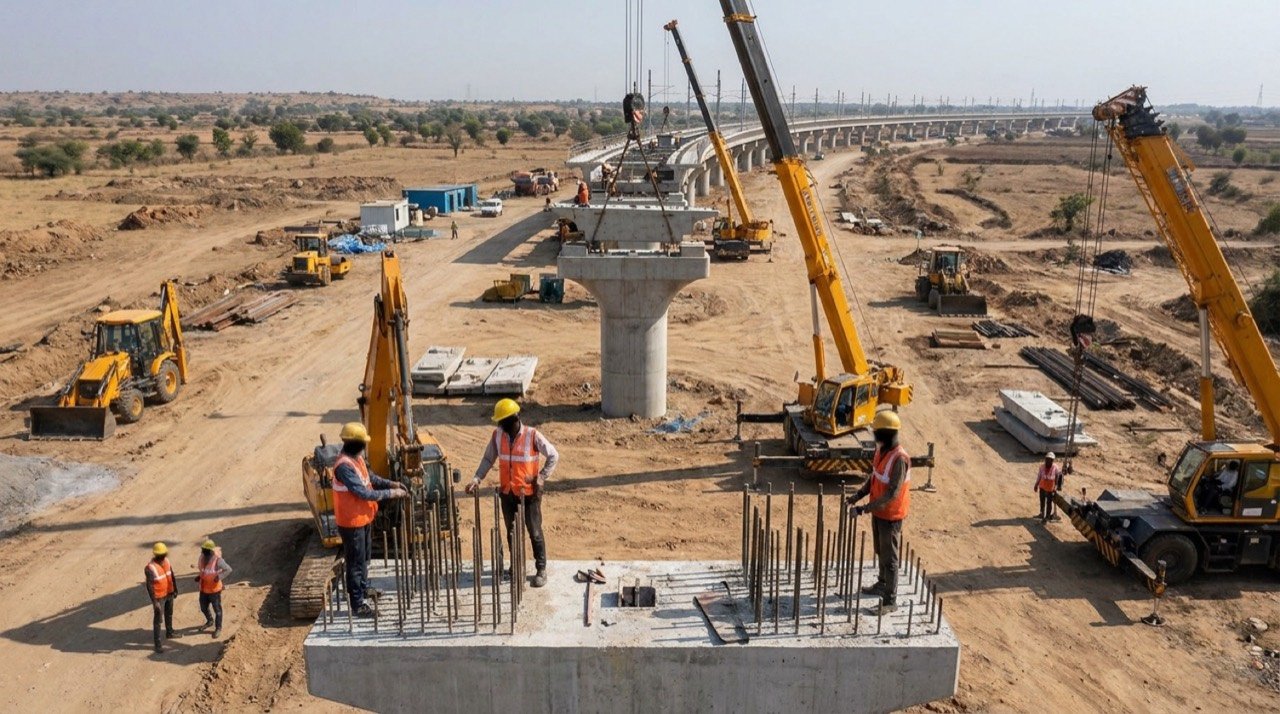
The Mumbai-Ahmedabad bullet train project, one of India's most closely watched infrastructure programmes, has opened applications for more than 200 posts. The recruitment drive offers engineers, technicians and operations specialists a fresh window into a flagship venture that is reshaping the way the country thinks about high-speed travel. For a project that has spent years absorbing headlines about land acquisition delays and cost overruns, a hiring exercise of this scale is a rare piece of news that speaks directly to progress on the ground rather than to disputes in courtrooms or negotiating rooms.
What the Recruitment Covers
According to reports, the hiring push is tied to the National High Speed Rail Corporation Limited's work across stations, systems, tracks and project operations. The breadth of roles reflects the complexity of building and running a modern high-speed corridor, which demands expertise far beyond civil construction. For jobseekers, the openings span technical and operational disciplines, signalling that the project has moved well past its early earthworks phase and into the integration of systems that will eventually carry passengers between the two cities. This shift in emphasis is itself informative. Early-phase infrastructure work tends to be dominated by contractors, labourers and civil engineers focused on viaducts, tunnels and land levelling. A recruitment drive centred on stations, systems and operations suggests the corridor has reached a stage where NHSRCL must start thinking about the people who will eventually run the trains, not merely those who build the track beneath them.
Why Big Transport Projects Create Broad Demand
Large transport undertakings generate employment well beyond the visible work of laying track and raising viaducts. Signalling, electrical systems, safety assurance, administration and long-term maintenance all require skilled personnel, often for years after the structures themselves are complete. This layered demand illustrates how a single corridor can sustain a diverse workforce, and why high-speed rail is frequently cited as a driver of skilled employment in the wider economy. It is worth dwelling on why this matters for a country such as India, where infrastructure spending is often judged narrowly by kilometres of track laid or the number of stations completed. The employment tail of a high-speed rail corridor is long: signalling engineers, safety auditors and maintenance technicians are needed not for the duration of construction but for the operational life of the line, which could run into decades. That is a materially different kind of job creation from the short-term construction employment associated with most infrastructure projects, and it is one that policymakers have historically undervalued when selling such projects to the public.
What Applicants Should Note
Prospective candidates are advised to verify eligibility criteria, qualifications and application timelines directly through official channels, including the NHSRCL careers portal, rather than relying on secondary summaries. As with all government-linked recruitment, accuracy on deadlines and documentation is essential. More than 200 posts are open across the bullet train project, with roles spanning engineering, technical and operations specialisations. Hiring is linked to NHSRCL work on stations, systems, tracks and operations, and demand extends to signalling, electrical systems, safety and maintenance. This is a point that bears repeating given how often recruitment news of this kind circulates in truncated or garbled form on social media and messaging platforms. Aspiring applicants, particularly those outside the metropolitan centres where such news is most reliably covered, would do well to treat the NHSRCL portal as the only authoritative source, and to be wary of intermediaries charging fees or promising guaranteed placement, a pattern that has dogged large government recruitment drives in the past.
A Measure of Momentum, and a Note of Caution
“Large transport projects create demand beyond construction, including signalling, electrical systems, safety, administration and long-term maintenance.” As the Mumbai-Ahmedabad corridor advances, recruitment of this scale offers a tangible measure of the project's momentum. For India's pool of engineers and technical professionals, it represents both an immediate opportunity and a glimpse of the long-term career pathways that high-speed rail is beginning to open up across the country. Yet momentum should not be mistaken for completion. The bullet train project has, over its lifetime, been subject to repeated timeline revisions, and a recruitment announcement, however substantial, is not itself proof that the corridor's remaining civil and systems work will proceed on schedule. What it does confirm is that NHSRCL now judges the project mature enough to warrant staffing decisions that look beyond construction and towards operations, which is a meaningfully different signal from, say, an announcement of fresh tenders or land handovers.
The NE Times View
Two hundred posts will not transform employment, but the hiring signals that India's flagship high-speed rail is moving from blueprint to operational reality after years of land and cost delays. The more telling indicator is the skill mix sought, which hints at building domestic capacity to run, not just construct, modern rail. The country needs this expertise to stay home; the bullet train's lasting dividend may be the workforce it trains. India has historically imported much of the specialised know-how for high-speed rail systems, given that this is its first such corridor. A recruitment drive of this nature, if it succeeds in embedding signalling, electrical and safety expertise within a domestic workforce, could pay dividends well beyond the Mumbai-Ahmedabad line itself, particularly if and when India pursues additional high-speed corridors elsewhere in the country. Skilled professionals trained on this project would represent a transferable national asset, reducing dependence on foreign contractors for future lines and potentially lowering the cost base of subsequent projects. That said, realising this dividend will depend on retention: whether the engineers and technicians trained on this corridor remain within the Indian rail ecosystem or are drawn away by better-paying opportunities abroad or in adjacent industries is a question that will only be answered years from now.
Key takeaways
- NHSRCL has opened more than 200 posts spanning engineering, technical and operations roles tied to stations, systems, tracks and operations on the Mumbai-Ahmedabad bullet train corridor.
- The shift from construction-heavy hiring to systems and operations roles suggests the project has moved past its early earthworks phase.
- Demand extends well beyond track-laying to signalling, electrical systems, safety assurance, administration and long-term maintenance, roles that persist long after construction ends.
- Applicants should verify eligibility, qualifications and deadlines only through official NHSRCL channels rather than secondary sources.
- The recruitment is a tangible sign of project momentum, and its longer-term significance may lie in building a domestic skilled workforce capable of running, not just constructing, high-speed rail.
You may also like to read

Mumbai-Ahmedabad Bullet Train: India's Largest TBM Starts Digging
India's largest rail tunnel boring machine has begun excavation on the Mumbai-Ahmedabad bullet train corridor, moving the country's flagship high-speed rail project into a visible and technically demanding underground phase.
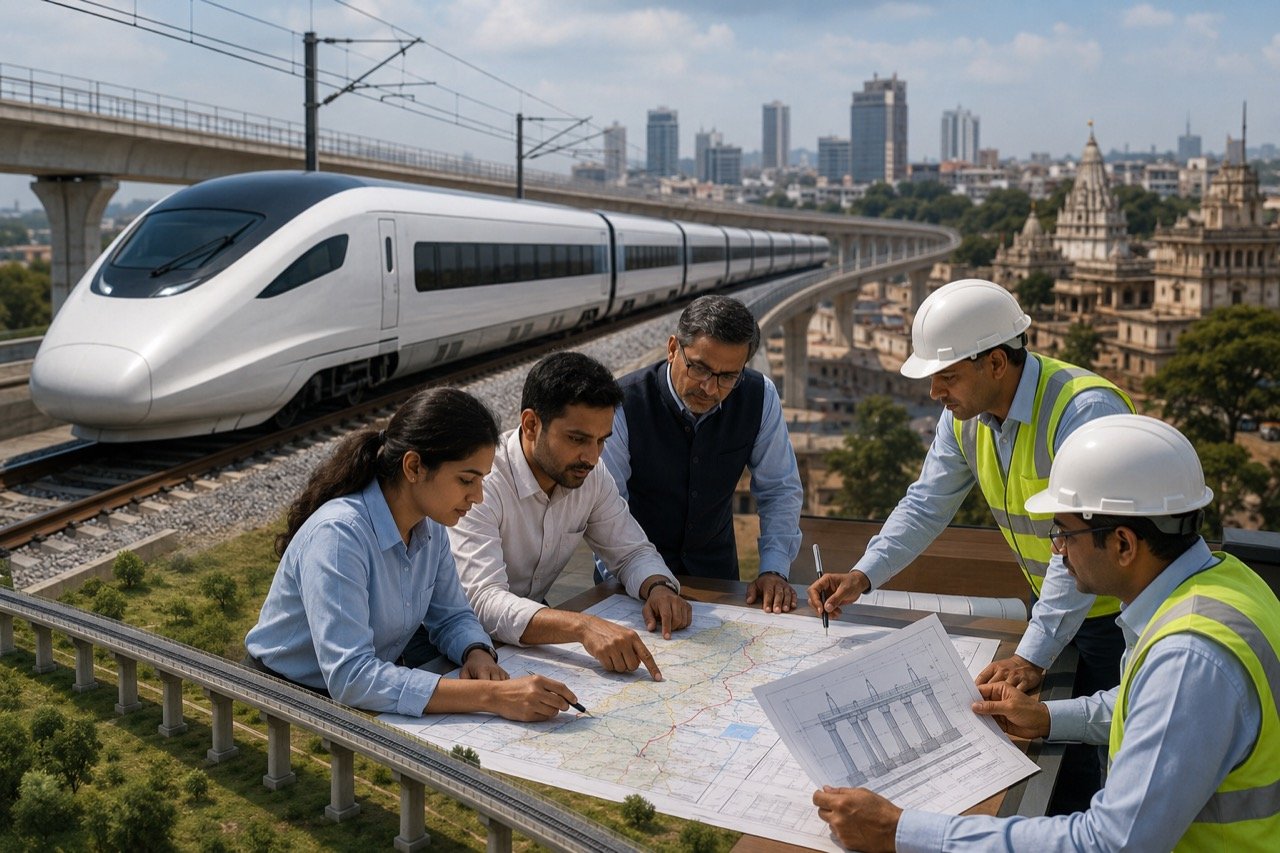
Bullet Train Push: NHSRCL Invites Design Bids for Two New Corridors
NHSRCL has invited design consultancy bids for the proposed Bengaluru-Chennai and Delhi-Varanasi high-speed rail corridors, signalling that India's next bullet train routes are moving from announcement to technical planning.

Ahmedabad Bullet Train Station Gets Kite-Inspired Multimodal Hub Plan
Ahmedabad's bullet train station is set to be developed as a multimodal transport hub with a kite-inspired design, giving India's high-speed rail project a distinctive urban landmark rooted in local identity.

TCS Cut 23,460 Jobs in FY26 as Indian IT Bets on an AI-First Model
India's largest software exporter led sector-wide reductions as firms slimmed benches and slowed fresher intake, even as global capability centres kept hiring.
More from this section
More
Adani Case: US DOJ Pushes for Permanent Dismissal of Charges
The US Department of Justice has urged a judge to permanently dismiss charges against Gautam Adani, calling the case legally flawed — a reversal with consequences for markets, diplomacy and cross-border enforcement.

Akasa Air Inducts 40th Aircraft in Indian Aviation Scale-Up
Akasa Air's 40th aircraft, ferried to Bengaluru via Seattle, Reykjavik and Cairo, marks a fleet milestone for the young carrier and a fresh signal that India's aviation market remains firmly in expansion mode.

BARC Ratings Suspension Leaves Indian TV Industry Flying Blind
BARC's pause on television ratings has put India's broadcast measurement system under fresh scrutiny, leaving broadcasters, advertisers and media planners without the weekly audience data that anchors the TV economy.