Mumbai-Ahmedabad Bullet Train: India's Largest TBM Starts Digging
India's largest rail tunnel boring machine has begun excavation on the Mumbai-Ahmedabad bullet train corridor, moving the country's flagship high-speed rail project into a visible and technically demanding underground phase.
Commentary & Analysis ·
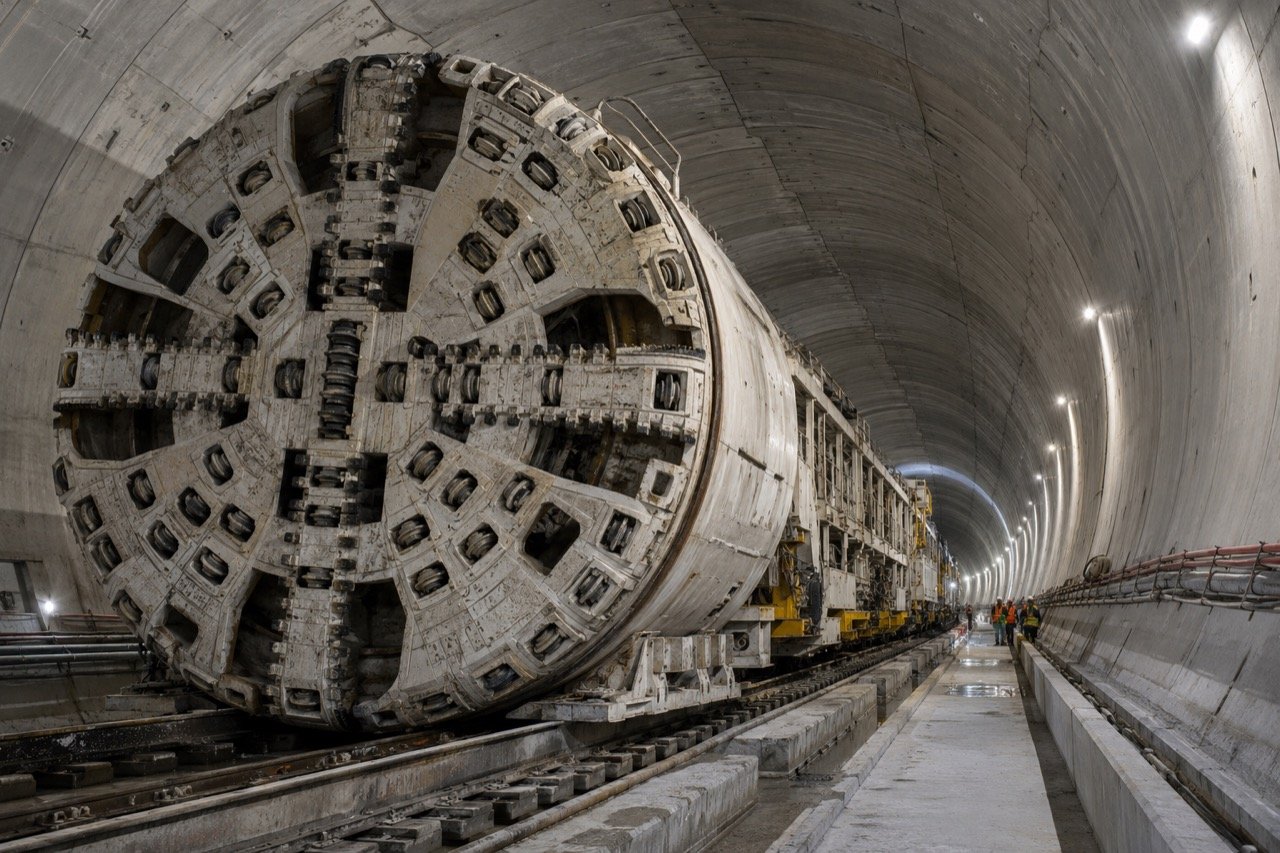
The Mumbai-Ahmedabad bullet train project has crossed a significant construction threshold, with India's largest rail tunnel boring machine beginning excavation, according to a July 5 report. The milestone shifts attention from the recurring debates over timelines and costs to something more concrete: visible engineering progress on the ground. For a project that has spent years being discussed largely in terms of deadlines missed and land parcels acquired, the sight of a giant machine actually cutting through rock is a different kind of news altogether.
Why the TBM launch matters
Tunnel boring machines are the workhorses of modern rail construction, allowing controlled excavation through complex ground conditions while keeping the future track alignment precise. Unlike surface construction, which is visible in the form of piers and girders rising along a route, tunnelling work happens largely out of sight, underground, and its progress is harder for the public to track. That makes the deployment of the country's largest such machine a notable marker in itself. It signals that one of the corridor's most demanding underground packages is now active, rather than existing only on paper as a scope of work awaiting a contractor's mobilisation.
Tunnelling is widely regarded as one of the more technically exacting components of any high-speed rail corridor. Ground conditions can vary unpredictably over even short distances, and the tolerances required for a track designed to carry trains at high speed leave little room for error. A machine of this scale being put into service therefore reflects not just a contractual milestone but a degree of engineering confidence in the readiness of the geological surveys, the design of the tunnel alignment, and the logistics needed to support a boring operation of this size over an extended period.
From promise to visible work
Large infrastructure projects earn public confidence when work becomes tangible. A TBM launch does not complete a bullet train, but it shows how the system is actually assembled: stations, viaducts, tunnels, depots, signalling and rolling stock must all advance in parallel before the first passenger boards. Each of these components has its own construction logic and its own risks, and none of them alone can be mistaken for the finished project. But each completed package narrows the gap between announcement and operation, and it is the accumulation of such packages, rather than any single event, that ultimately determines when the corridor opens.
This is worth stating plainly because infrastructure coverage in India has often oscillated between two unhelpful poles: breathless announcements when a project is sanctioned, and cynical dismissal when timelines slip. A tunnel boring machine cutting rock is neither. It is simply one more piece of a very large puzzle falling into place, and its significance lies in what it tells us about the state of execution on one specific, difficult segment of the route, not in what it tells us about the project as a whole.
A flagship corridor under scrutiny
The corridor is India's flagship high-speed rail venture and is widely treated as a test of the country's execution capacity. It has drawn scrutiny disproportionate to its length precisely because it is the first attempt of its kind in the country, combining land acquisition across two states, coastal and geologically varied terrain, and technology transfer arrangements that are themselves being tested at this scale for the first time. Every delay has been read as evidence of systemic inefficiency, and every milestone has been read, sometimes overeagerly, as evidence of a turnaround. Neither reading is especially useful in isolation.
The confirmed news here is the excavation milestone itself. Judgements about whether the project is running ahead of or behind schedule should rest on official timelines rather than on single construction events such as this one. It would be a mistake to treat the start of tunnelling as proof that the broader schedule is secure, just as it would have been a mistake to treat earlier delays as proof that the project was fundamentally troubled. Infrastructure of this scale moves in fits and starts, and the honest position is to track it package by package.
What the machine's scale signals
Beyond the immediate construction update, the scale of the machine deployed carries a broader implication. India is now routinely deploying specialised heavy engineering equipment and expertise that, in earlier decades, would have been entirely dependent on imported capability and foreign personnel. That shift matters for reasons that extend well beyond this one corridor. It speaks to the maturing of a domestic ecosystem, capable of operating and maintaining equipment of this complexity, which in turn has implications for how future large infrastructure projects, high-speed or otherwise, are planned, staffed and costed.
This is not to suggest that the entire supply chain behind the corridor is now indigenous, nor that the technology transfer arrangements underpinning the project are complete. But the visible normalisation of operating such heavy machinery domestically is itself a data point worth noting, separate from the question of whether this particular corridor meets its target completion date.
The NE Times View
High-speed rail is built in technical increments long before it is experienced at 320 kilometres per hour, and this TBM launch is exactly the kind of unglamorous step that decides whether the project succeeds. It will not generate the same headlines as a ministerial announcement or a ceremonial inauguration, yet it is precisely this category of work, repeated across dozens of packages over several years, that determines whether the corridor is ultimately delivered as envisaged.
The real test, in our assessment, is whether this execution momentum holds through the corridor's hardest stretches. Tunnelling through varied terrain, coordinating between multiple contractors, and maintaining pace on land parcels that have historically been contentious will all test whether this is a sustained trend or an isolated milestone. Future high-speed corridors across India will be sanctioned or shelved based on how convincingly Mumbai-Ahmedabad is delivered, which raises the stakes of every individual package well beyond this one route. Milestones like this one make the case for cautious optimism, but they are not, on their own, grounds for declaring the project on track. That verdict belongs to the official timeline, and to the packages still to come.
Key takeaways
- India's largest rail tunnel boring machine has begun excavation on the Mumbai-Ahmedabad bullet train corridor, according to a July 5 report.
- The milestone reflects progress on one demanding underground package, not the readiness of the corridor as a whole, which also depends on stations, viaducts, depots, signalling and rolling stock advancing in parallel.
- Judgements on whether the project is ahead of or behind schedule should be based on official timelines, not on individual construction milestones such as this one.
- The scale of the machine deployed reflects a broader shift toward domestically operated heavy engineering capability that was previously reliant on imported expertise.
- The corridor's execution is widely viewed as a test case that will shape whether future high-speed rail projects across India are approved.
You may also like to read
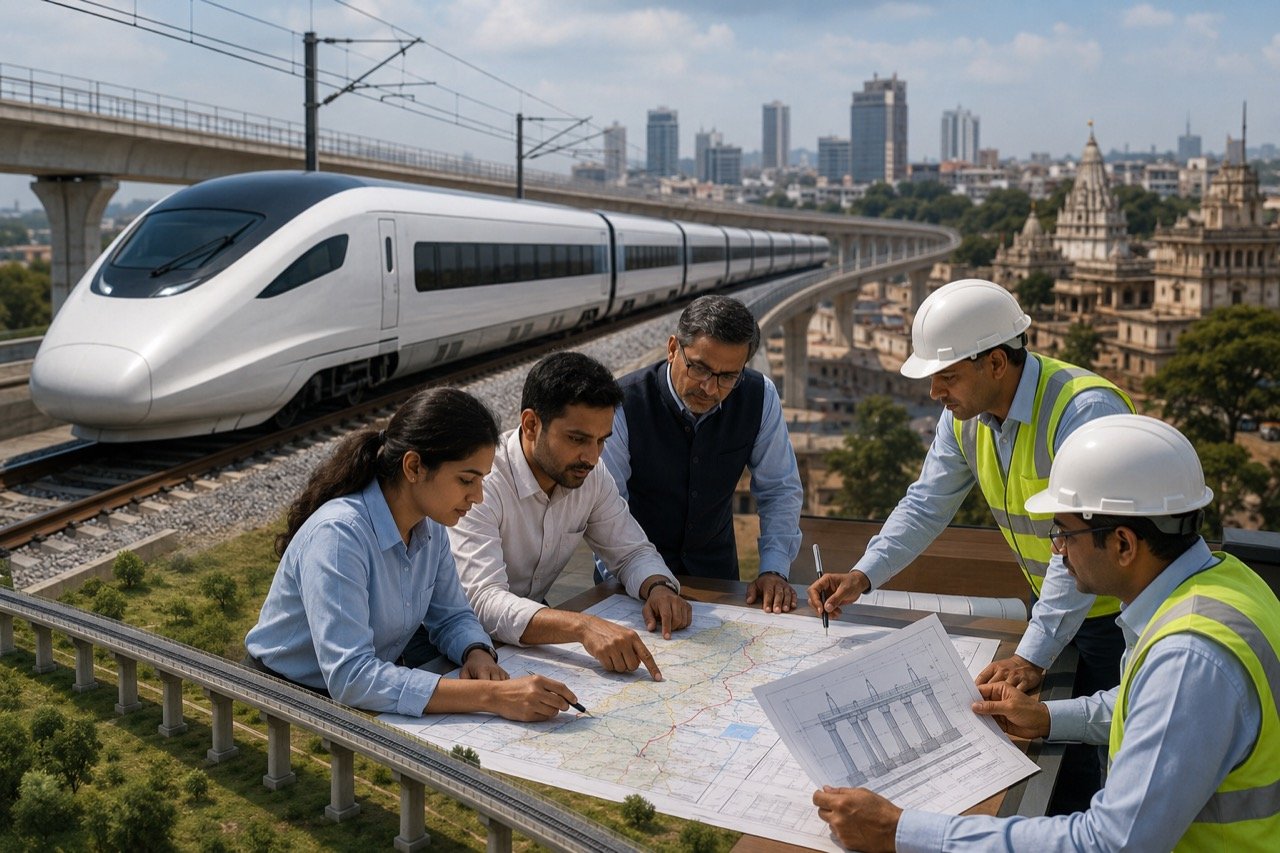
Bullet Train Push: NHSRCL Invites Design Bids for Two New Corridors
NHSRCL has invited design consultancy bids for the proposed Bengaluru-Chennai and Delhi-Varanasi high-speed rail corridors, signalling that India's next bullet train routes are moving from announcement to technical planning.
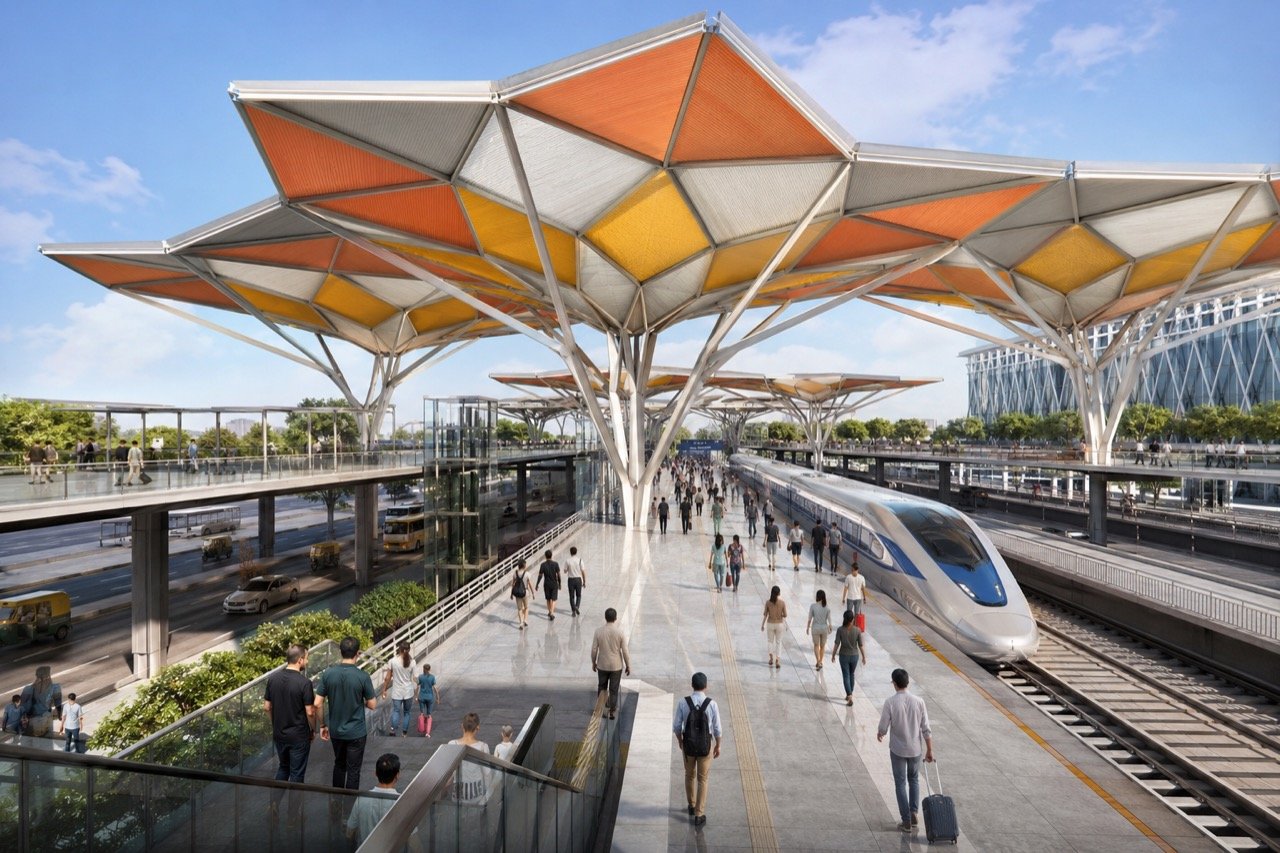
Ahmedabad Bullet Train Station Gets Kite-Inspired Multimodal Hub Plan
Ahmedabad's bullet train station is set to be developed as a multimodal transport hub with a kite-inspired design, giving India's high-speed rail project a distinctive urban landmark rooted in local identity.
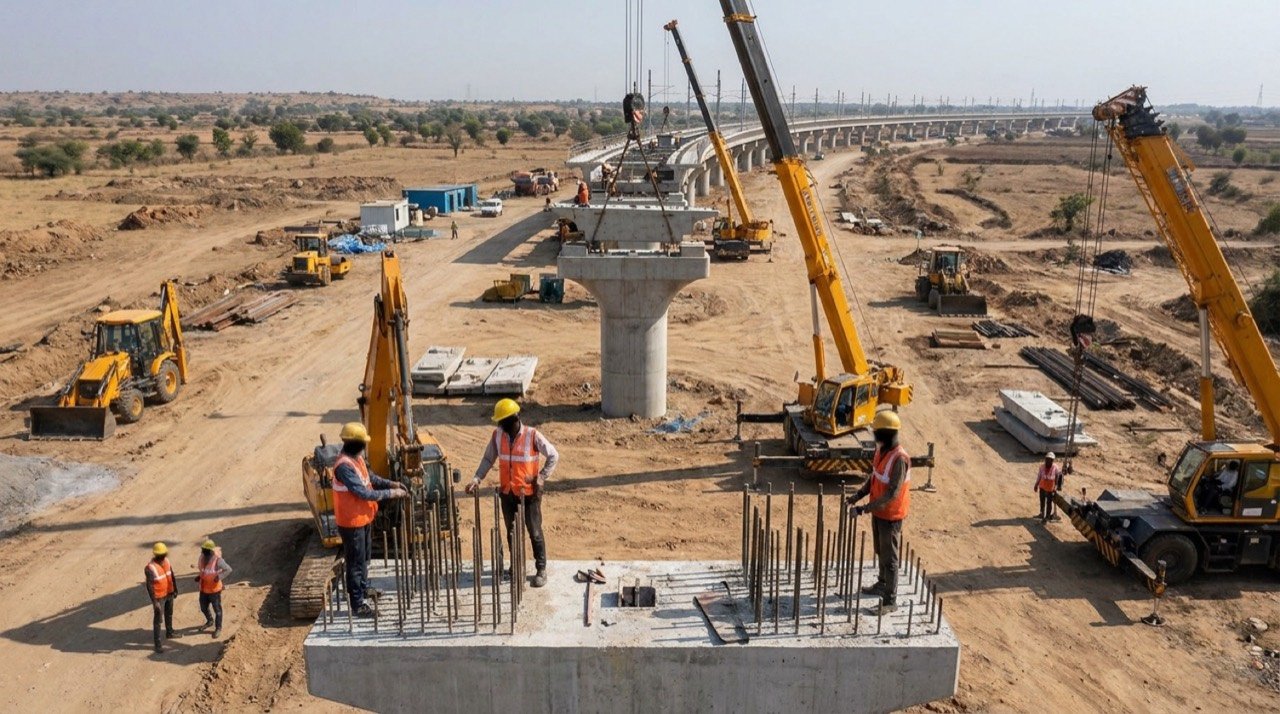
Mumbai-Ahmedabad Bullet Train Project Opens Over 200 Jobs
The Mumbai-Ahmedabad bullet train project has opened applications for more than 200 posts, offering engineers, technicians and operations specialists a new hiring window in India's flagship high-speed rail programme.
Puri-Koraput Express: New Train to Link Coastal and South Odisha
Indian Railways is introducing the Puri-Koraput Express to give Odisha a more direct passenger link between its coastal pilgrimage hub and the southern hill districts, with route and timetable details now published.
More from this section
More
AICTE Industry Fellowship 2026: Rs 1.5 Lakh Scheme Closes July 5
The AICTE Industry Fellowship Programme 2026, which places technical-education faculty inside leading companies on a Rs 1.5 lakh monthly stipend, reached its application deadline on July 5.

Bay of Bengal Low Pressure System Revives Monsoon Over Western India
A low-pressure system over the Bay of Bengal has pushed the monsoon back into an active phase, bringing steady heavy rain to Kerala, coastal Karnataka and Maharashtra, and putting Mumbai and Pune on preparedness watch.
Bishnoi Gang Suspects Injured in Haryana Encounter as Police Tighten Net
A joint Haryana-Delhi Police operation in Bahadurgarh left two suspected Lawrence Bishnoi gang members injured, spotlighting the multi-state coordination now central to India's fight against organised crime networks.