Modi And Trump Hold G7 Bilateral In Evian As Trade And West Asia Crisis Dominate Agenda
On the sidelines of the G7 summit in France, Prime Minister Narendra Modi and US President Donald Trump met to advance the trade deal and coordinate on a deepening crisis in West Asia.
Commentary & Analysis ·
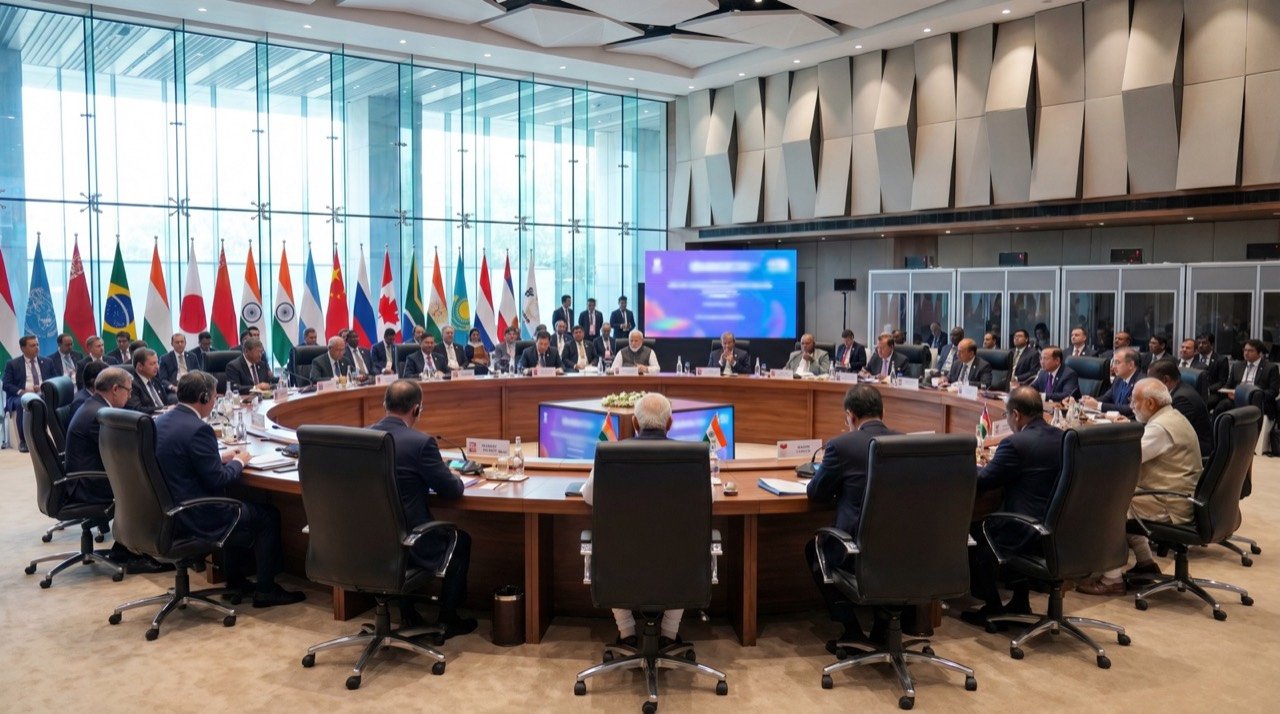
Prime Minister Narendra Modi and US President Donald Trump held a bilateral meeting on the sidelines of the G7 summit in Evian-les-Bains, France, with the near-final India-US trade deal and the worsening crisis in West Asia topping a crowded agenda. India was attending the gathering as an invited partner for the eighth time, underlining its place in the conversations of the world's wealthiest democracies. That repeated presence, absent formal membership, is itself a statement about how the grouping has come to view New Delhi: not as a supplicant seeking entry, but as a power whose cooperation on trade, technology and energy security is worth actively courting.
Trade talks reach the finishing line
The Modi-Trump conversation came as negotiators put the finishing touches on the first tranche of an interim trade agreement that officials describe as almost complete. A leaders-level meeting at this stage of a negotiation is rarely about resolving technical disputes; those are the province of trade officials and sherpas working through tariff schedules, market access clauses and regulatory alignment line by line. What a summit sideline meeting does instead is convert that grinding technical progress into political momentum. When two heads of government sit across the table and signal shared intent, it gives negotiators on both sides political cover to make the final compromises needed to close remaining gaps. For India, an early signing would offer clarity to exporters and investors who have had to plan around an unsettled trade relationship with its largest single-country trading partner. For the Trump administration, a signed deal with India would be a tangible deliverable to point to amid a broader recalibration of American trade policy with multiple partners simultaneously.
The stakes of getting this right extend well beyond the immediate tariff lines under discussion. Trade agreements of this kind tend to set the tone for a wider economic relationship, shaping decisions on supply chain diversification, technology transfer and investment flows for years afterward. Both governments have incentives to be seen delivering something concrete rather than merely another round of extended talks, which is precisely why the Evian meeting carried weight beyond its brief duration.
West Asia's shadow over the summit
The crisis in West Asia and concerns over the security of maritime trade routes figured prominently across Mr Modi's engagements in Evian, at times threatening to overshadow the summit's other business entirely. This is not a peripheral concern for India. With a large Indian diaspora resident across the Gulf and West Asia, and a substantial share of the country's energy imports tied to the region, instability there translates quickly into domestic consequences: the safety of Indian nationals working abroad, the price of crude oil landing at Indian ports, and the reliability of shipping lanes that carry a significant share of the country's trade.
New Delhi's posture in these discussions has been consistent with its broader foreign policy instincts of recent years: pushing for de-escalation and dialogue while quietly working to protect the shipping lanes critical to its economy. This is a delicate balance. India has neither the desire nor, arguably, the standing to insert itself as a mediator in a conflict driven by actors and grievances well outside its direct control. What it can do, and what it appears to be doing, is use forums like the G7 sidelines to press the case for restraint among parties with more direct leverage, while working through other channels to keep commercial shipping moving safely.
Deepening ties with Germany
The Prime Minister also met German Chancellor Friedrich Merz, with both leaders expressing satisfaction over renewed momentum in the India-Germany strategic partnership as the two countries mark seventy-five years of diplomatic ties in 2026. Anniversaries of this kind are often treated as ceremonial footnotes, but the timing here is not incidental. A seventy-fifth anniversary provides a convenient occasion for both governments to reaffirm and, where useful, reset the terms of engagement between two of the world's larger industrial economies. Germany's own recalculation of its trade and security dependencies in recent years, particularly around energy and manufacturing supply chains, makes India an increasingly relevant partner for Berlin, just as European technology and investment matter to India's own growth ambitions. The Merz meeting, while less headline-grabbing than the Trump bilateral, fits into the same broader pattern on display throughout the summit.
What the optics signal
Beyond the specific outcomes, the sequence of meetings in Evian reinforces a familiar message about how India wants to be seen on the world stage: as a swing power courted by Western capitals while keeping its strategic autonomy intact. Being repeatedly invited to the G7 without being a formal member allows New Delhi to shape outcomes on trade, technology and energy security without binding itself to the bloc's positions on every matter, including on issues where Indian and Western interests do not fully align. This is a comfortable position for India to occupy, and one it has cultivated deliberately over successive summits.
An Indian official briefing reporters in Evian captured this stance succinctly, noting, paraphrased, that India will engage constructively wherever dialogue can lower tensions, but that its decisions will be guided by its own interests. That framing is worth taking seriously as a description of operating principle rather than diplomatic boilerplate. It explains why India can simultaneously deepen trade ties with Washington, expand strategic cooperation with Berlin, and counsel restraint on West Asia, all without formally aligning itself with any single bloc's foreign policy line.
The road ahead: from optics to outcomes
The real measure of the Evian meetings will not be the warmth of the photographs or the language of the readouts, but whether the trade deal is signed within the promised window and whether coordination on West Asia translates into calmer shipping lanes and reduced risk to Indian nationals and commercial interests in the region. Summits generate goodwill and momentum, but that momentum has a short shelf life. Trade negotiators will need to convert the leaders' political signal into finalised legal text within weeks, not months, if the early-signing ambition is to be realised. Similarly, any diplomatic coordination on West Asia will only matter if it is followed by demonstrable changes on the ground, whether in the form of reduced attacks on shipping, de-escalatory steps by regional actors, or clearer commitments from major powers to avoid further inflaming the situation.
For now, the summit has handed both leaders a useful stage and a shared incentive to deliver. Mr Trump gains a plausible trade win to tout domestically. Mr Modi gains further validation of India's standing as an indispensable interlocutor for the West on both economic and security questions. Whether that translates into durable substance is the question that will define how this Evian meeting is remembered a year from now.
The NE Times View
Pairing trade talks with West Asia coordination at the G7 sidelines plays to India's strengths as a swing power courted by all sides. It is a formula New Delhi has refined over multiple summits: show up as an invited partner, engage substantively on the issues that matter most to the host bloc, and extract commitments on the issues that matter most to India, all while resisting entanglement in commitments that would compromise its strategic autonomy. The NE Times View is that the real test is whether Delhi converts goodwill into concrete terms on tariffs and energy security, rather than warm optics that fade once the summit ends and Washington's domestic politics reassert themselves. Trade deals announced as "near final" have a way of encountering last-mile complications, and geopolitical crises rarely respond to diplomatic reassurance alone. The coming weeks, measured in signed text and shipping-lane security rather than summit statements, will tell the real story.
Key takeaways
- Modi and Trump held a G7 sideline bilateral in Evian-les-Bains focused on finalising the first tranche of an interim India-US trade deal.
- West Asia's crisis and maritime trade route security featured heavily in Modi's engagements, reflecting India's exposure through its diaspora and energy imports.
- Modi also met Chancellor Merz, reaffirming India-Germany strategic ties as the two nations mark seventy-five years of diplomatic relations in 2026.
- India's eighth invited appearance at the G7 underscores its self-positioning as a swing power engaging the West without binding alignment.
- The genuine test lies ahead: a signed trade agreement within the promised window and tangible de-escalation in West Asia, not summit optics alone.
You may also like to read
Modi Joins G7 Leaders in Evian as Critical Minerals and AI Top Agenda
India's prime minister attends his seventh consecutive G7 summit, with a much-watched Modi-Trump bilateral and supply-chain security dominating talks in the French Alps.
India And US Close In On First Tranche Of Trade Deal As Negotiators Call It 99 Per Cent Done
After three days of talks in New Delhi, India and the United States say the first tranche of their interim trade agreement is all but complete, with signatures expected within weeks.
Modi Greets Trump on US 250th Independence Day, Hails Partnership
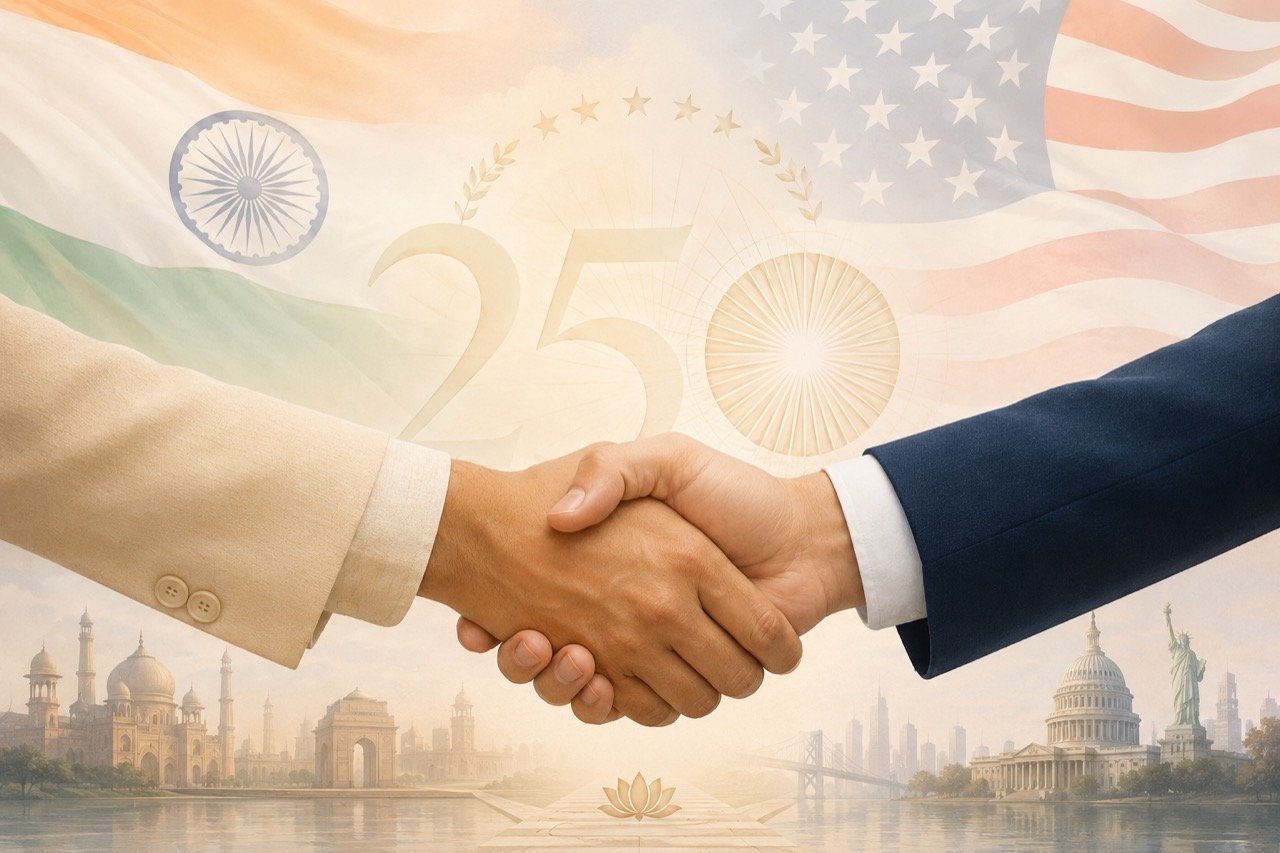
Prime Minister Narendra Modi marked America's 250th Independence Day with a message to President Trump, saying the next 250 years should lift the India-US partnership to new heights.
Modi's G7 Outing In Evian Turns On A Crowded Schedule Of Bilaterals
Attending the G7 summit in Evian, Prime Minister Modi packed in a series of bilateral meetings, including with Canada's Mark Carney and the UK's Keir Starmer, signalling a busy phase of personal diplomacy.
More from this section
More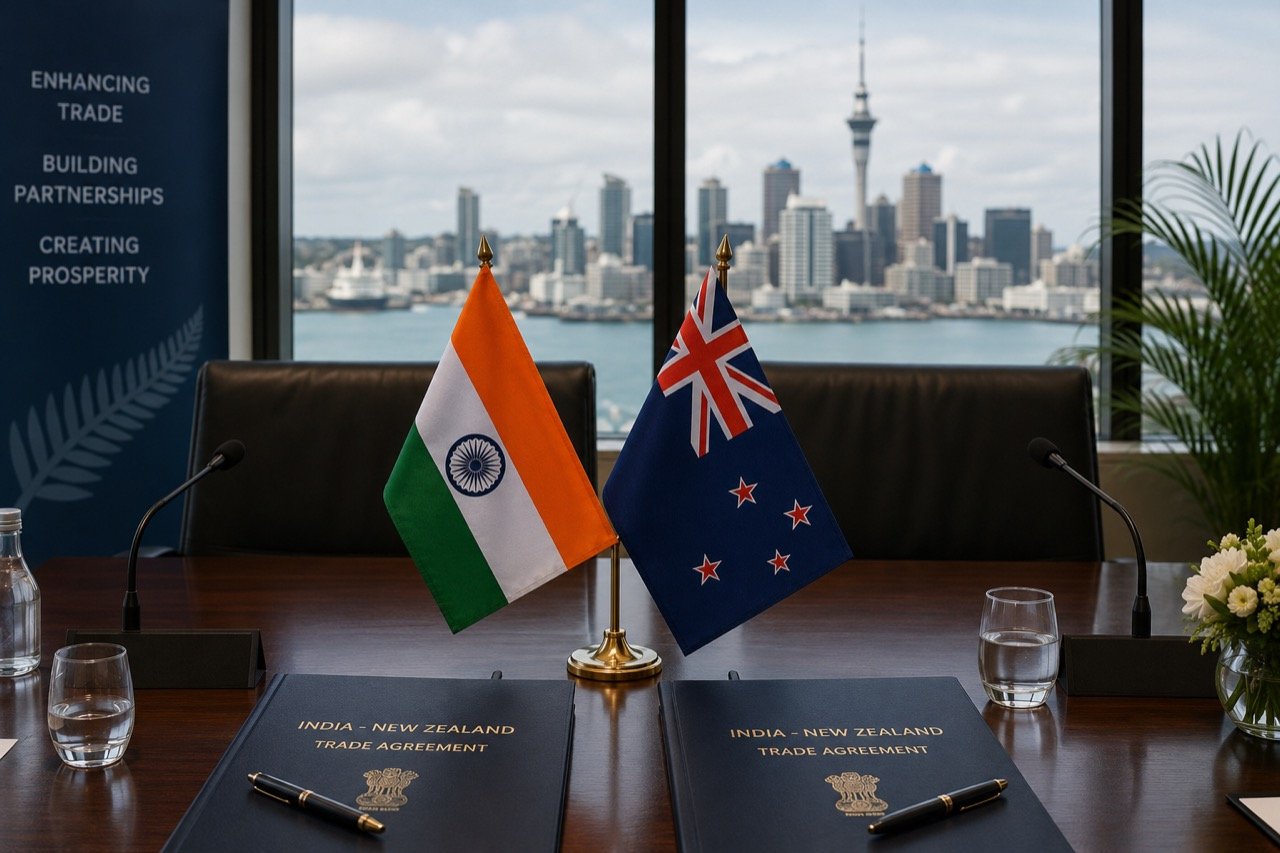
India-New Zealand Ties: Visit Plans Put FTA and Diplomacy in Focus
Reports of a planned high-level India-New Zealand engagement have revived attention on free trade talks, professional mobility and Indo-Pacific cooperation between two partners with clear room to grow.
Modi Greets Trump on US 250th Independence Day, Hails Partnership
Prime Minister Narendra Modi marked America's 250th Independence Day with a message to President Trump, saying the next 250 years should lift the India-US partnership to new heights.
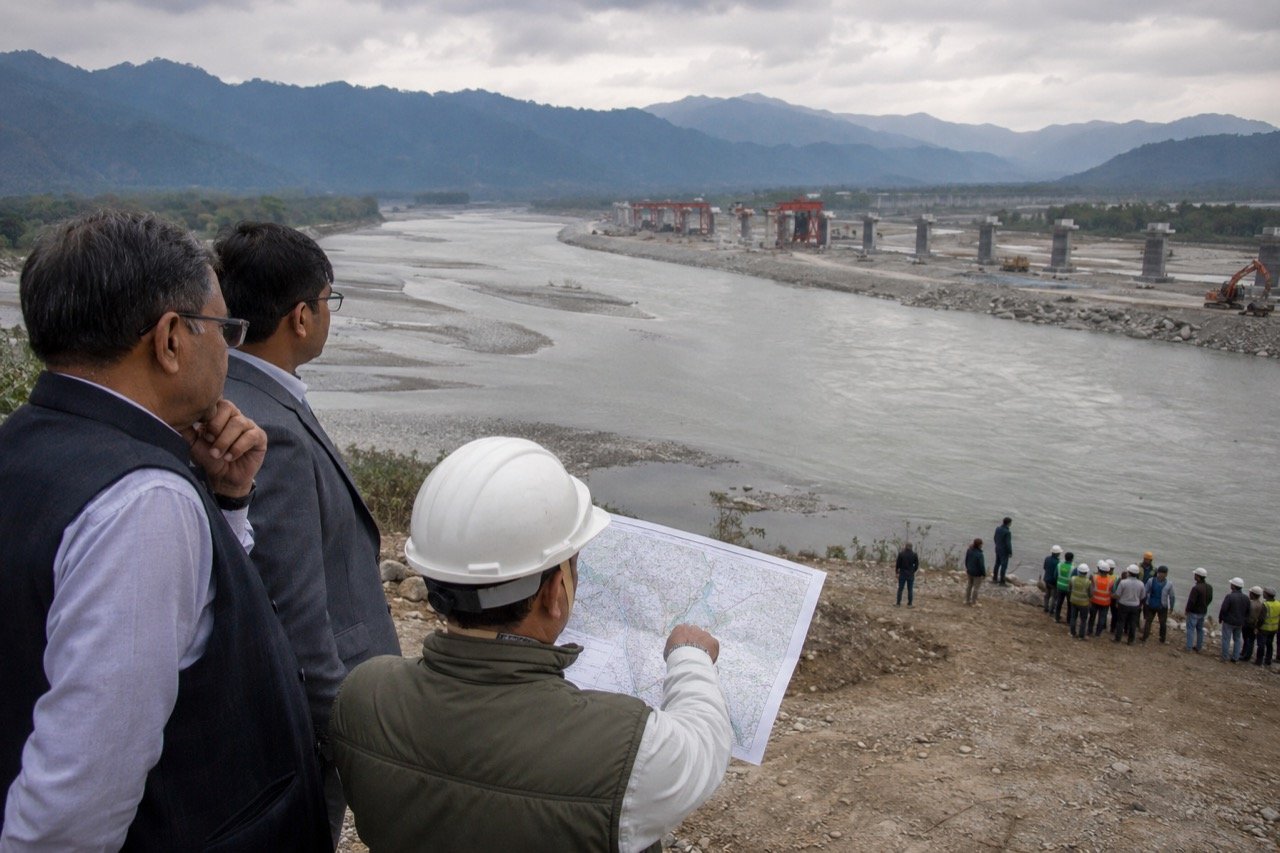
India Watches Dhaka's China-Backed Teesta Plan as Stakes Rise
New Delhi is closely tracking Bangladesh's proposal to develop the Teesta river with Chinese assistance, a move that revives one of South Asia's most sensitive water-sharing disputes and tests regional strategic trust.