India-New Zealand Ties: Visit Plans Put FTA and Diplomacy in Focus
Reports of a planned high-level India-New Zealand engagement have revived attention on free trade talks, professional mobility and Indo-Pacific cooperation between two partners with clear room to grow.
Commentary & Analysis ·
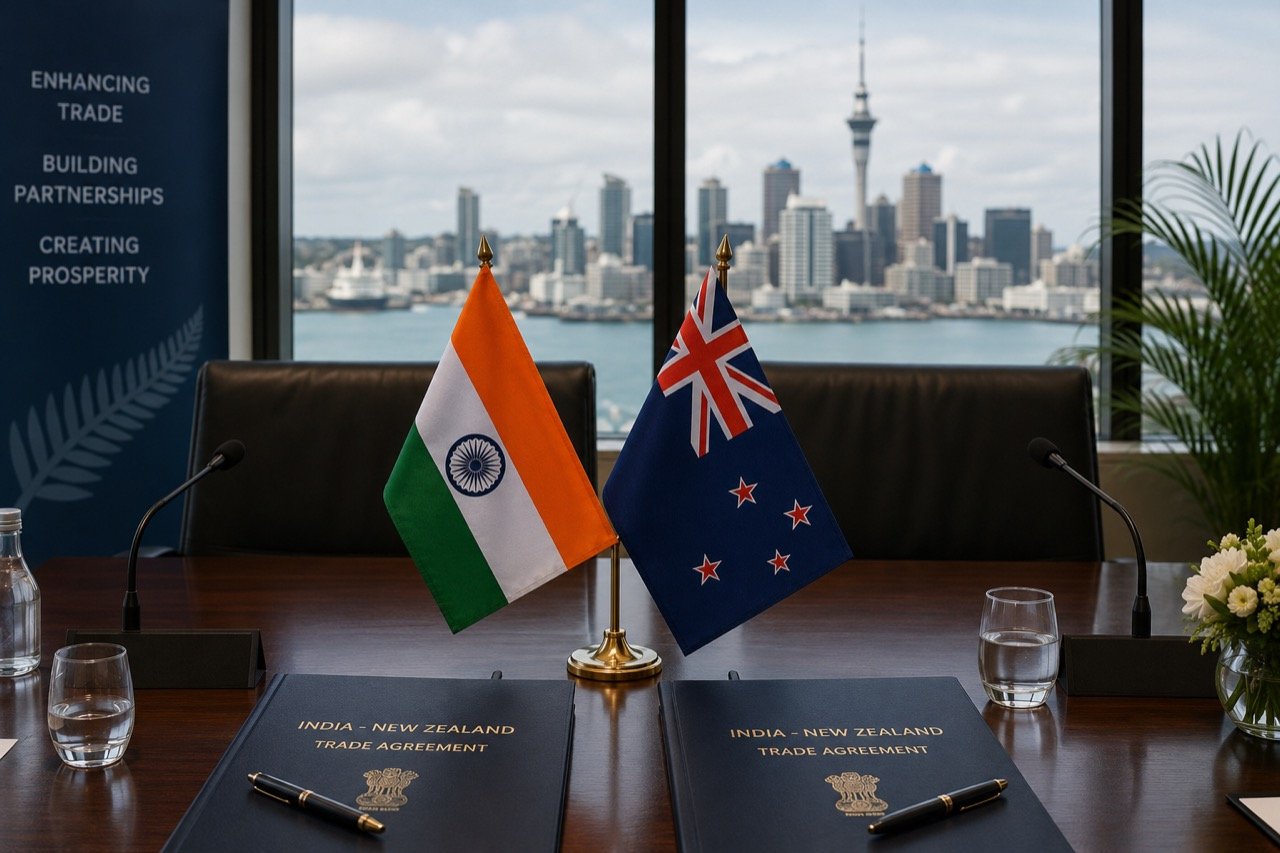
India's relationship with New Zealand rarely dominates front pages, but reports linking a possible high-level visit with renewed trade and diplomatic engagement have put the partnership back in focus. The questions readers are asking are practical ones: where does the India-New Zealand free trade agreement stand, and what would a prime ministerial visit actually deliver? The story matters precisely because the relationship is under-built. Compared with India's ties to larger powers, engagement with Wellington has plenty of unrealised headroom in trade, education and mobility.
A relationship with unrealised headroom
It is worth pausing on why a bilateral relationship of this kind has stayed relatively modest for so long. India's foreign policy bandwidth is naturally drawn toward the major relationships that dominate headlines — the United States, the Gulf states, the European Union, and its immediate neighbourhood. New Zealand, a small and geographically distant economy, has never had the scale to force its way onto that list. Yet smallness is not the same as unimportance. New Zealand is a developed, rules-respecting economy with genuine strengths in agriculture, dairy, education services and a stable, predictable regulatory environment. For India, a country that has struggled to conclude ambitious trade agreements with developed economies, even a modest deal with Wellington would carry a signalling value well beyond its immediate commercial size. The current moment, with reports of a possible high-level visit, is best understood as an attempt to convert dormant potential into active diplomacy.
Trade is the obvious pillar, and also the hardest
Businesses on both sides are watching tariff discussions, market access and the perennial sticking point of dairy, where New Zealand's export strength collides with India's sensitivities about protecting millions of small farmers. This is not a new tension; it is the same fault line that has complicated India's trade negotiations with other agricultural exporters for decades. New Zealand's dairy sector is world-class in efficiency and cost, which is precisely why Indian policymakers are wary of exposing a politically sensitive and economically fragmented domestic dairy base to that kind of competition. Any negotiator on the Indian side will be conscious that concessions here carry political costs that ripple far beyond the trade ministry. This is why dairy has functioned, in effect, as a permanent sticking point rather than a solvable technical issue — it sits at the intersection of economics and domestic politics in a way that resists quick fixes.
Services, education and professional mobility offer easier wins, and it is worth explaining why. Unlike agricultural goods, these sectors do not threaten a large, politically organised domestic constituency in India. Opening pathways for Indian students, skilled professionals and service providers to access the New Zealand market builds on an existing base — the two countries already have meaningful educational and migration links — rather than requiring either side to overturn entrenched protections. A high-level visit can set direction and inject political will, but the detailed outcomes will depend on negotiators and each side's domestic priorities. Visits generate momentum and headlines; they rarely, by themselves, resolve the technical detail that determines whether an agreement is actually signed.
The Indo-Pacific layer beneath the trade talk
Diplomacy provides the second track, and it is arguably the more strategically significant one over the long run. New Zealand is part of the wider Indo-Pacific conversation, and India has been deliberately building partnerships beyond traditional security alliances. This matters because India's Indo-Pacific approach has consistently emphasised breadth over depth in some relationships — cultivating a wide network of partners who share broadly aligned interests in a free and open region, rather than relying solely on a small number of formal alliances. New Zealand fits this pattern well. It is not a treaty ally of India in any formal sense, but it is a democracy with shared interests in maritime security, rules-based trade and regional stability.
Cooperation between the two can span education, skills, technology, agriculture and the sizeable Indian diaspora in New Zealand — connections that accumulate quietly but durably. The diaspora dimension deserves particular attention. Diaspora communities function as informal ambassadors, sustaining people-to-people ties, driving demand for language and cultural links, and creating constituencies in both countries that favour closer formal engagement. Over time, these quieter forms of connection can do as much to cement a relationship as any single trade agreement, because they are harder to unwind and less dependent on the political cycle of either government.
Reading the caution correctly
The caution embedded in current reporting is equally important: nothing has been finalised, and the sensible reading is of a relationship preparing for fresh momentum rather than one that has already transformed. This distinction matters for how readers should interpret the coming weeks and months. A planned visit, or reports of one, is a signal of intent — an indication that both governments see value in reactivating a relatively quiet relationship. It is not, in itself, evidence that a trade agreement is close to completion or that a diplomatic breakthrough is imminent. Concrete agreements, when and if they come, will determine the long-term significance. Readers should watch for specific markers: the announcement of a confirmed visit date, the resumption or acceleration of FTA negotiation rounds, and any joint statements that go beyond generalities to name specific sectors or timelines.
It is also worth noting what is absent from the current picture. There is no indication yet of a finalised text, an agreed timeline for concluding negotiations, or specific commitments on dairy access or tariff schedules. That absence is not necessarily a sign of stalled talks; trade negotiations of this kind often proceed through long, largely invisible technical phases before political-level visits are used to lock in what negotiators have already worked out, or to unblock the issues that negotiators cannot resolve on their own.
The NE Times View
Middle-power friendships are the quiet compound interest of Indian foreign policy, and New Zealand is a textbook case. A trade pact with Wellington will never rival deals with the EU or the Gulf in headline value, but it would signal that India can close negotiations with developed economies even when dairy politics make it hard. That signalling value should not be underestimated: India's credibility as a trade negotiating partner is shaped as much by its ability to conclude deals as by the size of the deals themselves. A track record of stalled or abandoned negotiations with developed economies has, in the past, made India a less attractive partner for exactly the kind of high-standard agreements it says it wants to pursue.
The pragmatic route is to bank the achievable — services, education, mobility and technology — while fencing off the most sensitive farm issues for later. This is not a counsel of low ambition; it is a recognition that sequencing matters in trade diplomacy. Securing early wins in sectors where both sides have clear mutual interest builds trust and institutional momentum that can, in time, make the harder conversations around agriculture more tractable. For Indian students, professionals and exporters, steady incremental access matters more than a grand bargain that never lands. A relationship that delivers modest, reliable gains year after year will, in practice, serve these constituencies better than an ambitious agreement that remains permanently under negotiation.
Key takeaways
- Reports of a possible high-level visit have renewed focus on the India-New Zealand relationship, but no trade agreement or visit has been finalised.
- Dairy remains the central sticking point in FTA talks, pitting New Zealand's export strength against India's need to protect small farmers politically and economically.
- Services, education and professional mobility are more achievable near-term wins than agricultural market access.
- The relationship carries an Indo-Pacific dimension beyond trade, resting on education, technology, agriculture links and a sizeable Indian diaspora in New Zealand.
- The NE Times View: prioritise achievable gains in services, education, mobility and technology now, leaving the toughest farm-sector issues for a later stage of negotiation.
You may also like to read
Modi's Expected July Travel Puts India's Indo-Pacific Diplomacy on Watch
Reports that Prime Minister Modi may visit Indonesia, Australia and New Zealand in July have spotlighted India's Indo-Pacific calendar, raising the question of what concrete agreements the trip could deliver.
India-Japan Summit Widens Ties Across AI, Defence and Chips
At their annual summit in New Delhi, Prime Ministers Modi and Takaichi unveiled a roadmap deepening cooperation on maritime security, artificial intelligence, semiconductors, shipbuilding and critical technologies.
India-China Security Talks Signal Cautious Normalisation of Ties
NSA Ajit Doval and Chinese Foreign Minister Wang Yi met on the sidelines of the BRICS security advisers' meeting in New Delhi, noting progress toward a gradual, guarded normalisation of strained relations.
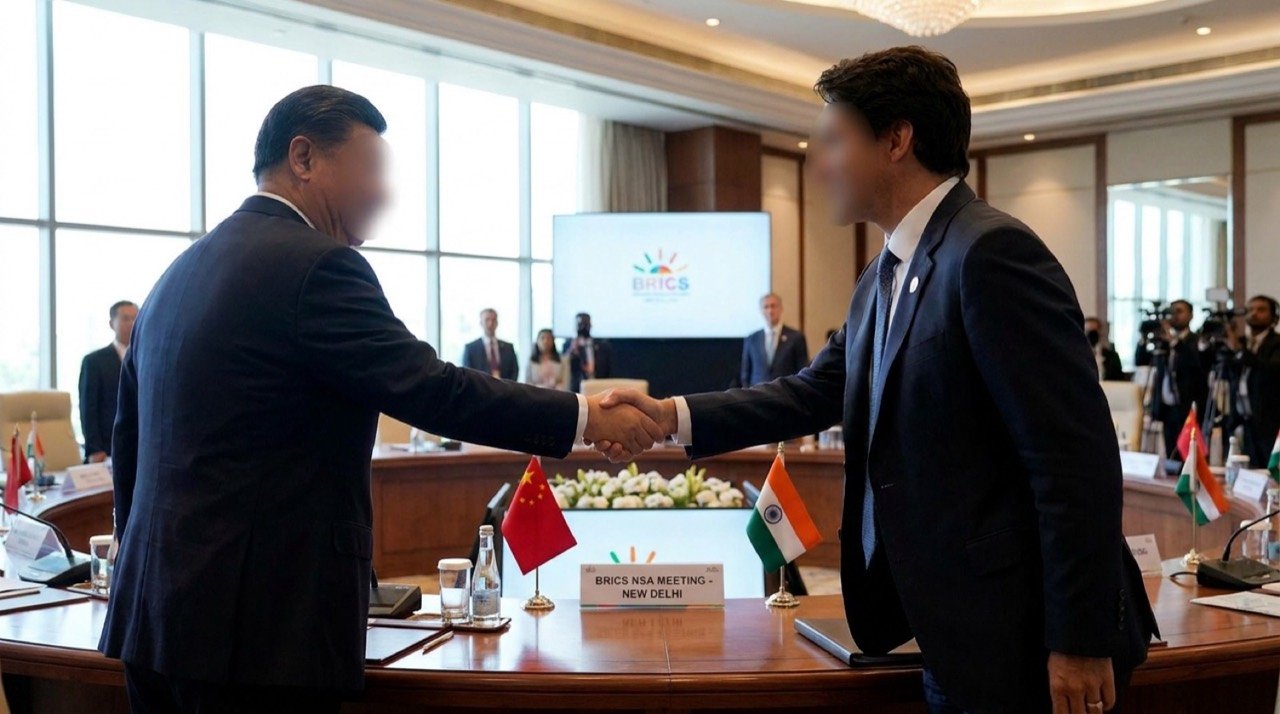
India-China Talks: Wang Yi, Doval Put Border Calm and Core Interests in Focus
Chinese Foreign Minister Wang Yi told NSA Ajit Doval in New Delhi that India and China must respect each other's core interests and keep the border issue in its proper place within the broader relationship.
More from this section
More
Modi Greets Trump on US 250th Independence Day, Hails Partnership
Prime Minister Narendra Modi marked America's 250th Independence Day with a message to President Trump, saying the next 250 years should lift the India-US partnership to new heights.
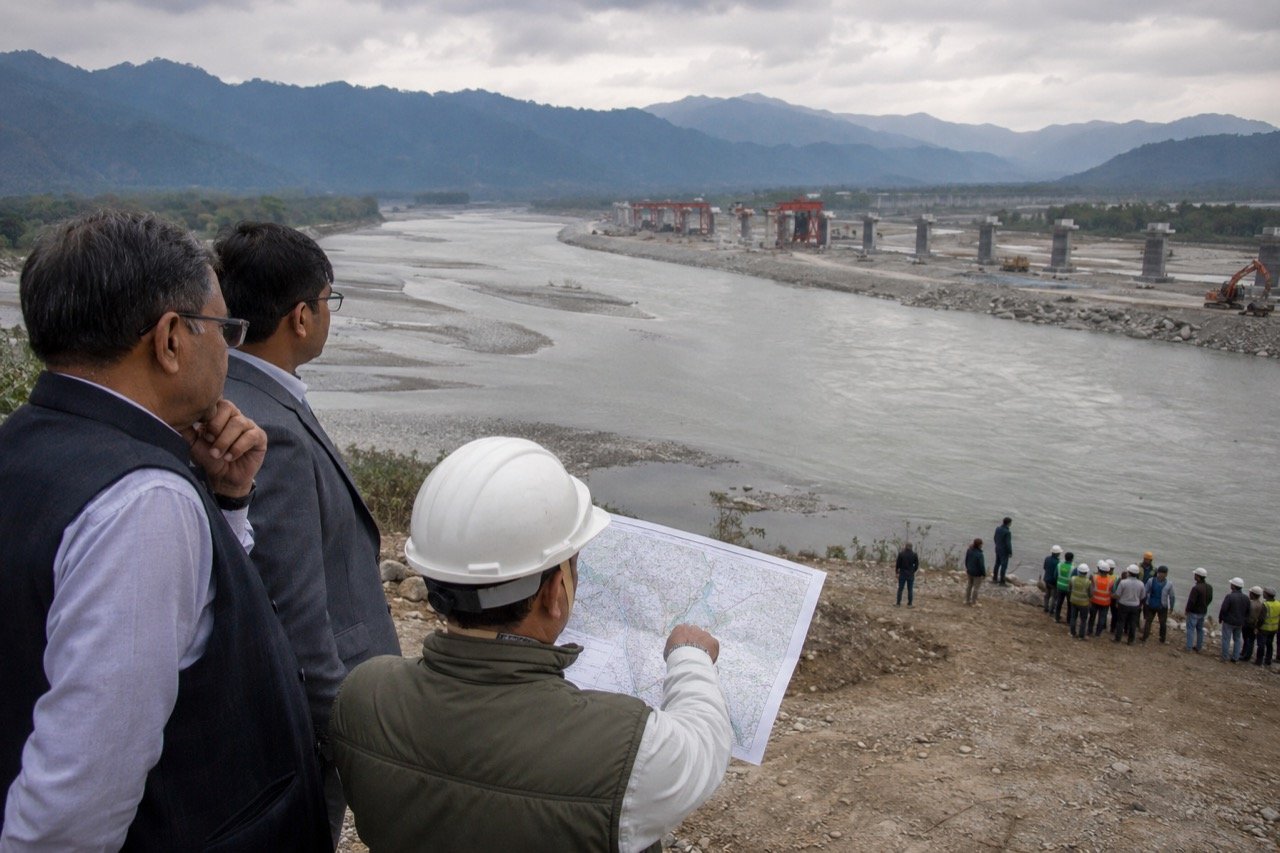
India Watches Dhaka's China-Backed Teesta Plan as Stakes Rise
New Delhi is closely tracking Bangladesh's proposal to develop the Teesta river with Chinese assistance, a move that revives one of South Asia's most sensitive water-sharing disputes and tests regional strategic trust.
India-Japan Summit Widens Ties Across AI, Defence and Chips
At their annual summit in New Delhi, Prime Ministers Modi and Takaichi unveiled a roadmap deepening cooperation on maritime security, artificial intelligence, semiconductors, shipbuilding and critical technologies.