Modi Joins G7 Leaders in Evian as Critical Minerals and AI Top Agenda
India's prime minister attends his seventh consecutive G7 summit, with a much-watched Modi-Trump bilateral and supply-chain security dominating talks in the French Alps.
Commentary & Analysis ·
World leaders gathered in the lakeside town of Evian in the French Alps for the 52nd G7 summit, a three-day meeting running from 15 to 17 June that France is hosting under President Emmanuel Macron. From its earliest sessions, the gathering has been shaped by a tightly focused agenda built around trade, global economic stability, artificial intelligence and the security of critical mineral supply chains, themes that increasingly bind the world's wealthiest democracies to the fast-growing economies they once treated as distant partners.
Prime Minister Narendra Modi is attending the summit as an invited guest, marking India's 13th appearance at a G7 meeting and Modi's seventh consecutive participation. That run of invitations underscores how far New Delhi has travelled from the margins of the old industrial club to a seat at the table where the rules of trade, technology and resource security are increasingly debated. France has extended invitations to a wider circle of partners this year as well, bringing Brazil, Egypt, Kenya and the Republic of Korea into the conversation.
A closely watched bilateral
Officials and reports point to a planned bilateral meeting between Modi and US President Donald Trump, expected on the final day of the summit. Trade, tariffs and technology cooperation are anticipated to feature heavily, and the encounter is likely to draw outsized attention given how central the United States has become to India's economic and strategic calculations.
Such sideline meetings often matter more than the formal plenary sessions, allowing leaders to test positions on contentious issues away from the full glare of the summit stage. For India, the substance of any Modi-Trump exchange on tariffs and market access carries direct consequences for exporters, technology firms and the broader trajectory of bilateral ties.
No single communique
Leaders are again expected to forgo a single joint communique, instead issuing area-specific outcome documents on correcting global economic imbalances and strengthening critical mineral supply chains. The shift away from one sweeping statement reflects a broader pattern in recent summitry, where divergent national priorities make consensus on a single text harder to reach and where narrower, issue-by-issue declarations can capture agreement that a comprehensive document might not.
The focus on critical minerals is especially consequential. The materials that power batteries, electronics, defence systems and the clean-energy transition are concentrated in a handful of countries, leaving advanced economies anxious about supply disruptions and over-reliance on single sources. India, already engaged in earlier G7 ministerial talks on critical minerals, has a direct stake in those discussions as it builds out its own manufacturing base and seeks to position itself as a reliable node in diversified supply chains.
Why it matters for India
India's repeated presence at the G7 signals both recognition of its weight in the global economy and an opening to shape outcomes on the issues that matter most to its development. Agreements on supply-chain security, artificial intelligence governance and the management of economic imbalances will ripple through Indian industry, trade policy and investment flows in the years ahead.
- Trade and tariffs, a central theme of the anticipated Modi-Trump bilateral
- Artificial intelligence and its governance among major economies
- Critical mineral supply-chain security, where India is an active participant
- Correcting global economic imbalances through area-specific outcome documents
As the summit closes in Evian, the test will be whether the issue-specific outcome documents translate into durable cooperation rather than statements of intent. For India, the value lies less in any single headline and more in the steady accumulation of influence, the bilateral relationships strengthened on the sidelines, and the chance to help write the rules on minerals, technology and trade that will define the next phase of the global economy.
The NE Times View
A seventh straight G7 invitation underlines India's indispensability to any serious conversation on minerals, AI and resilient supply chains free of single-source dependence. The Modi-Trump bilateral is the real signal to watch, given tariff frictions and the courtship over rare earths. The NE Times View: India should leverage its position as the swing power both blocs need, but presence at the table must translate into concrete access, not just photo-ops.
This article is original commentary and analysis by The NE Times. Background facts were referenced from Reuters, France 24.
You may also like to read
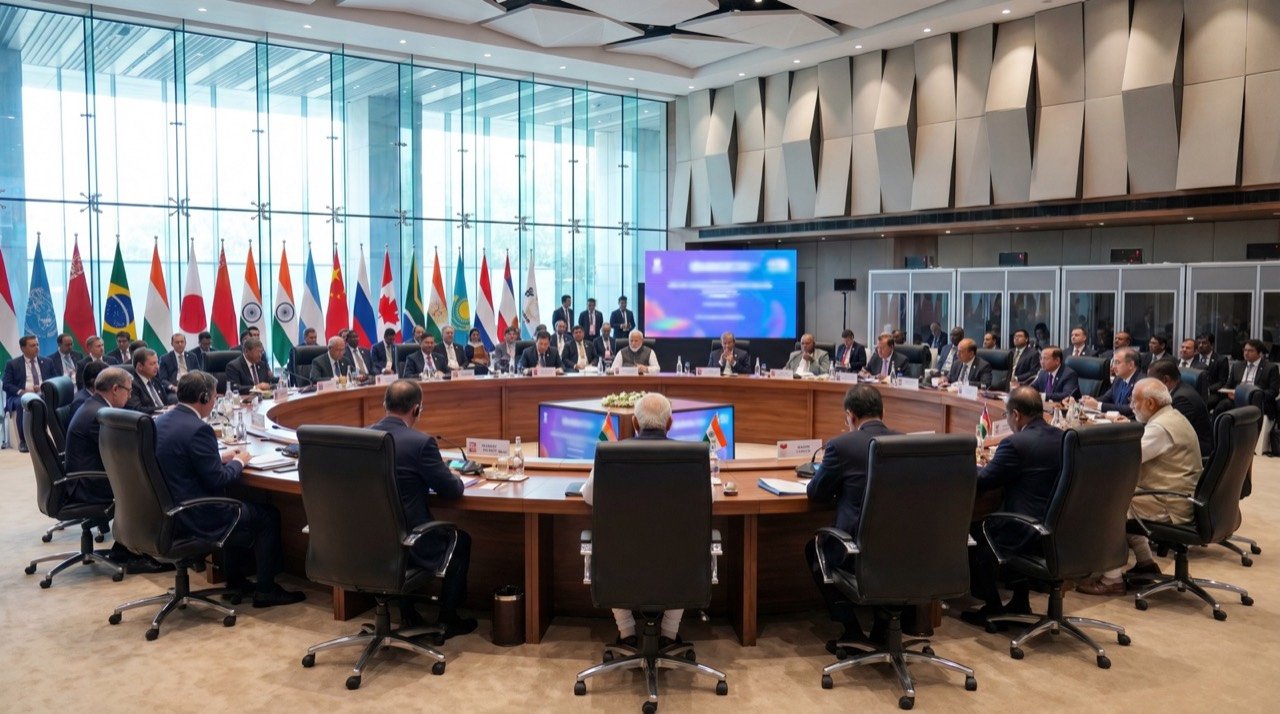
Modi And Trump Hold G7 Bilateral In Evian As Trade And West Asia Crisis Dominate Agenda
On the sidelines of the G7 summit in France, Prime Minister Narendra Modi and US President Donald Trump met to advance the trade deal and coordinate on a deepening crisis in West Asia.
Modi's G7 Outing In Evian Turns On A Crowded Schedule Of Bilaterals
Attending the G7 summit in Evian, Prime Minister Modi packed in a series of bilateral meetings, including with Canada's Mark Carney and the UK's Keir Starmer, signalling a busy phase of personal diplomacy.
EU Leaders Gather In Brussels For Budget, Ukraine And US Trade Showdown
European Union heads meet for a high-stakes two-day summit covering the next long-term budget, Ukraine, Middle East fallout and a fresh vote on the EU-US trade deal.
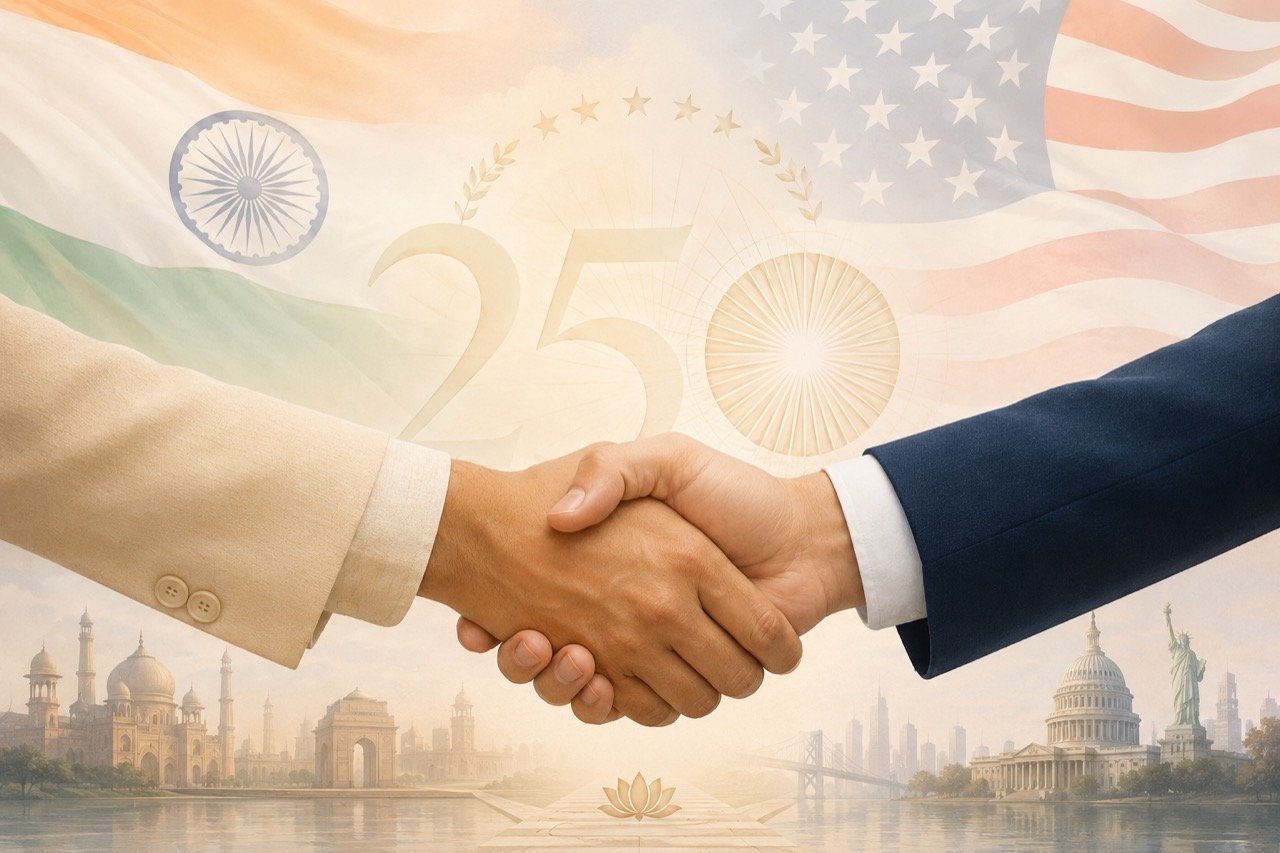
Modi Greets Trump on US 250th Independence Day, Hails Partnership
Prime Minister Narendra Modi marked America's 250th Independence Day with a message to President Trump, saying the next 250 years should lift the India-US partnership to new heights.
More from this section
More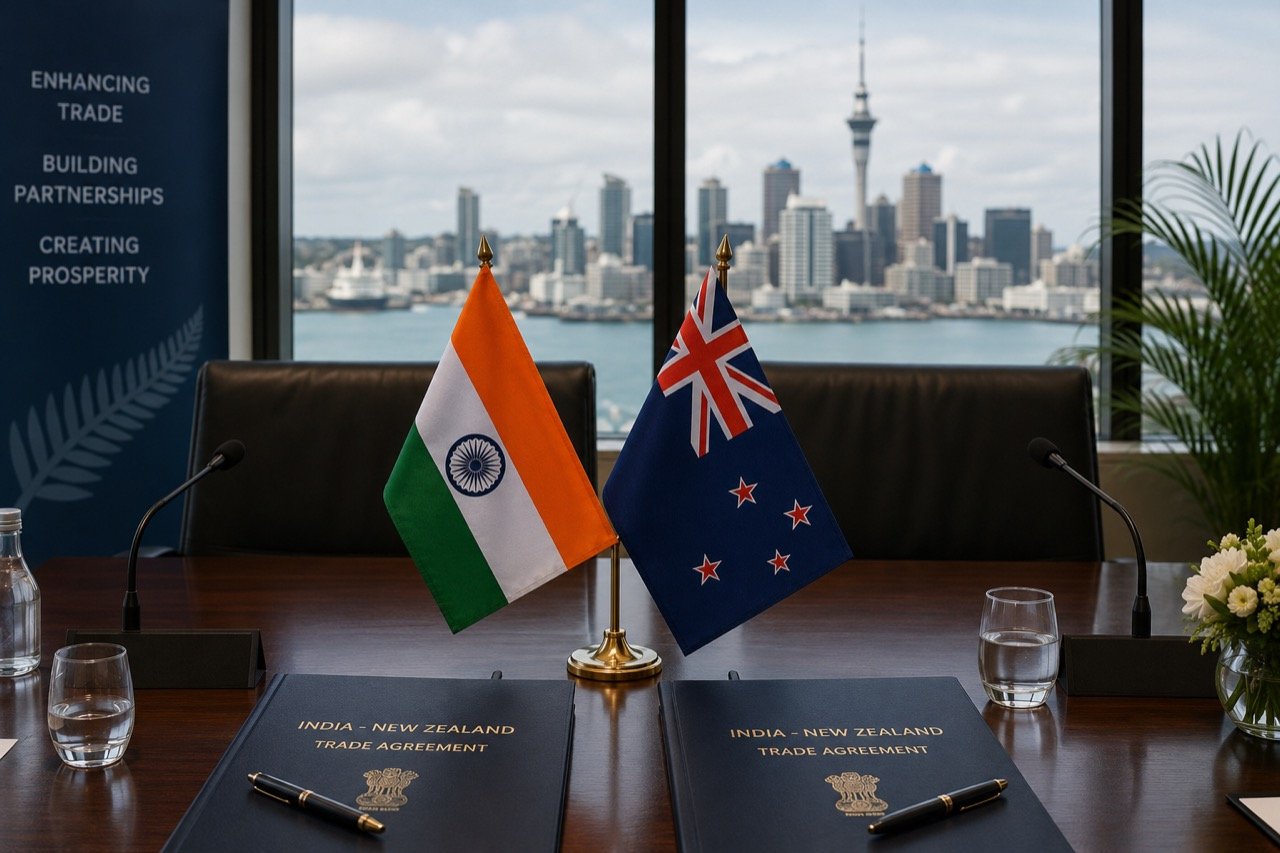
India-New Zealand Ties: Visit Plans Put FTA and Diplomacy in Focus
Reports of a planned high-level India-New Zealand engagement have revived attention on free trade talks, professional mobility and Indo-Pacific cooperation between two partners with clear room to grow.
Modi Greets Trump on US 250th Independence Day, Hails Partnership
Prime Minister Narendra Modi marked America's 250th Independence Day with a message to President Trump, saying the next 250 years should lift the India-US partnership to new heights.
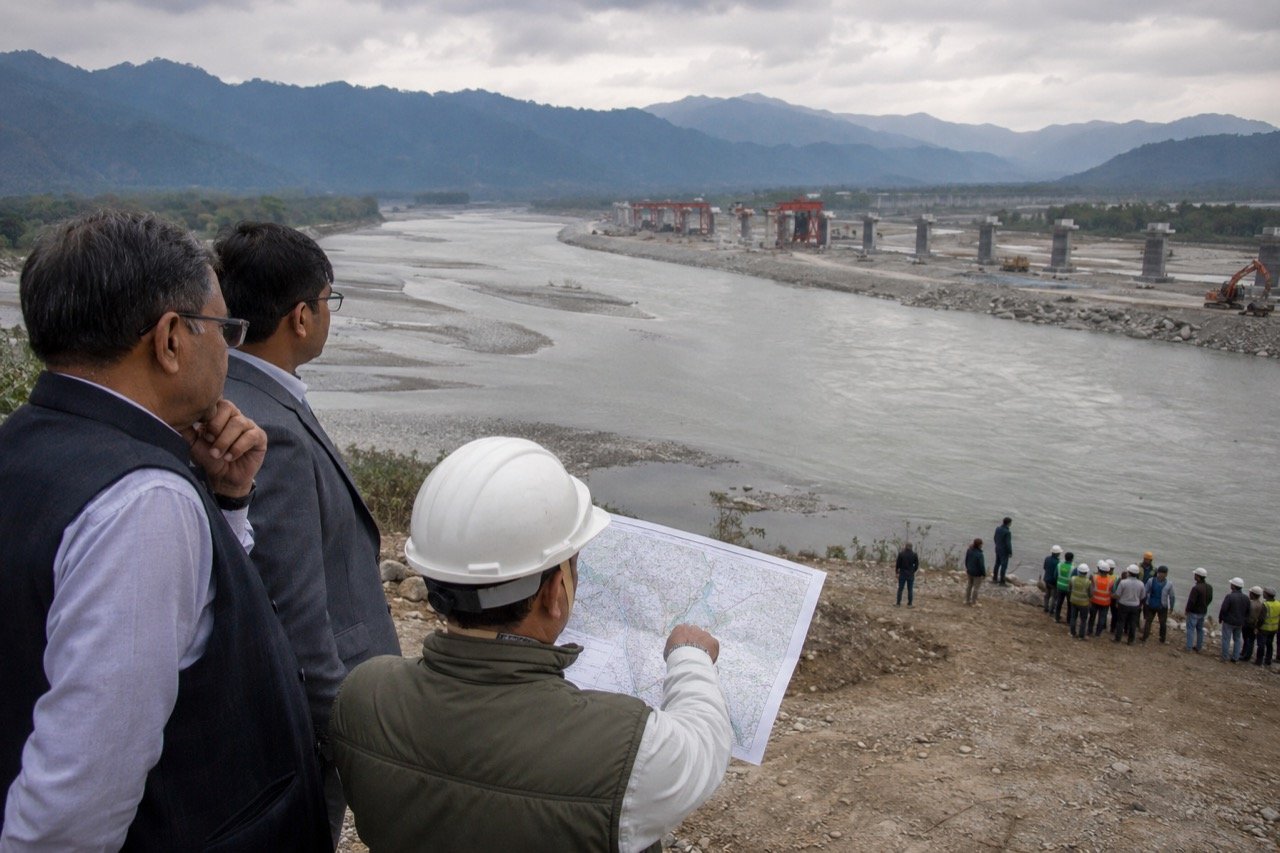
India Watches Dhaka's China-Backed Teesta Plan as Stakes Rise
New Delhi is closely tracking Bangladesh's proposal to develop the Teesta river with Chinese assistance, a move that revives one of South Asia's most sensitive water-sharing disputes and tests regional strategic trust.