EU Leaders Gather In Brussels For Budget, Ukraine And US Trade Showdown
European Union heads meet for a high-stakes two-day summit covering the next long-term budget, Ukraine, Middle East fallout and a fresh vote on the EU-US trade deal.
Commentary & Analysis ·
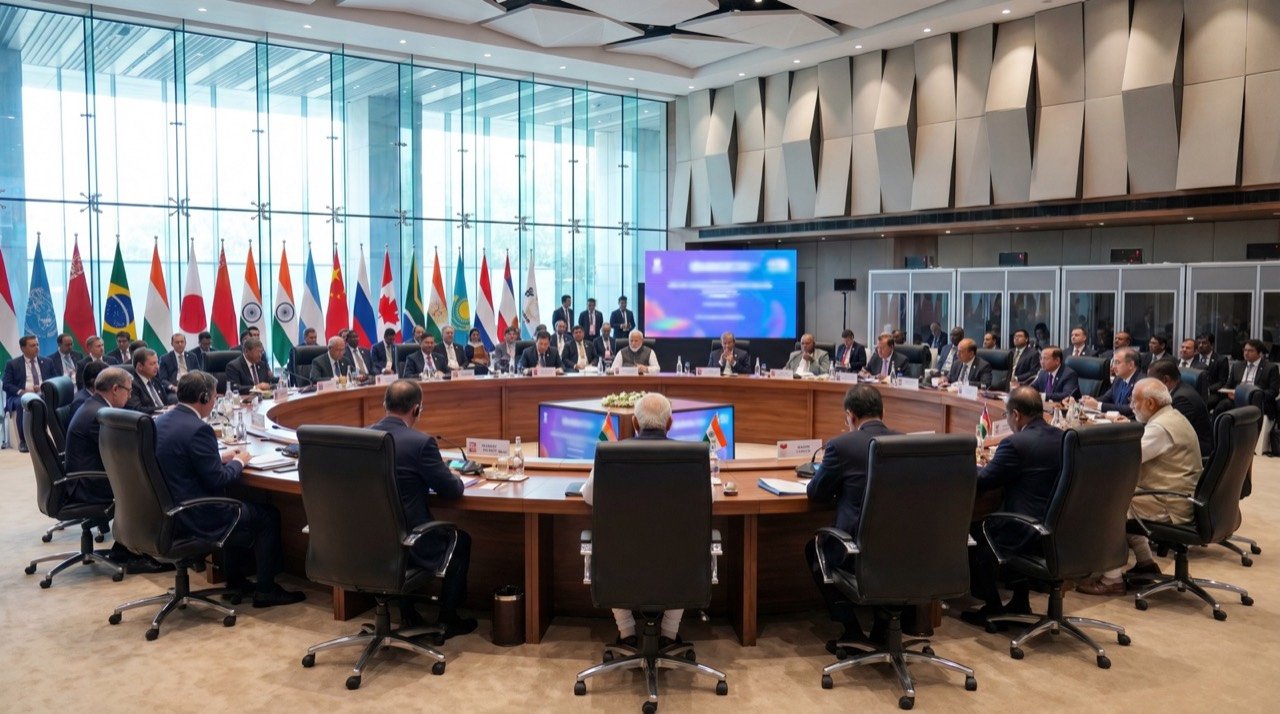
European Union leaders are convening in Brussels on June 18 and 19 for a two-day summit set to tackle the bloc's competitiveness, its long-term budget for 2028 to 2034, the war in Ukraine and the volatile situation in West Asia. For Indian businesses and policymakers tracking trade and supply chains, the meeting carries significant downstream consequences, even though it is unfolding thousands of kilometres away and involves institutions Delhi has no direct seat at. The sheer breadth of the agenda, spanning fiscal architecture, war diplomacy, migration and digital regulation, is itself telling of how much a single European Council session can now touch on issues of interest well beyond the continent.
Money, war and migration on the table
Leaders will debate the politically charged Multiannual Financial Framework for 2028-2034, alongside migration policy and measures targeting illicit drugs. A seven-year EU budget negotiation is never a tidy affair; it pits net contributor states against net beneficiaries, and reshuffles funding priorities across agriculture, cohesion, defence and now, increasingly, competitiveness and green transition spending. That this negotiation is happening in parallel with an active war on the continent's eastern flank only raises the stakes further, since defence and reconstruction commitments compete for the same fiscal headroom as everything else on the table.
Ukrainian President Volodymyr Zelenskyy is expected to brief the European Council on the latest developments in the war, keeping support for Kyiv at the centre of the agenda even as the bloc balances competing budgetary demands. Such briefings have become a recurring fixture of EU summitry, but their persistence itself is a reminder that the war has not been resolved and that European unity on continued support, financial, military or otherwise, remains a live and recurring negotiation rather than a settled matter.
The Middle East ceasefire and its implications for energy and migration are also slated for discussion, reflecting how closely European stability is tied to events far beyond its borders. Energy security and migration flows from West Asia have, in recent years, proven to be among the more destabilising forces in European domestic politics, and any fragility in the ceasefire holding has a way of quickly translating into pressure on European governments already navigating tight budgets and restive electorates.
A trade vote with global ripples
In parallel, members of the European Parliament are voting in plenary on the EU-US trade deal, updated migrant-return rules, the bloc's landmark Artificial Intelligence Act and a proposed ban on so-called nudifier apps. Lawmakers are also debating protections for children's mental health against social-media risks, an area of growing regulatory interest worldwide. That the Parliament is acting on all of this in the same window as the Council summit underscores how intertwined Europe's external diplomacy and internal rule-making have become; a trade deal with Washington does not exist in isolation from the AI Act or from domestic digital-safety debates, since all three shape the environment in which foreign firms, Indian ones included, must operate.
The summit runs June 18-19 in Brussels under the European Council, with the long-term EU budget for 2028-2034 acting as a flashpoint likely to generate friction well beyond this single meeting. Zelenskyy is set to update leaders on the war in Ukraine, while MEPs vote on the EU-US trade deal and the AI Act. Child online-safety measures and migrant-return rules round out an agenda that leaves little room for any single issue to dominate the conversation entirely.
Why it matters for India
The EU is one of India's largest trading partners, and the bloc's regulatory choices on AI, digital safety and trade frequently set global benchmarks that Indian exporters and technology firms must navigate. This is not a new phenomenon; European regulation on data protection and product standards has repeatedly become a template that other jurisdictions, including India, have had to reckon with, whether by alignment or by carving out distinct approaches. The AI Act in particular is being watched closely by Indian technology companies that either operate in European markets or supply into value chains that eventually touch Europe, since compliance obligations tend to cascade down supplier networks regardless of where a company is headquartered.
A finalised EU-US trade framework could reshape tariff flows and competitive dynamics in sectors from pharmaceuticals to IT services where Indian companies are deeply embedded. If Washington and Brussels settle on preferential terms for each other, Indian exporters in overlapping categories could find themselves facing a relatively less favourable position, or conversely, could see opportunities open up if the deal reroutes certain supply chains away from either bloc. Pharmaceuticals, where Indian generic manufacturers have a substantial global footprint, and IT services, where Indian firms are deeply woven into European corporate back-office and technology operations, are precisely the sectors where such shifts would be felt most directly.
As a trade policy analyst observed, in paraphrase, what Brussels decides on budgets, AI and trade rarely stays in Brussels; it reverberates across Indian boardrooms and policy desks. With Ukraine, the budget and transatlantic trade all in play at once, the summit is unlikely to resolve every dispute. But the direction set this week, particularly on the AI Act and the US deal, will shape the rules of engagement for India's businesses operating in and with Europe for years to come. Even incremental or provisional outcomes from this summit are likely to harden into the baseline assumptions that Indian firms and negotiators will have to plan around going forward.
The NE Times View
Brussels juggling its budget, Ukraine, Middle East fallout and an EU-US trade vote at once signals a bloc stretched thin. Each of these files would, on its own, be enough to dominate a summit; taken together, they suggest an EU whose institutional bandwidth is being tested precisely at a moment when its external partners, India among them, need clarity rather than a crowded and contested agenda.
India has a stake in the outcome, from the long-stalled trade pact to supply-chain stability. The EU-India trade negotiation has, for years, moved at a pace that has tested the patience of businesses on both sides, and a Brussels distracted by war financing, migration disputes and a fractious budget round is unlikely to accelerate that process on its own initiative. A distracted, divided Europe is a less reliable partner, so Delhi should press its own EU negotiations now, while the bloc still wants friends and while there remains an opening to secure terms before Europe's attention is consumed entirely by its internal fiscal and geopolitical firefighting.
Key takeaways
- The June 18-19 Brussels summit brings together budget negotiations for 2028-2034, Ukraine war briefings and Middle East fallout in a single, crowded agenda.
- The European Parliament is simultaneously voting on the EU-US trade deal, the AI Act, migrant-return rules and a ban on nudifier apps, alongside child online-safety measures.
- Outcomes on the AI Act and the EU-US trade deal will set regulatory and tariff benchmarks that Indian technology, pharmaceutical and IT services firms will need to navigate.
- A finalised US-EU framework could alter competitive dynamics for Indian exporters in overlapping sectors.
- The NE Times View: with Europe's attention divided across war, budget and trade fronts, India should press ahead with its own EU trade negotiations now rather than wait for Brussels to resolve its internal contests first.
You may also like to read
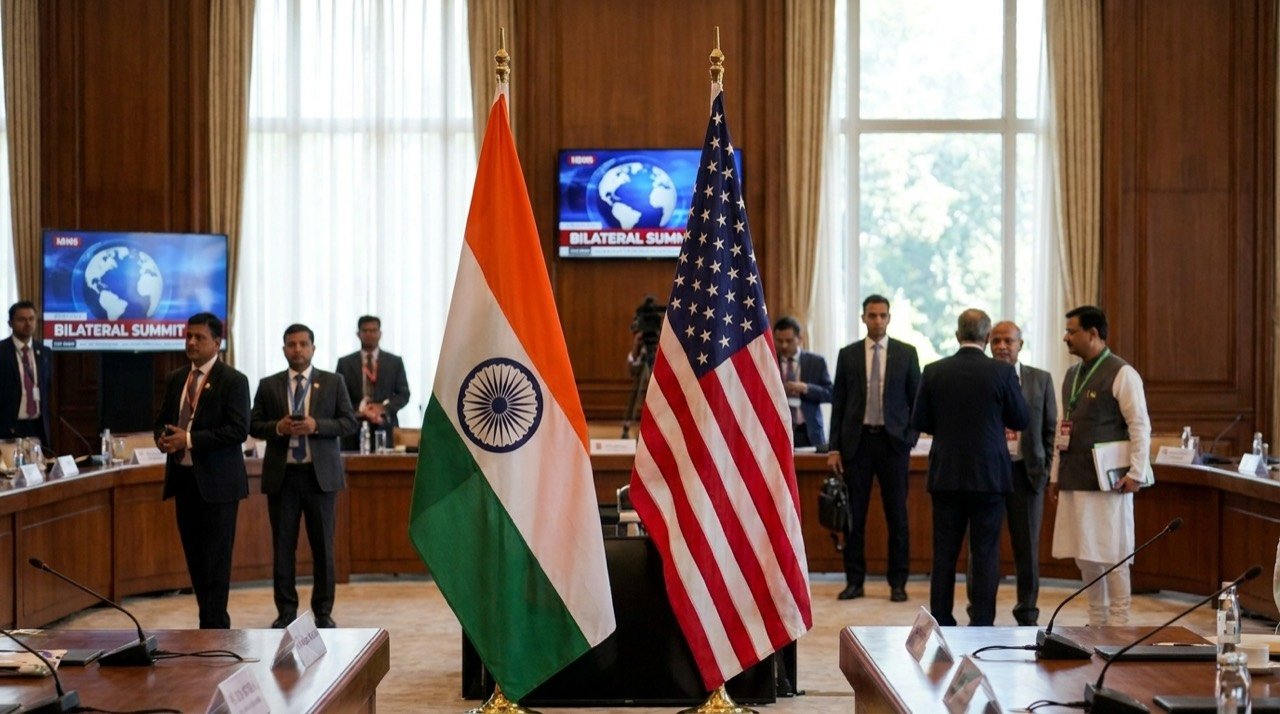
India and Canada Push to Seal the Reset, Targeting a Trade Pact by Year-End
Buoyed by personal rapport between Narendra Modi and Mark Carney, New Delhi and Ottawa are working to convert a fragile diplomatic thaw into a comprehensive trade agreement, with implications for students, professionals and the large Indo-Canadian diaspora.
India And US Close In On First Tranche Of Trade Deal As Negotiators Call It 99 Per Cent Done
After three days of talks in New Delhi, India and the United States say the first tranche of their interim trade agreement is all but complete, with signatures expected within weeks.
India Hosts Regional Summit, Pushing Trade and Climate Cooperation
Leaders gathered for talks aimed at deepening regional trade ties and coordinating action on climate resilience.
Zelenskyy Presses Putin for Ceasefire Talks as Strikes Continue
Ukraine's president called for direct negotiations in an open letter, winning backing from European leaders, even as drone attacks and shelling persisted across the front.
More from this section
More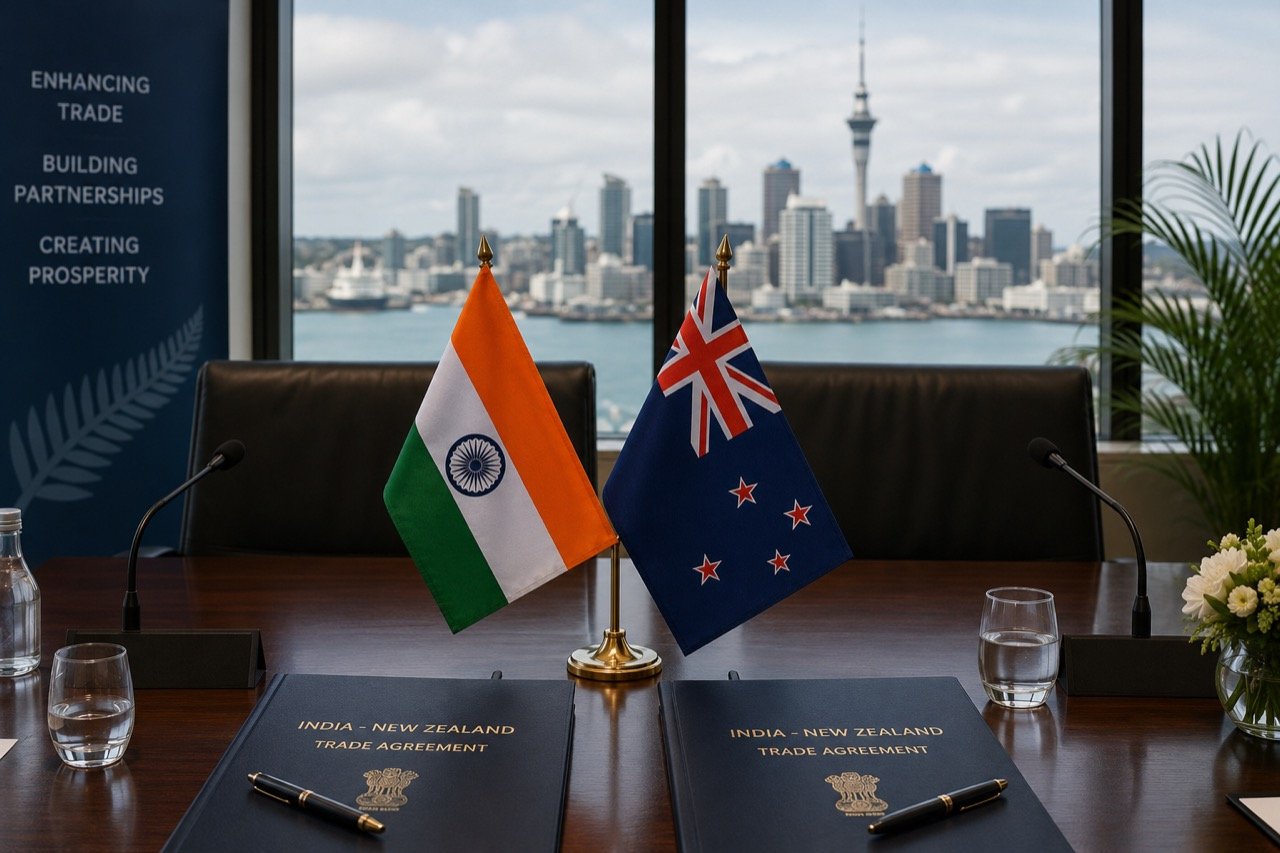
India-New Zealand Ties: Visit Plans Put FTA and Diplomacy in Focus
Reports of a planned high-level India-New Zealand engagement have revived attention on free trade talks, professional mobility and Indo-Pacific cooperation between two partners with clear room to grow.

Modi Greets Trump on US 250th Independence Day, Hails Partnership
Prime Minister Narendra Modi marked America's 250th Independence Day with a message to President Trump, saying the next 250 years should lift the India-US partnership to new heights.
India Watches Dhaka's China-Backed Teesta Plan as Stakes Rise
New Delhi is closely tracking Bangladesh's proposal to develop the Teesta river with Chinese assistance, a move that revives one of South Asia's most sensitive water-sharing disputes and tests regional strategic trust.