TMC Bengal Chief Quits Within a Month, Putting Party Under Scrutiny
A close aide of Mamata Banerjee has reportedly stepped down as the Trinamool Congress's Bengal unit chief barely weeks after taking charge, reviving questions about organisational stability inside West Bengal's ruling party.
Commentary & Analysis ·
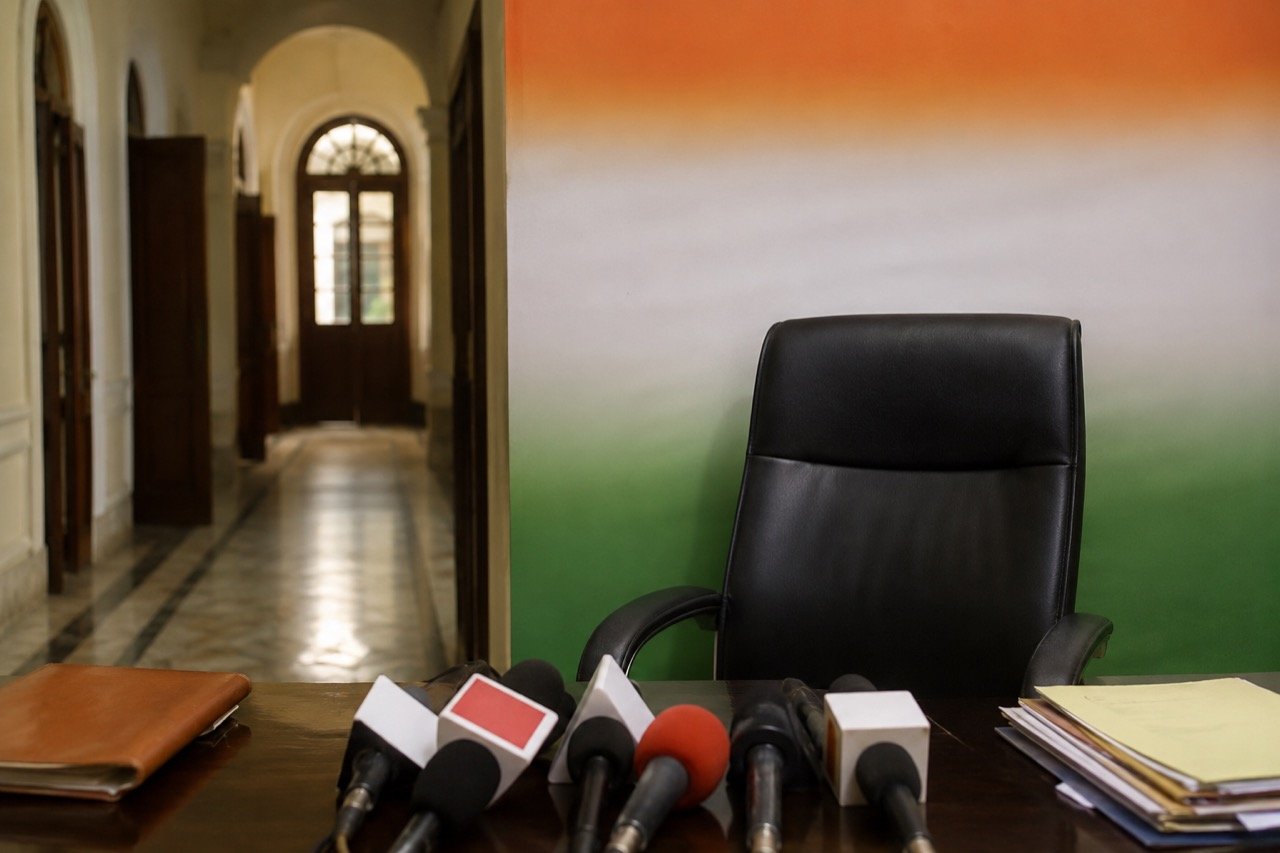
A close aide of West Bengal Chief Minister Mamata Banerjee has reportedly resigned as the Trinamool Congress's state unit chief less than a month after being appointed, a departure swift enough to put the party's internal organisation back under the spotlight. In a party where appointments to the top organisational post are typically made with deliberation and are expected to hold for a meaningful stretch of the electoral cycle, an exit measured in weeks rather than years is unusual enough to demand scrutiny, even before any official explanation has been offered.
Why the state chief's post carries such weight
In Bengal's intensely organised political culture, the state party president is far more than a ceremonial title. The office coordinates candidate selection, disciplines district units, shapes campaign messaging and manages the crucial channel between the government's leadership and the party's grassroots machinery. This is not an honorary perch handed out as a reward for loyalty; it is an operational role that touches nearly every lever of the party's day-to-day functioning, from managing block-level workers to negotiating the competing claims of factional leaders across the state's districts.
A vacancy — or rapid churn — at that level ripples through all of it. Candidate selection processes stall or lose a steady hand at the top. District units, some of which nurse their own local rivalries and ambitions, are left uncertain about whose authority to defer to. And the messaging apparatus that the TMC relies on to project unity into the public domain suddenly has to explain a leadership gap it did not plan for. For a party gearing up for future electoral contests, even a short period of organisational uncertainty at this level is costly, because Bengal's political battles are won as much in the granular work of booth management and candidate selection as they are in the CM's public rallies.
An exit without an official explanation
No confirmed reason for the resignation has been made public. That silence is itself significant. An exit within weeks of appointment inevitably invites theories: an unsustainable workload, factional friction, strategic disagreement or purely personal grounds. Each of these is plausible on its own terms — the state chief's job is demanding enough that burnout is a genuine possibility, and Bengal's TMC has never been free of internal factional currents — but none of them is established as fact. The absence of a stated reason leaves room for competing narratives to fill the vacuum, and in a state where political rumour travels fast, that vacuum rarely stays empty for long.
This is where the predictable choreography of Indian state politics tends to take over. Opposition parties will frame the departure as proof of instability at the heart of the ruling party's organisation, using it to argue that the TMC's public unity conceals a leadership structure under strain. The TMC, for its part, is likely to present the resignation as routine or personal, an internal administrative matter unworthy of external speculation. Both framings serve their proponents' interests, and neither, on the facts available, can yet be verified as the fuller truth.
What to watch for next
The more telling signals will come next rather than now. The party's official explanation, whenever and if it arrives, will matter less for its content than for its timing — a prompt, detailed account suggests the party wants to close the story quickly, while a delayed or vague one suggests there is more going on internally than anyone is prepared to say. Equally important is how quickly a successor is named. A swift, smooth handover would suggest the resignation was a contained, individual matter. A prolonged vacancy, by contrast, would suggest the party is still working through disagreements about who should hold the post and what authority it should carry.
Perhaps most revealing will be whether the replacement represents continuity or a factional rebalancing. If the next appointee is drawn from the same circle as the outgoing chief, it points to a personal or logistical reason for the exit. If the choice instead shifts the balance of power toward a different faction or generation within the party, it suggests the resignation was a symptom of a broader recalibration ahead of the state's next electoral cycle — one being managed carefully, but a recalibration nonetheless.
The broader pattern this fits into
Episodes like this do not occur in isolation from the wider question of how the TMC is structured as an organisation. Rapid turnover in a senior post is the kind of event that, taken alone, might be dismissed as an anomaly. But it becomes more meaningful when read against the backdrop of a party that has, for over a decade, been built around the singular authority of its supreme leader. In such a structure, state-level posts can carry significant operational responsibility without necessarily carrying commensurate independent authority — and that gap between responsibility and authority is precisely the kind of tension that can produce an abrupt resignation within a month of appointment.
For ordinary party workers and district-level functionaries, this uncertainty is not merely an abstraction. It shapes how confidently they can act, whom they look to for direction, and how they read the internal signals about who is rising and who is falling out of favour within the organisation. A period of unclear leadership at the state level, even a brief one, can slow decision-making at exactly the moments when a functioning organisation needs to be decisive — during candidate selection, dispute resolution between factions, or the fine-tuning of campaign strategy.
The NE Times View
For a party that has dominated Bengal for over a decade, the TMC has a persistent soft spot: its organisation still runs overwhelmingly on the authority of one leader. When a hand-picked state chief exits within a month, the question is less about the individual and more about whether any appointee can exercise real authority in a structure where power flows from the top. If the TMC wants its machine to outlast personality, it needs institutional depth — and episodes like this suggest that depth is still a work in progress. A party this dominant can absorb a single awkward resignation without visible political cost in the short term. But the accumulation of such episodes, even if each is individually explainable, is what erodes the perception of organisational solidity over time, and perception matters in politics almost as much as substance. Watch the replacement choice; it will say more than any resignation letter.
Key takeaways
- A close aide of Mamata Banerjee has reportedly resigned as TMC's West Bengal state unit chief less than a month after appointment, with no official reason yet made public.
- The state chief's post is operationally central to the TMC, overseeing candidate selection, district discipline, campaign messaging and the link between the government and grassroots workers.
- Opposition parties are likely to cite the exit as evidence of instability, while the TMC is expected to characterise it as routine or personal.
- The choice and speed of the successor's appointment will be the clearest indicator of whether this was an isolated personal matter or part of a wider factional rebalancing ahead of the next electoral cycle.
- The episode renews scrutiny of the TMC's reliance on centralised leadership authority and whether its organisational structure can develop independent depth at the state level.
You may also like to read
TMC Expels Senior Leaders as West Bengal Party Crisis Deepens
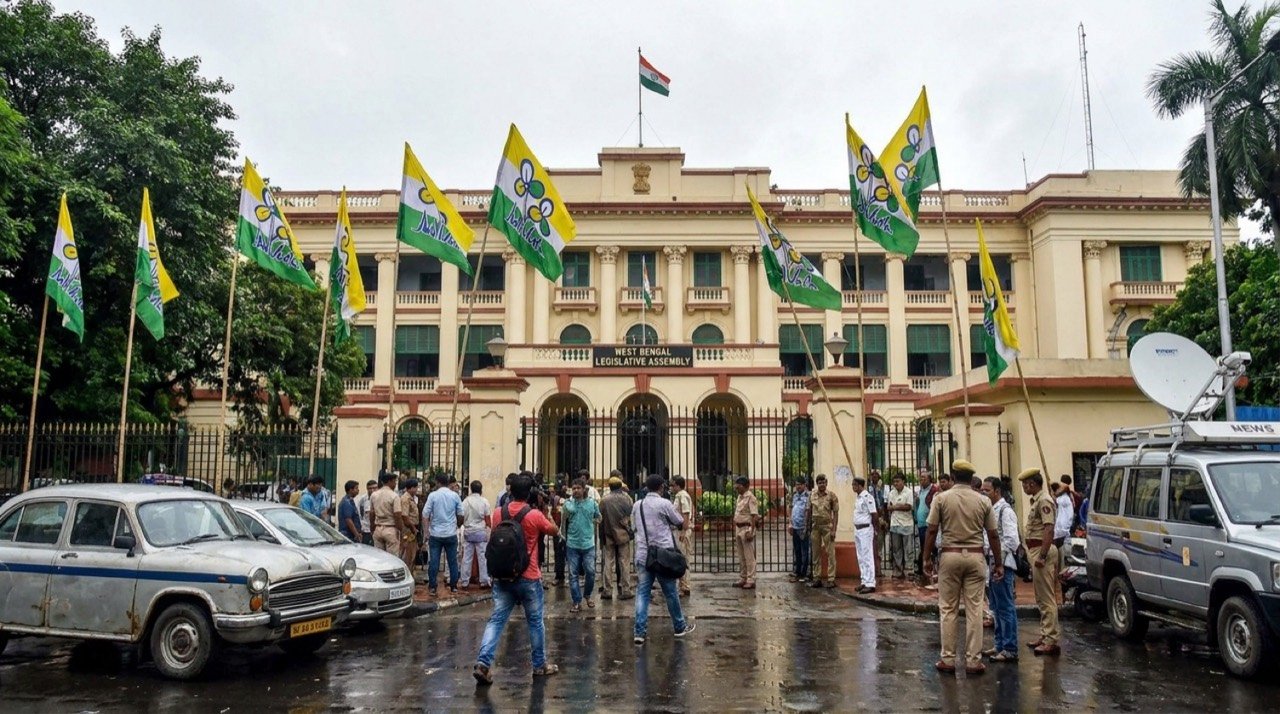
The Trinamool Congress crisis escalated as the party expelled eight senior leaders, including Firhad Hakim, over alleged anti-party activity, after a rebel faction claimed to remove Mamata Banerjee.

Rebel TMC MLAs Name Arup Roy Chairperson, Deepening Mamata Banerjee's Crisis
A breakaway group of Trinamool Congress legislators has declared Arup Roy chairperson of what it calls the 'real TMC', mounting an open challenge to Mamata Banerjee's leadership in West Bengal.
TMC Rebellion and Expulsions Deepen Trinamool's Bengal Discipline Crisis
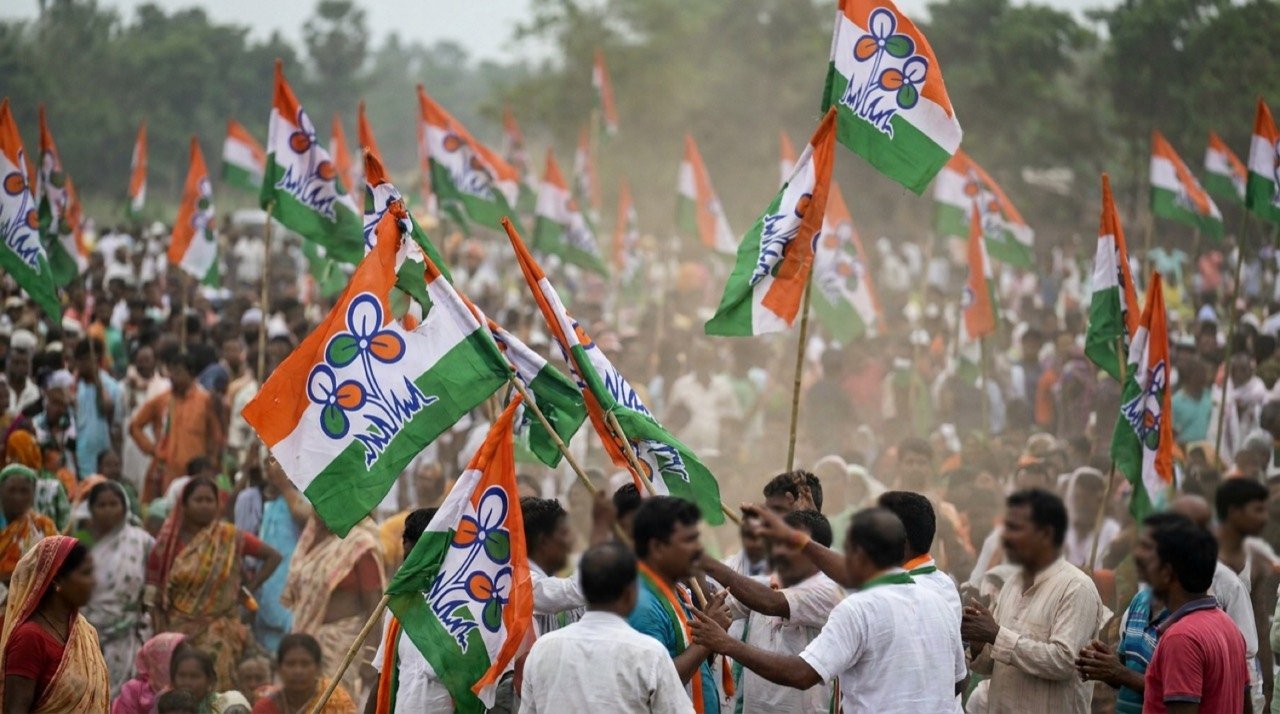
Open defiance by councillors and workers, followed by expulsions touching figures like Firhad Hakim and Arup Roy, has turned a local Trinamool dispute into a wider test of party discipline in West Bengal.

FCRA Rule Changes Put NGO Foreign Funding Under Sharper Scrutiny
Amended FCRA rules will require NGOs to specify why they seek foreign funds, where they operate and who controls them, while excluding proselytisation from permitted faith-based activities.
More from this section
More
K Kavitha Party Denied TRS Name by Election Commission
The Election Commission has refused to register K Kavitha's Telangana Rakshana Sena under the TRS acronym after objections, forcing a branding reset for the new party at a politically sensitive moment in Telangana.
Lalu Prasad Yadav Security Downgrade, Bungalow Order Stir Bihar
A government order downgrading Lalu Prasad Yadav's security cover and asking him to vacate an official bungalow has opened a fresh political flashpoint in Bihar, with the RJD chief's reaction fuelling the row.
Manipur CM's Churachandpur Visit: First Since 2023 Unrest
The Manipur Chief Minister travelled to Churachandpur for a BJP MLA's funeral, his first visit to the district since the 2023 violence, lending the sombre occasion an unmistakable political significance.