India Passport Ranking 2026: Mobility Gains Meet Citizenship Debate
India's improved position on the Henley Passport Index 2026 has widened visa-free access for travellers, even as a parallel domestic debate asks what a passport actually proves about citizenship.
Commentary & Analysis ·
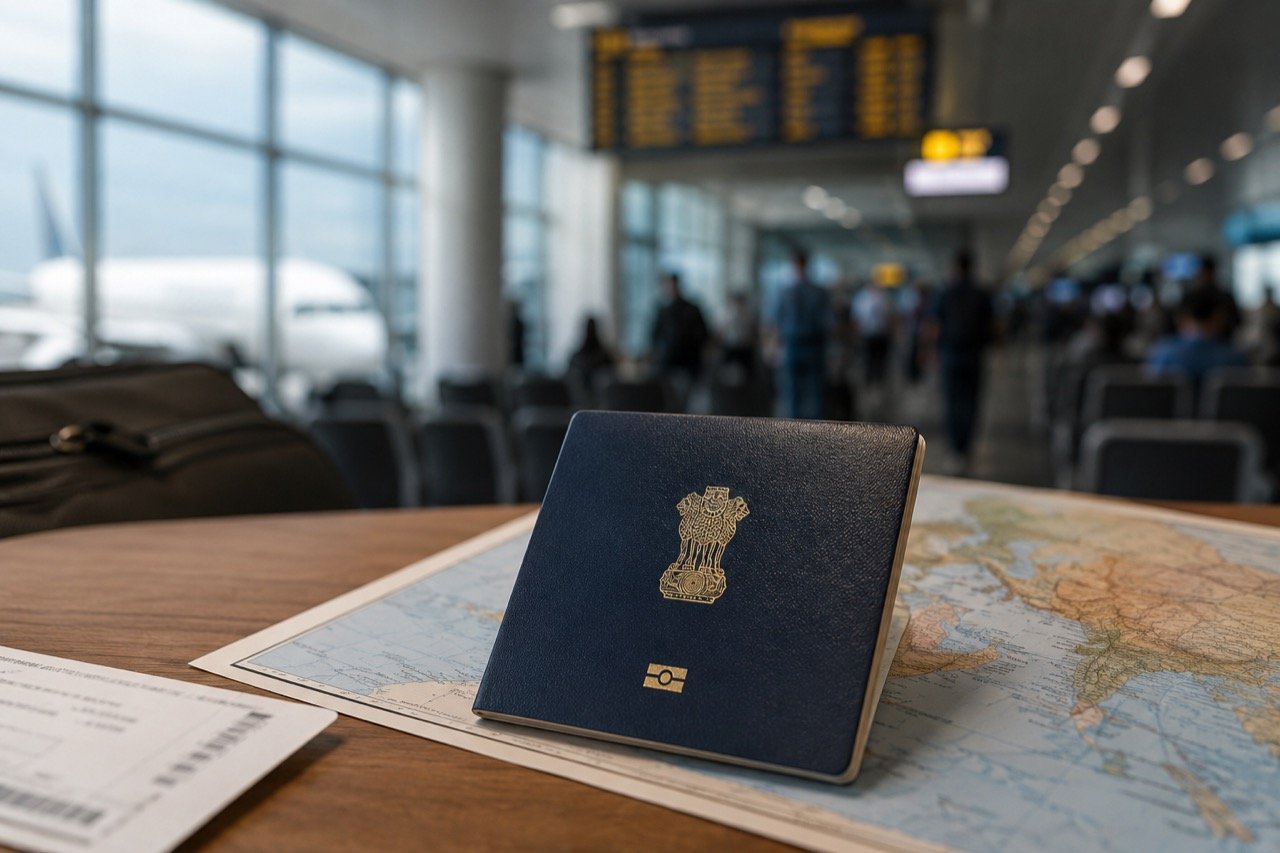
India's passport is having a moment of double scrutiny. According to recent coverage citing the Henley Passport Index 2026, the country's ranking has improved on the previous year, giving Indian citizens visa-free or visa-on-arrival access to a broader set of destinations. At the same time, a domestic conversation about citizenship proof has pulled the humble travel document into a much larger argument about identity and rights. The coincidence of these two developments, one external and celebratory, the other internal and unresolved, is what makes this an unusually rich moment to examine what a passport actually is, and what it is not.
Why the ranking matters beyond a league table
The Henley index converts visa arrangements into a measurable score of travel freedom, which is why it commands attention far beyond frequent flyers. For students eyeing foreign universities, founders chasing investor meetings, small business owners and holidaying families, even a modest expansion in visa-free access can translate into less paperwork, lower costs and fewer weeks lost to appointment queues. A rise of even a few places can, in practical terms, mean one fewer visa application in a year of travel, one less trip to a consulate, one less anxious wait for a stamped approval. For a country of India's size and outward-looking ambitions, in business, education and diaspora ties, these incremental gains compound across millions of individual journeys.
The improved position also reflects India's widening diplomatic and economic reach, since mobility ultimately rests on reciprocity and trust between states. A passport's strength is not decided unilaterally; it is negotiated, renewed and sometimes withdrawn based on bilateral relationships, security cooperation and economic ties. That India's ranking has moved upward is, in this sense, a quiet marker of its diplomatic footwork over recent years, evidence that more governments are willing to extend easier terms of entry to Indian citizens than before.
Yet the gap with the world's strongest passports remains substantial. Holders of top-ranked documents can enter far more countries without advance visas, and Indian travellers still face significant visa requirements for many major destinations. The index captures one slice of the travel experience; it says little about fees, documentation burdens or the uncertainty that still shadows many applications. A visa-on-arrival policy, for instance, can still involve queues, cash payments, or discretionary refusals at the border that a simple ranking cannot convey. Celebrating the improvement should not obscure how much distance remains before Indian mobility matches that of the leading passports.
The citizenship-proof question
What makes this ranking cycle unusual is its timing. Public debate over citizenship proof and identity documents has led many to ask whether a passport, issued only after verification, should carry more weight in administrative contexts at home. This is a natural question: if a government agency has already gone through the trouble of confirming a person's citizenship status to issue them a passport, why should that same person need to separately prove their status through other documents in unrelated bureaucratic processes? The logic has intuitive appeal, but it collides with the messy reality of how identity documentation actually works in India.
India operates a patchwork of documents with distinct purposes: Aadhaar for identity and service access, voter ID for elections, birth records, residence papers and the passport for international travel. Each of these serves a different administrative function and is governed by its own rules, issuing authority and legal standing. Aadhaar, for example, is explicitly not proof of citizenship, only of identity and residence, a distinction that has been the subject of considerable public confusion since its introduction. Voter ID exists to establish electoral eligibility, which involves criteria beyond citizenship alone, such as age and residency in a constituency. Birth certificates and residence papers each carry their own evidentiary weight, often varying by state and by the era in which they were issued.
Treating any single one of these documents as definitive across all contexts risks confusion, which is why analysts urge a careful distinction between the passport's legal function, its verification process and the separate rules that govern citizenship claims. A passport is, first and foremost, a travel document. Its issuance does involve a citizenship check, but the process, timelines and legal standards applied were designed for that specific purpose, not to serve as a universal, all-context proof of citizenship for every administrative or legal question that might arise domestically.
A mobility story and a governance story at once
Seen together, the two strands make this a mobility story and a governance story at once: a small shift in a global index has become part of a wider national conversation about opportunity, documentation and the relationship between citizens and the state. This is not merely an academic distinction. For ordinary citizens navigating school admissions, property transactions, welfare enrolment or legal disputes, the question of which document proves what can have real consequences, delays, rejections or the need to produce yet another form of paperwork.
The stakes are different for different groups. For the urban, frequently travelling and relatively well-documented citizen, the passport ranking is the more visible story, a marker of convenience and status on the world stage. For citizens in regions or circumstances where documentation has historically been harder to obtain or verify, whether due to migration, informal birth registration, or gaps in older record-keeping systems, the citizenship-proof debate carries far higher stakes, touching on questions of belonging and legal standing that a stronger passport abroad does nothing to resolve.
This divergence is worth sitting with. It is entirely possible for India to be gaining ground internationally as a travel-friendly nation while simultaneously facing unresolved and consequential questions about its domestic identity infrastructure. The two are not contradictory; they simply operate on different planes, one external and comparative, the other internal and administrative.
What clarity would require
Bringing coherence to India's layered identity-document regime is not a simple matter of picking one document and declaring it supreme. Each document was built for a specific legal and administrative purpose, and collapsing those purposes into a single all-purpose credential would require significant legal and institutional rework, not just a policy announcement. What is more achievable, and more urgently needed, is clearer public communication from the state about what each document does and does not establish, so that citizens are not left to guess, or to discover the limits of a document only when a bureaucratic process rejects it.
This is where the passport ranking and the citizenship debate intersect most usefully as a lesson: the same country that is winning easier entry into foreign nations should be able to offer its own citizens equally legible rules about proving who they are at home. A traveller who can move through a foreign airport with minimal friction should not have to face uncertainty about which document to bring to a local government office.
The NE Times View
The improvement in India's passport ranking is genuinely good news, but it deserves sober framing rather than celebration or anxiety. Rankings measure visa arithmetic, not the lived friction of travel, and they certainly do not settle domestic questions about what proves citizenship. India's real task is twofold: keep expanding mobility through steady diplomacy, and bring clarity to its layered identity-document regime so that ordinary citizens are not left guessing which paper counts where. A stronger passport abroad means most when the rules at home are equally legible.
This article is original commentary and analysis by The NE Times. Background facts were referenced from Hindustan Times and Henley & Partners.
Key takeaways
- India's Henley Passport Index 2026 ranking improved on the previous year, expanding visa-free and visa-on-arrival access, though the gap with top-ranked passports remains substantial.
- A domestic debate over citizenship proof has separately raised questions about whether a passport should carry more administrative weight at home, alongside documents like Aadhaar, voter ID, birth records and residence papers.
- Each Indian identity document serves a distinct legal purpose; Aadhaar in particular is explicitly not proof of citizenship, making it risky to treat any single document as universally definitive.
- The mobility gain and the documentation debate are two separate stories, one diplomatic and external, the other administrative and internal, that happen to be unfolding at the same time.
- Lasting progress requires both continued diplomatic effort to expand travel freedom and clearer state communication on what each domestic document does and does not prove.
You may also like to read
India Passport Ranking 2026: 125th Place Renews Visa-Free Debate
India's 125th position in the latest global passport index, a list topped by Singapore, has revived questions about visa-free access, travel friction and what mobility rankings really measure for ordinary travellers.

Rushikonda Complex PPP Plan Revives Andhra Coastal Asset Debate
Andhra Pradesh has invited private operators to run the nearly Rs 450 crore Rushikonda Building Complex in Visakhapatnam, reopening questions about tourism potential, transparency and the future of a politically contested coastal asset.
NRI Marriage Registration Proposal Enters Madhya Pradesh UCC Debate
A BJP submission to Madhya Pradesh's Uniform Civil Code committee proposes registering NRI marriages within a week and linking them to passports, aiming to curb abandonment in cross-border unions.
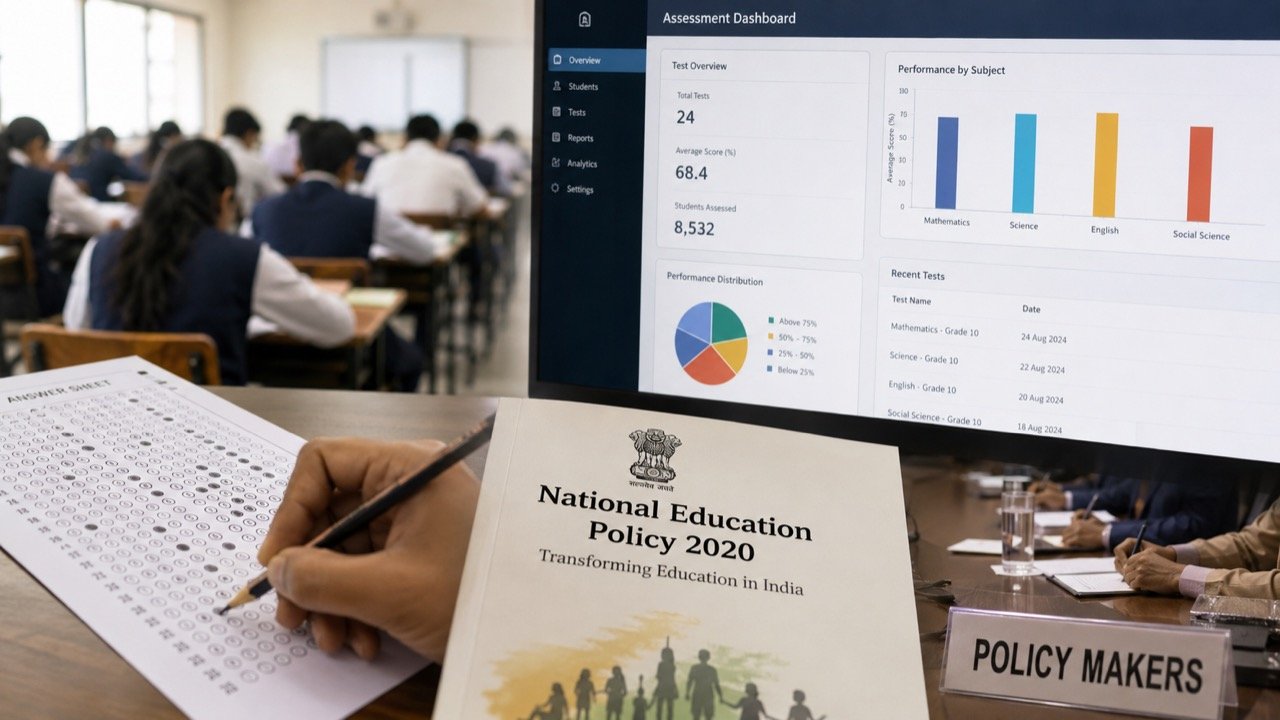
NITI Aayog MCQ Exam Proposal Revives Assessment Quality Debate
A NITI Aayog-linked recommendation backing multiple-choice exams has reignited India's debate over whether standardised testing can measure real learning without rewarding rote memorisation and coaching patterns.
More from this section
More
AICTE Industry Fellowship 2026: Rs 1.5 Lakh Scheme Closes July 5
The AICTE Industry Fellowship Programme 2026, which places technical-education faculty inside leading companies on a Rs 1.5 lakh monthly stipend, reached its application deadline on July 5.
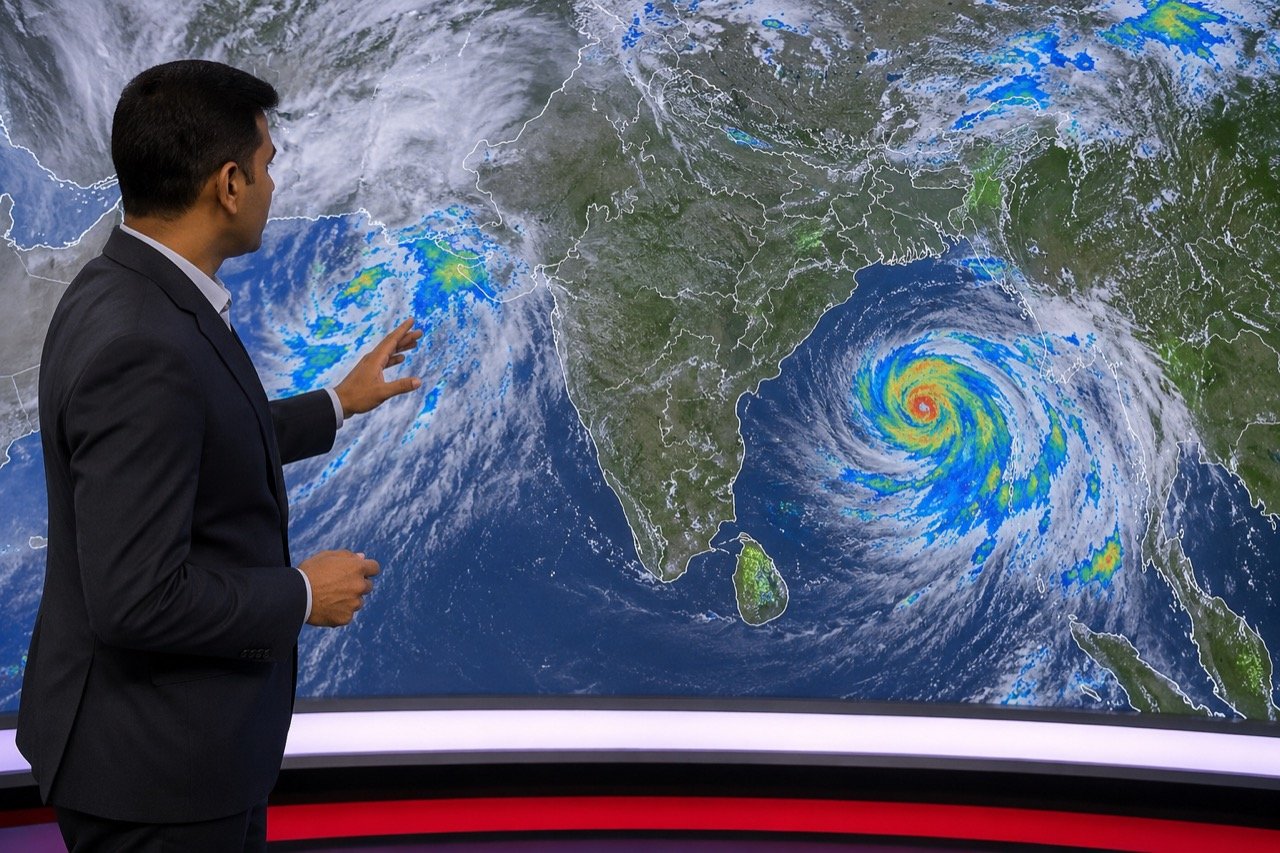
Bay of Bengal Low Pressure System Revives Monsoon Over Western India
A low-pressure system over the Bay of Bengal has pushed the monsoon back into an active phase, bringing steady heavy rain to Kerala, coastal Karnataka and Maharashtra, and putting Mumbai and Pune on preparedness watch.
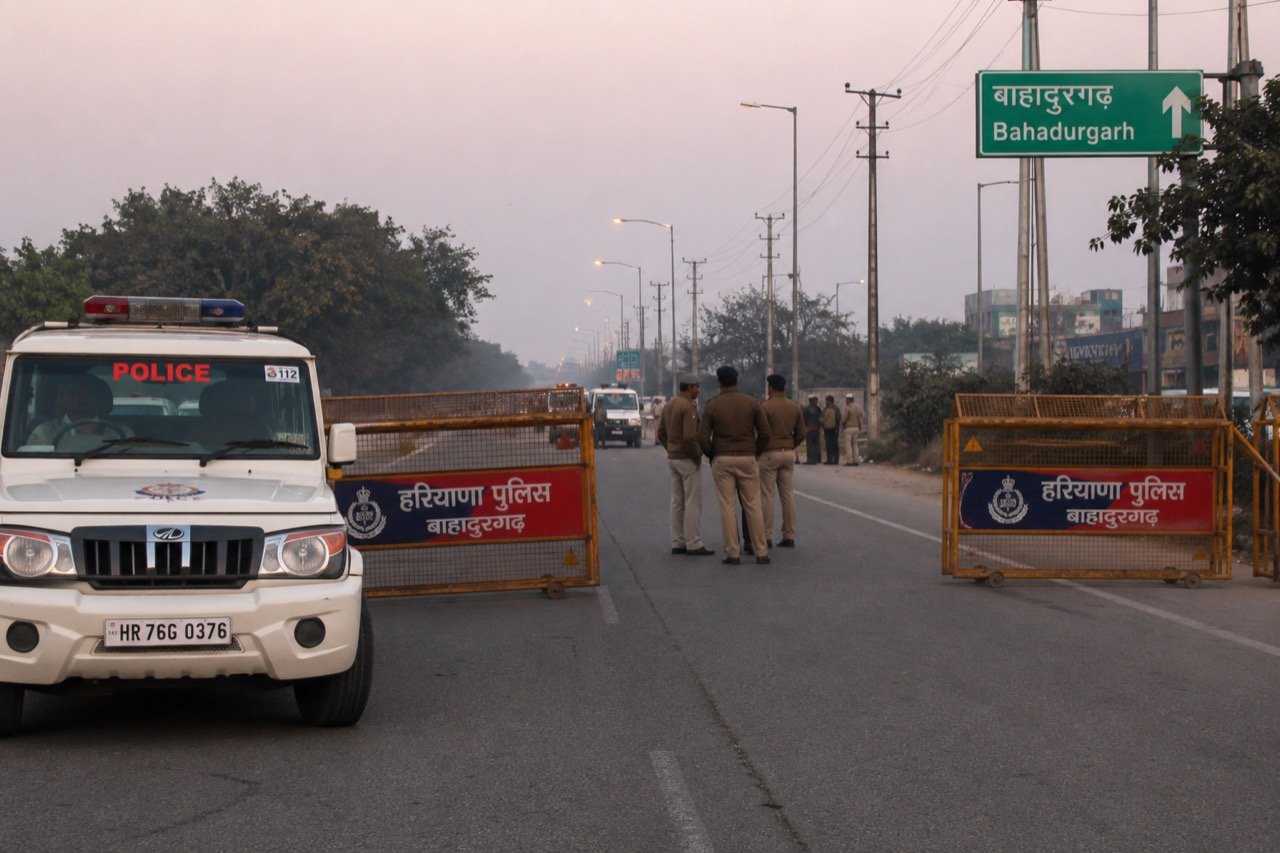
Bishnoi Gang Suspects Injured in Haryana Encounter as Police Tighten Net
A joint Haryana-Delhi Police operation in Bahadurgarh left two suspected Lawrence Bishnoi gang members injured, spotlighting the multi-state coordination now central to India's fight against organised crime networks.